L8- Permian Terrestrial Ecosystems
The Permian World:
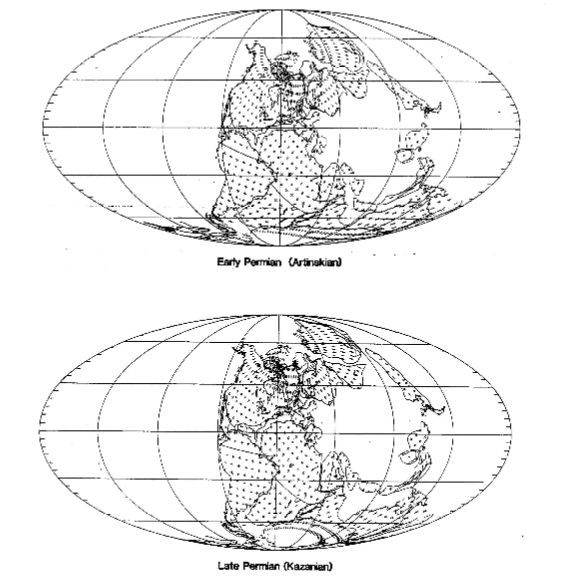
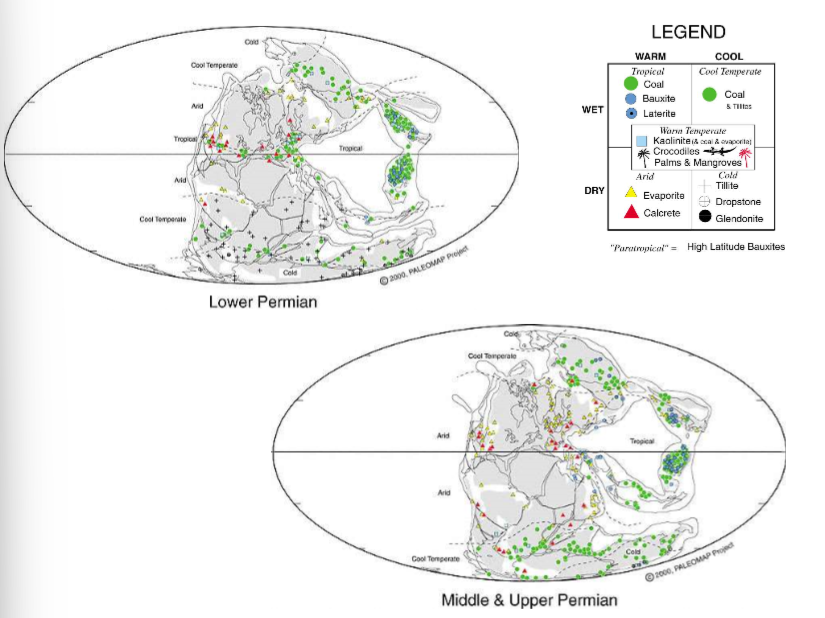
all continents have come together, fewer mid-ocean ridges, less coastline, less preserved shallow marine areas, less continental shelf (shallow sea where light penetrates <200m deep)
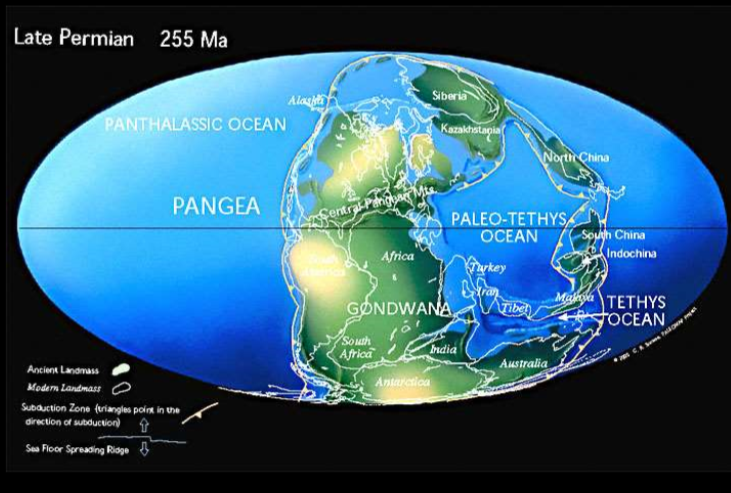
Gondwana collided with Euramerica to create the central Pangean mountain range with deserts above and below this
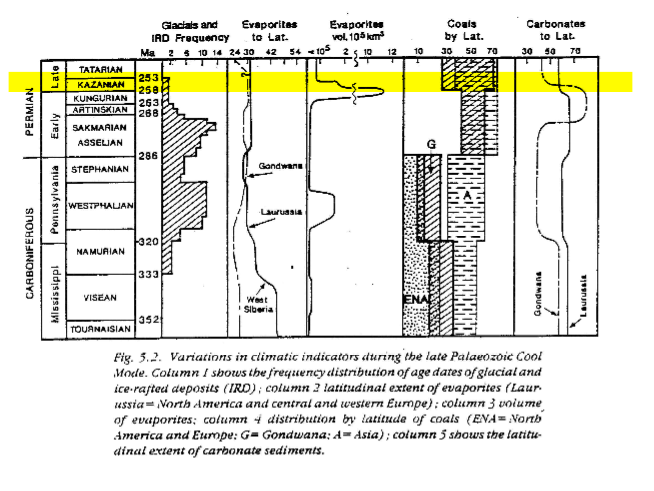
CO2 levels start to rise, O2 levels start to fall
switch from an icehouse to a greenhouse world in the late Permian→ probably due to CO2 levels beginning to rise
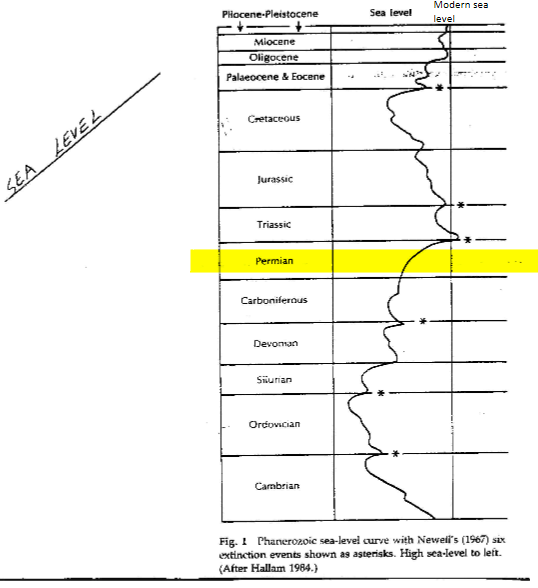
ice sheet disappears but sea levels are lower than today→ no mid-oceanic ridges that push up water
tropical zone in mountains, cool temperate at poles, tropical Tethis sea→ diverse, marine life
Plants:
new groups, cordites disappear
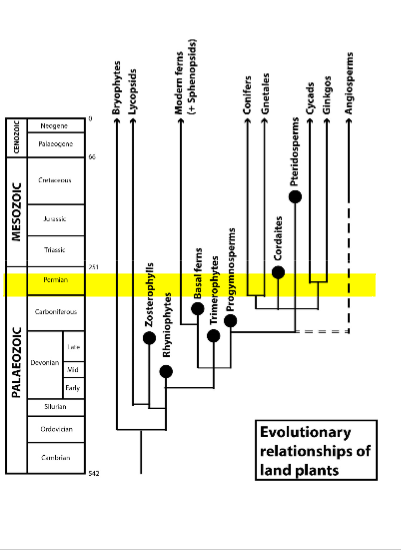
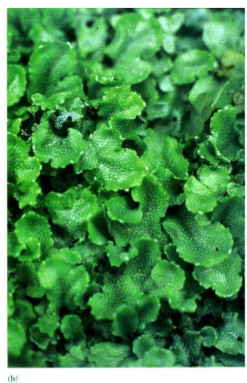
Bryophytes→ unchanged from Carboniferous
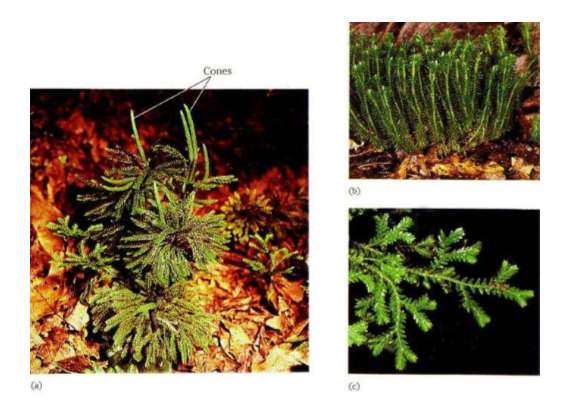
Lycopsids→ tree form gets wiped out at the end-Carboniferous as rainforests get uplifted, persist in China for a bit, reduced to small herbaceous forms
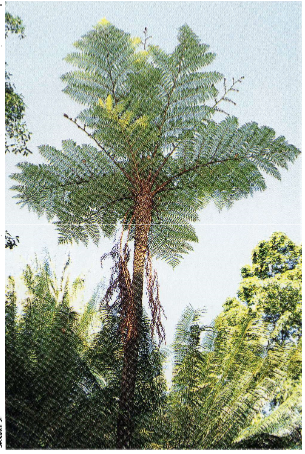
Ferns→ lots of forms from Carboniferous
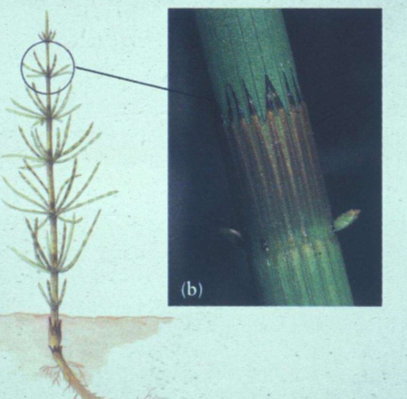
Sphenopsids→ tree form disappears except in China, reduced to small herbaceous forms, similar to equisetums (horsetails today)
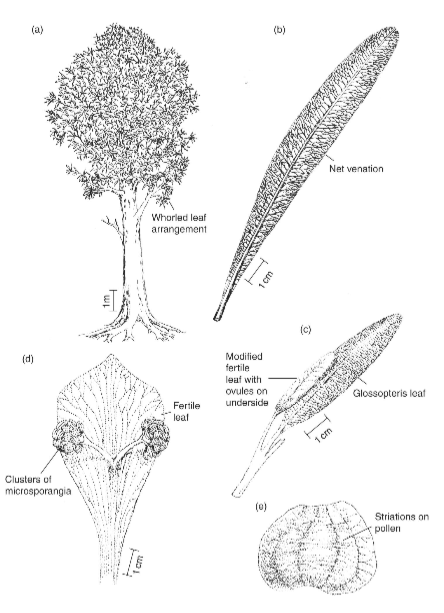
pteridosperms→ diversify, have characteristic leaves, Gigantopterids in China, Glossopterids in Pangea, found all over
Cordaites→ go extinct
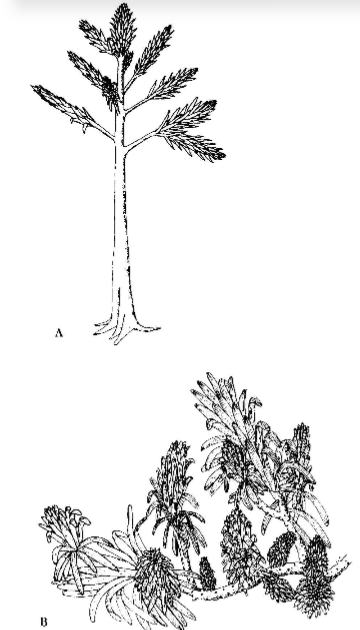
Conifers→ primitive conifers diversify (relative of Cordaites)
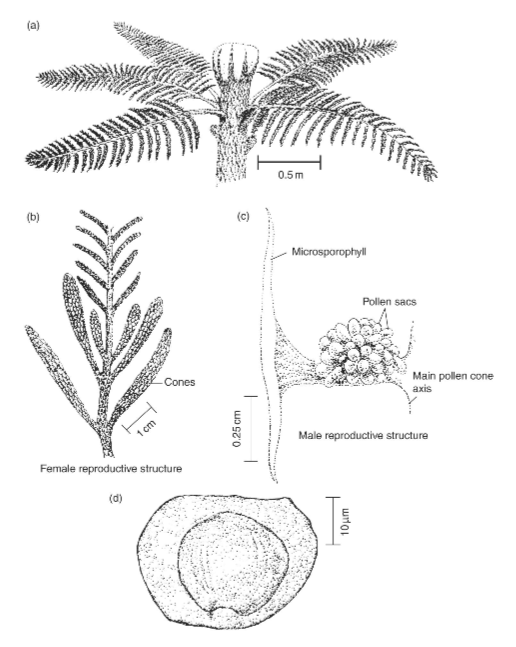
Ginkgos→ new species, one species left today
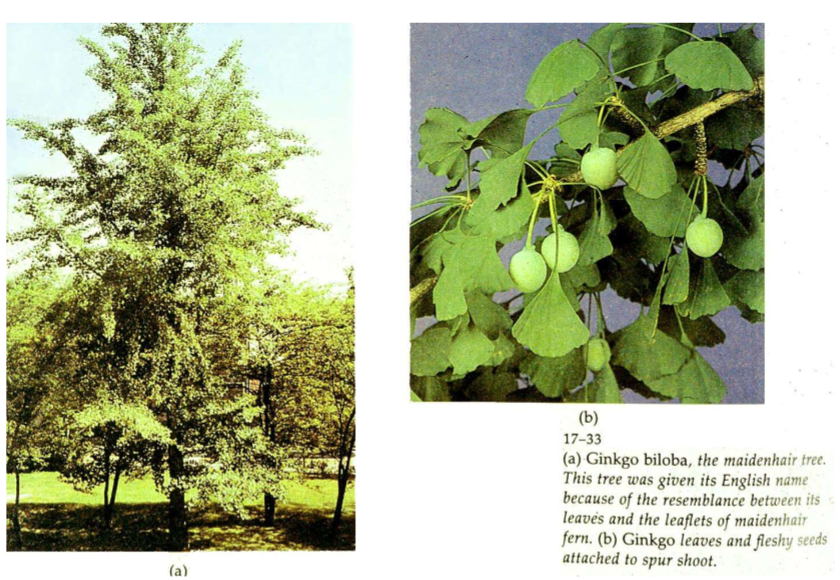
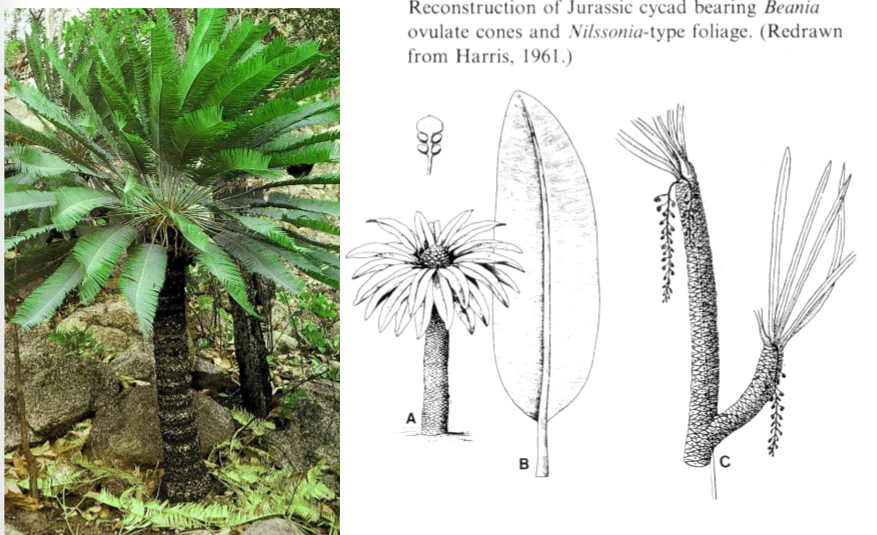
Cycads→ new species, slow growing, male cones produce pollen, female cones produce seeds, appear in the Late Permian but possibly earlier in China
clear shift in plant dominance at the end of the Permian
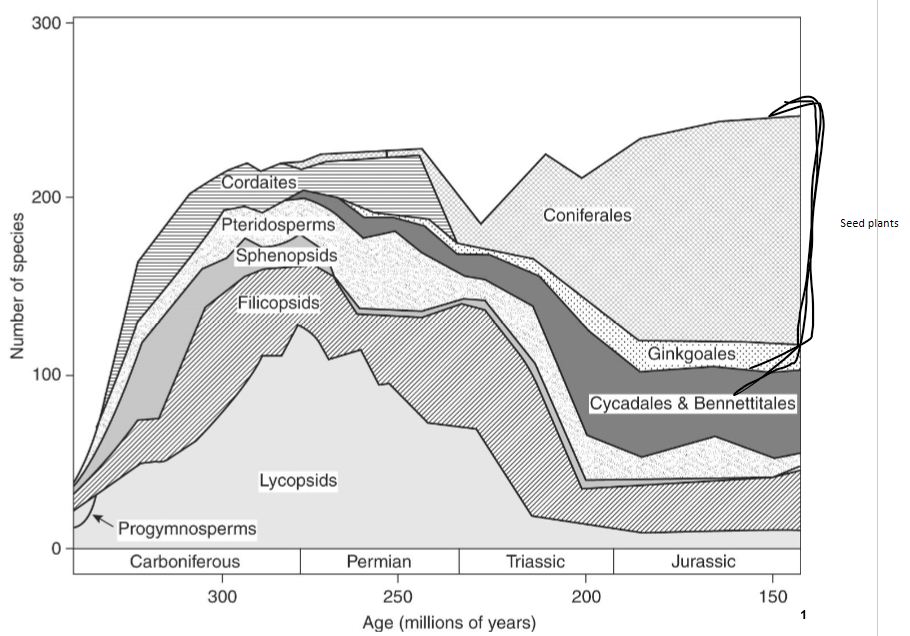
palaeophtic-mespohytic transition in vegetation→ change from tree lycopsids and sphenopsids to gymnosperms
seed plants are better adapted to dry environment
Permian-Triassic mass extinction shows a clear transition from west to east:
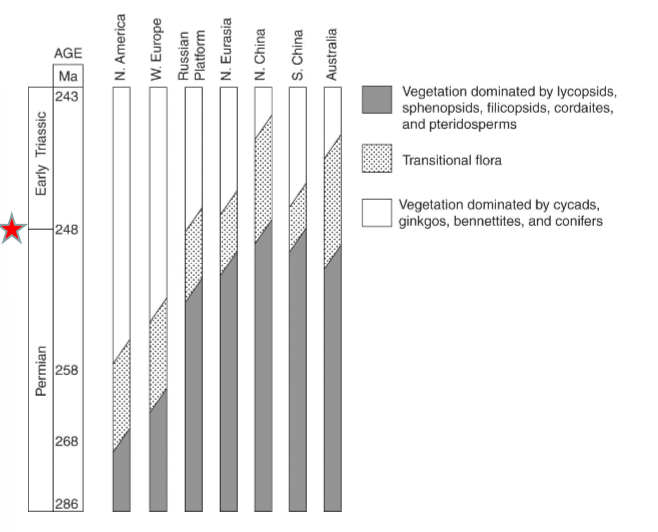
plants are only affected in the short term by the mass extinction
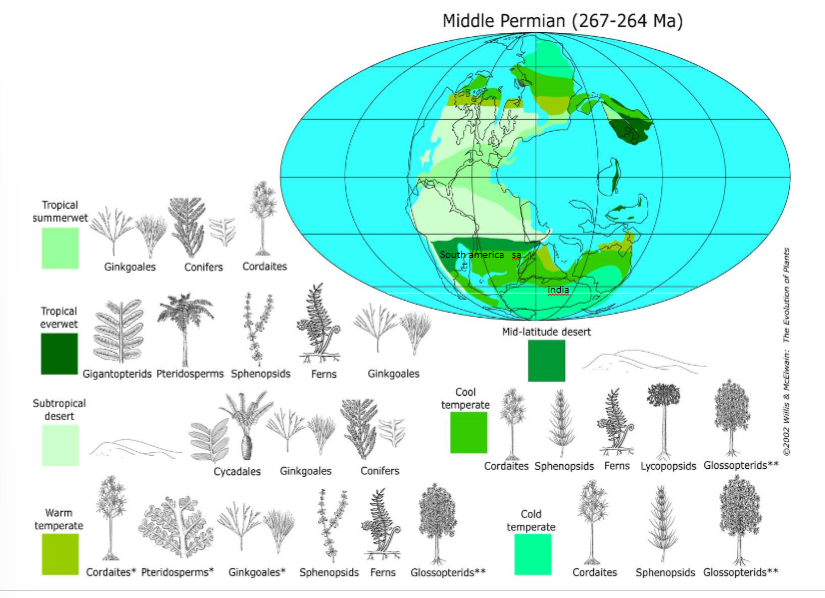
not a strict latitudinal gradient of biomes, affected by the positioning of the Tethis ocean:
Invertebrates:
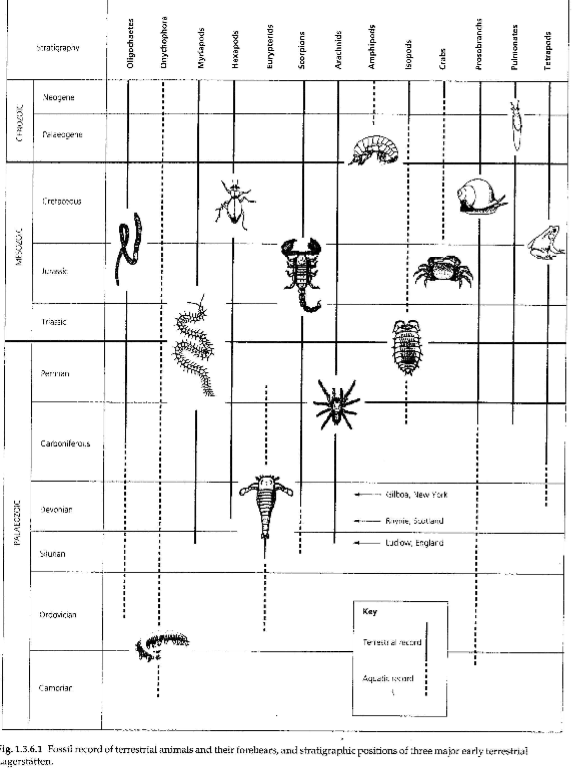
jawed fish become the top predators instead of eurypterids
not much change
cycads were primary wind pollinated but there is some evidence that beetles pollinated some of them
Fish:
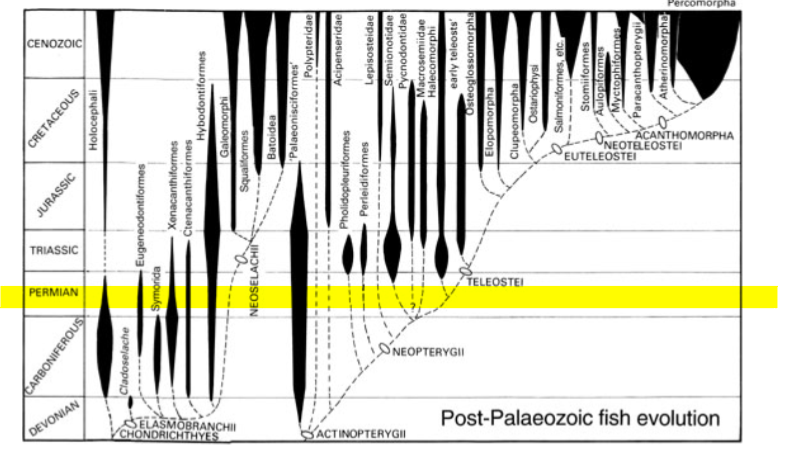
End Devonian killed all basal groups
still have chondrichthyes, ray-finned fish and lobe-finned fish
starting to get the modern pattern of fish
Tetrapods:
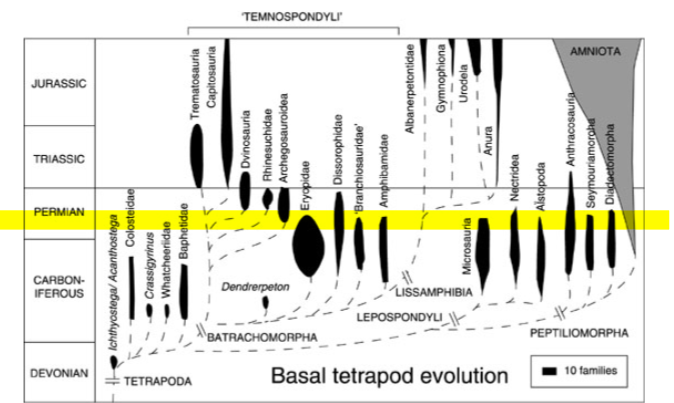
basal groups continue to diversify
characteristic of tetrapod evolution→ appear, diversify, go extinct (high turnover)
initially amphibians dominate but reptiles overtake them
synapsids→
were previously split into pelycosaurs and therapsids (are actually paraphyletic)
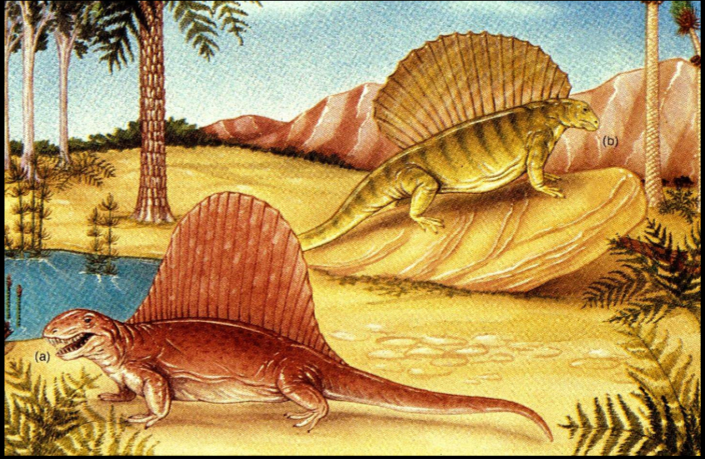
pelycosaurs→ sails held up by single bones from vertebrate (possibly heat regulation), were very common then replaced by therapsids
therapsids→ have hairlike structures, possibly where mammals came from
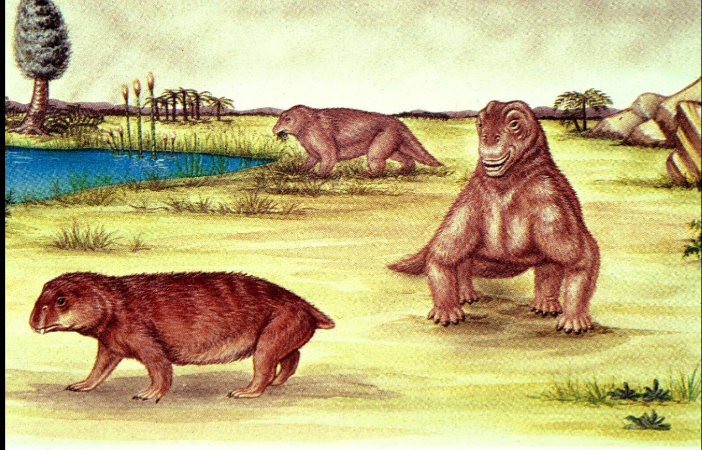
late permian→ therapsids dominate
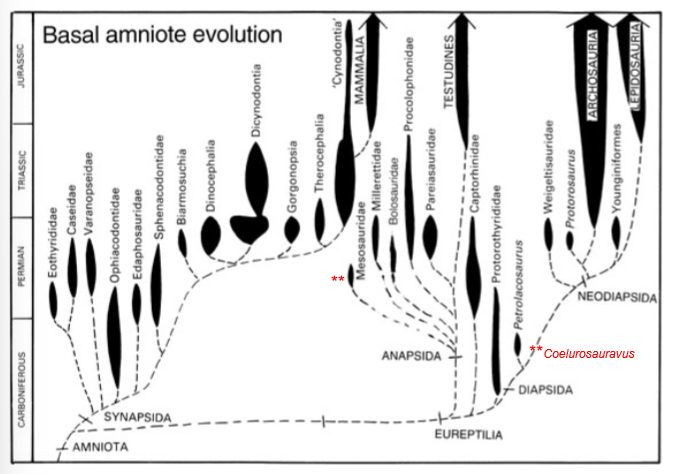
some tetrapods go back to the sea (**)
some tetrapods can glide (**Coelurosauravus)
Mass extinction:
nearly all groups disappear, some survive and re-diversify
animals affected, doesn’t really affect vegetation
changes direction of tetrapod evolution
synapsids, anapsids and neodiapsids make it through
reason for mass extinction:
outpouring of siberian traps
overlaying siberia are volcanic deposits→ earth surface cracks open, basalt lava spills out, can work out how much co2 it releases, was a lot but not enough to make a huge climate change, the rocks it moved through are made of coal and evaporates, releases sulfur dioxide (dissolves into acid rain) and methane
initial deforestation due to acid rain, methane and co2 creates a greenhouse world→ super-heats planet
sea temperature rises→ some have metabolism that is more susceptible to heating than others- survive
Summary:
coal measure forests start drying out due to equitorial uplift, from west to east (except from in North and South China)
vegetation changes from lycopsid dominant to tree fern dominant to cordaite/conifer dominant to mountain dominant
switch from icehouse to greenhouse world in the late Permian
gradual change from lycopsid/sphenopsid dominant to seed plants