soils lecture 1.27.23
- HW deadline may be pushed back a day (due 2/3 and will be covered in class and the due date will change in class if needed)
Soil Texture
soil texture very different in size
sand, silt, vs clay
they all have different reactivity
clays are negatively charged which is one reason they are more reactive
be able to identify
- water-holding capacity
- aeration
- drainage rate
- soil OM level
clay has tiny pore space
- small pore space
- high pore space
Sand
- large pore size
- low pore space
refer to table 4.1 in the powerpoint; i tried taking notes but he was confusing me and i didn’t want to write the wrong thing
- clay
- secondary silicate minerals and some clay
based on figure 4.2, it is evident clay weathers the most. sand is made up of mostly quartz, which doesn’t really weather at all
- sand is not very reactive and is very similar to its parent material
- clay on the other hand has mainly secondary silicate minerals and not many primary silicate minerals
Application - sandy soils
in-class question: would this sandy soil be good for farming?
answer: no
this is why….
- poor water retention
- shows little to no organic matter
- don’t necessarily need organic matter in soils to be good but this helps with adding acids and things like that
- low fertility due to:
- low exchange sites (no clays) to hold nutrients
- low organic matter
- leachable
what is the impact of sandy soils on soil development?
→ inability to hold organic matter plus little weathering on parent material → no soil horizons
Soil Texture Triangle (no need to memorize but this will be referenced all semester)
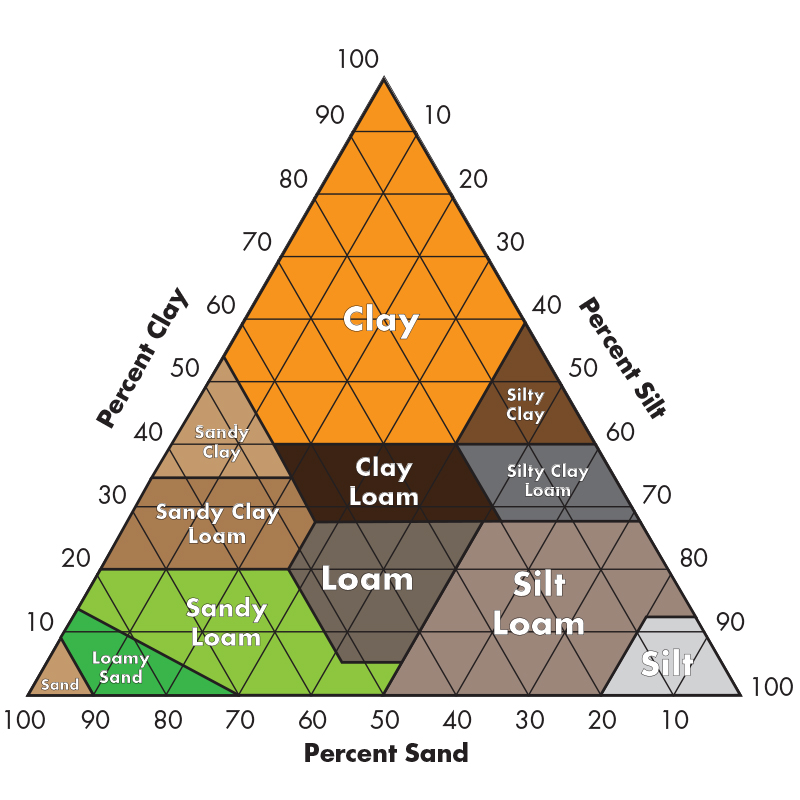
- clay is read straight across
- silt is read on the right side but will be read towards the bottom
- sand is on the bottom and will be read starting there going uward
- its not intuitive on how to read it (aside from clay cause its straight across) so additional resources might be good
soils ribboning
- determine how sticky and how much clay there is
- grab soil and spread it out with thumbs to ribbon it before it breaks
- determines feel of texture
soil aggreation
- typically improves water relationship
- more stable
- supports bigger plants
- there are some bad aggregates human are responsible for
- aggregates are sometimes referred to as “peds” or “pedon” but in lecture he will only use the term “aggregate”
- aggregate is percentage of sand silt and clay plus the organic matter in the soil
- improves aeration, plant growth?, and drainage
he was talking about aggregates and i got so lost i have no idea what he’s trying to say right now
- b horizon without aggregation
- mostly clay, very slow water infiltration and drainage
- b horizon with aggregation
- mostly clay
- forms blocky arrogates or secondary structures → larger pores
- faster water infiltrations and drainage compared to b horizon without aggregation
- makes more room for plant roots
- more aeration
soil structures
- granular structure
- blocky structure
- platy structure
- “bad” aggregate
- longer structures that are plated almost
- bad because it takes water forever to travel through these structures
- makes root rot happen
- basically impossible to reverse
- they would have to take out all the soil and replace the soil with new soil from a different source
- prism-like (prismatic & columnar)
- they have salt caps
- dry environments