Mixed methods research
What is mixed methods research?
Using more than 1 method to address the same research question in
social research‘ the combination of different methods of data collection and / or
data analysis techniques within a single study, frequently combining
qualitative and quantitative approaches’ (Braun and Clarke, p. 333)‘the combination of at least one qualitative and at least one
quantitative component in a single research project or programme’
(Bergman, 2008, p. 7)
Why we have discussed quantitatgive and qualitative methods?
Because there are different research paradigms for different methods
and methodologies:
What is data?
How do we get data?
How do we analyse data?
Epistemology and Ontology
Sampling
Research Questions
Research paradigms: The incompatibility thesis
Quantitative:
Objective
Time and context-free generalizations
Elimination of bias
Remaining emotionally detached/uninvolved
Empirical approach or tests to justify hypotheses
Rhetorical neutrality
Formal detached writing style
Qualitative:
Subjective
Argue for superiority of constructivism, idealism, relativism, humanism, hermeneutics, postmodernism
Value bound
Impossible to differentiate causes and effects
Knower and known cannot be separated
‘Rich’ and empathic description
The third paradigm
Mixed methods research is formally defined as the class of research where the researcher mixes or combines quantitative and qualitative research techniques, methods, approaches, concepts or language into a single study.
Mixed methods approaches offer a way forward
“The goal of mixed methods research is not to replace either of these
approaches but rather to draw strengths and minimize the weaknesses of both in single research studies and across studies”(Burke Johnson & Onwuegbuzie, 2004, p.15).
To create mixed methods research:
To construct a mixed-model design, think about your objectives
To construct a mixed-method design, you’ll need to make two primary
decisions: (a) whether you want to operate largely within one dominant paradigm or not, and (b) whether you want to conduct the phases concurrently or sequentially.
Convergent / triangulated design
Collecting qual and quant data at the same time
Analysing separately
Comparing/combining results
Use it when you want to:
Combine advantages of quant with qual
Validate your findings
Expand your findings
Exploratory sequential
Two-phase project
Qual, then quant, typically greater emphasis on quality
Use it when you want to:
Develop a research instrument or too
Develop a classification or typology for testing
Identify most important variables when these variables are not known
Explanatory sequential
Two-phase project
Quant, then qual, typically greater emphasis on quant
Use it when you want to…
explain quant data with depth qual data
Identify appropriate participants with whom to do depth work
Reflexivity
Bias
CUlture
Structure
Worldview
Personal history and background
More detail on methods
Survey: demographics, risk factors, protective/promotive factors, depression
Dwelling checklist
Biological data (blood pressure, weight, sight/hearing, cortisol and DHEA levels, wearables)
Environmental data (air quality, Earth observation/satellite, GIS/
infrastructure, data loggers in dwellings)Socio-cultural: interviews, digital day-in-the-life, ethnography, arts-based methods
Network modelling, statistical analysis
Strengths and weaknesses
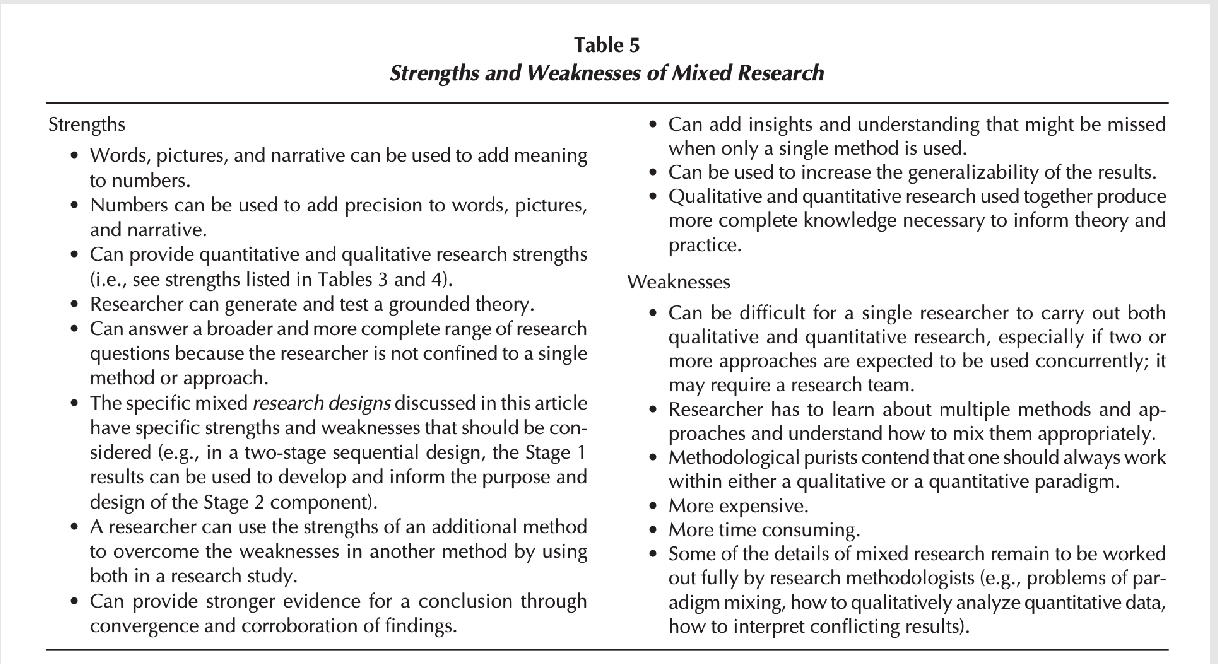
summary
Mixed methods research happens when you combine more than one method (usually qualitative and quantitative) in one study.
Mixed methods can be exploratory or convergent in design
Thinking about integration and ethics early and often is important to delivering successful mixed methods research