Comparative Nutrition
Lecture 1
introduction to comparative nutrition
life sciences (biochemistry, physiology, endocrinology, immunology, microbiology, pathology, environmental science and biology
social sciences (education, animal welfare and ethics, sociology, psychology, culture and food, religion)
what is nutritional?
nutrition can be defined as applied biochemistry and is commonly referred to as nutritional science
focus on how nutrients are consumed for energy, growth, reproductive while maintaining cost and environment impacts
definition of animal nutrition
animal nutrition refers to the scientific study of how animals obtain and utilize nutrients from their diet for growth, maintenance, reproduction, overall health. it encompasses the process of digestion, absorption, metabolism, and utilization of nutrients by animals
diet, digestion and absorption, GIT micbrobiota, GIT mucosa, welfare, immune status, GI functionality
differences in animals nutrition and human nutrition
digestive systems
animals have diverse digestive systems adapted to their dietary habits
herbs, carnivores, omnis; grazers vs meal eaters
nutrient composition
both require similar types of nutrients (carbs, lipids, protein, vitamins, minerals, and water) but proportions needed differ among species
feed/food sources
animals: formulated feed ingredients based on nutrient content, availability and cost
often feed seeds, oils, byproducts
humans: diet based on food choices, preferences, and habit
dietary requirements
animals: based on specific needs of species, stage of life and physiology
humans: bases on age, sex, health conditions, and activity level
purpose and research
human: weight
both: metabolism, sustainability
factors that influence human diet and nutrition
food preferences, religion, health of individual, allergens, environment, region in the earth, money, psychology
what is dietetics
refers to the formulations and preparations of diets to meet the needs of humans
the comparable activity with domestic animals is the diet formulation
nutritional science vs dietetics
nutritional science deals with the principles of how nutrients affect metabolism
dietetics and feed formulation affect the supply of nutrients and structural properties of the diet
nutrition science of animals
animal nutritionist has played key role in the development of the nutritional sciences and how nutrition affects productivity and health
many species with different requirements
different physiological and anatomic characteristics
different growth characteristics due to genetic selection for economically important traits
objective of the comparative nutrition course
understand the fundamental principles of animal nutrition
compare and contrast the differences of nutritional systems among animal species, as related to: digestive systems amount mammalian, avian, and aquatic species
nutrient digestion, absorption, homeostasis
metabolism as affected by physiological state
requirements of diverse species used in animal production, companionship, captive breeding and preservation, or rehab
vive la difference
at the cellular level, metabolic processes among animal species are far more similar than differences observed from their common evolutionary history
nutrient assimilation differ among species
the passage of nutrients from the environment to the molecular level of the animal cells involve great species differences, largely because of differences in;
food selection
food-seeking strategy
food prehension
digestive tract physiology
digestive strategies
types of digestive systems
avian
omnivores
short GI tract bc of flying
crop
retrograde peristalsis
monogastric
omnivores or carnivores
ruminants
herbivores
4 chambers
rumen floor doing the digestion (releasing VFA, minerals, vitamins and microbial proteins)
hind gut fermenters
herbivores
protein and fat extraction and then fermented
comparative digestive anatomy
monogastric
normal GIT
not adapted to digesting cellulose or non-starch carbs because of the lack of microbial fermentation
no fermentation chamber
hindgut fermenters
single chambered stomach
adapted to digesting cellulose
fermentation occurs after digestion in the stomach in the enlarged cecum and large intestine
foregut fermenter (ruminant)
multi-chambered stomach
adapted to digesting cellulose
fermentation by the microbiota occurs before digestion in the stomach in a specialized rumen
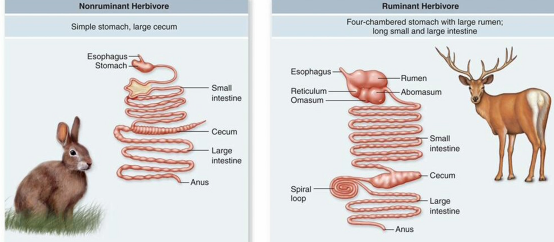
nonruminant vs ruminant
nonruminant
simple stomach, large cecum
ruminant
four chambered stomach with large rumen, long small and large intestine
insectivore vs carnivore
insectivore
short intestine, no cecum, small stomach
very nutrient rich diet that is easy to extract
carnivore
short intestine and colon, small cecum
larger stomach because they are meal animals
meaning it eats a lot of food at once and will not eat for a couple of days
comparative digestive tracts of animals
there are similarities among wild avian species to domestic poultry, as well as numerous difference
ie the birds are seedeaters, meat eaters, herbivores, insectivores
digestive process in hindgut digester in wild animals:
elephants share some similarities with domestic species, like a horses
koala resembles the rabbit in hindgut function
digestive tracts of reptiles and fish
similar to carnivores
large stomachs for digestion of whole prey and large meals, short digestive tracts
not need that many calories bc they are cold blooded but rely on the minerals and vitamins
Lecture 2: Prehension and Consumption of Food
compartmentalized functions of the digestive system
the process of acquiring, consuming, digesting, absorbing, and eliminating nutrients from the diet
food seeking sight, olfaction, hearing, grazing, browsing, foraging, and hunting
oral complex: prehension, salivation, mastication
esophagus and deglutition: conveying food from mouth to stomach
gastric or peptic digestion
small intestine-liver-pancreas complex
large intestinal complex
prehension of food
the first step of the digestive process
horses and goats rely in lips to grasp forage
cattle, dogs, cats, pigs gather food with their tongues
avian species use their beaks
elephants have a trunk
apes, many rodents, bears, marsupials, and racoons use paws
sea mammals, fish, and reptiles grasp food with teeth
the process of seizing or grasping or otherwise getting food into the mouth
techniques to prehend food differs among animals depending on their feeding behavior and food source within their environment
the oral complex involves a multitude of structures within the mouth that evaluates within the mouth that evaluate food and prepare it for subsequent digestion
evaluation includes temp, texture, and taste
prehension of food in ruminants
ruminants have digestive systems that help the digest vast amounts of forage grasses
the ruminant’s mouth does not have upper incisor teeth they use their lower teeth, tongue, lips to tear and chew their food
drinking liquids and slurries
as with prehension drink techniques differ among animals
sucker (cattle, horses, swine and elephants)
lapper (dogs many omnivores and carnivores)
birds are considered lappers bc they cannot suck due to their beaks, and it is hard to lap due to immobile tongue
lift their head to drain the water in their gullet
ducks have a flexible tongue and are also like lappers
prehension of food by swine
mouth us relatively stiff and immobile compared to other animals
fine feed is taken up by the tongue and larger pieces are shorn off with teeth
can also suck fluid and slurry type feeds
lips, cheeks, and palate all act in conjunction with the tongue to hold and move feed within the mouth during mastication
prehension of food by fowl
keratinized beak limits the oral manipulation of food and involves two phases
food particle is picked and positioned in the beak
forward thrust of the head concurrent with particle release moves food to the back of the bought where it is coated with saliva a swallowed
deglutition involves at 13 muscles in the throat and esophageal area for rapid rostro caudal tongue movements to rotate the bolus to coat it in saliva, and peristatic contractions of the esophagus to convey food to the crop
fowl are “seed eaters” but large particles must be left unconsumed
very fine particles can be eaten but not efficiently without wastage
may cause sticky mass on the beak that interferes with prehension
this is why ground or mash is feed often
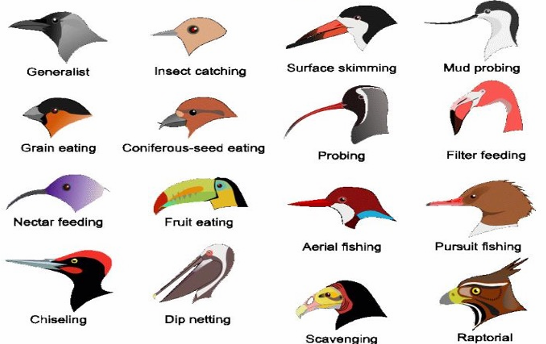
avian beak types designed to prehend food
birds evolved to reflect their diet
mastication or chewing of food
breakdown of complex foodstuffs serving several functions:
breaking large pieces into smaller pieces to increase surface area for better enzymatic digestion
softens food and transformation into a size conductive to swallowing
lubrication of food by impregnating it with saliva
chewing is mostly a reflex, but can be voluntary
presence of food causes a reflex inhibition of muscles of the lower jaw
jaw drops cause a stretch reflex and muscle contraction to bite
during mastication, the tongue, lips, and cheeks act to keep food between the teeth
poor mastication is a common cause of digestive disease in animals
occurrence of points on molar teeth of horses is a problem
salivation
saliva aids oral manipulation for food and is a medium for detecting taste
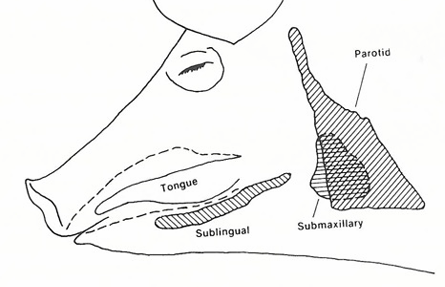
parotid glands are the largest
has one major duct to convey serous, watery secretion
submaxillary (or sub mandible) glands are ventral to the parotid just behind the mandible
has one major duct conducting mixed serous and mucous secretion
sublingual glands are closely associated with the tongue and found below the flood of the moth with multiple ducts just ventrolateral to the tongue to convey mucous saliva
ruminants produce a lot of saliva bc it plays an important part of buffering the rumen pH
in fowl the saliva is very viscus mucus and functions primarily as a lubricant for food bolus deglutition
the parenchyma of a salivary gland
acini are composed of serous and/or mucous cells
thin serous fluid and/or mucins are ducts to the oral cavity in quantity and quality as the needs of the animal to manipulate it food require
arterial blood perfuses the acinar capillaries where water, Na, Cl, and bicarbonate is transferred into the acinus, which is surrounded by myoepithelial cells that contract upon stimulation to express their contents as serous or mucus saliva
the dark purple stained cells are serous cells, and the white ones are mucus- secreting cells
secretion of saliva is under the autonomic nervous system which controls both the volume and type of saliva secreted
Knowing that salivation is controlled by the brain will also help explain why many psychic stimuli also induce excessive salivation - for example, why some dogs salivate all over the house when it's thundering
functions of saliva
lubrication and binding masticated food into a slippery bolus so it easily slides down the esophagus without damaging the mucosa
solubilizes dry food in order to be tasted
oral hygiene; flushes and floats away food debris to keep mouth clean
saliva also contains lysozyme that lyses may Bactria
initiate starch digestion
serous acinar cells secrete an alpha-amylase to begin the digestion of starch into maltose
amylase is not present or very little saliva of carnivores or ruminants
provides alkaline buffering and fluid in ruminants that have non-secretory forestomaches
evaporative cooling in panting animals
dental anatomy
teeth are important bc they are used for eating, grooming and defense
mammals have teeth of different sizes and shapes designed (a condition known as heterodonty) for different task
this allows different teeth to be specialized for different tasks
incisors (I)
canine teeth (C)
premolars (P)
molars (M)
mammals also have two sets of teeth
deciduous set and permanent set
brachydont or low-crowned teeth are what is seen in humans and carnivores such as dogs, cats, and pigs
this type of tooth consists of a crown above the gingiva, a constricted neck at the gum line, and a root embedded in the jawbone
the crown is encased in enamel and the root in cementum
enamel is the hardest substance in the body, being densely packed with hydroxyapatite crystal and mineralized with calcium salts
cementum is calcified connective tissue
dentin, a bone like material is under the enamel and makes up most of the tooth
the pulp cavity included blood vessels and lymphatics and nerves
hypsodont or high crowned teeth are continued to erupt throughout life
i.e. all permanent teeth of horses and cheek teeth of ruminants
usually describe a having a body, much of which is below the gum line and root, which is embedded in the alveolus of the jawbone
enamel covers the entire body if the tooth, but not the root
tongue papilla and their taste buds
circumvallate papillae are usually located at the rear and have more taste buds associated with them that any other type
fungiform shaped papillae can also have taste buds and can be found in large part at the front of the tongue
taste buds contain a group of cells that collectively responsible for the detection and transmission of flavors
buds do not make direct contact with the oral cavity but are protected within the papillae and evaluate fluids though their pore
little differences between mammalian and avian taste buds
sense of taste promotes ingestion and prevents potential consumption of poison or toxins
food preferences are mediated through the CNS
taste sensations
sense of taste is the equivalent to excitation of taste receptors and receptors for a large number of specific chemicals have been identified that contribute to the reception of taste
the 5 tastes are based on humans
for example, cats cannot taste sweet
sweet: usually indicates energy rich nutrients
umami: the taste of AA (ie meat broth or aged cheese)
salty: allows modulating diet for electrolyte balance
sour: typically, the taste of acids
bitter: allows sensing of diverse natural toxins
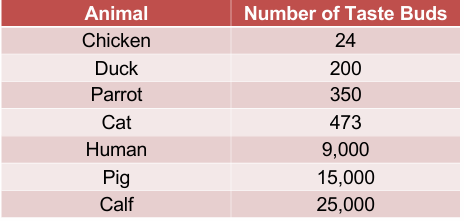
estimates of the total number of taste buds in the mouth
avian species tend to have few taste buds that mammals
esophagus and deglutition
esophagus conveys boluses of food from the pharynx to the stomach
esophagus has four tunics: serosa, muscularis (smooth muscle and striated muscle), submucosa, and mucosa
lined with stratified squamous epithelium
in sheep dogs and cattle, the muscle is all striated
in cats horses and humans, the proximal esophagus is striated, and the distal end is smooth
embedded in the connective tissues
so the outer tunic is called the adventitia instead of the serosa
the mucosa contains mucous glands that are expressed as foodstuffs distend the esophagus
upper and lower esophageal sphincters are normally closed except diring swallowing
the swallowing reflex is a peristaltic wave that is initiated at the upper sphincter and terminates at the lower esophageal sphincter
anatomically and functionally the esophagus is the least complex section of the digestive tube
the body of the esophagus is bound by physiologic sphincters known as the upper and lower esophageal sphincters
the upper sphincter (the pharyngoesophageal sphincter is made up of muscle related to the larynx
when relaxed the muscle pulled the larynx forward and aids in routing food into the esophagus instead of the larynx
the lower esophageal sphincter is the muscle that surrounds the esophagus as it enters the stomach
esophagus: crop in fowl and avian species
esophagus in birds is not that much different than in other animals
they have a longer esophagus relative to their overall body dimension
the diameter of the esophagus is small when they consume seed, but large with species that consumer whole fish, mice, etc.
the avian crop is a diverticulum of the esophagus that occurs about 2/3rds the way down
mucus glands found at the esophageal crop juncture, but not in the crop
stores food that is consumed rapidly
modification of crop epithelia with pigeons permits production of crop “milk” for young
crop is filled and emptied by peristaltic movements of the circular layer of muscle
digestive activity in the crop
the crop increases the moisture and softens feedstuffs
during food retention in the crop, some microbial and digestive activities occur
extensive hydrolysis of starch is attributed to microbial enzymes or fermentation that also produce VFAs which can then be used for energy
hydrolysis may occur due to amylase secretions
crop lactobacilli predominate in the crop and line the epithelium of the crop this protecting against pathogens and may seed the gut with probiotic culture to stabilize the gut microbiome
forms a protective film
Lecture 3: Digestive tract anatomy
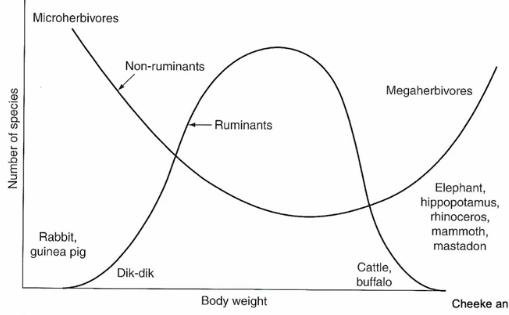
distribution of species by body weight and feeding behavior
compartmentalized function of the digestive system
the process of acuiring, consuming, digesting, absorbing and eliminating nutrients from the diet
food seeking: sight olfaction, hearing, behavior
oral complex: prehension, salvation, mastication
esophagus and deglutition: conveying food from mouth to stomach
gastric or peptic digestion
small intestine, liver, pancreas complex
large intestine complex
different aspects of digestive tract anatomy
monogastric, or auto-enzymatic
avian
two ceca for balance
the crop: food storage
proventiculus: glandular stomach
gizzard: mechanical digestion
carnivores
omnivores
herbivores
produce their own digestive enzymes from the intestines stomach and pancreas
polygastrics or ruminants or allo-enzymatics
pseudo-ruminants
have large cecums for hind gut fermentation
hindgut fermenters
make their own enzymes but compliment microbes enzymes
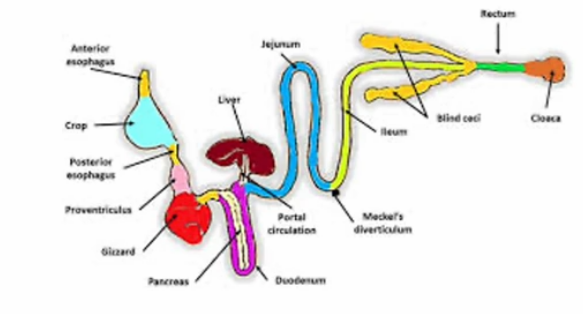
the avian gut
three parts
crop: food storage
proventricular: glandular stomach
gizzard: grind food
small intestine
duodenum: where the liver and pancreas release enzymes
where most of the enzymatic digestion occurs
retrograde peristalsis
jejunum: extents from the bile duct to the Meckel’s diverticulum
Meckel diverticulum is where the intestines were attached to the yolk sac
enzymatic digestion continues with absorption
ileum is where most of the nutrients is absorbed and opens to a pair of ceca
large intestine includes ceca, rectum and cloaca
absorbs water
dry out undigested food
eliminate waste product
the ceca are considered the large lymphoid tonsils
provides protection against bacteria
is opposite to the GIT which allows fermentation to happen
rectum uses peristalsis
the cloaca forms the poop pellet
often coated in uric acid
aka vent
houses the reproductive systems
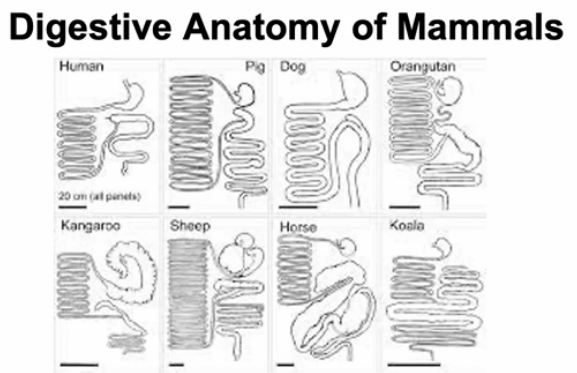
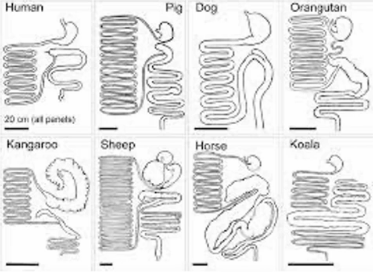
pigs have the roughly the same sized stomach as the human but has a much longer small intestine because of this can eat amost anything
the dog has a large stomach that can be used to eat large meals (so they dont have to eat everyday or to regeratate food in the den for young)
the orangatan have a much longer small and long intestine with a large cecum
the kangaroo have a large stomach where some fermentation can happen with a huge cecum
the sheep is polygastic for fermenation and rumenation. they have a long small intestine
the long intestine
the appendix in humans is used as a reserve for microbiota
monogastrics
one stomach
humans and many animals have monogastric digestive systems
the process of digestion begins with the mouth and the intake of food
the teeth play an important role in masticating or physically breaking down food into smaller particles
this increases the surface and therefore increase enzymatic function
the food inters the stomach through the esophagus and ends up in the cardiae region
this region is larger in animals that are meal eaters
then the bolus goes to the gastric or peptic region
this is where most of the peptic digestion happens
this is where the peptic juices are released from glands
rugae increase the surface area
the plyloric region does not have any rugae but does have peptic glands
then the bolus is moved to the duodenum by peristalsis movement
mucus protects the stomach from digestion
pepsin and HCl comes from the digastric glands that are mixed in the pyloric region
if not enough mucus can cause ulcers
the esophageal, gastric, and cardia are highly vascularized as to deliver blood to the gastric glands and muscles