Eukaryotes
FUNDAMENTALS OF MICROBIOLOGY
EUKARYOTIC MICROBES: FUNGI & PROTISTS
Instructor Information
Dr. Glyn Barrett
Contact: glyn.barrett@reading.ac.uk
Copyright University of Reading
LEARNING OUTCOMES
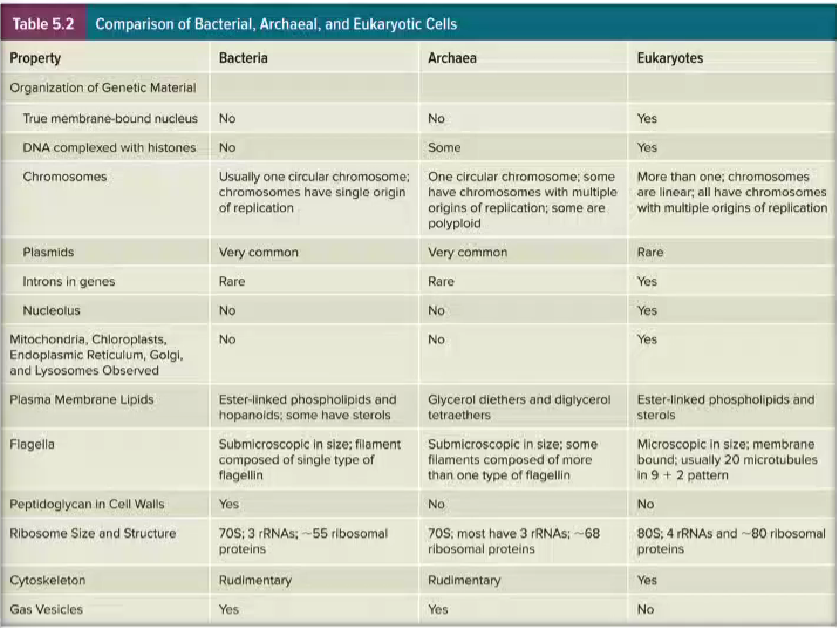
Compare and contrast eukaryotic, bacterial, and archaeal cells:
Membranes: Structural differences in the use of membranes across cell types.
Size: General size differences, eukaryotic cells are generally larger.
Morphological Diversity: Varied shapes and forms across eukaryotic microorganisms.
Organelles: Presence of specialized organelles in eukaryotes, such as mitochondria and chloroplasts.
Cellular Structures: Differences, including flagella structure and function.
Explain the endosymbiotic theory:
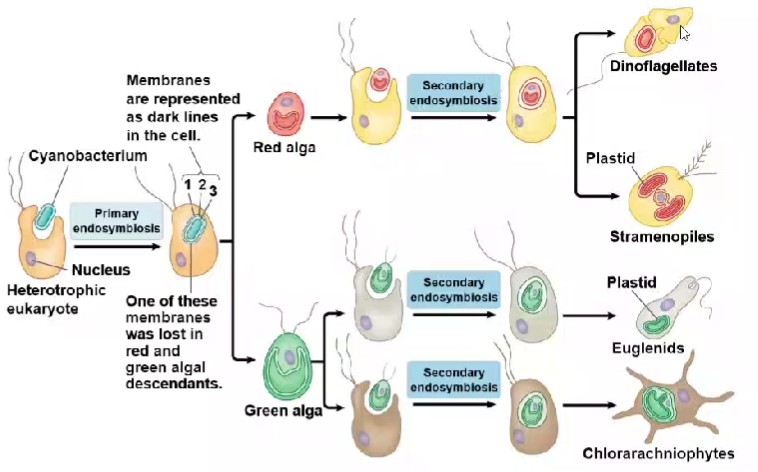
Primary vs. Secondary Endosymbiosis: Different evolutionary pathways for plastid origin (primary from cyanobacteria, secondary from red/green algae).
Fungal Cell Features:
Distinguishing features and structural differences between yeasts and molds.
Define dimorphism: The ability of fungi to exist in two forms (yeast and mold).
Nutrition and Reproduction in Fungi:
Detailed mechanisms of nutrient acquisition and reproductive strategies, with emphasis on the yeast Saccharomyces cerevisiae.
Diversity of Protists:
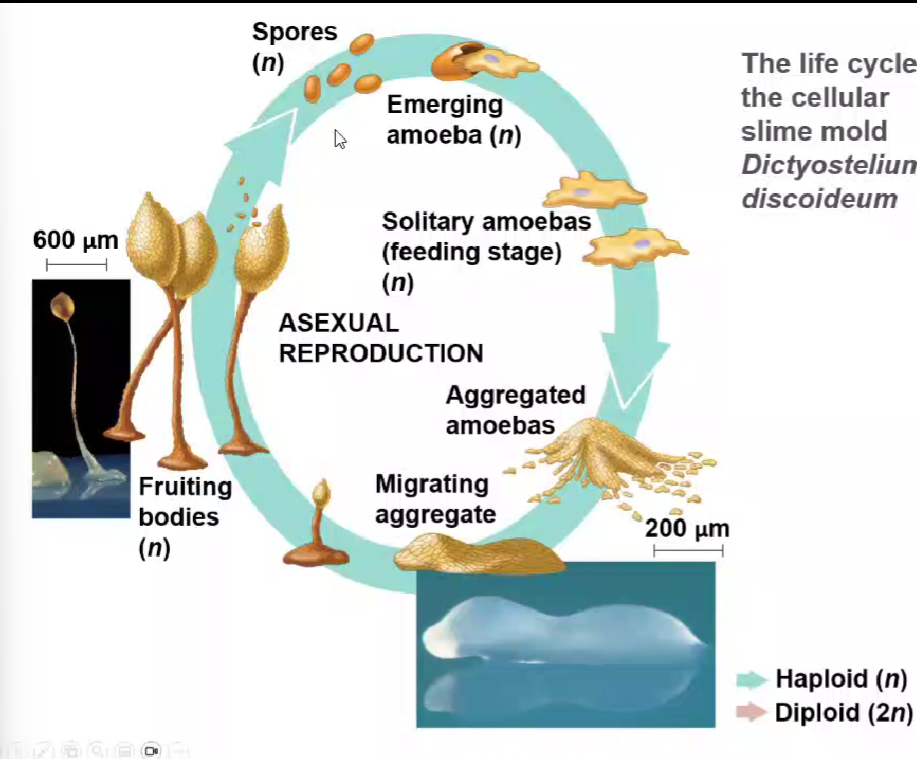
Discuss modes of nutrition and reproduction, focusing on diatoms and the cellular slime mold Dictyostelium discoideum.
EUKARYOTIC CELLS
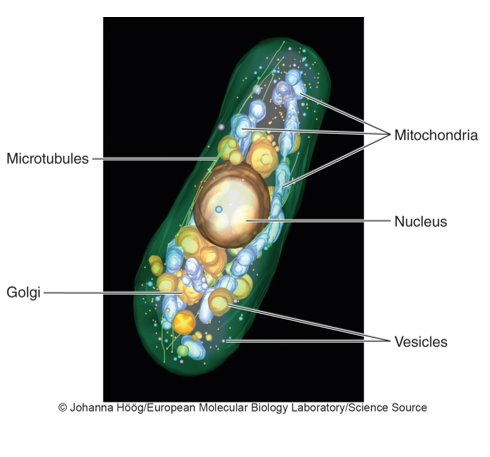
General Features:
Membrane-delimited nucleus.
Presence of membrane-bound organelles for specific functions.
Intracytoplasmic membrane complex utilized as a transport system.
Structural complexity is greater, and typically, they are larger than bacterial or archaeal cells.
EUKARYOTIC CELL FEATURES
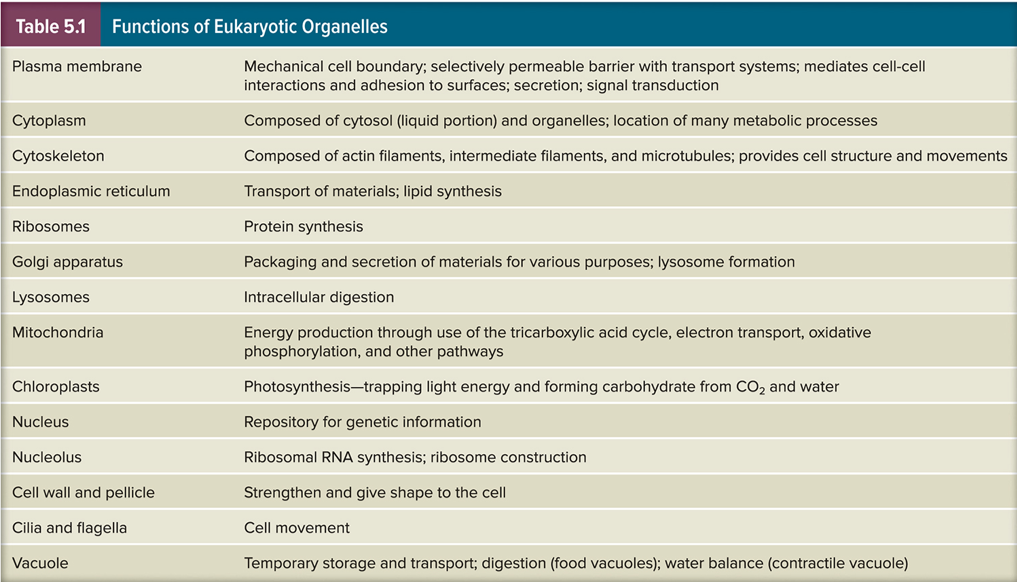
CELL WALL STRUCTURE IN EUKARYOTES
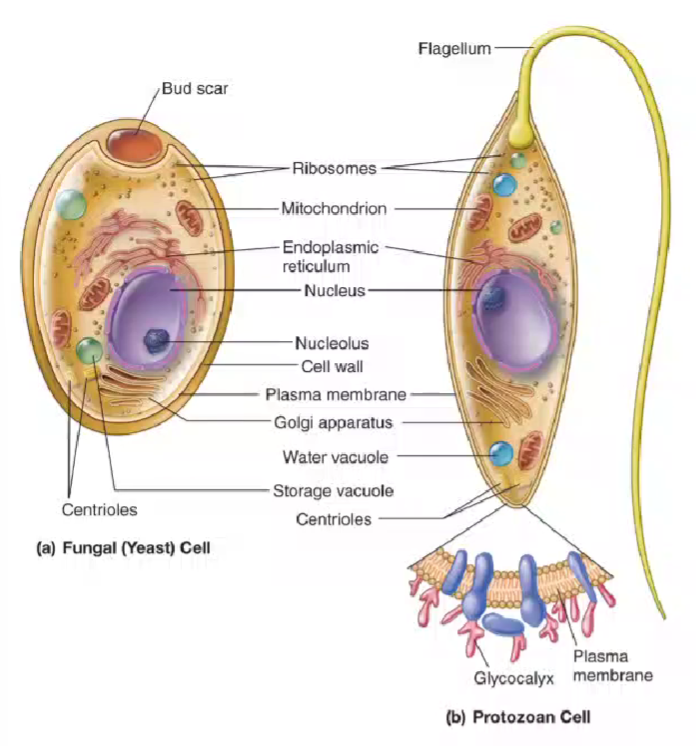
Many eukaryotes have chemically distinct cell walls.
Photosynthetic Algae: Have walls composed of cellulose, pectin, or silica as there major structural polymer
Fungi: Cell walls consist of chitin and glucans.
.
ENDOSYMBIOTIC HYPOTHESIS
Evolution of Organelles:
Mitochondria, hydrogenosomes, and chloroplast origins trace back to bacterial cells that were ingested by ancestral eukaryotic cells.
Structurally similar to modern prokaryotes (e.g., purple non-sulphur bacteria for mitochondria, and cyanobacteria for chloroplasts).
Characteristics of endosymbiotic organelles:
Similar size to bacteria.
Inner membranes have distinct prokaryotic proteins and transport systems.
Replication occurs via binary fission.
They contain circular DNA that replicates independently.
Contain ribosomes resembling prokaryotic 70S ribosomes, not eukaryotic 80S ribosomes.
MITOCHONDRIA & HYDROGENOSOMES
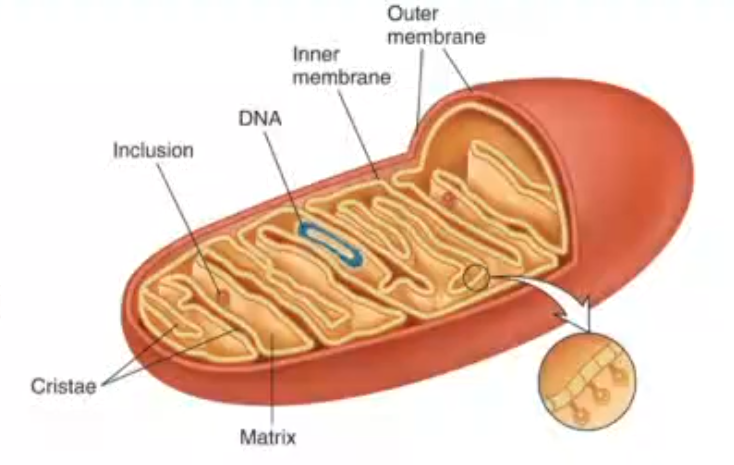
Mitochondria:
Site for tricarboxylic acid cycle and ATP generation via oxidative phosphorylation and electron transport (aerobic respiration).
ATP is generated by electron which happened in the membrane of the mitrochondria
Hydrogenosomes:
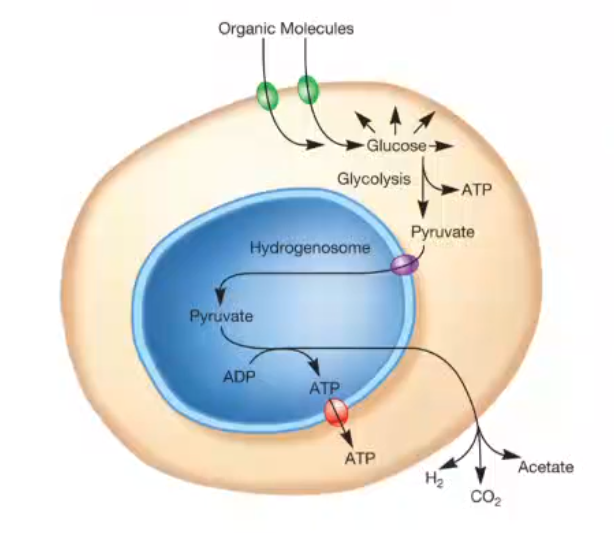
these are energy-conservation organelles found in anerobic protisrs
Small organelles in some anaerobic protists; ATP produced through fermentation.
Derived from a common mitochondrial ancestor, they have a double membrane but lacking cristae and often DNA.
CHLOROPLASTS
Characteristics:
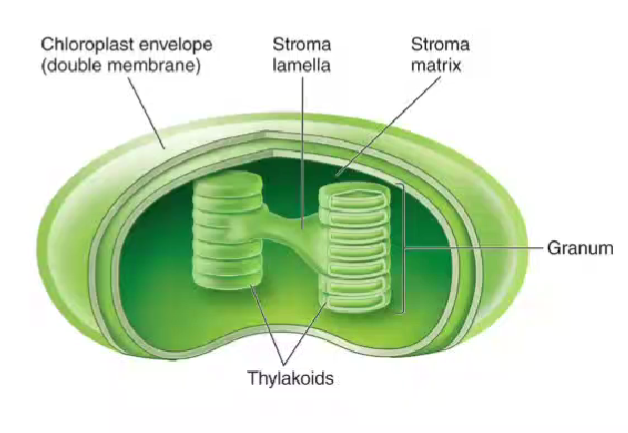
Type of plastid that contains pigments and is essential for photosynthesis.
Found in alge and plants
Surrounded by a double membrane.
Contains thylakoids, flattened membrane structures, organized into stacks known as grana which the light reaction sites.
ENDOSYMBIOSIS MECHANISMS
Primary Endosymbiosis:
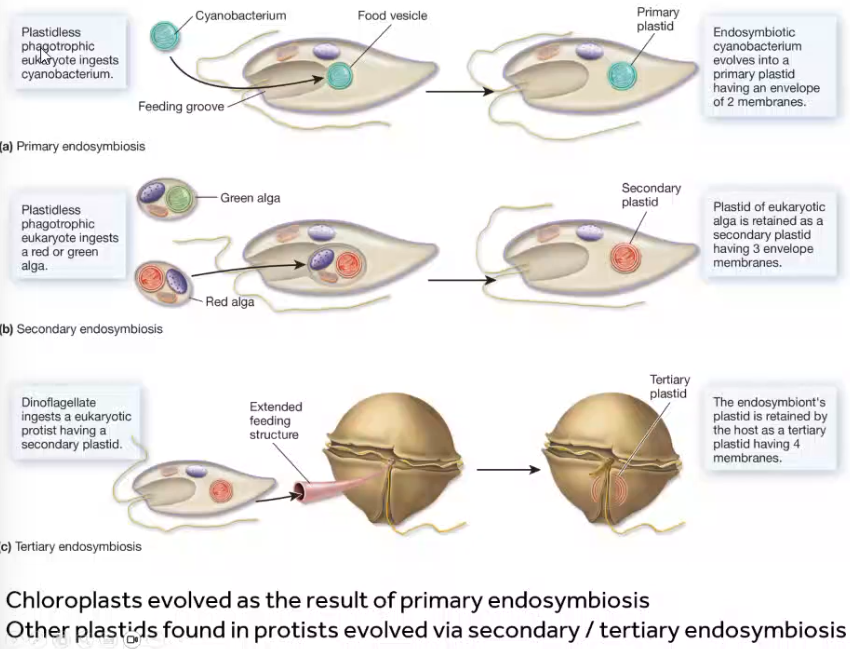
What we think is the origin of mitrochondria and chloroplasts.
there is where a cyanobacteria in the form of a chloroplast made its way into eukaryotic cell. this could of been a feeding relationship where by the eukarote was trying to eat it.
but instead of being digested the host was benefited and so it established inside the host and as able to live there.
Because this benefited the host it then increase in fequency
A plastidless phagotrophic eukaryote ingests a cyanobacterium, leading to the evolution of primary plastids.
Secondary Endosymbiosis:
where a eukarotic cell from primary endosymbyosis that already contains a plastid
enters another eukarotic cell and then becomes established as an orgaelle.
A plastidless eukaryote engulfs a red or green alga, integrating secondary plastids (3 membranes).
Tertiary Endosymbiosis:
A host engulfs another eukaryote with a retained plastid resulting in plastids surrounded by four membranes.
EUKARYOTIC CILIA AND FLAGELLA
Flagella:
in eukarotes its longer
Instead of helical motion of moving it moves in wave direction
Length: 100-200 μm, move in an undulating manner.
Cilia:
Beat in 2 phases
Length: 5-20 μm, beat in two coordinated phases.
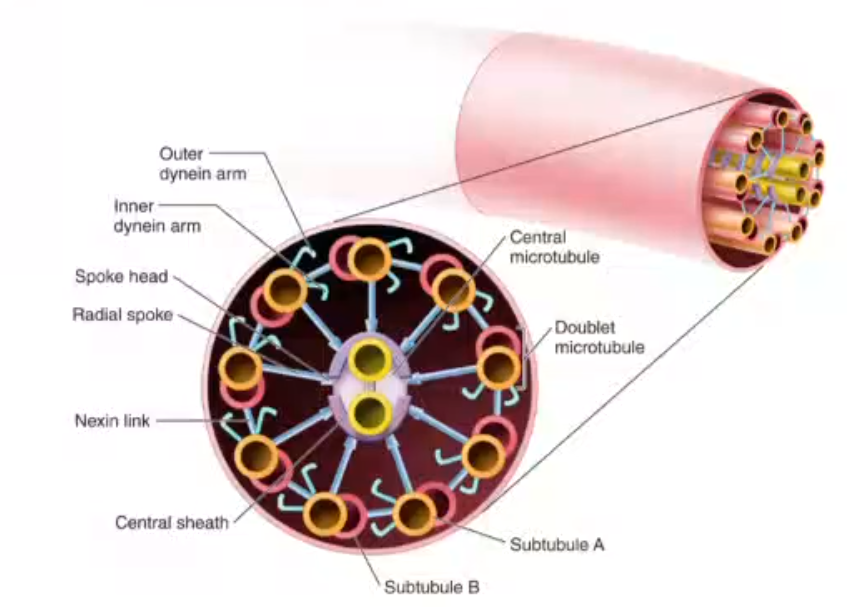
Structure:
Formed as membrane-bound cylinders about 2 μm in diameter.
Axoneme: A set of microtubules arranged in a 9+2 pattern.
Basal Body: Directs the synthesis of cilia and flagella from the base. assebled from the base not the tip
COMPARISON OF EUKARYOTIC, BACTERIAL, AND ARCHAEAL CELLS
KINGDOM FUNGI
fungi terrestrial and wide spread in species distrubtuion.
lack chloroplsts and plasmids and so are not photosynthetic
General Features:
Primarily terrestrial organisms with some aquatic species.
Global distribution from polar to tropical regions.
Approximately 90,000 fungi have been described, with projections of more than 1.5 million species.
Notable for lacking chloroplasts or plastids.
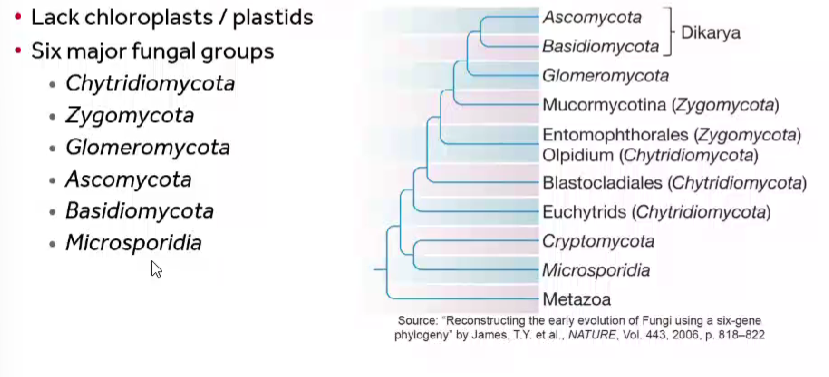
FUNGAL NUTRITION
Type of Nutrition:
Fungi are classified as chemoorganoheterotrophs.
Osmotrophy: they absorb nutrients across there cell wall and membrane and digest their food outside their cell by using hydrolytic enzymes. They break down polymers in the environment and absorb them via the cell wall and transport system
Nutritional roles include:
Saprophytes: they can survive on dead and decaying matter, they are important biodigraders ( nutrients cycles)
Pathogens: surviving in a host at the hosts expense
Mutualists: Form beneficial relationships such as mycorrhizae with plant roots and lichens with algae or cyanobacteria.
Respiration: aerobic and so use oxygn in respiration
some are facultative anaerobes = meaning they can which between aerobic and anaerobic respiration
obliage anaerobes - kill in the presence of O2
Generally aerobic except for some yeasts (facultative anaerobes or obligate anaerobes).
Industrial Relevance: Yeast fermentation is vital in several industrial processes.

FUNGAL STRUCTURE
Diversity in Size and Form:
From unicellular yeasts (microscopic) to extensive multicellular forms (e.g., a fungus covering 3.7 square miles).
The body of a fungus is referred to as the thallus (plural: thalli).
Made up of long branched hyphae forming a mycelium.
YEASTS
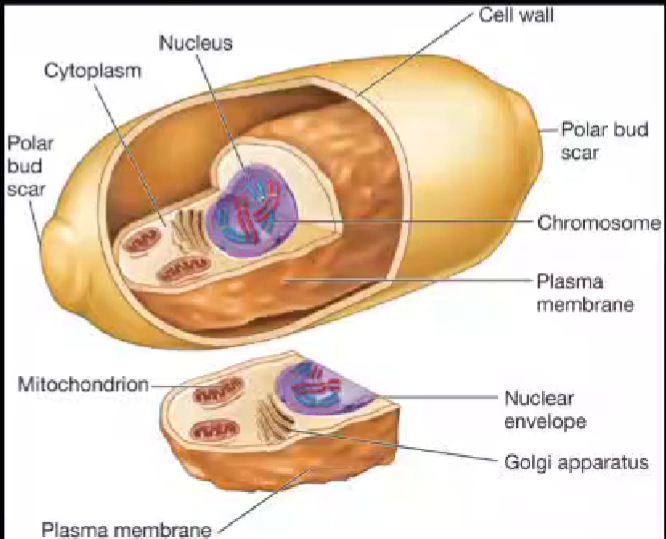
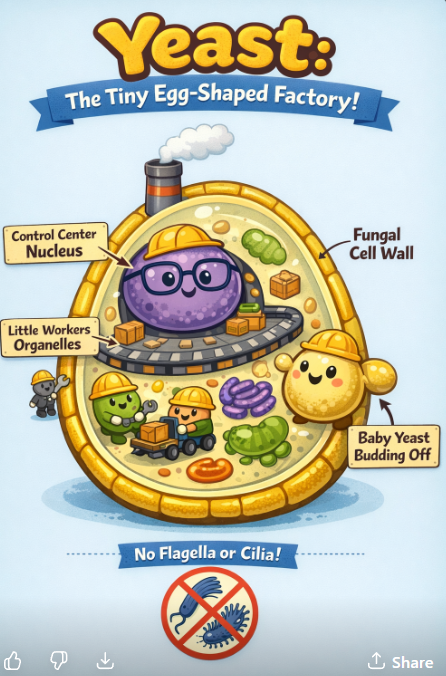
Characteristics:
Unicellular fungi often forming colonies.( seen in lab)
Retain purple dye in Gram staining; larger than bacteria, characterised by an oval or egg shape. But they are not gram positive as they don’t have a bacterial cell wall ( fungal cell wall)
Possess a single nucleus.
Reproductive mechanisms include binary fission, budding (asexual), and spore formation (sexual).
budding is where the cell forms on the side of the mother cell and gets bigger until it breaks off
Contain essential organelles for eukaryotic cells.
Lacking flagella or cilia.
FILAMENTOUS FUNGI
Molds:
Defined as multicellular fungi encompassed by long, branched filaments (Cellled hyphae) measuring 2-30 μm in diameter.
Hyphae intertwine to form the mycelium.
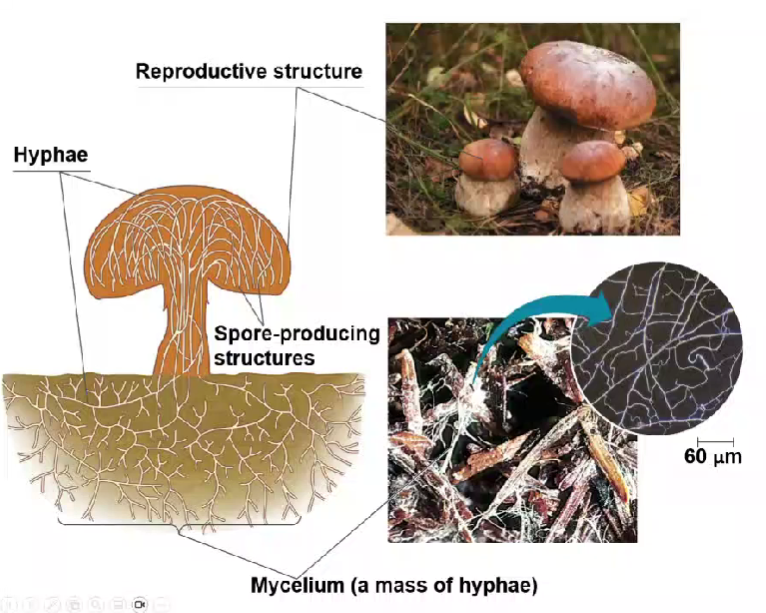
mushrooms are the reproductive structure of a certain type of fungi, most of the mycellium is in the soill, but in sexual reproduction they will produce reproductive spores, which will germinate to form mycelium somewhere else.
HYPHAE
Structure and Function:
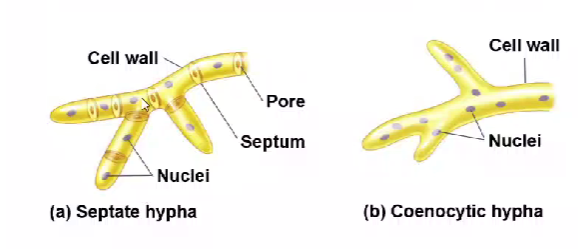
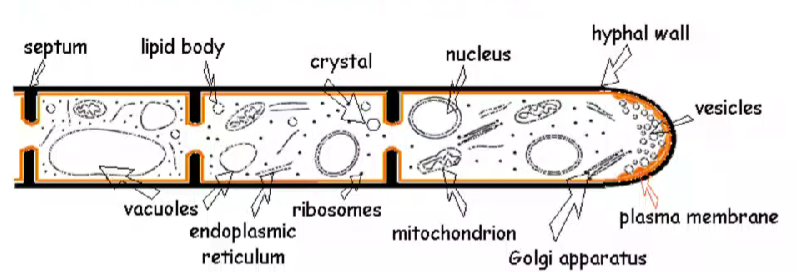
Hyphae of some fungi are subdivided by septa, creating septate hyphae.
Septa aid in structural support and damage limitation.
septate hypha = have cross walls
Coenocytic hypha = no cross walls
Visual Representation:
Hyphae represented by cell wall, pore, and septum structures.
HYPHAL GROWTH
Mechanism:
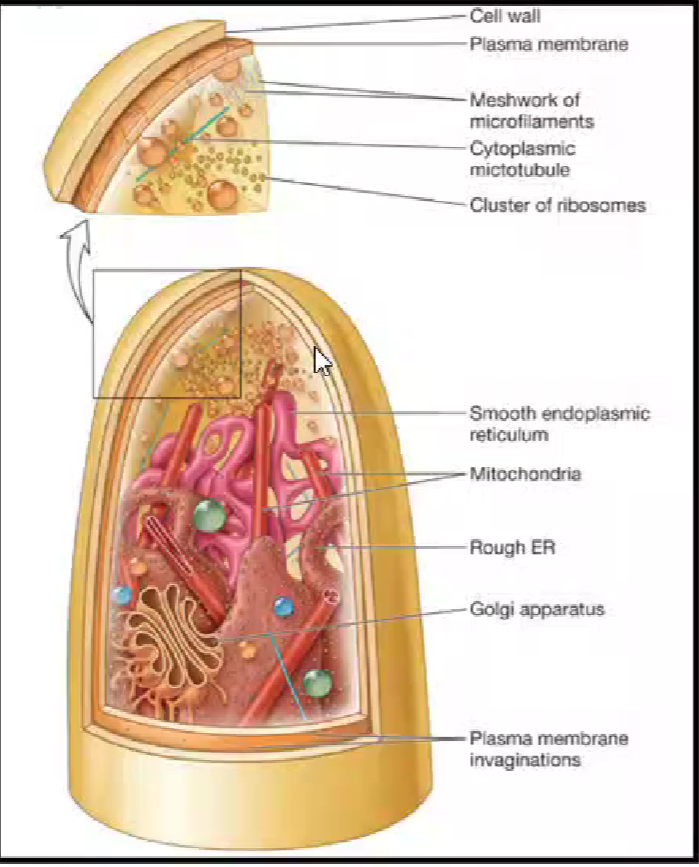
Growth occurs at the hyphal tips.
High density of vesicles at the tips, produced from Golgi apparatus and containing all the lipids needed to make the new cell membrane and the cell wall material too.
Some vesciles contain the chitin synthase which makes the cell wall chitin.
Spitzenkörper: Bodies rich in vesicles that dictate the direction of growth.
HYPHAL ULTRASTRUCTURE
Nuclear Characteristics:
Most fungi carry a haploid genome (1 copy of each chromosmes)
more than 1 nucleus
Membrane Composition:
Contain ergosterol in cell membranes.
plasma
Protein Secretion System:
Supported by Golgi, endoplasmic reticulum, and vesicles.
Vacuoles:
Regulate pH and aid in cellular expansion and contraction.
Cytoskeleton:
Composed of microtubules, microfilaments, and intermediate filaments.
FUNGAL CELL STRUCTURE
Cell Membranes:
Ergosterol characterises fungal membranes.
cells membrane is bound to the cell wall via chitin
it is unquie as a cell wall compount in fungal cell
however chitin is also found in beetles so is rigid, this helps against osmotic lysis
Cell Walls:
Composed mainly of chitin, which serves as a protective barrier against lysis and UV damage.
Act as a molecular sieve and host enzymes.
CANDIDA CELL WALL
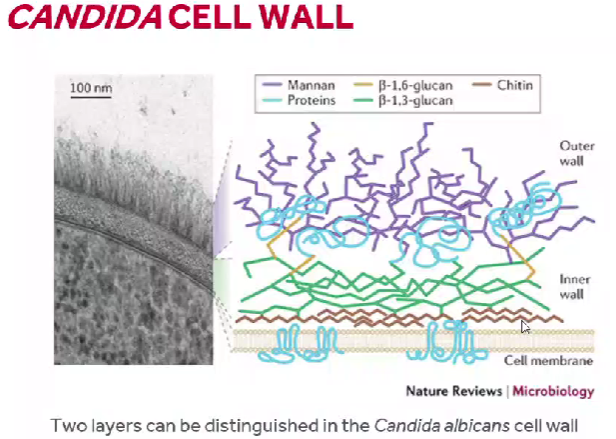
canadida cell walls have extra components, this is because beta-glycans and chitin are potent immune stimulators. this stops triggering our receptors that are part of our immune system.
DIVERSITY IN WALL STRUCTURE
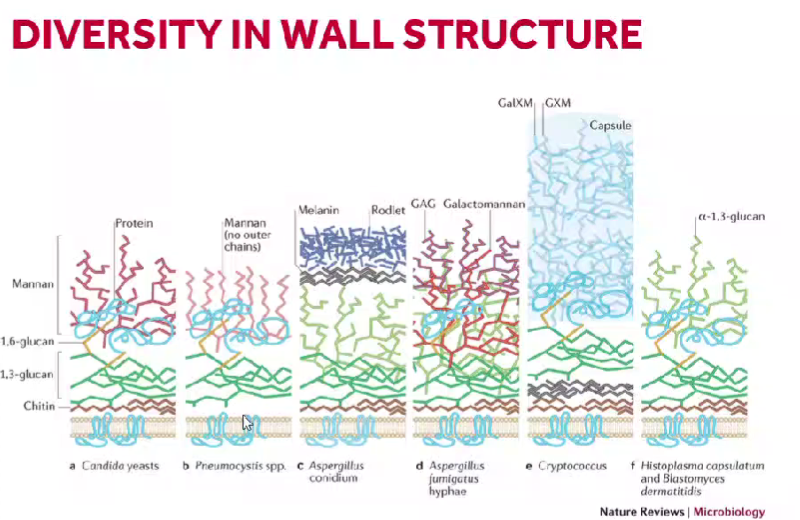
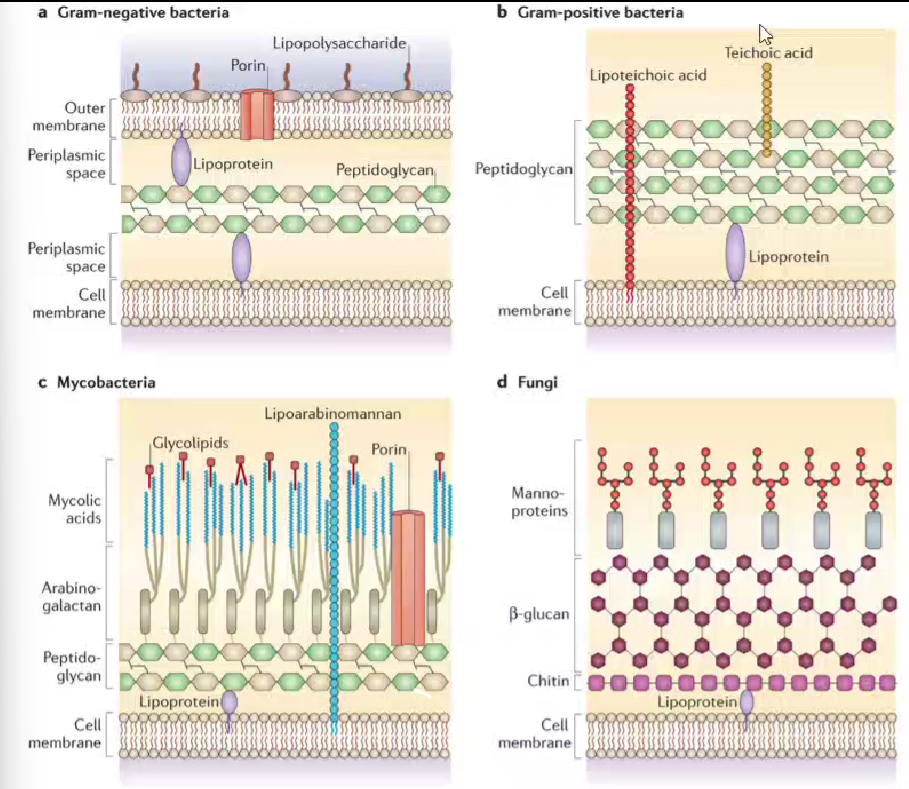
- Variability in cell wall components across fungi, including mannan, B-1,6-glucan, and B-1,3-glucan.
DIMORPHISM
Many fungi exhibit the ability to alternate between yeast and filamentous forms depending on environmental conditions (e.g., temperature, CO2 levels).
Pathogenic Forms:
-Some fungi are yeast-like during pathogenic phases but filamentous when saprophytic.
FUNGAL REPRODUCTION
Asexual Reproduction
Haploid Form:
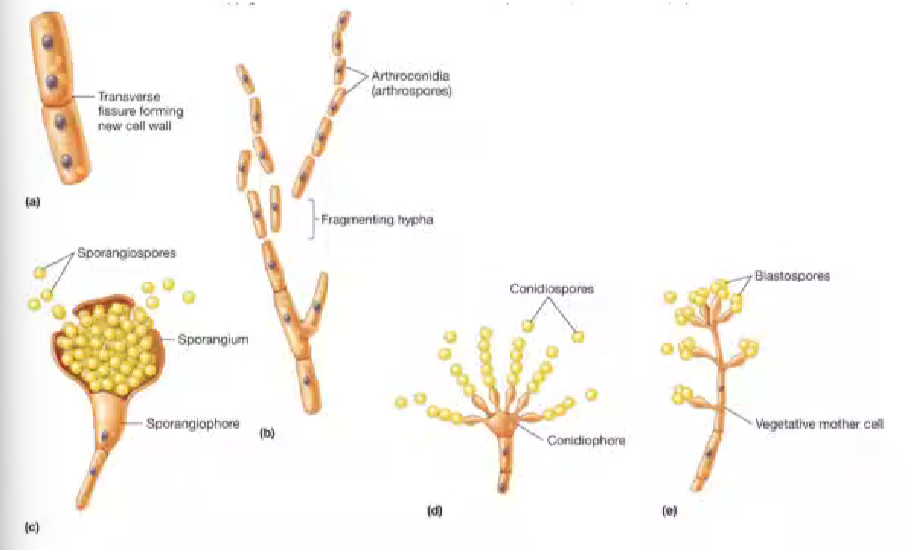
Fungi predominantly exist in a haploid state; vegetative growth occurs through mitosis.
Asexual reproduction via hyphal fragmentation or sporulation; spores serve as important dispersal mechanisms.
Sexual Reproduction
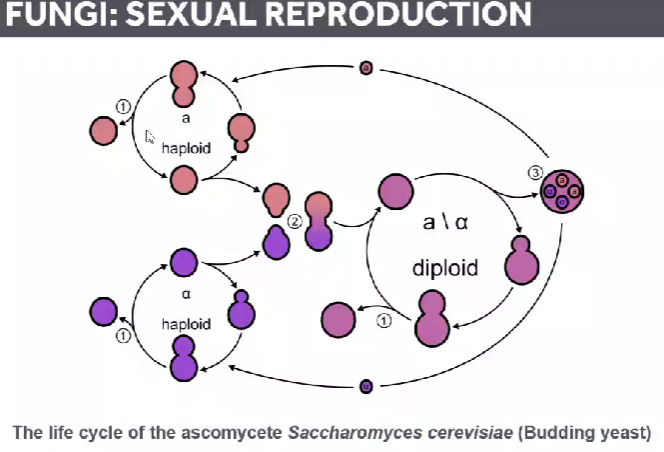
2 types different mating types to come together
this photo shows sexual reprouction in bakers yeast
it goes through axsexual reprodcution through budding
this happend in 2 different types of the yeast whch each have a different mating type, (A & Alhpa)
if these come together they produce chemical signals called phermones which tell them they are didfernt mating types
thsi triggers tehmt o fuse and form a single diploid cell
this then produces a sexaully, but can lso unergo mitiosis to form hapliod spores
hapliod spores can germinate to form another hapliod cell type
Nuclear Characteristics:
Fungal nuclei are typically haploid, with transient diploid stages during sexual reproduction cycles.
Sexual Communication:
Pheromones signal mating types.
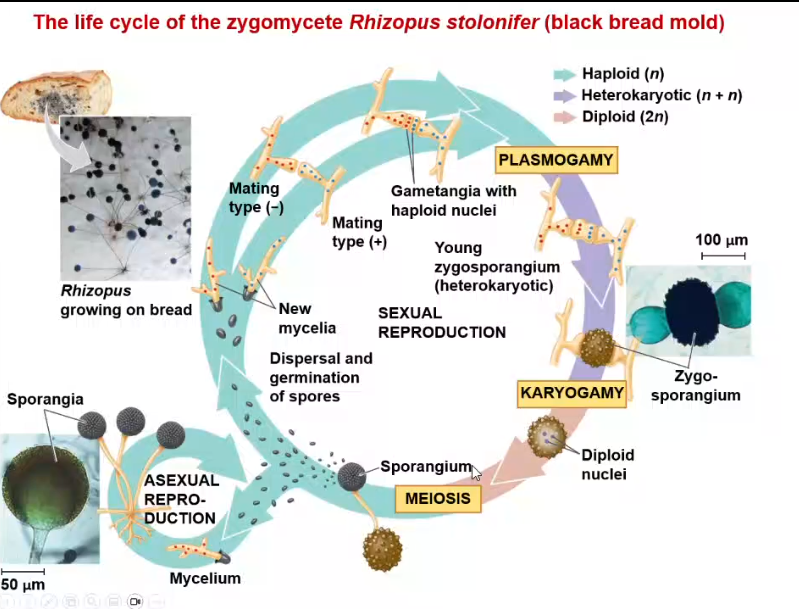
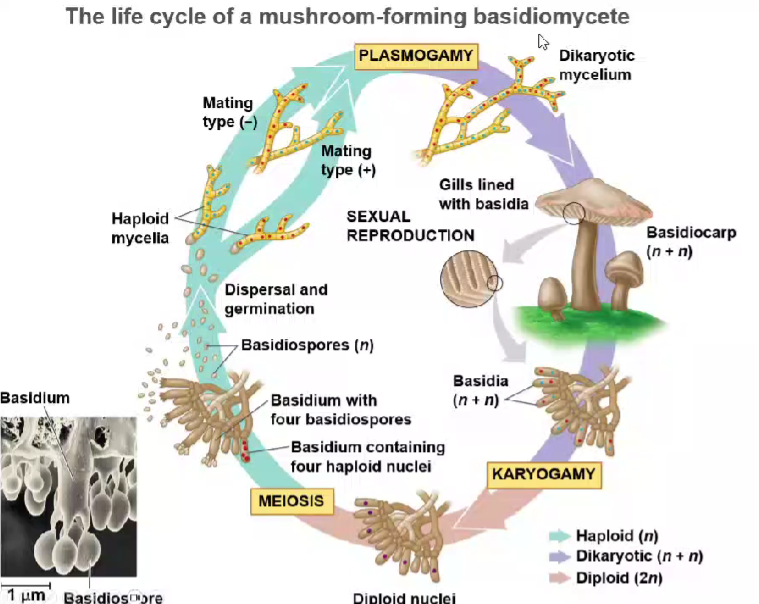
Requires fusion of hyphae from different mating types (plasmogamy).
Nuclear Coexistence:
In some fungi, haploid nuclei of each parent coexist in the mycelium (heterokaryon) before fusion (karyogamy).
Dikaryotic Mycelium:
Mycelium characterized by paired haploid nuclei, may persist for extended periods before karyogamy.
Karyogamy:
Process leading to diploid formation, which is short-lived and undergoes meiosis, yielding haploid spores contributing to genetic diversity.
Fungal Life Cycles
- Example of Saccharomyces cerevisiae and Rhizopus stolonifer: Detailed depiction of reproductive structures and cycles, including plasmogamy, karyogamy, and meiosis.
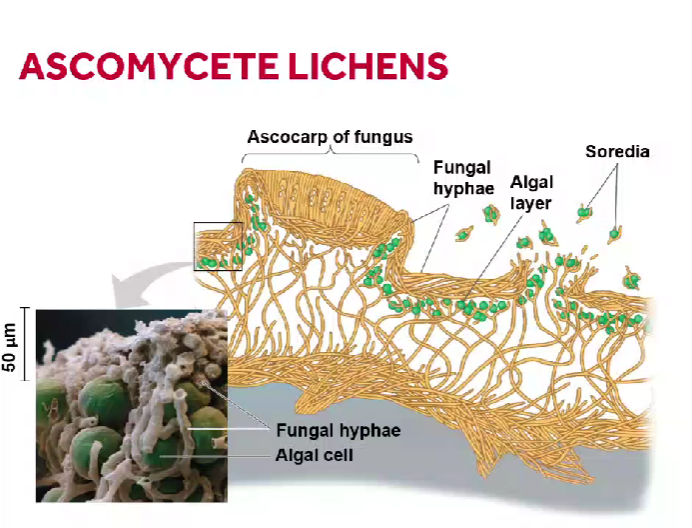
Ascomycete lichens
forms mutulims called lichens.
some species of fungi team up with siona bacteria green alge and forms a mualistic relationship which allows it to collanise which would other wise be reallly inhospitable environments.
its a massive fungal hyphae that are protecting these algal / sina bacteria partners that can photosynthesis.
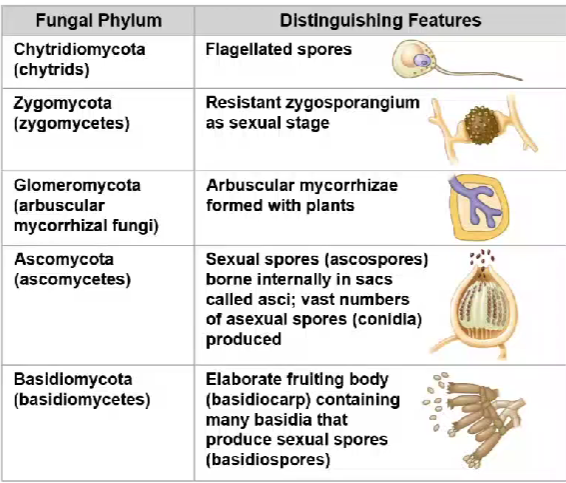
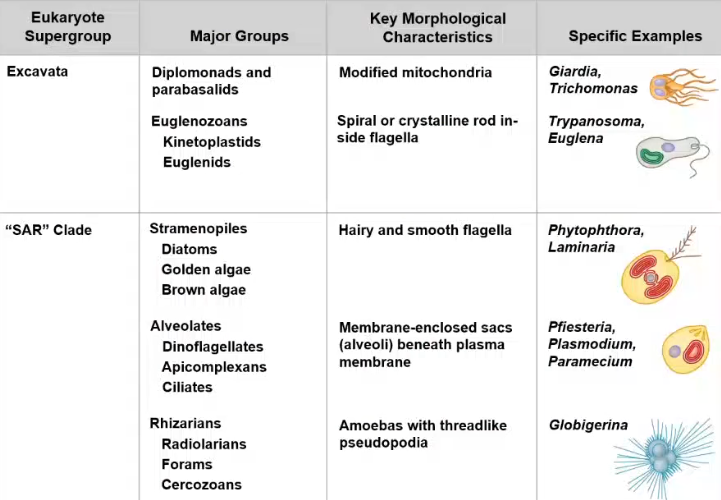
Kingdom Protista
Protists are a kingdom in eukaroytes, but the kingsom protista is the group of eukaryotes that don’t fit into animals, plants and fungi.
so they are vary diverse.
Classification:
Eukaryotes with a taxonomic classification that remains in flux, comprising over 64,000 species (polyphyletic).
Predominantly unicellular organisms lacking the tissue organizamoisttion characteristic of multicellular eukaryotes.
Habitat: found in various habilitates and they are usuallly free living, they grow in a wide variety of mosit environments.
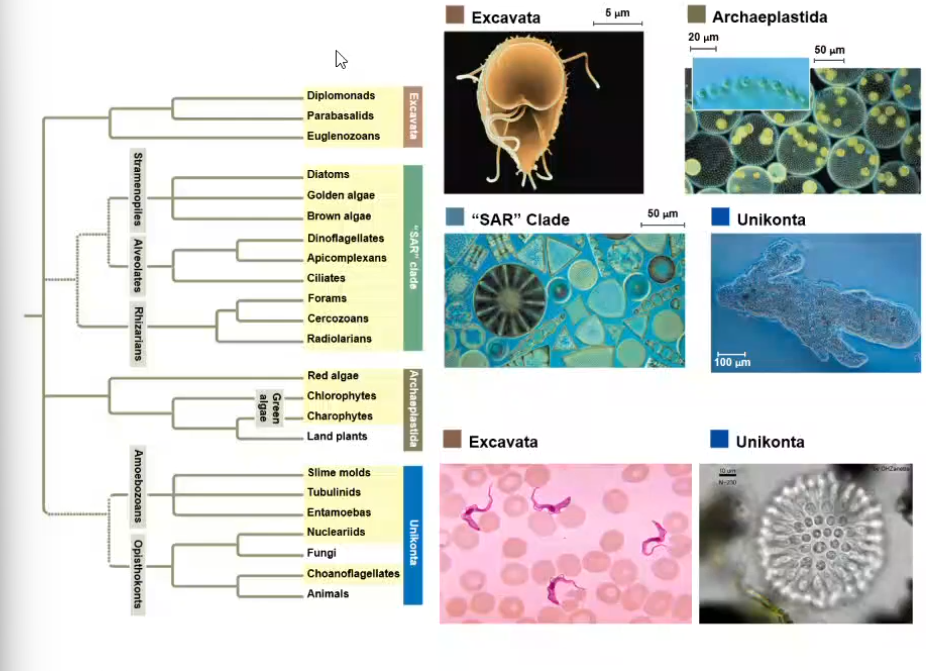
this is a rough phylogenetic tree of protists, looking at them in their main groups
DONT HAVE TO REMEBER ALL THE NAME
NUTRITION IN PROTISTS
Nutritional Types:
Chemoorganoheterotrophs
Saprophytic - Nutrients are obtained from dead organic matter through enzymatic degradation.
Osmotrophic: absorb dissolved nutrients.(absorb across membrane)
Holozoic: Acquire solid nutrients by phagocytosis.
Parasitic: acquire nutrients from hosts.
Some protists are photolithautotrophs just like plants - theses utiliseare strict aerobes as they use oxygen for photosystems 1 and 2 in photosynthesis
Mixotrophy: Some protists can utilize both organic and inorganic carbon sources.
PROTIST MORPHOLOGY
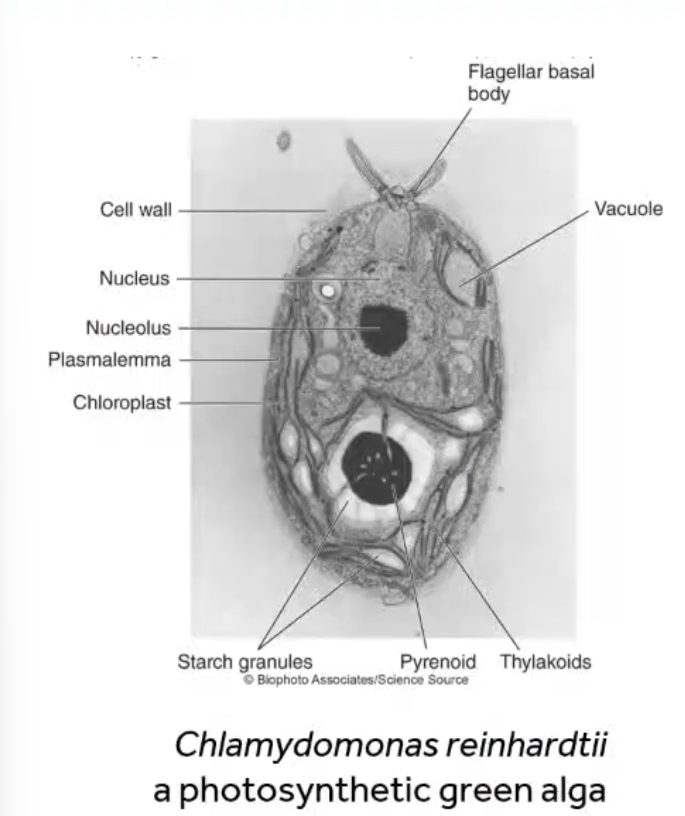
Vacuoles:
Contractile vacuoles manage osmoregulation
Phagocytic vacuoles able to move up and surround / engulf the prey organism. it will bring it inside the cell to digest them.
Energy Production:
Mitochondria, chloroplasts, or hydrogenosomes exist depending on the protist’s lifestyle.
Cilia or flagella may be present for mortitly or feeding.
PROTIST REPRODUCTION
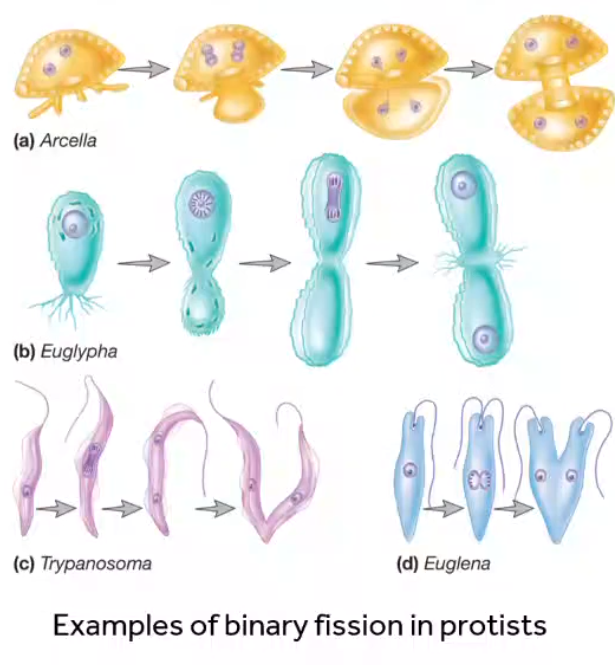
Reproductive Modes:
Many be sexual and asexual.
Asexual reproduction is typically via binary fission.
sexual reproduction may involve gametes in the synamy process, including autogamy or conjugation.
ENCYSTMENT AND EXCYSTMENT
Encystment Process:
They
simplify their structure & can enter dormancy by forming cysts with low metabolic activity to withstand environmental changes.
Excystment Activation:
A return to favourable conditions can stimulate cysts to revert to active states, necessary in parasitic protists.
SUPER-GROUP AMOEBOZOA
some ameobae are surrouned only by a plasma membrane
Movements:
Use pseudopodia for movement and feeding (phagocytosis).
Reproductive Modes:
Binary or multiple fission strategies.
Multiple fussion = a bacteria splits into 4+ cells.
ALGAE
Definition: Informal term for photosynthetic protists; paraphyletic classification across multiple phylm (green algae, Euglenids, stramenopiles, etc.).
Paraphyletic means that they are not all nicley envolutionaly related to each other.
Habitat:
- Common in aquatic environments.
DIATOMS
Frustule Structure:
Characterized by a two-piece cell wall of silica (epitheca and hypotheca) with unique patterns.
plastids ( photosynthetic organelle), which is derived by secondary endosymiosis. so have 4 membranes surrounding them. theseare important in global carbon cycling.
Significance:
Plastids derived from secondary endosymbiosis; crucial for carbon cycling, contributing to organic ocean carbon by 40-50%.
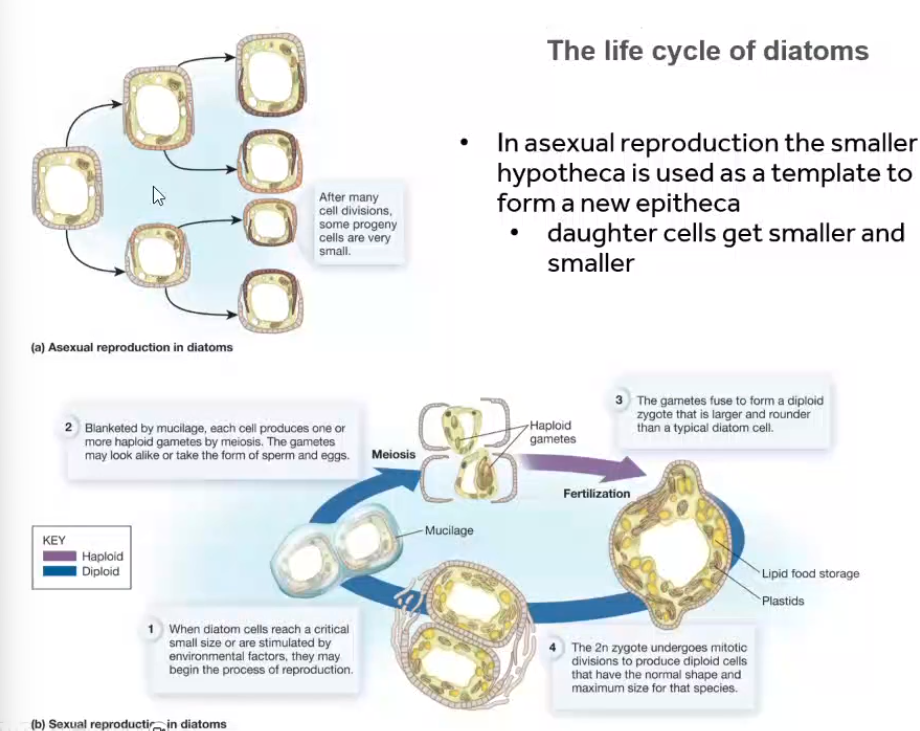
when they replicate asexually they a single cell will divide into 2 slightly small cells, these then again divdide into slightly smaller cells. after many division some of the cells are really small.
so they have to do sexual reproduction to return to orginal size
in the sexual reproduction they cover themselves in a blanket in a mucillage where they from gametes which fuse to form a dipoid zygote
which is much larger than a typical diatom, this then undergoes mitotic divison which have the normal shape and size
then the process repeates
LIFE CYCLES IN EUKARYOTES
Examples:
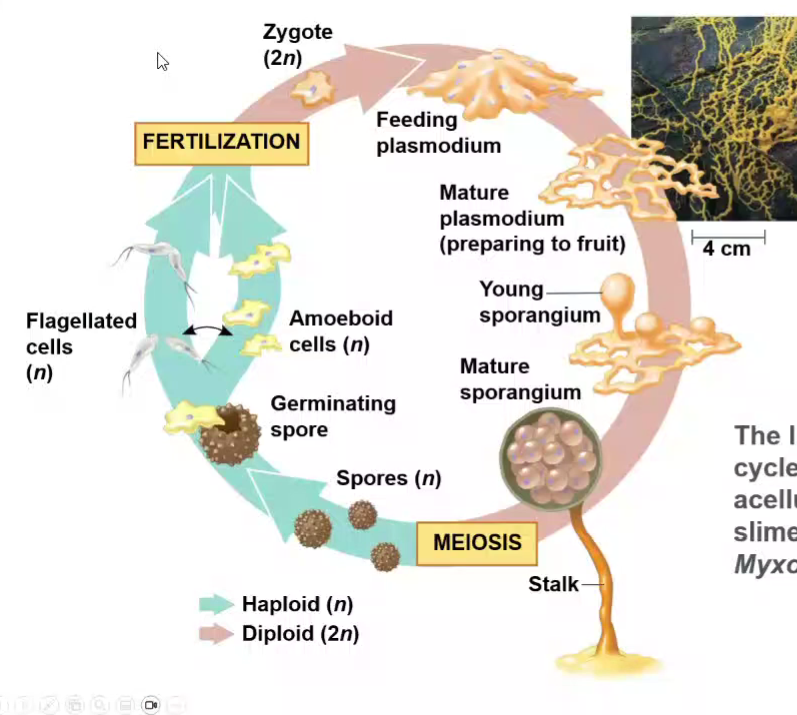
Detailed life cycles of Chlamydomonas, diatoms, and the acellular slime mold Myxogastria are illustrated with clear stages.
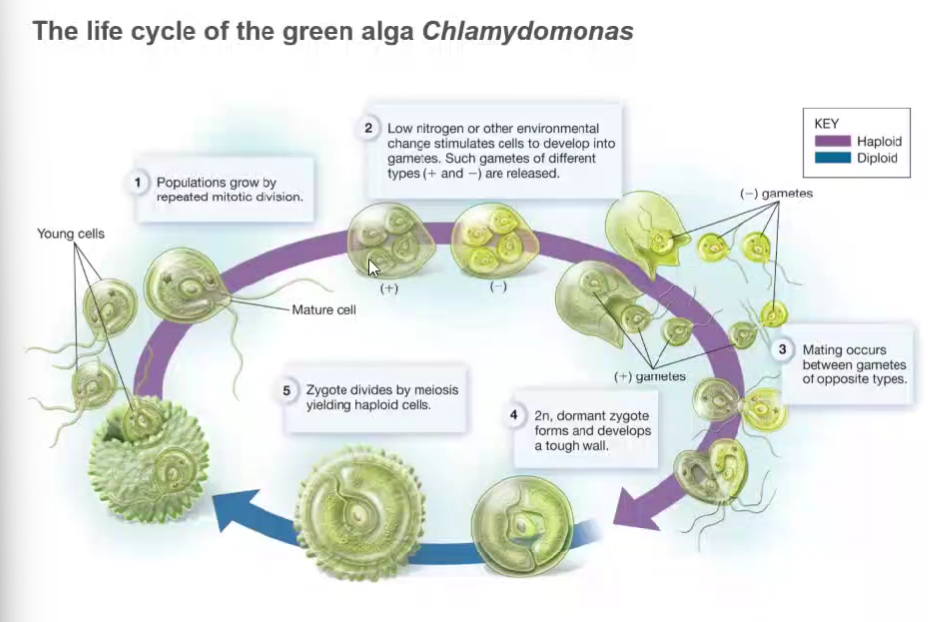
replicate via mitosis, but if the environment is unstable to can also sexually reproduce.
so you have 2 different gametes and mating types
these then forma fusion to form a diploid
this forms a zygote which divdeds by mitosis.
ACELLULAR SLIME MOLD
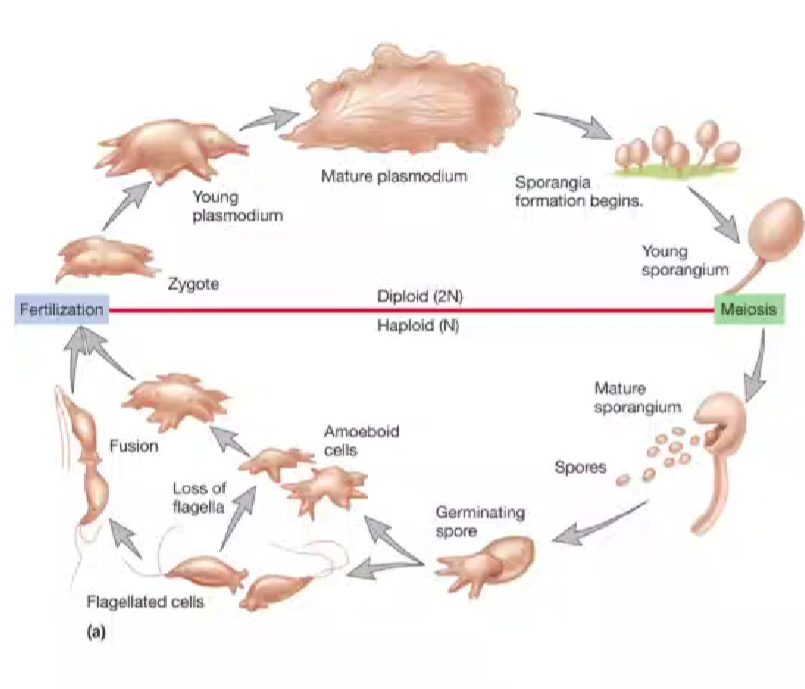
CELLULAR SLIME MOLD
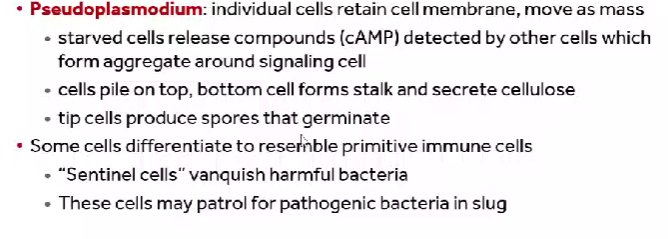
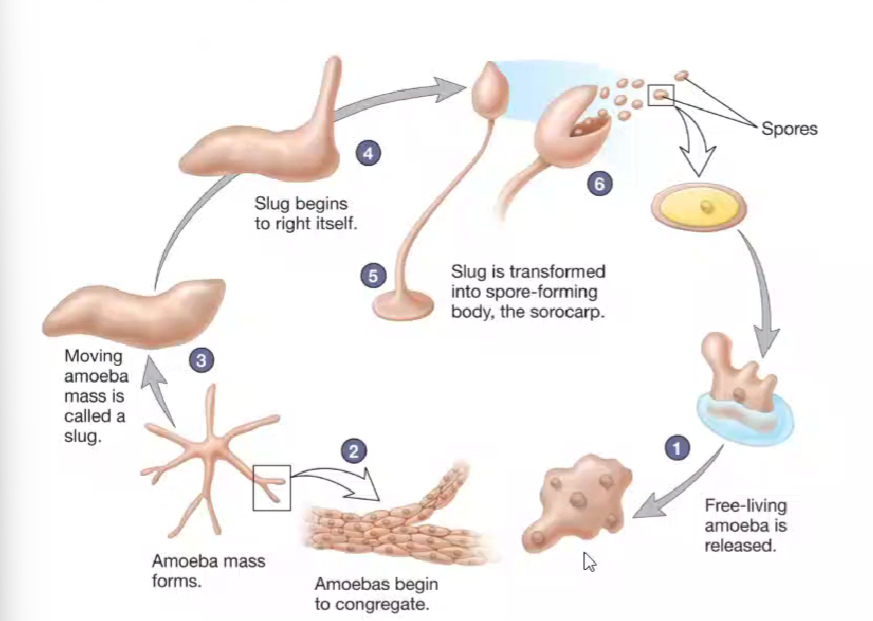
a unicelleur organism which has as multicelleuar stage in the lifecycle.
CONCLUSIONS AND STUDY TIPS
Notes Study: Emphasis on thorough note-taking after lectures aids long-term retention.
Reading Assignment: Suggested reading from Chapters 5, 23, and 24 of Prescott’s Microbiology that correlate with lecture topics.
Integration of Learning: Encourage making connections between learning in this module and across other subjects to facilitate overall understanding.