Back & Abdomen
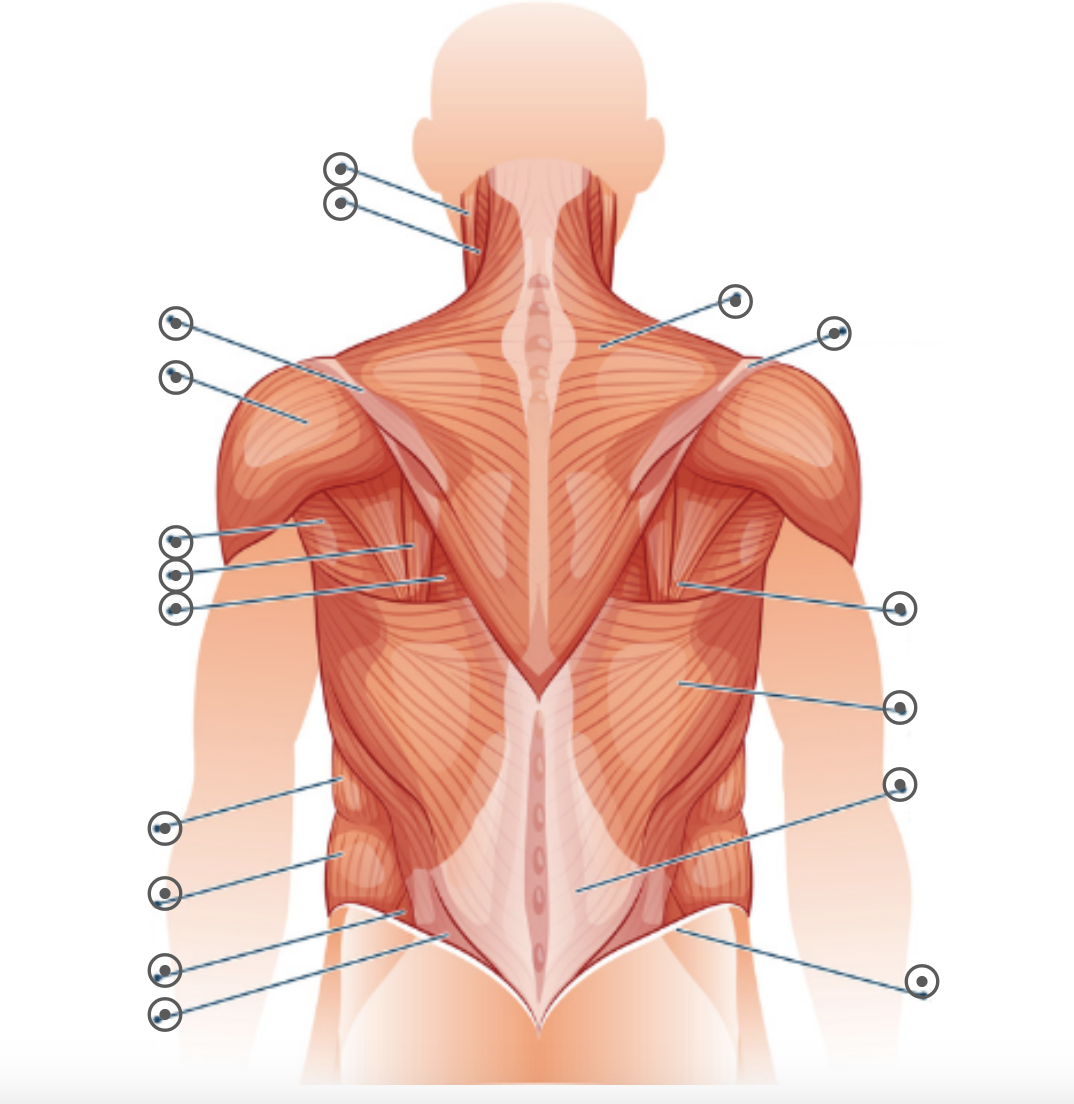
Back Musculature
splenius capitus
sternocleidomastoid
Trapezius
deltoid
spine of scapula
teres major
infraspinatus
rhomboids
lattissimus dorsi
thoracolumbar fascia
external oblique
lumbar triangle
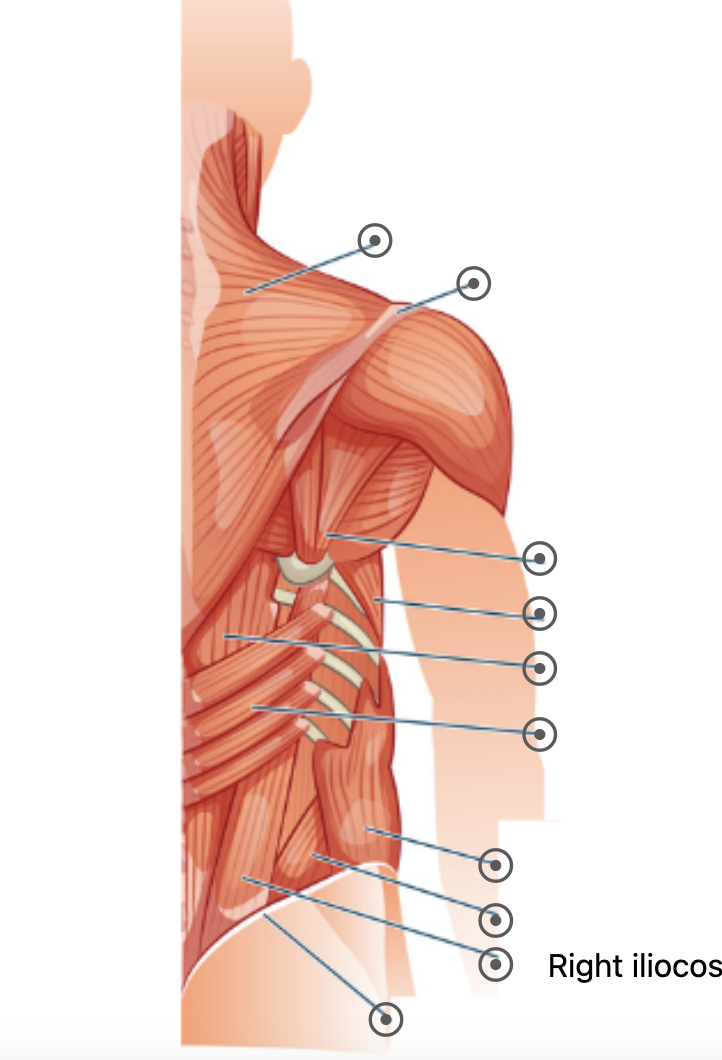
Deep Back Musculature
scapula inferior angle
serratus anterior
right longissimus thoracis
serratus posterior inferior
external oblique
internal oblique
iliocostalis lumborum
iliac crest
Thorax & Abdomen
Anatomy
Thorax
Also known as the chest - between neck and diaphragm
Thoracic vertebrae
12 ribs, costal cartilage, and sternum
True rubs = upper 7 that are joined to the sternum
False ribs = 8-10
Floating ribs - 11-12
Sternum = manubrium - body - xiphoid process
Protects lungs and heart
Thoracic cage = lungs, heart, and thymus
Muscles
External intercostals - elevate diaphragm during inspiration
Internal intercostals - depress rib cage assisting with expiration
Phrenic nerve
Lungs
Trachea - right and left primary bronchi - secondary bronchi - alveoli
Right lung = 3 lobes
Left lung = 2 lobes
Diaphragm
Contraction = inspiration
Relaxation = expiration
Blood supply
Pulmonary arteries - alveoli turn it into oxygenated blood and return to heart via the pulmonary veins
Bronchi get their oxygenated blood from the bronchial arteries (which come off the aorta)
Heart
Under sternum, to the left between ribs 1-5/6
Blood supply - right and left coronary arteries that come off the aorta
Deoxygenated blood
Right atrium
Tricuspid valve
Right ventricle
Pulmonary valve
Pulmonary artery and lungs - turned to oxygenated blood
Pulmonary vein
Left atrium
Mitral valve
Left ventricle
Aortic valve
Aorta --> supplies rest of body with blood
Thymus
Anterior and superior to the heart
Produces lymphocytes
Abdomen
Between diaphragm and pelvic bones
Muscles
Rectus abdominis - flexes trunk
External oblique - flexes trunk, rotation, lateral flexion, and compression
Internal oblique - flexes trunk, lateral flexion, and rotation
Transverse abdominis - compression of the abdominopelvic cavity
Quadratus lumborum - pulls thoracic cage to the pelvis, abduction of the vertebral column
Organs
Kidneys
Ureters and bladder
Liver
Gallbladder
Pancreas
Stomach
Small intestine
Large intestine
Spleen
Female reproductive organs (uterus, vagina, uterine tubes, ovaries)
Male reproductive organs (prostate, urethra, ejaculatory ducts, seminal vesicles, testes, epididymis, vas deferens)
Evaluation and Injuries
Wear protective equipment
Strengthening of abdomen muscles
Empty hollow organs prior to competitions (stomach and bladder)
Abdomen quadrants
Upper Right (UR) - liver, pancreas, kidney, lung
Upper Left (UL) - heart, spleen, kidney, stomach, lung
Lower Right (LR) - appendix, ureter, bladder, colon, gonads
Lower Left (LL) - ureter, bladder, colon, gonads
Referred pain
Cardiac, lung, splenic pain = left shoulder
Diaphragmatic pain = shoulders
Liver, gallbladder pain = right shoulder, UL quadrant
Appendix - McBurney's point
Auscultation
Heart sounds
"lubb-dupp" - abnormal - murmur
S1 --> S2 - systole (blood to body/lungs); S2 --> S1 diastole (filling of heart)
S1 = closing of the atrioventricular valves - mitral and tricuspid
S2 =closing of semilunar valves - aortic and tricuspid
Breath sounds
Normal breathing = even and consistent
Cheyne-Stokes = rate speeds up and slows down over 1-3 minutes
Biot's (Cluster breathing) = series of breaths at the normal rate that is followed by cessation of breathing. Similar to Cheyne-Stokes
Apneustic = pauses of the respiratory cycle at full inspiration
Thoracic = without diaphragmatic breathing
Wheezes (rhonchi) = music like sounds with high pitch
Rales = crackling sounds
Bowel sounds
Normal = liquid gurgling sounds
Absent or diminished sounds = swelling
High-pitched tinkling sounds = obstruction
Percussion
Solid organs = dull sound
Hollow organs = tympanic sound
Injuries (thoracic)
Rib contusion
Rib fractures
Costochondral separation/dislocation
Sternum fracture
Muscular injuries
Breast injury
Breast cancer
Lung injuries
Hyperventilation
Contusion
Sudden death syndrome
Commotio Cordis
Injuries (abdomen)
Kidney contusion
Kidney stones
Ureter, bladder, urethra contusions
Cystitis
UTI
Urethritis
GI bleeding
Liver contusion
Pancreatitis
Indigestion (dyspepsia)
Vomiting
Gastroenteritis (food poisoning)
Peptic ulcer
Gastroesophageal reflux
Diarrhea
Constipation
Irritable bowel syndrome
Appendicitis
Hemorrhoids
Scrotal contusion
Spermatic cord torsion
Traumatic hydrocele of the tunica vaginalis
Vaginitis
Female genitalia contusion
Spleen injury
Abdominal muscle strain
Abdominal wall contusion
Hernia
Blow to solar plexus ("wind knocked out")
Exercise-related transient abdominal pain ("Side stitch")