Deep Time - Evolution Lecture 21 Study Notes
Deep Time – Evolution Lecture 21
Fossils
Definition: Fossils are the preserved remains or traces of ancient organisms.
Context: Charles Darwin was aware of fossils and their significance, yet paleontology as a science was relatively new during his time.
Incompleteness of Fossil Record:
Darwin correctly hypothesized that the fossil record is incomplete.
Question Posed: Why is the fossil record incomplete?
Studying Fossils
Key Insights: Paleontologists derive a substantial amount of knowledge about organisms from studying their fossils.
Examples of Fossils
Mating Turtles: Fossils demonstrate instances of turtles dying while mating.
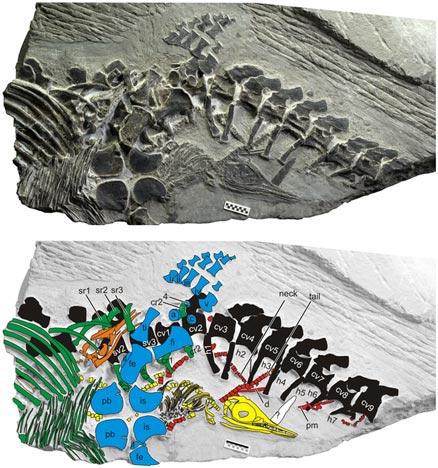
Aquatic Dinosaurs: Some aquatic dinosaurs are indicated to have given live birth instead of laying eggs.
Fish Behavior: Modern fish are still observed dying in similar predatory situations as their ancestors did.
Live Birth
Image Source:
Trilobite Growth Rates
Graph Analysis:
Measurement of maximum cephalic width (B) in relation to total cephalic length (A).
Important for inferring organismal growth rates across different time periods.
Help infer global temperatures and other environmental conditions.
Coloration in Dinosaurs
Feather Pigmentation: Using scanning electron microscope images to identify different types of melanosomes.
Melanosomes correspond to specific pigments, helping provide information on the coloration of dinosaur feathers.
Knowledge of melanosomes allows paleontologists to infer the colors of extinct species.
Countershading Techniques: Various methods are used to analyze how species, including dinosaurs, were countershaded.
Animal Mass and Predatory Dynamics
Current Research Findings:
Data indicates that no extant (living) predators have a mass comparable to the largest herbivores, such as rhinos and elephants.
Graph Analysis: Ratio of body mass to percentage of species that exhibited countershading.
Reference: Zimmer/Emlen, "Evolution: Making Sense of Life, 3e, 2020 W. H. Freeman and Company."
Hadrosaur Crests
Physiology Insights: Hadrosaurs had unique crests located on the back of their heads.
CT Scanning: Fossil examinations revealed that these crests are associated with nasal cavities.
Acoustic Predictions: Crests likely utilized for sound production, with predictions of sound frequency based on their shape.
Research indicates that ear morphology suggests these dinosaurs were adapted to hear the sounds generated by their crests.
Chemical Analysis of Rocks
Rock Chemistry and Age:
Rock chemical composition can provide insights beyond dating, such as the biological origins of carbon.
Analysis of isotopes:
Key Isotopes: 12C and 13C.
13C is less absorbed by plants compared to 12C, reflecting a lower ratio of 13C/12C in plant matter compared to the atmosphere.
C3 and C4 Plants: Difference in isotope ratios helps identify dietary sources for animals.
C3 Plants: Examples include forbs, with a specific isotopic signature.
C4 Plants: Examples include grasses, which have a different isotopic ratio, facilitating inferences about animal diets.
Hominin Diet Trends
Dietary Evolution: Early hominins initially consumed more C3 plants (akin to modern chimps).
Gradual shift towards C4 plants over generations, indicating dietary adaptability in response to environmental changes.
Trace Fossils
Definition of Trace Fossils: Often, the fossilized evidence studied is not from the organism itself but marks of its activity.
Examples: Follow animal movement through tracks, nests, or waste rather than the remains themselves.
Stromatolites: Ancient structures formed by microbial mats, indicative of early life on Earth.
Date of Fossil Stromatolites: Approximately 3.8 billion years old, reflecting parallels with modern stromatolites.
Image Reference: [Stromatolites](https://globalchange.umich.edu/globalchange 1/current/lectures/complexlife/complexlife .html)
Animal Movement Evidence
Burrowing Evidence: Specific fossils indicating burrowing patterns of ancient worms and animal movements.
Footprints: Footprints from approximately 390 million years ago have been preserved and studied for insights into prehistoric animal behavior.
Concept of Deep Time
Understanding Depth of Time in Evolution:
Example: Counting time sequentially to understand the immense duration of evolutionary history.
Hypothetical Examples: How long would it take to count to 1,000,000? To a billion? To 4.567 billion years?
John McPhee's Metaphor:
McPhee provides a relatable metaphor for deep time by comparing Earth's history to a yardstick. A small action (like filing a nail) could represent the erasure of entire human history. This metaphor emphasizes the vast scale of geological time.
24-Hour Timeline of Earth History
Visualization of Earth's History:
The first appearance of Homo sapiens is metaphorically represented at 11:59:30 P.M. on a 24-hour time scale.
Significant Events in Geological Timeline:
Age of Dinosaurs: between 1-2 billion years ago.
Oldest Multicellular Fossils: around 1 billion years ago.
Origin of Earth and the oldest known rocks: Approximately 4.567 billion years ago.
Each second on this timeline equates to about 52,000 years.
Measuring Deep Time in Distance
Reflecting on Distance:
Hypothetical exercise of measuring Earth’s age in physical distance (e.g., 100 meters) to determine "years per meter".
Calculating: 0.04567 billion years per meter, leading to 45.67 million years per meter.
Purpose: To examine pivotal moments in Earth’s history using this continuous scale to appreciate the longevity of evolutionary processes.