Prokaryotic cells Bacteria_V2
Parts of the Bacterial Cell
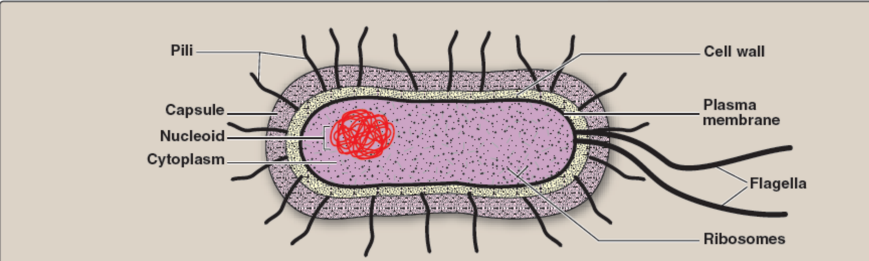
Cell Wall: Provides structure and protection; composed mainly of peptidoglycan.
Cell Membrane: Semi-permeable membrane that regulates the entry and exit of substances.
Cytoplasm: Gel-like substance where metabolic processes occur; contains ribosomes and other essential components.
Nucleoid: Area where DNA is located, not enclosed by a membrane; typical of prokaryotic cells.
Ribosomes: Sites for protein synthesis; smaller than eukaryotic ribosomes.
Flagella: Long, whip-like structures that aid in mobility.
Pili: Hair-like appendages that assist in attachment to surfaces and gene transfer.
Gene Transfer
Transformation: Uptake of naked DNA from the environment.
Transduction: Transfer of DNA from one bacterium to another via bacteriophages (viruses that infect bacteria).
Conjugation: Direct transfer of DNA between two bacteria through physical contact; often involves plasmids.
Cell Morphology (Shape)
Coccus: Spherical shape (e.g., Streptococcus).
Bacillus: Rod-shaped (e.g., Escherichia coli).
Spirillus: Spiral shape (e.g., Spirillum minus).
Vibrio: Comma-shaped (e.g., Vibrio cholerae).
Coccobacillus: Short bacillus, intermediate between cocci and bacilli (e.g., Haemophilus influenzae).
Atmospheric (Oxygen) Requirements
Aerobic Bacteria: Require oxygen for survival and metabolism.
Anaerobic Bacteria: Do not require oxygen; may even be harmed by it.
Facultative Anaerobes: Can live with or without oxygen; can switch between aerobic and anaerobic respiration.
Microaerophiles: Require oxygen but at lower levels than found in the atmosphere.
Nutritional Requirements
Autotrophs: Can produce their own food; use inorganic sources (e.g., CO2).
Heterotrophs: Require organic compounds for nourishment (e.g., glucose).
Chemotrophs: Obtain energy by oxidizing chemical compounds.
Phototrophs: Use light energy to convert CO2 into organic compounds through photosynthesis (e.g., cyanobacteria).