PM163 Lecture 5 - Principles of Genetic Equilibrium
Learning objectives
Define genetic equilibrium (Hardy-Weinberg equilibrium).
Describe the principles that maintain genetic equilibrium.
Explain how disruptions of genetic equilibrium impact genetic diversity and evolution.
Mutations
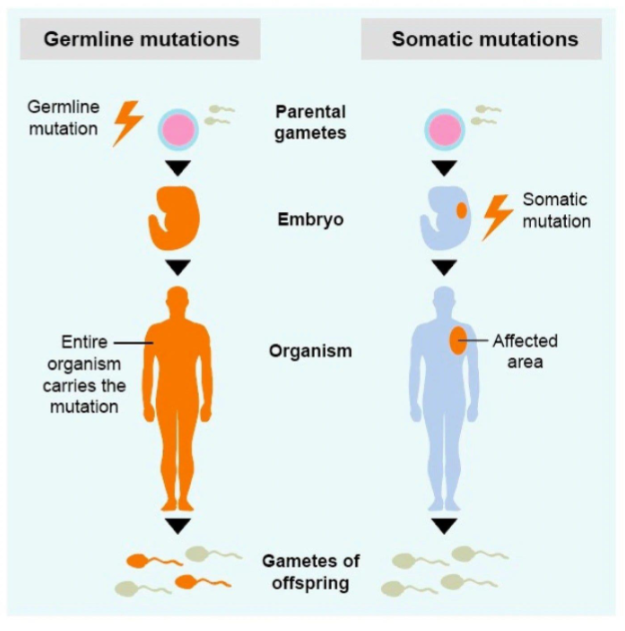
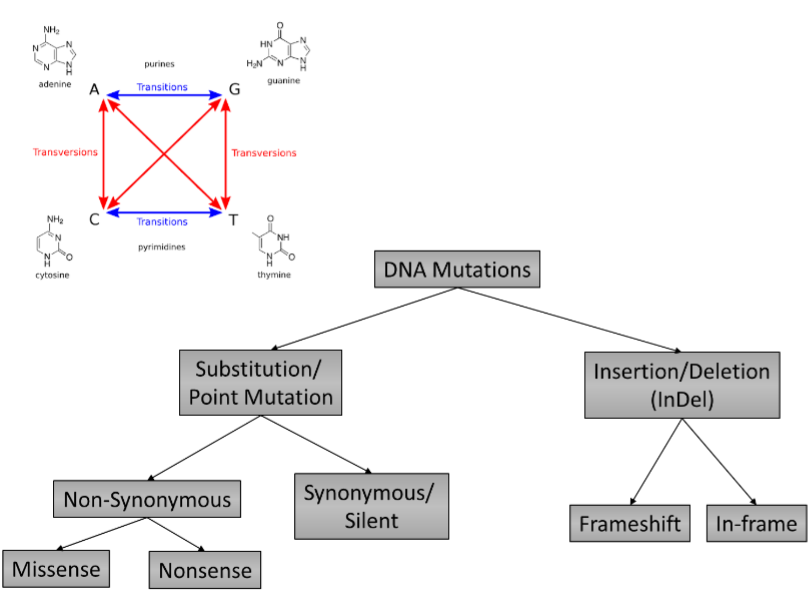
Most important for increasing/maintaining genetic diversity as it is the only principle that only increases genetic diversity.
Genetic drift
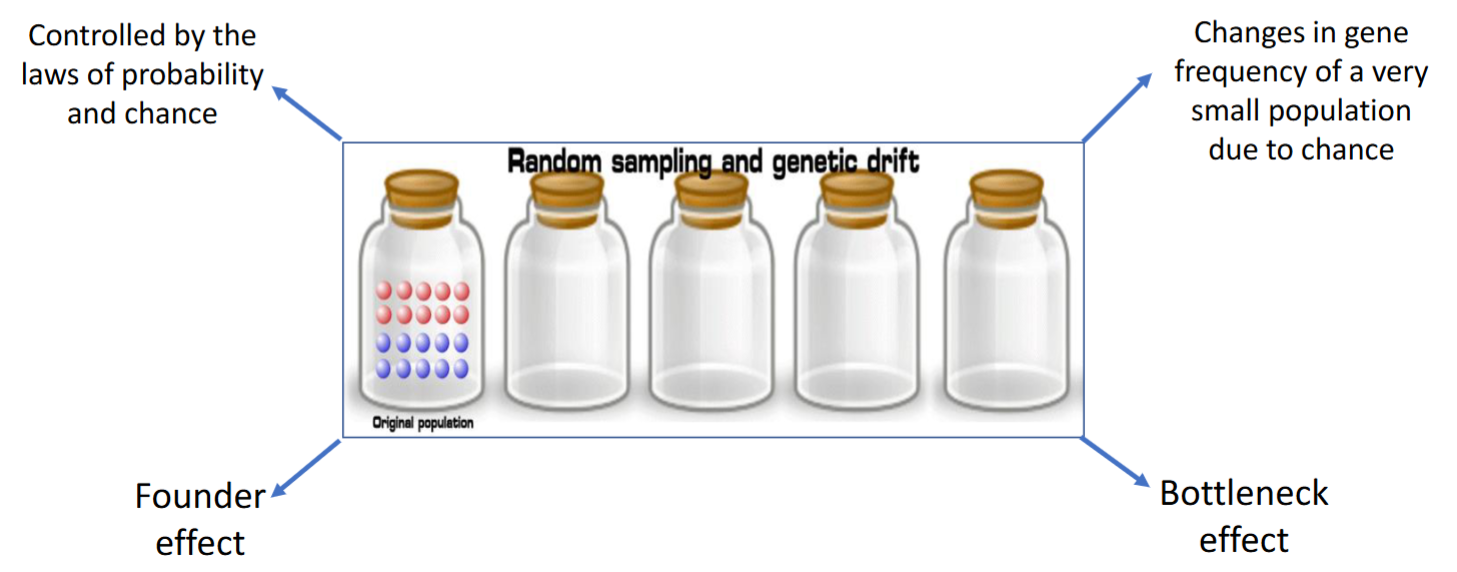
Change in frequency of an existing gene allele/variant in a population due to random sampling of the organisms.
Genetic drift - Bottleneck effect
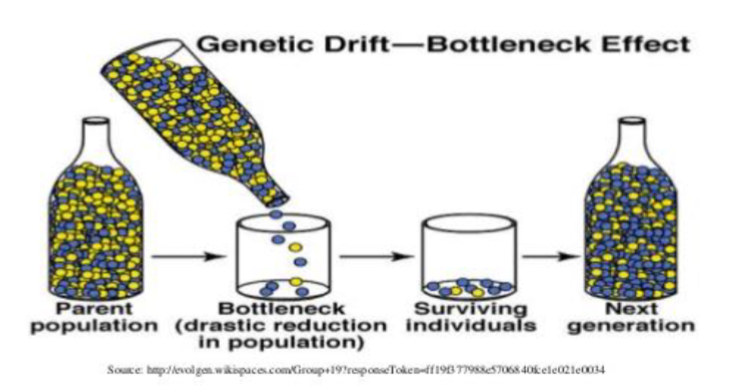
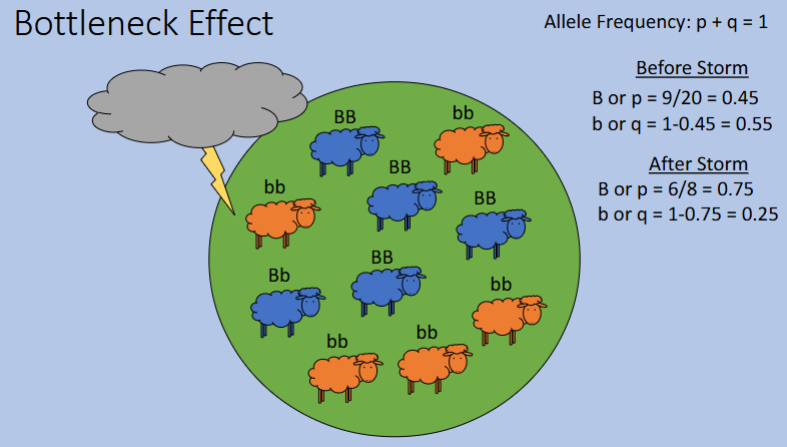
The bottleneck effect consists of a sharp reduction in size of a population due to environmental stochastic events.
The effect is characterised when a large number of individuals die, and the population is restored from a gene pool smaller than before.
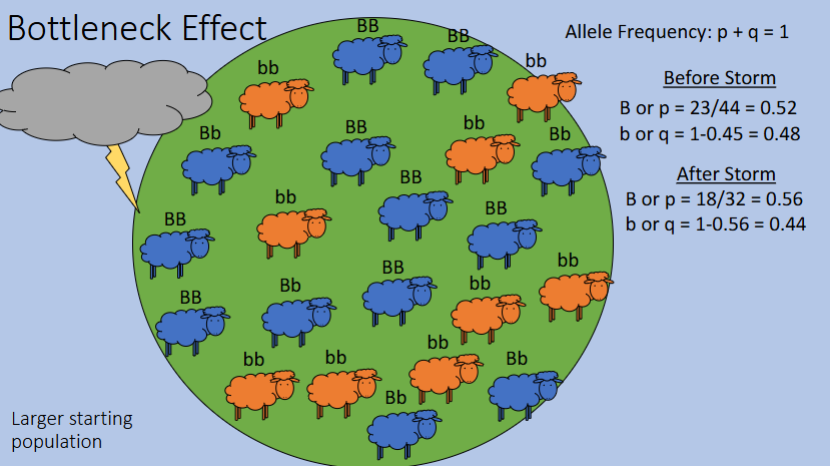
The effect will be less powerful the larger a population is.
Genetic drift - Founder effect
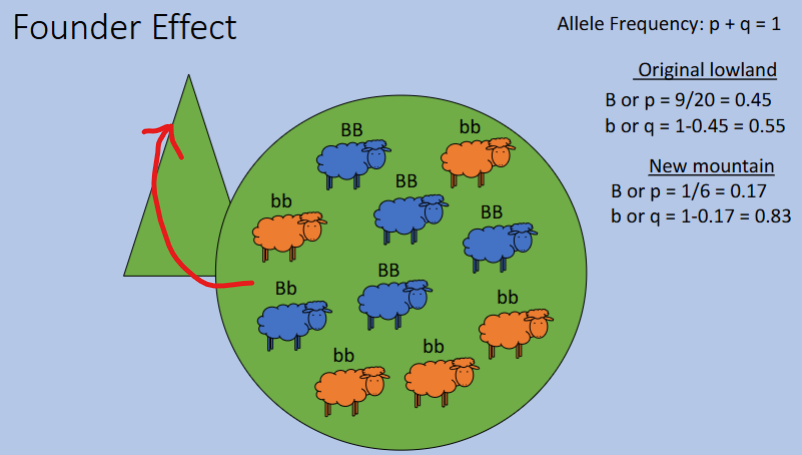
A new population is established from a very small number of individuals, giving a lack of genetic variation.
The new population can become genetically distinct both phenotypically and genotypically from the original population.
Extreme cases can lead to speciation and the subsequent evolution of new species.
Natural selection - survival of the fittest
“A mechanism of evolution”
Organisms which are more adapted to their environment are more likely to survive and pass on the genes that aided their success.
This process causes species to change and diverge over time.
Natural selection - Stabilising selection
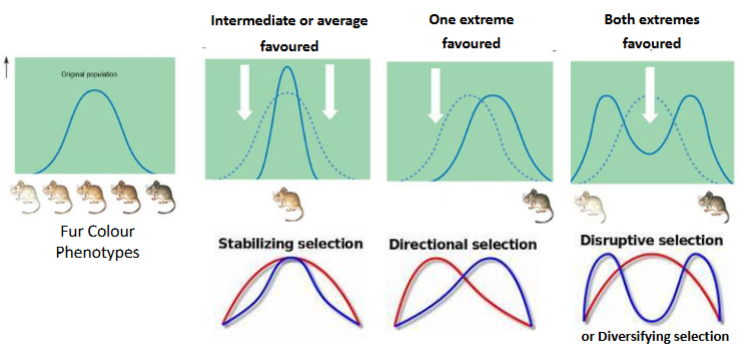
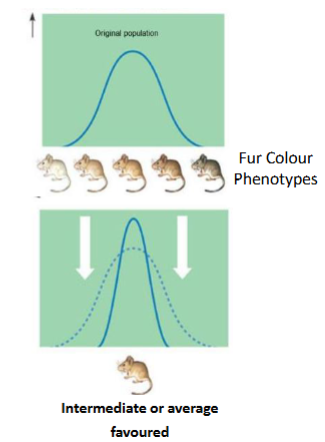
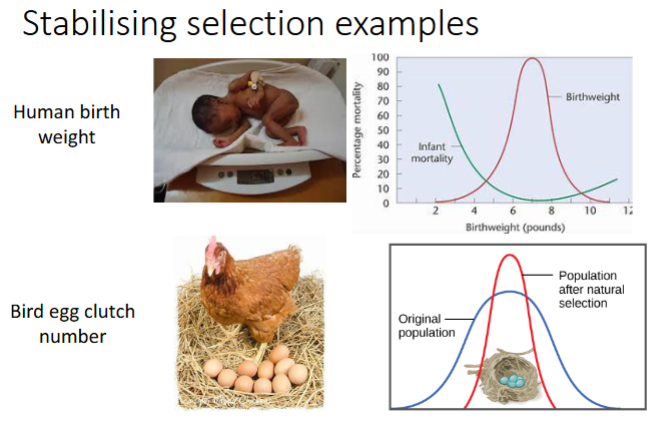
Stabilising selection favours the average individuals within a population.
The environment selects against individuals with extreme phenotypes or variants.
It drives down the population genetic diversity.
Natural selection - Directional selection
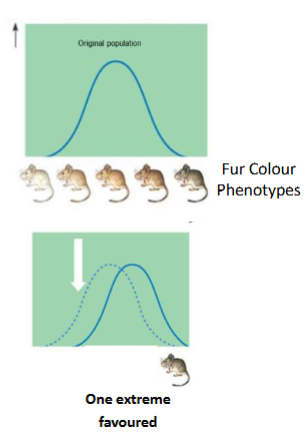
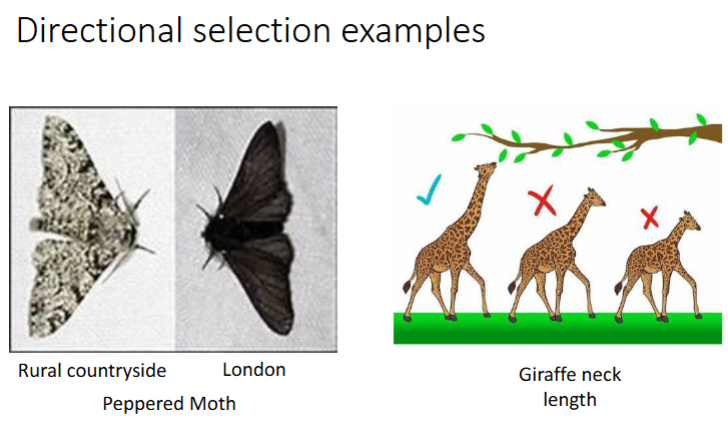
Directional selection occurs when individuals with traits on one side of the mean in their population survive better or reproduce more than those on the other side of the mean.
Natural selection - Disruptive selection
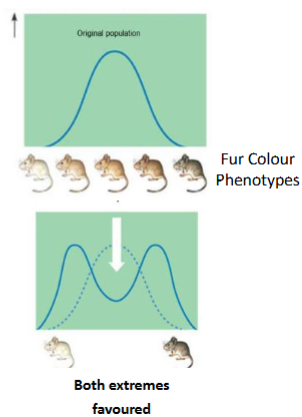
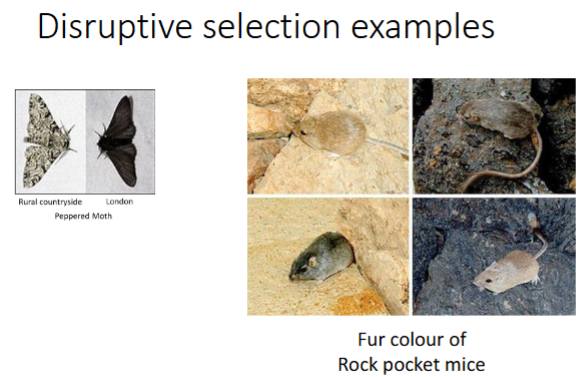
Disruptive selection or diversifying selection favours individuals with traits on both sides of the mean over the individuals with intermediate forms.
This type of selection is the rarest among selection types.
Along with directional selection, it has the greatest potential to lead to speciation.
Gene flow (gene migration)
Movement of genetic variation from one population to another
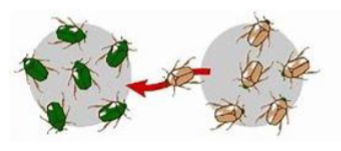
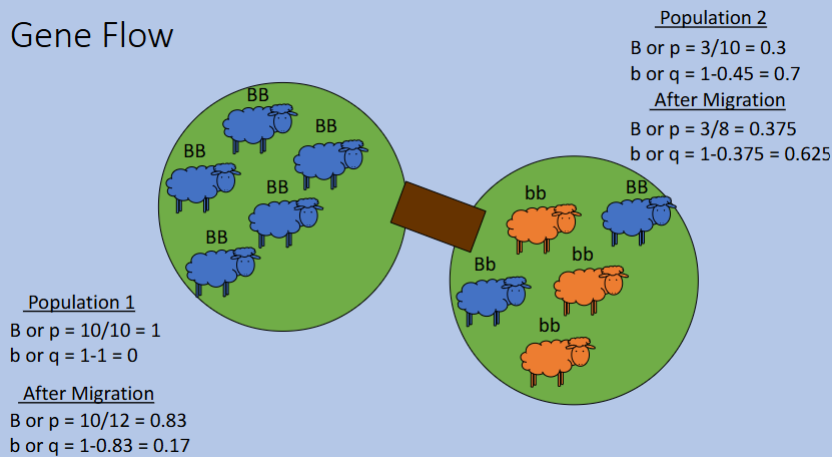
Bridge formed between two populations of sheep. If some sheep from one population come over and breed with sheep from the other population, this is gene flow.
However, if a few sheep from population 1 move to the other island and do not breed with sheep from population 2, this is the founder effect, not gene flow.
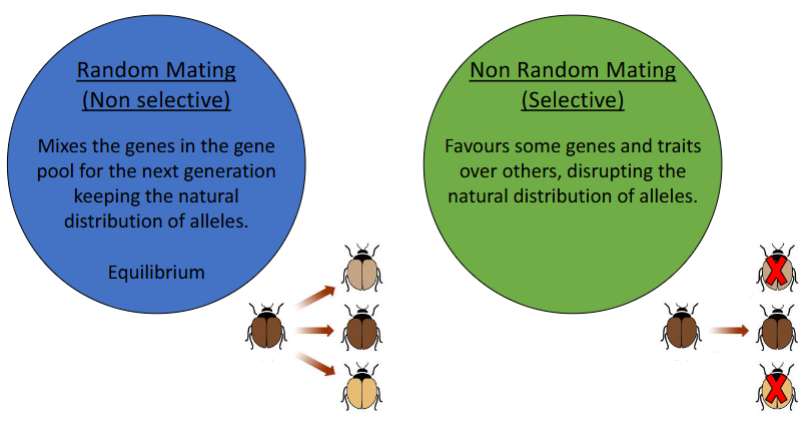
Non-random mating (selective)
Non-random mating is one that occurs with individuals who have a closer relationship.
Caused by
Geographical barriers
Preferential selection of a mate who is similar (same community, similar characteristics, have a disability, etc)
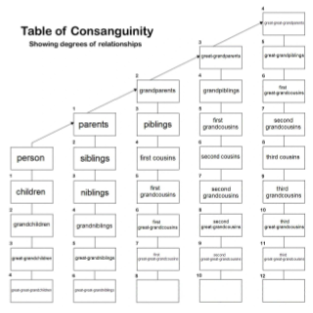
Consanguineous mating (within the same family)
Non-random mating causes a non-random distribution of alleles in the gene pool.
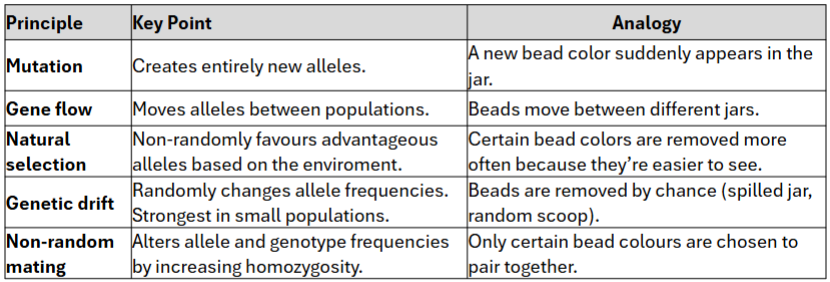
Recap: Summary of principles
Altering genetic diversity drives evolution
A population in genetic equilibrium shows little to no change in genetic diversity and is not evolving.
When the conditions of genetic equilibrium are violated, genetic diversity may increase or decrease, which drives evolution.
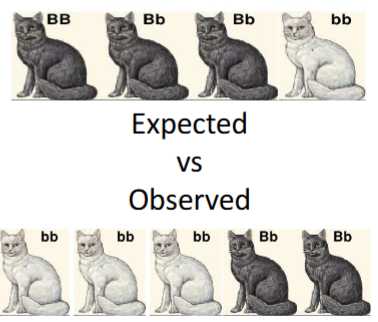
Expected vs Observed
The Hardy-Weinberg equation provides a framework to predict expected allele and genotype frequencies in a non-evolving population.
It provides a baseline for comparing observed gene pool frequencies to identify evolutionary shifts.
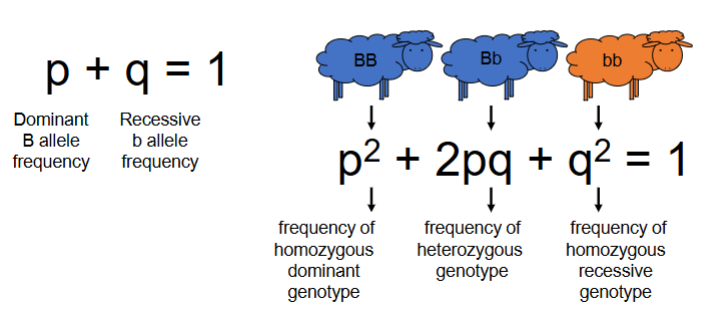
Hardy-Weinberg equation
Allele and genotype frequencies (gene pool) in a population will remain constant from generation to generation in the absence of other evolutionary influences.
What does this mean in terms of real populations?
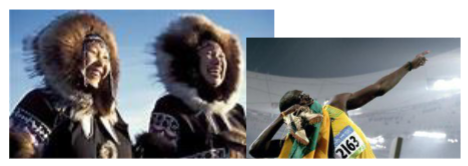
Genetically distinct populations, evolving populations, specific skill superiority, consanguinity, disease spreading.