Friday - Climate Responsive Design
LO:
review of content from previous Ecologies courses.
Climate-responsive architecture, life-cycle of buildings, carbon emissions and relationships to the climate crisis. Fundamental principles of environmental performance, bio-climatic architecture, regenerative design, living systems and ecological wellbeing. Links between course topics and the Mauri Ora compass.
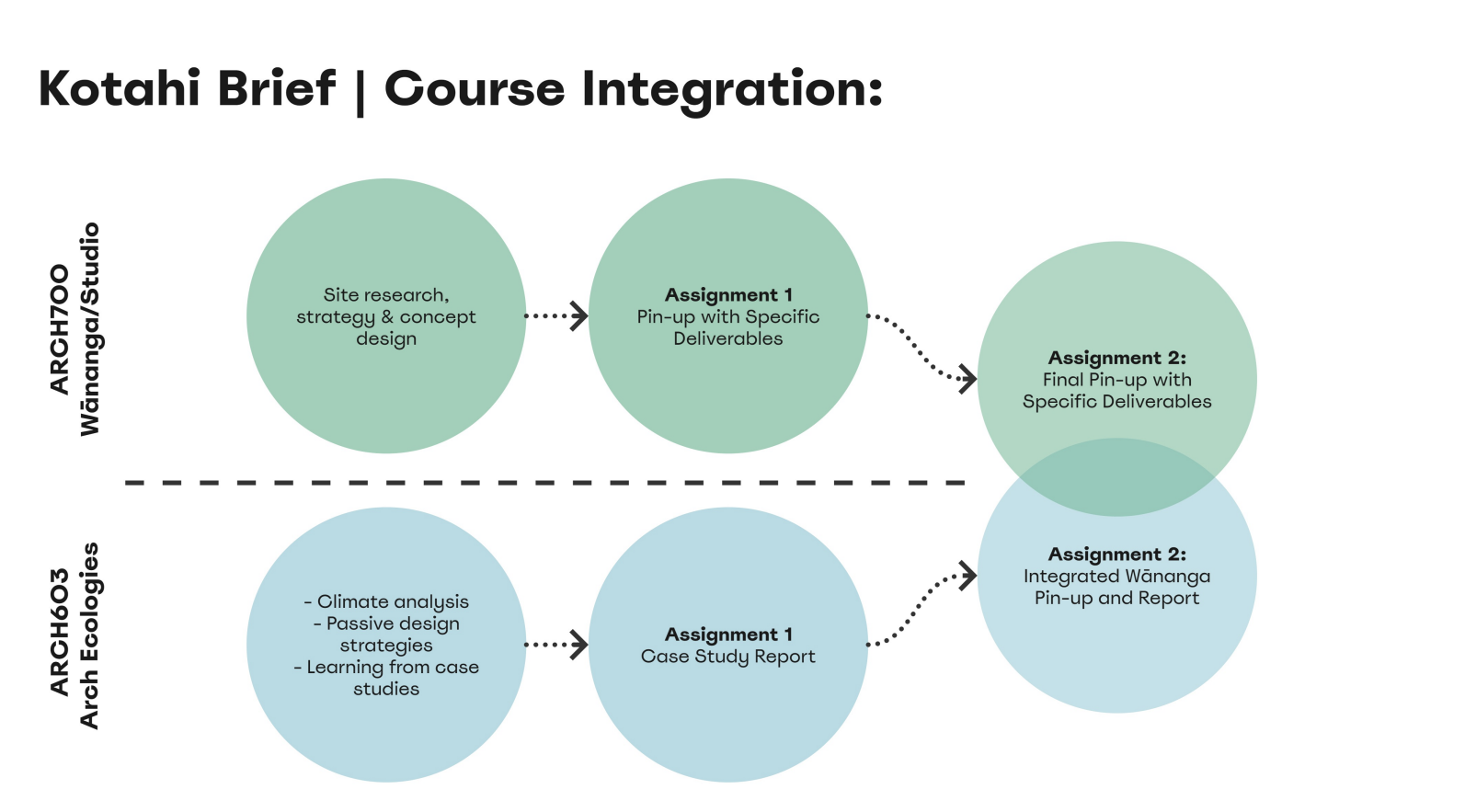
Architectural Ecologies Stream
An integrated design for living systems
Relationships between the systems, strategies, and materials that create regenerative buildings
Principles and applications of regenerative and sustainable design, including Te Aranga principles, building environmental performance strategies and human comfort are examined. Introduces basic scientific principles of heating/cooling, lighting, acoustics, operational energy and carbon. Strategies for passive design, site ecology regeneration, water-sensitive design and climate-responsive architecture are explored.
What we are doing and Why?
Working on Panmure site
lots of issues to fix inrelation to micro climate, urban heat island, and wider urban environment
learn from case studies and precedents and climate analysis to inform developed design and detailing
Creating healthy spaces and wellbeing of people and wider environment
damp, cold, mouldy = unhealthy
too hot = uncomfortable, consider this with rise of temps in global warming
Poor passive design requires lots of energy and mechanical systems to make spaces comfortable
Buildings have an impact on the climate crisis as it’s responsible for 39% of global Co2 emissions and 20% of NZ’s Co2 emissions
Impact of generating energy for those buildings
Energy use of extraction, processing, and transportation of materials
How?
Understanding appropriate design and detailing strategies according to the climate through diagrams and detailing
Climate responsive architecture and passive design precedents
Forma get recap in spare time
sun analysis
wind patterns
UHI analysis
impermeable and concrete surfaces, that make it warmer
existing vegetation that make it cooler
map these onto site
climatic date
understanding average temp, humidity, and rainfall
projections of how things will change and why?
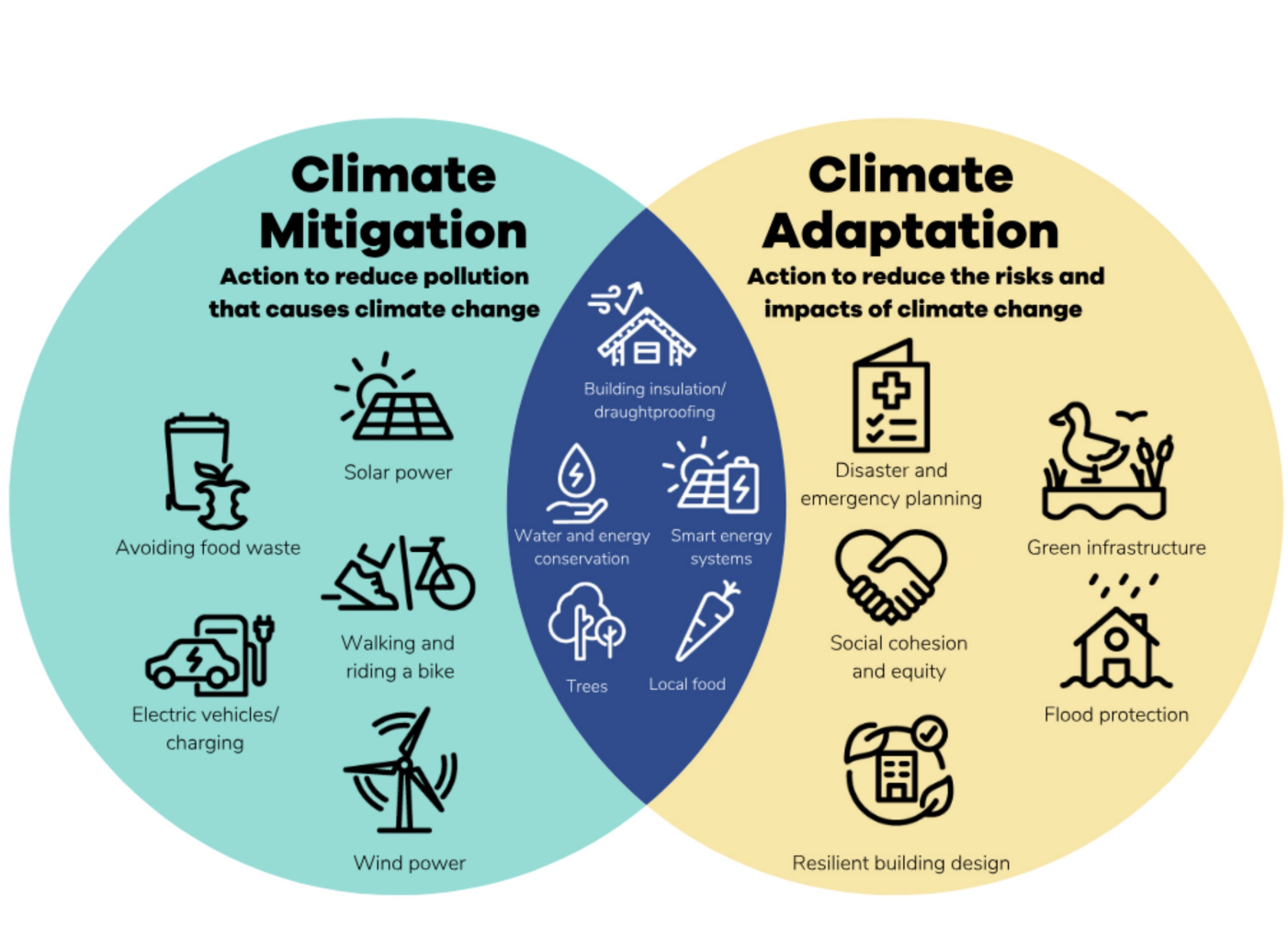
Climate change mitigation vs adaptation
Mitigation deals with the causes of climate change (root cause of the problem)
Adaptation responds to its impacts (dealing with the effects but not the original cause/problem)
In architecture we can do a lot to reduce carbon emissions and adapt to create resilient places that adapt to the effects of climate change
Reduce sources of emissions or enhancing sink of green house gases are our response to climate change mitigation
Building Life Cycle
Carbon emissions from buildings
embodied
think about materials selected if it is low carbon or negative carbon
local material → less transport emissions
operational
happens during entire life cycle of a building consumes energy and water over that entire lifetime
lot of opportunities to minimise energy and carbon through passive and active systems
Climate Change Mitigation in buildings
Increase carbon sequestration (capturing and storing atmospheric CO2)
Plants absorb Co2 and release oxygen which benefits the overall carbon balance of a building as well as creating a habitat for various living beings
Reduce embodied emissions & Operational emissions
insulation
water recycling, grey water systems don’t rely as much on water networks
using more electrical sources than gas for energy
low carbon materials
solar panelling
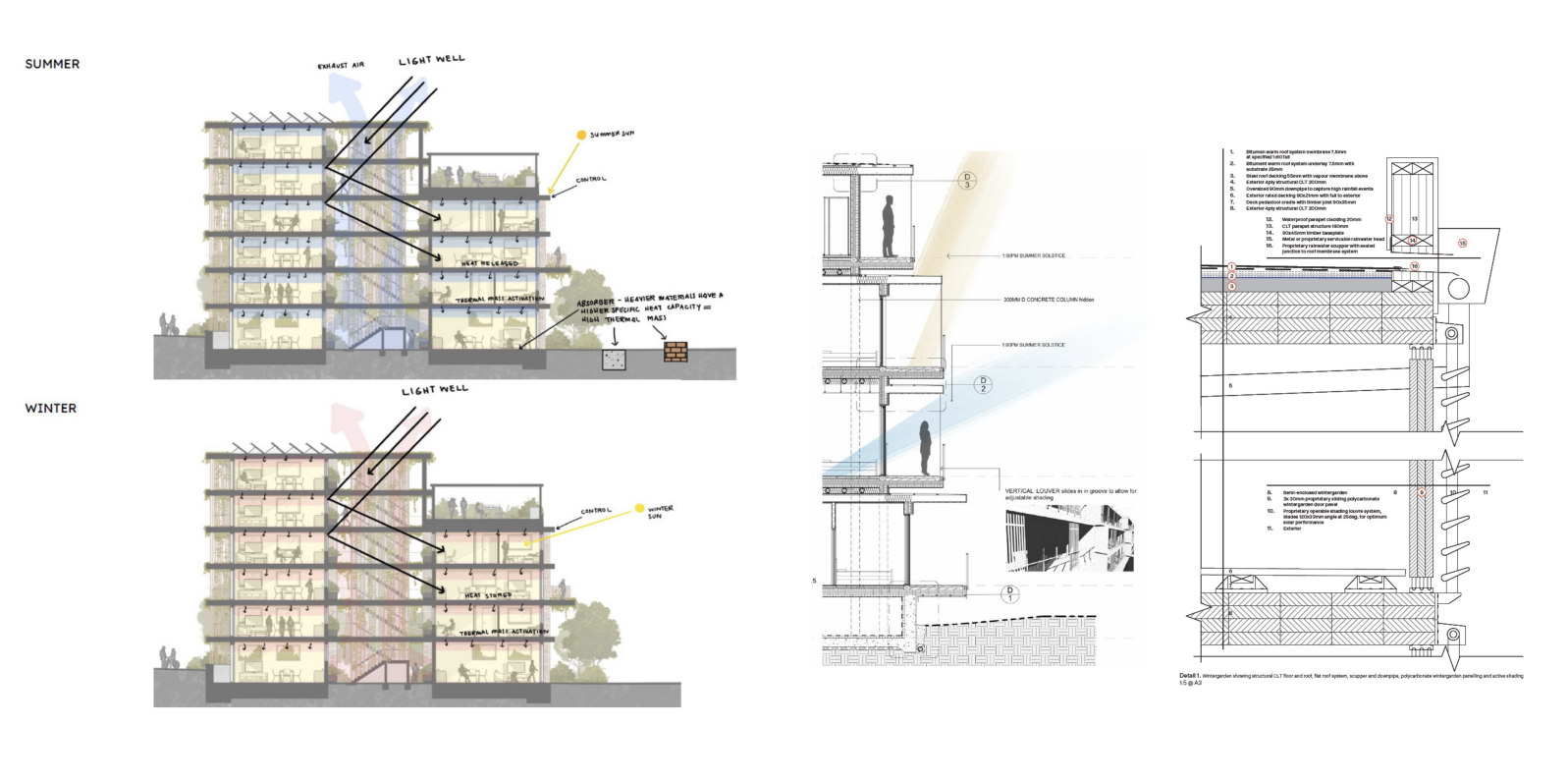
thermal masses
double glazed system
use more daylight so buildings don’t need more artifical light during day
good passive design needs little energy that is still comfortable to be in
Climate Change Adaptation
Adapating to extreme weather events through stronger structure, methods of wind protection and adaptable shading
Extreme Wather Events:
Temperature Extremes
Heavy Rain
Wind Storms
Seismic Activity
Heavy Snow
Wild Fires
Solutions (middle is mix of both)
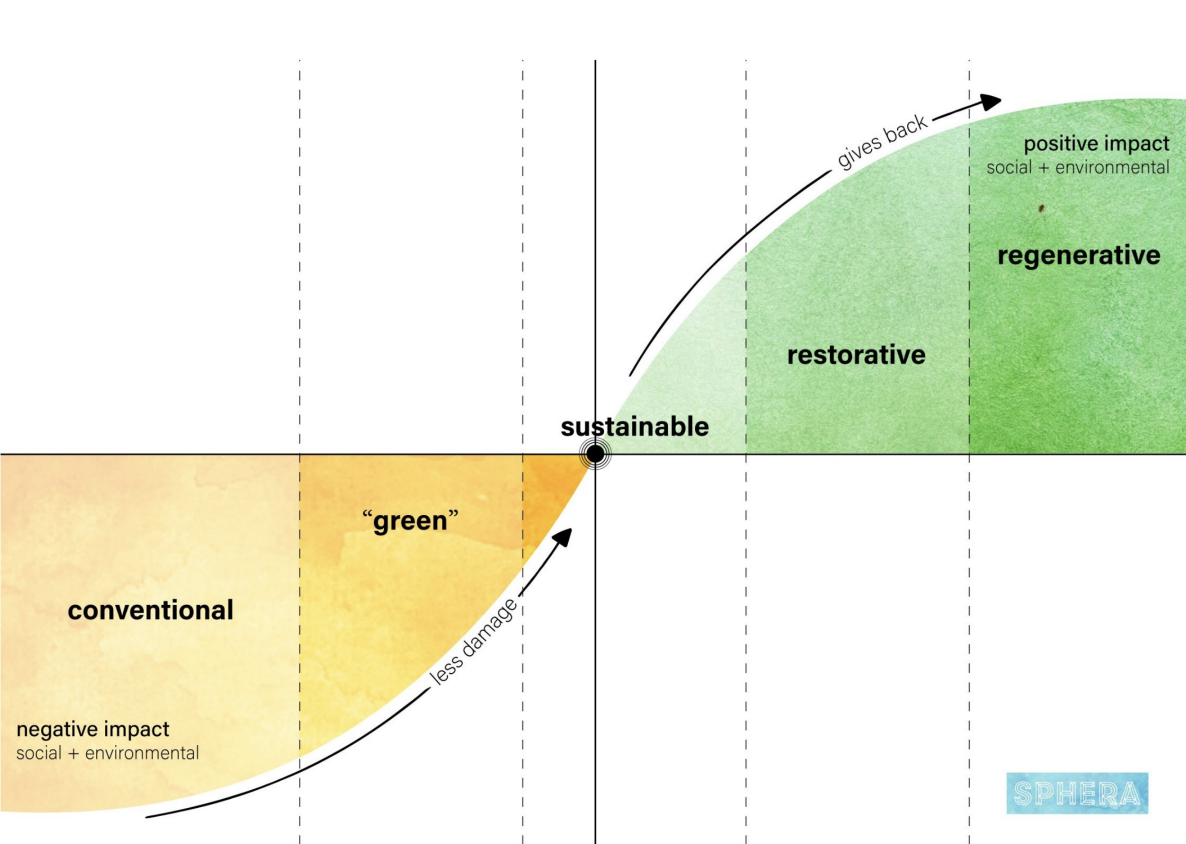
Evolution from business-as-usual to regenerative architecture
creating positive impacts for nature, biological systems, regenerative design where most buildings are conventional that have negative impact
initiatives to go green and reduce that impact, sustainable is to balance and reduce the underlying issues to then moving to giving back to nature
conventional → sustainable → regenerative
Regenerative Design
Instead of doing less damage to the environment, it is necessary to learn how one can participate with the environment by using the health of ecological systems as a basis for design.
The shift from a fragmented to a whole systems model is the significant cultural leap that consumer society needs to make - through framing and understanding living system interrelationships in an integrated way.
Designing structures that harmonise with their surroundings, hence minimising disruption to local ecosystems.
Fostering relationships between different systems such as energy use, water management, and material sourcing to create self-sustaining environments.
Employing a multi-disciplinary approach that includes insights from biology, ecology, and ethics to inform architectural practices.
Incorporate local cultural values into design, promoting a sense of belonging and respect for the place.
A place-based approach is one way to achieve this understanding. The design process begins by attempting to understand how the systems of life work in each unique place.
The role of designers and stakeholders is to create a whole system of mutually beneficial relationships. By doing so, the potential for green design moves beyond sustaining the environment to one that can regenerate the health of a building design as well as our own.
Mauri
A pervasive agency, vitality and inter-relatedness, a life-system or 'life-field' ...
Holistic wellbeing is a fundamental characteristic of living-ness and extends... to environmental entities such as rocks, atmosphere, climate"
relationship between people and their environment
revisit Mauri Ora compass
from human centrism to holistic ecological wellbeing
Bio climatic Architecture
Bioclimatic architecture is a way of designing buildings based on the local climate, with the aim of ensuring thermal comfort by using environmental resources.
Bioclimatic design - combining "biology" and "climate" - is an approach to the design of buildings and landscape that is based on local climate. Bioclimatic design techniques include solar heating and sun shading, natural ventilation, and use of building materials/mass for thermal time lag and storage.
Climate change adaptation and mitigation
Enhancing comfort and wellbeing
Working with nature, not against it
Embracing regional identities and different identities
Climate-Responsive Architecture
Climate-responsive architecture is a design practice centered on creating buildings that function in lockstep with the local climate, not in spite of it
Read “design with climate”
Passive vs Active Sytems
Passive systems utilise natural resources and environmental conditions to create comfortable indoor environments, relying on features such as thermal mass, natural ventilation, and daylighting without the need for mechanical assistance.
Active systems, on the other hand, involve mechanical methods to regulate indoor climate and energy use, such as heating, ventilation, and air conditioning (HVAC) systems, requiring energy input to function.
A balanced approach that integrates both passive and active strategies can enhance building efficiency and comfort while reducing energy consumption.
Designing positive energy buildings
Increase on site renewable energy generation
Reduce energy consumption in buildings
Climate Analysis for Architecture
Solar radiation informs sizes of windows and how to work with shading etc
Wind rose for specific location to show where its coming from which can be overlayed on a siteplan to show best ways to place a building and locate it on site
name of area/city windrose is how to search it
shows windspeed, direction
Air temperature important to know with yearly chart to understand extremes, averages to think about for design to last throughout the year
Humidity (water vapour is in a water-air mixture)
Rainfall on site (according to dry and wet season)
rain can be used for water harvesting
rain can determine weather tightness of facade
Urban Heat Islands (UHI)
when walking along streets without vegetation and more carparks compared to shading and vegetation it will effect the temperature of the environment in different spaces (eg park and carparks etc)