Intro to pharmacovigilance
Phase IV required by regulator to follow up drug once released to market so identify ADR and long term harm.
Spontaneous reports:
Yellow card
Methodology for monitoring the safety of all marketed medicines
It’s primary function is to provide early warning of unknown ADR of medicines.
Types of ADR:
Type A- drug effect- rare but easy to know if occur
Type B- patient reaction (anaphylaxis, Steven-Johnson syndrome)
Type C- where drug increases the frequency of spontaneous disease
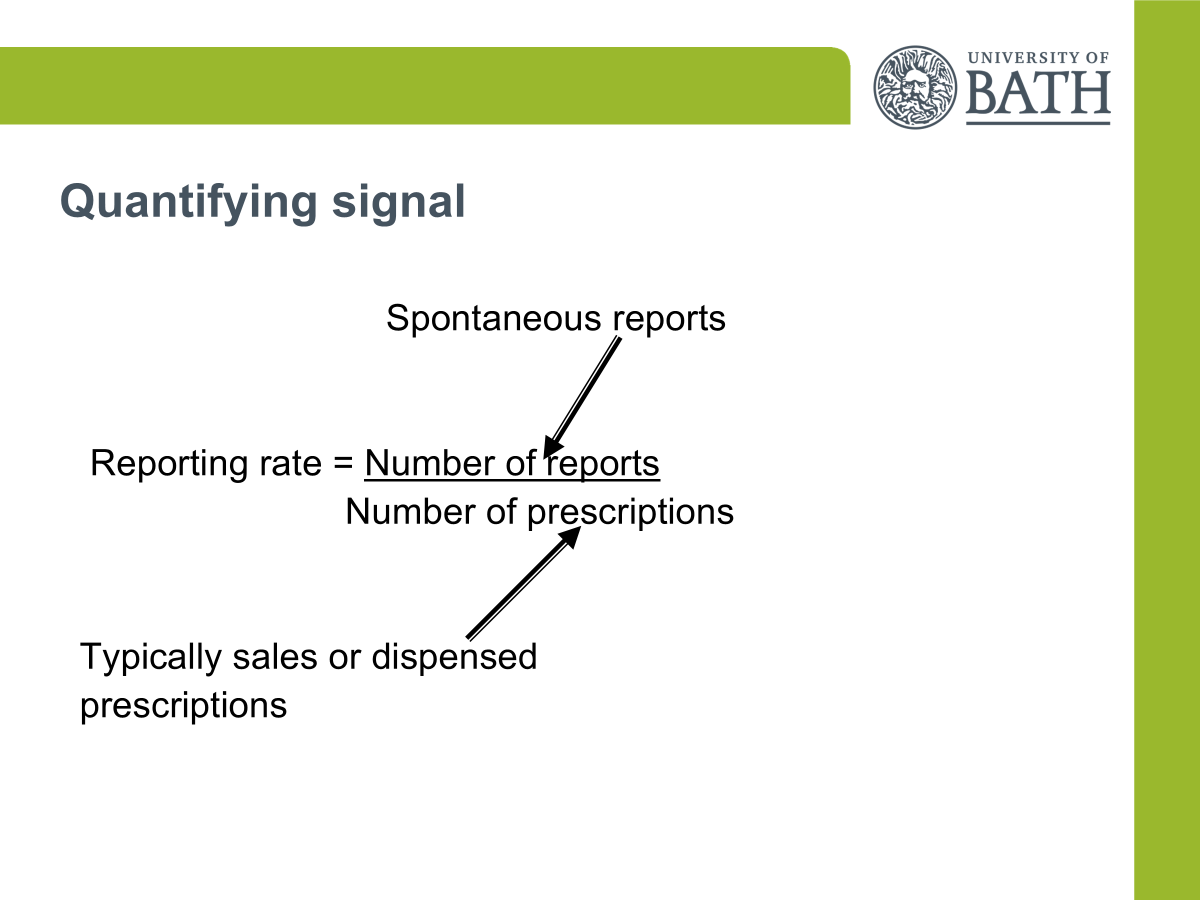
ways spontaneous report signals are looked at:
Strength of spontaneous reports:
Large scale – potentially cover entire population
Relatively inexpensive to operate
Surveillance can start immediately
No time limit
Generation of hypotheses and signals
Stronger the drug-event relationship and rarity of event = fewer reports needed
Healthcare professionals can help to improve public health
Weaknesses of spontaneous reports:
Adverse event recognition
False signals
Underreporting
Biases
Estimated population exposure?
Report quality
Comparing drugs (piroxicam, GI ulcers?): confounding?
Bias from new drugs
Pharmacovigilance- the detection ,assessment and prevention of ADR in humans (WHO)
Pharmacoepidemiology- the principles of chronic disease epidemiology applied to the clinical area of pharmacology