B1.1 Carbohydrates and Lipids
Guiding Questions:
In what ways do variations in form allow diversity of function in carbohydrates and lipids?
How do carbohydrates and lipids compare as energy storage compounds
B1.1.1 Chemical properties of a carbon atom allowing for the formation of diverse compounds upon which life is based
all organic compounds contain carbon → carbon can form 4 bonds to different atoms by covalent bonds
allows it to be the backbone of life
majority of molecules can be categorized into 4 biochemical groups:
carbohydrates
→ monosaccharides, polysaccharides
lipids
→ triglycerides, phospholipids
proteins
→ enzymes, antibodies, peptide hormones
nucleic acids
→ nucleotides
B1.1.2 Production of macromolecules by condensation reactions that link monomers to form a polymer
macromolecule: made up of smaller molecules called monomers
carbohydrate monomer: monosaccharides
lipids monomer: glycerol, fatty acids, phosphate groups
protein (polypeptide) monomer: amino acids
nucleic acids monomer: nucleotides
B1.1.3 Digestion of polymers into monomers by hydrolysis reactions
hydrolysis: chemical reactions breaking down macromolecules
hydrolysing enzymes: digestive enzymes
B1.1.4 Form and function of monosaccharides
ribose: pentose monosaccharide
C5H10O5+
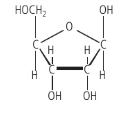
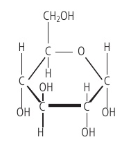
glucose: hexose monosaccharide
C6H12O6+
can be used to make polysaccharides (cellulose and starch being examples)
molecular stability: covalent bonds (very strong)
high solubility in water: glucose is polar and dissolves in a polar solvent (water)
easily transportable: glucose easily circulates in blood and in between cells
B1.1.5 Polysaccharides as energy storage compounds
compact nature of starch in plants and glycogen in animals
→ due to coiling and branching during polymerization
glycogen: storage of excess glucose by animals and humans
B1.1.6 Structure of cellulose related its function as a structural polysaccharide in plants
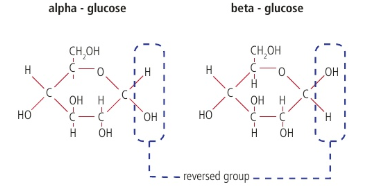
alternating orientation of beta-glucose monomers
→ giving straight chains that can be grouped and cross-linked with hydrogen bonds
B1.1.7 Role of glycoproteins in cell-to-cell recognition
lipoprotein: lipid +protein
glycolipid: carbohydrate + lipid
glycoprotein: carbohydrate + protein
glycoproteins MUST be present for cell-to-cell recognition
blood proteins called antigens are used to trigger the immune system:
people with blood type O → can give blood to others with type O, A, B, or AB
people with blood type AB → can receive blood from types AB, A, B, or O
B1.1.8 Hydrophobic properties of lipids
lipids → dissolve in non-polar solvents, not water (due to the non-polar covalent bond)
examples: fats, oils, waxes, steroids
B1.1.9 Formation of triglycerides and phospholipids by condensation reactions
lipids are formed by condensation reactions:
1 glycerol + 3 fatty acids → 1 triglyceride (resulting lipid) + 3 water molecules (output of condensation reaction)
phospholipids are formed if an inorganic phosphate replaces one of the fatty acids:
1 glycerol + 2 fatty acids + 1 inorganic phosphate → 1 phospholipid (resulting lipid) + 3 water molecules (output of the condensation reaction)
B1.1.10 Difference between saturated, monosaturated and polysturated fatty acids
saturated fatty acids: fatty acids that contain single bonds between the carbons
all other carbon bonds are to hydrogens
higher melting point (solid at room temperature)
monosaturated fatty acids: one double bond between two of the carbons
lower melting point (liquid at room temperature)
polyunsaturated fatty acids: fatty acids that have more than one double bond
lower melting point (liquid at room temperature)
B1.1.11 Triglycerides in adipose tissue for energy storage and thermal insulation
properties of triglycerides make them suited for long-term energy functions
adipose tissue: composed of cells that store fat in the form of triglycerides
B1.1.12 Formation of phospholipid bilayers as a consequence of the hydrophobic and hydrophilic regions
ampipathic molecules: have both hydrophilic and hydrophobic regions
example being phospholipids
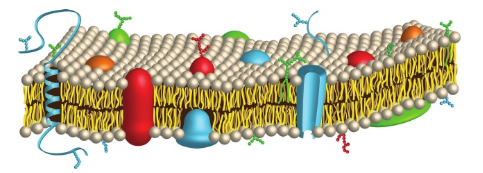
in the phospholipid bilayer → hydrophobic fatty acid tails extend toward each other in order to keep away from the water inside and outside the cell
foundation of the plasma membrane
B1.1.13 Ability of non-polar steroids to pass through the phospholipid bilayer
cholestrol passes through the phospholipid bilayer