C3 structure and bonding
C3.1
- \
C3.2
- when two non metals join together they share electrons it forms a covalent bond
- ionic bonds are when a metal and
video notes
- changing state requires lots of energy, which is why the graph flattens when it is changing state (solid, gas, liquid)
- atoms want to have a full outer shell and share or transfer electrons to become ions
- group 1 has one electron on it’s outer shell so it needs to lose one
-1 electron → - -1 → +1 is the charge
- electrons cannot be made or destroyed can only be transferred or shared
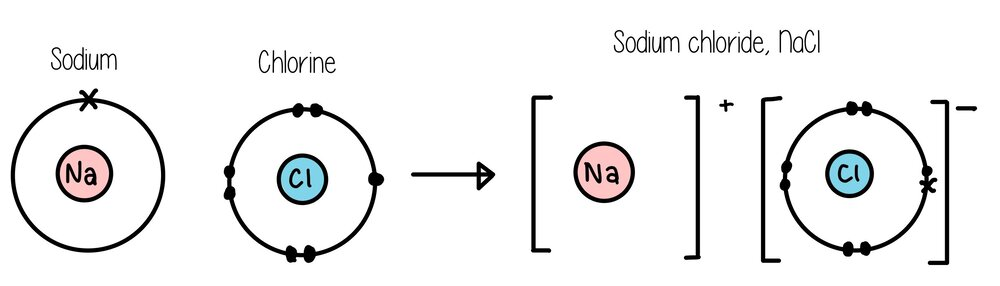
- dot and cross diagram shows the transfer of electrons so it shows ionic bonding (between metal and non-metal)
- \
C3.3 ionic bonding
- between a metal and non-metal
- transfer electrons
- shown through a dot and cross diagram
- ions are held together by strong forces of attraction between oppositely charged ions
C3.4 giant ionic structures
- they have high boiling points because they have strong electrostatic forces between them, it means they need a lot of energy to break
- they can carry charge when dissolved in water or molten because ions are allowed to be mobile and flow.
C3.5 covalent bonding
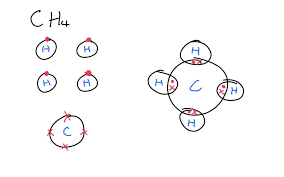
- two non metals bonding
- share electrons
- each shared pair of electrons is an individual covalent bond
C3.6 structure of simple molecules
- simple structures have a lower melting and boiling point, this is because they have weak intermolecular forces (forces that hold the molecules together)
- substances of simple molecules cannot carry electricity because they have no overall charge and can’t carry charge
- each model has its limitations
- electrons are shown in a fixed position when they are constantly moving
- all electrons look identical
- doesn’t show shape of the molecule
- when a molecule is melted the intermolecular forces are broken
- covalent have strong bonds but the simple molecules have weak attraction, which means a low melting/boiling point
6+