Reproduction
Sexual and Asexual Reproduction
There are two main ways by which organisms can reproduce: sexual reproduction and asexual reproduction.
In sexual reproduction, genes from two parent organisms are combined to produce an organism with a unique genetic code. The advantages of sexual reproduction is that it produces natural variation among a species, enabling it to adapt to environmental change. Most animals and many plants reproduce sexually.
In asexual reproduction, a single organism makes a copy of itself with exactly the same genetic code. The new organism is a clone of the original. Asexual reproduction enables an organism to quickly populate a new habitat and ensures that, if it is well adapted to its environment, successful characteristics are passed on. Organisms that asexually reproduce include:
many plants, such as spider plants, strawberries and potatoes
microorganisms such as bacteria and yeast
some insects such as aphids
Fact: Bacteria can copy themselves very quickly — their numbers can double every 20 minutes. That’s 10 times faster than the quickest animal cells.
Human clones
Human clones already exist. Identical twins have exactly the same genes and are therefore, clones of each other. Identical twins are created when a fertilised egg splits in two separate, but genetically identical embryos.
Meiosis
Mitosis
During mitosis, the double chromosomes are pulled apart as each new set of 46 chromosomes moves to opposite ends of the cell. Two nuclei then form. The cytoplasm and cell membrane divide and two identical cells are produced. Mitosis produces 2 daughter cells from the parent cell with the same number of chromosomes (46)
Mitosis occurs rapidly in a newly formed fertilised egg. Mitosis is also needed for repair and replacement of cells at site of wound or injury, during growth spurts, during production of red blood cells in bone marrow (happens all the time). Red blood cells have life spans of about 4 months and need to be replaced constantly by mitosis.
Meiosis
Meiosis is another form of cell division that takes place when sex cells are produced in the ovaries and testes in animals, and in the carpels and stamens of plants (asexual reproduction). It is used to half the number of chromosomes. The cells that are formed by meiosis have half as many chromosomes as the cell that formed them. Human body cells contain 23 pairs of chromosomes, while human gametes contain 23 single chromosomes. The main features of meiosis are:
the chromosomes are copied
the cell divides twice, forming 4 gametes.
In meiosis, the DNA f each chromosome is copied, just as in mitosis. But it then divides twice, so the chromosome number is halved. So, in mitosis, there is one replication of DNA and one division, but in meiosis, there is one replication of DNA and two divisions.
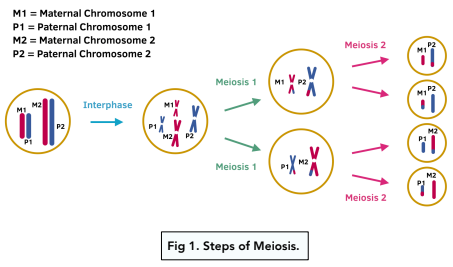
When the gametes (egg and sperm) fuse at fertilisation, the normal number of chromosomes is restored (23 pairs). They form a zygote. The zygote then divides by mitosis and the number of cells increases. As the embryo develops, cells begin to differentiate. Each gamete is unique because there’s some exchange of genetic material during meiosis. This contributes to genetic variation. When an egg or sperm is produced, it doesn’t just receive unchanged chromosomes from the parent.
Plant reproduction
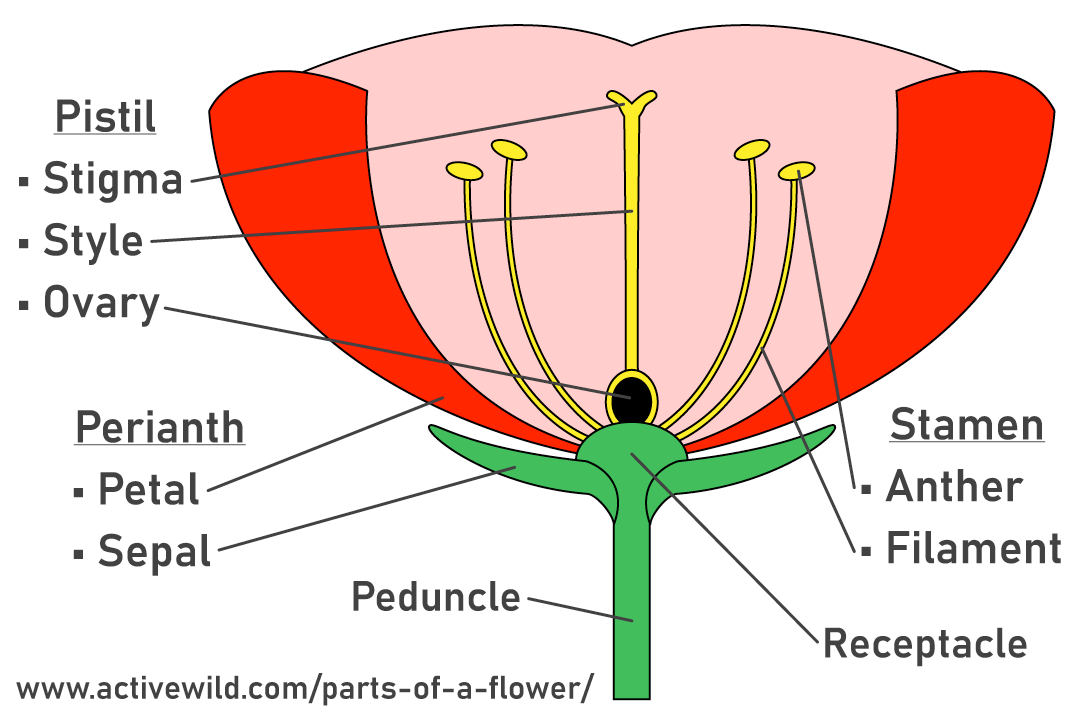
Flowers are the reproductive organs of plants.
Pollination
The pollen grain contains the male sex cell. Pollination is the transfer from the anther to the stigma.
Cross pollination is when pollen travels from one flower to another. This is desirable in plants as it promotes variation. Pollen can be carried between flowers by insects or by wind. Insect pollinated flowers are adapted to attract insects to them to enable the transfer of pollen.
Pollen has barbs for hooking onto insect fur.
Anthers (male) are positioned to rub pollen onto insects
Sticky (female) stigmas collect pollen
Wind pollinated flowers are different in structure because they do not have to attract insects to them, but need to be exposed to the wind. For eg, lavender.
Petals are small and green as there is no need to attract insects.
Pollen grains are small and light. They occur in very large numbers.
Anthers are exposed to the wind so that pollen can be easily blown away.
Stigma is feathery to catch pollen.
Has no scent or nectar.
Self pollination occurs when pollen falls from the anther onto the stigma of the same flower. Self pollination is not desirable as it reduces variation. Flowers will present self pollination by either having stigma above stamen or by having stamen and stigma mature at different times. A mature pollen grain has two types of cells: tube cells and generative cells.
Fertilisation and fruit development
Once pollination occurs, a tube grows from the pollen grain down through the style to the ovule. Fertilisation occurs when the male gamete fuses with the ovule.
Seed dispersal
After fertilisation, the petals, stamen and sepals fall off. The ovule turns into a seed, the fertilised egg inside develops into an embryo plant.
Testa — tough seed coat
Micropyle — hole made by the pollen tube
Cotyledon — food store
Plumule — embryo shoot
Radicle — embryo root
Water leaves the seed, it dehydrates and becomes dormant because metabolic reactions stop. The ovary develops to become a group. You are eating an adapted ovary when you bite into a fruit.
Seeds need to be dispersed away from the parent plant in order to reduce competition for space, light, nutrients and water. Seeds can be dispersed by wind, water, animals and mechanically.
The Stem
Q) Why do plants need transport systems?
They are multicellular — this means they have a higher demand for resources.
Surface area : volume ratio — as organisms get bigger, this ratio gets smaller. This means diffusion alone is insufficient to supply resources.
Q) What materials do plants exchange and distribute?
CO2
Oxygen
Water
Glucose
Mineral ions
Plants have two different types of transport tissue. Xylem transports water and solutes from the roots to the leaves, phloem transports food from the leaves to the rest of the plant.
Xylem
Xylem vessels are involved in the movement of water and minerals through a plant from its roots to its leaves. Water is absorbed from the soil through root hair cells. It is then transported through the xylem vessels up the stem to the leaves and evaporates from there (transpiration).
Carries water and minerals to the leaves
made of dead cells
cell wall made of lignin
no cytoplasm
transports water and minerals
thick cell wall
flow is upward
Phloem
Phloem vessels are involved in translocation. This is the movement of food substances from the stems to growing tissues and storage tissues. Cells have end walls with perforations to allow a two way flow, unlike xylem cells.
carries glucose to growing parts and storage organs
made of living cells
cell wall made of cellulose
permeable cell walls
transports food
thin cell wall
flow is up and down
The Male Reproductive System
Structures:
Scrotum
Seminiferous tubes
Pituitary gland
Vas deferens
Testes
Leydig cells (testosterone)
Epididymis
The male reproductive system has two main functions: producing sperm and releasing testosterone. Sperm cells from certain cells in the male reproductive system divide by meiosis to form haploid cells. Being haploid means they have half the number of chromosomes of other cells in the body. An adult male may produce millions of sperm each day. Testosterone has two primary roles. During adolescence, testosterone causes most of the changes associated with puberty. In adulthood, testosterone is needed for the production of sperm.
The male reproductive organs include the penis, testes, epididymis, vas deferens, and prostate gland. The two testes (testis singular) are ovular organs that produce sperm and secrete testosterone. They are located inside a sac called the scrotum. The scrotum also contains the epididymis. It is a 6m tube in adults. It is tightly coiled, so it fits on top of the testes. The epididymis is where the sperm matures. It stores the sperm until it leaves the body.
Adaptations
Types of adaptations:
Behavioural
Behavioural adaptations help an organism survive and reproduce
Physiological
Physiological adaptations are body processes that help an organism survive and reproduce.
Structural
Structural adaptations are body features that help an organism survive and reproduce.