Types of Bones and Bone Tissue
Types of Bones and Bone Tissue
Introduction
Bones, like people, come in various shapes and sizes.
Purpose: Bones have specific functions that facilitate movement and support within the human skeleton.
Types of Bone Tissue
Compact Bone
Makes up 80% of the total weight of the human skeleton.
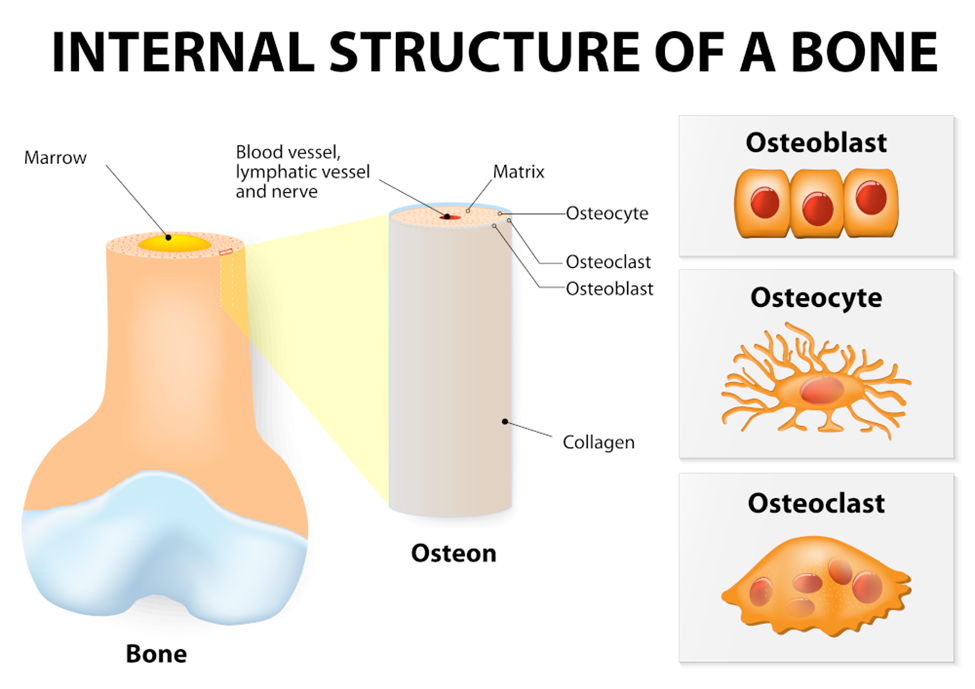
Comprises cylinder-shaped units known as osteons (also referred to as Haversian systems).
Osteons run lengthwise through the bone, providing structural integrity.
Bone cells in osteons are closely packed, allowing efficient nutrient delivery and waste removal during bone remodeling.
Appearance: Compact bone is smooth and forms the external layer of bones.
Cancellous Bone
Accounts for 20% of the human skeleton.
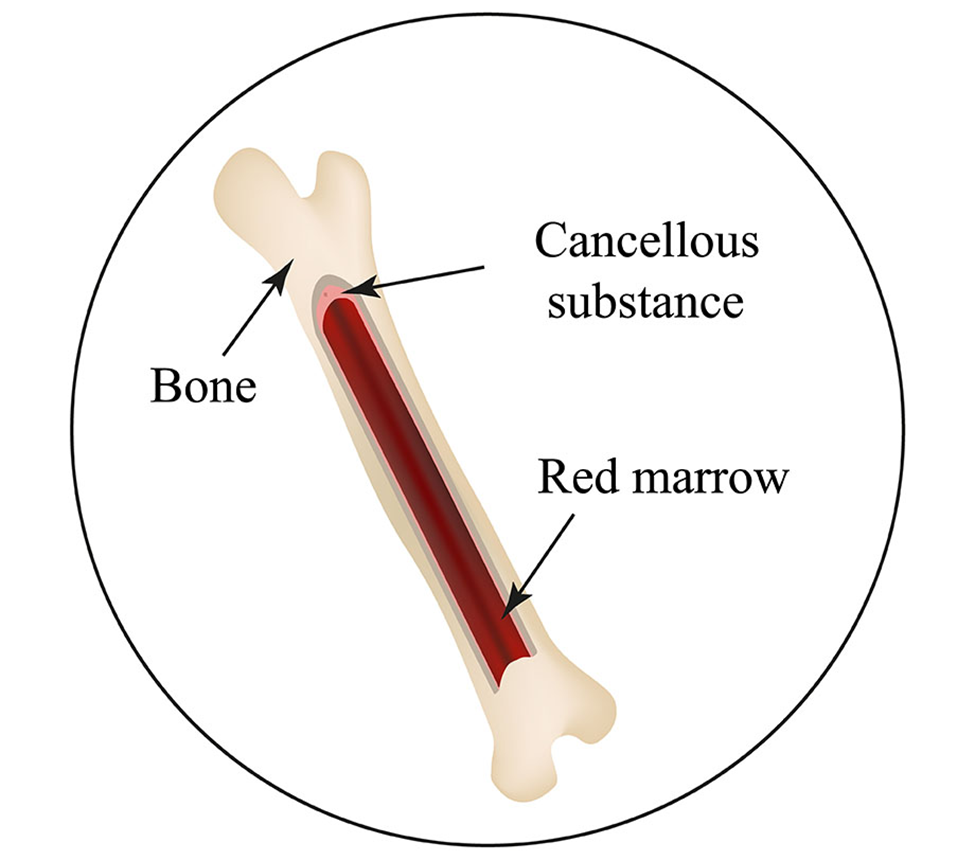
Does not contain osteons; instead, it has tiny branches called trabeculae crisscrossing each other.
Also known as trabecular bone.
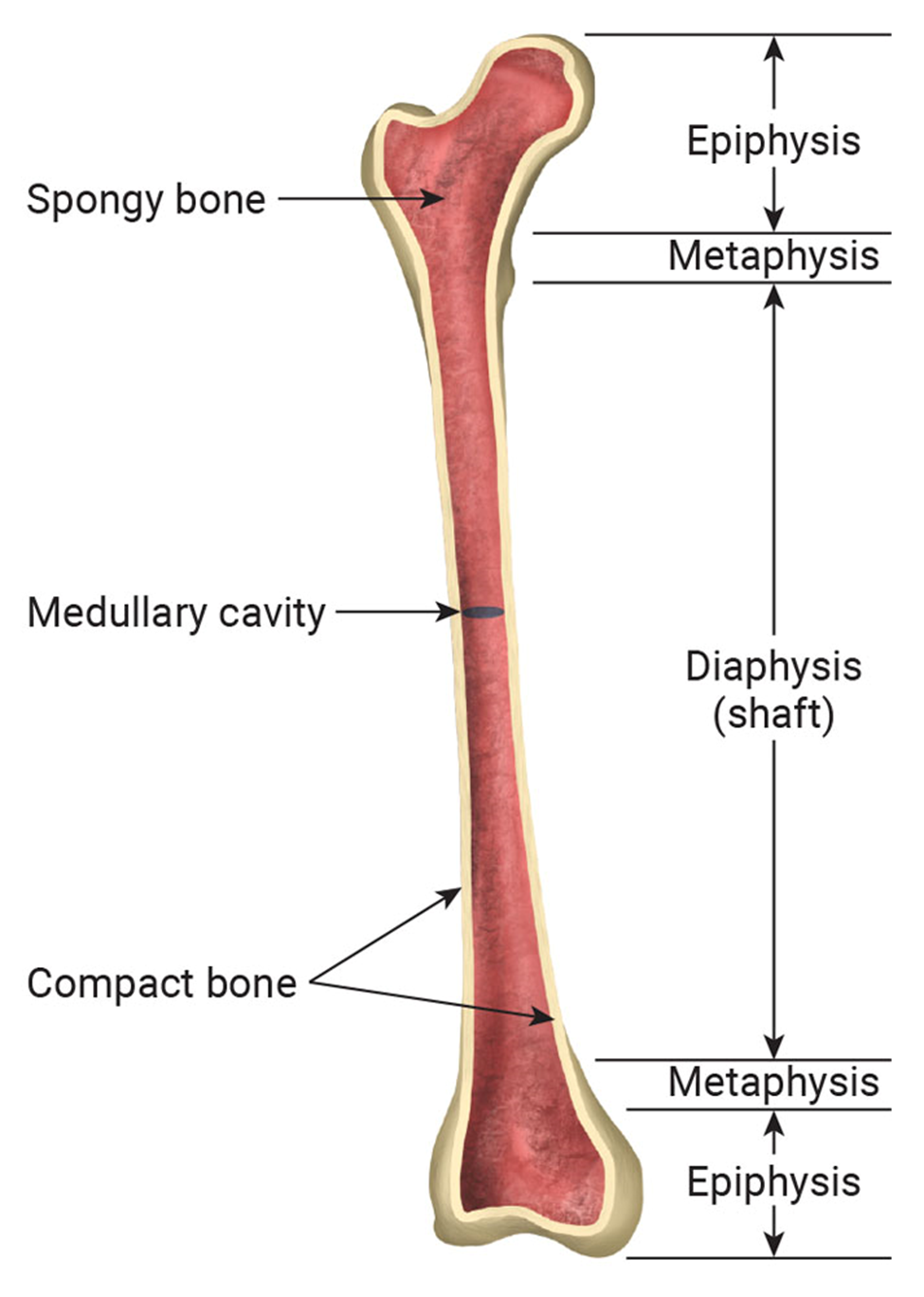
Location: Found primarily in the epiphyses, which are the rounded ends of long bones.
Bone Marrow
Described as a soft connective tissue vital for bone function.
Types of Bone Marrow:
Red Bone Marrow
Site of hematopoiesis, the production of red blood cells.
Found in the diaphysis (straight section) and epiphysis (ends) of long bones in children.
Post-epiphyseal plate fusion, it is present only in the epiphysis and flat bones of adults.
Yellow Bone Marrow
Functions primarily for fat storage (adipose tissue).
Located within the medullary canal (marrow cavity) of long bones.
In infants, this cavity contains red marrow, which is gradually replaced by yellow marrow around the age of seven.
Classification of Bones
Bones are classified based on their shape into five categories:
1. Long Bones
Found in arms and legs.
Characteristics:
Longer than they are wide.
Composed of a diaphysis (straight shaft) and epiphyses (rounded ends).
The area between diaphysis and epiphyses is called the metaphysis.
Function: Designed to withstand significant weight and offer structural support.
2. Short Bones
Predominantly spongy and cube-shaped.
Locations: Found in the wrists (carpal bones) and ankles (tarsal bones).
Function: Allow for greater movement compared to long bones.
3. Flat Bones
Thin, often curved structures (like a peanut butter sandwich).
Examples: Skull, ribs, sternum, scapula.
Function: Protect delicate tissues, such as the brain and organs in the thorax.
4. Sesamoid Bones
Encased within a tendon that runs over an angled surface.
Example: Kneecap (patella).
Characteristics: Resemble sesame seeds; also present in hands and feet.
5. Irregular Bones
Exhibit a multitude of shapes and edges for muscle, tendon, and ligament attachment.
Definition: These do not fit into other categories and are also known as miscellaneous bones.
Examples: Jawbone (mandible), tailbone (coccyx), and vertebrae.
Bone Fractures
Definition: Fractures are breaks in bones that occur when they absorb more force than they can withstand.
Types of Fractures: Various, further research is encouraged on this category.
Healing Process: Involves a consistent series of events tied to remodeling:
Realignment: Bones must be realigned and immobilized using casts, slings, or bed rest.
Stages of Bone Healing
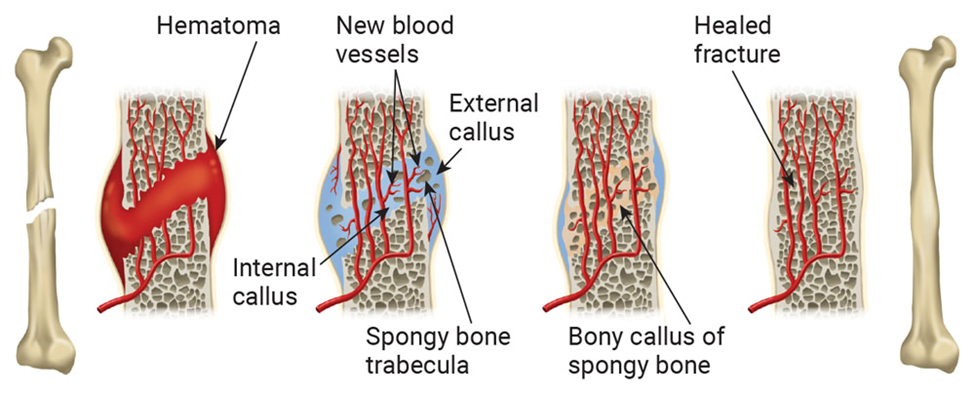
The healing process consists of four stages:
Hematoma Formation:
Occurs immediately after a fracture, involving bleeding that forms a bruise known as a hematoma.
This stage lasts approximately 72 hours.
Soft Callus Formation:
Begins around the end of the second week.
Nutrients and bone matrix rebuild around the fracture, resulting in a fibrocartilaginous callus consisting of cartilage, calcium, phosphorus, and osteoblasts.
Hard Callus Formation:
Also known as ossification; occurs between three weeks and six months post-fracture.
Involves the decrease of distance between broken bone pieces.
Patients are advised to keep the fractured area immobilized until x-ray confirms healing.
Remodeling:
The final phase where excess bone tissue is reabsorbed by osteoclasts.
Restores normal bone strength and shape over time.
Aging and Bone Health
Change in bone matrix with age:
As age increases, matrix layers become brittle and less capable of regeneration.
This results in reduced bone density and strength.
Cellular Impact:
Osteoclasts (bone breakdown cells) continue to function normally, but osteoblasts (bone-building cells) become less active.
Outcome: More bone is lost than built; this condition is known as osteoporosis.
Demographics:
Osteoporosis can affect males but is most common in post-menopausal females due to decreased estrogen production, which hampers osteoblast activity.
Complications of Osteoporosis:
Increased fragility of bones, leading to fractures from minor impacts or falls.