Mesothelial carcinoma
Review Article Guidelines for Pathologic Diagnosis of Mesothelioma 2023 Update
Overview
Authors: Aliya N. Husain, MD, David B. Chapel, MD, Richard Attanoos, MB, BS, Mary Beth Beasley, MD, et al.
Context: Mesothelioma is a rare malignant tumor that presents significant diagnostic challenges due to its diverse morphological characteristics and similarities with other conditions. Therefore, a comprehensive approach is essential for an accurate diagnosis.
Objective: This article aims to provide updated, practical guidelines for the pathology diagnosis of mesothelioma, incorporating the latest findings and expert insights to assist pathologists in making informed diagnostic decisions.
Data Sources: The guidelines are based on the contributions of leading experts in the field, critical reviews of the literature, and established texts that pertain to mesothelioma diagnosis and pathology.
Conclusion: There is a consensus on the importance of histomorphologic diagnosis, the understanding of molecular pathogenesis, the use of immunohistochemical markers, and the implementation of ancillary studies for definitive diagnosis.
Key Guidelines for Diagnosis
Histomorphologic Diagnosis
Types of Mesothelioma: There are three primary types of mesothelioma: epithelioid, biphasic, and sarcomatoid. Each type presents unique histological features that are critical for accurate identification.
Morphologic Variants: Pathologists should be trained to identify various morphologic variants of mesothelioma, including distinct architectural patterns and common pitfalls in diagnosis that could lead to misinterpretation.
Molecular Pathogenesis
An in-depth discussion of the genetic alterations involved in the pathogenesis of mesothelioma, including mutations in key oncogenes and tumor suppressor genes, is essential for understanding the disease. Alterations in genes such as BAP1, CDKN2A, and MTAP play significant roles in tumor behavior and treatment response.
Immunohistochemical Markers
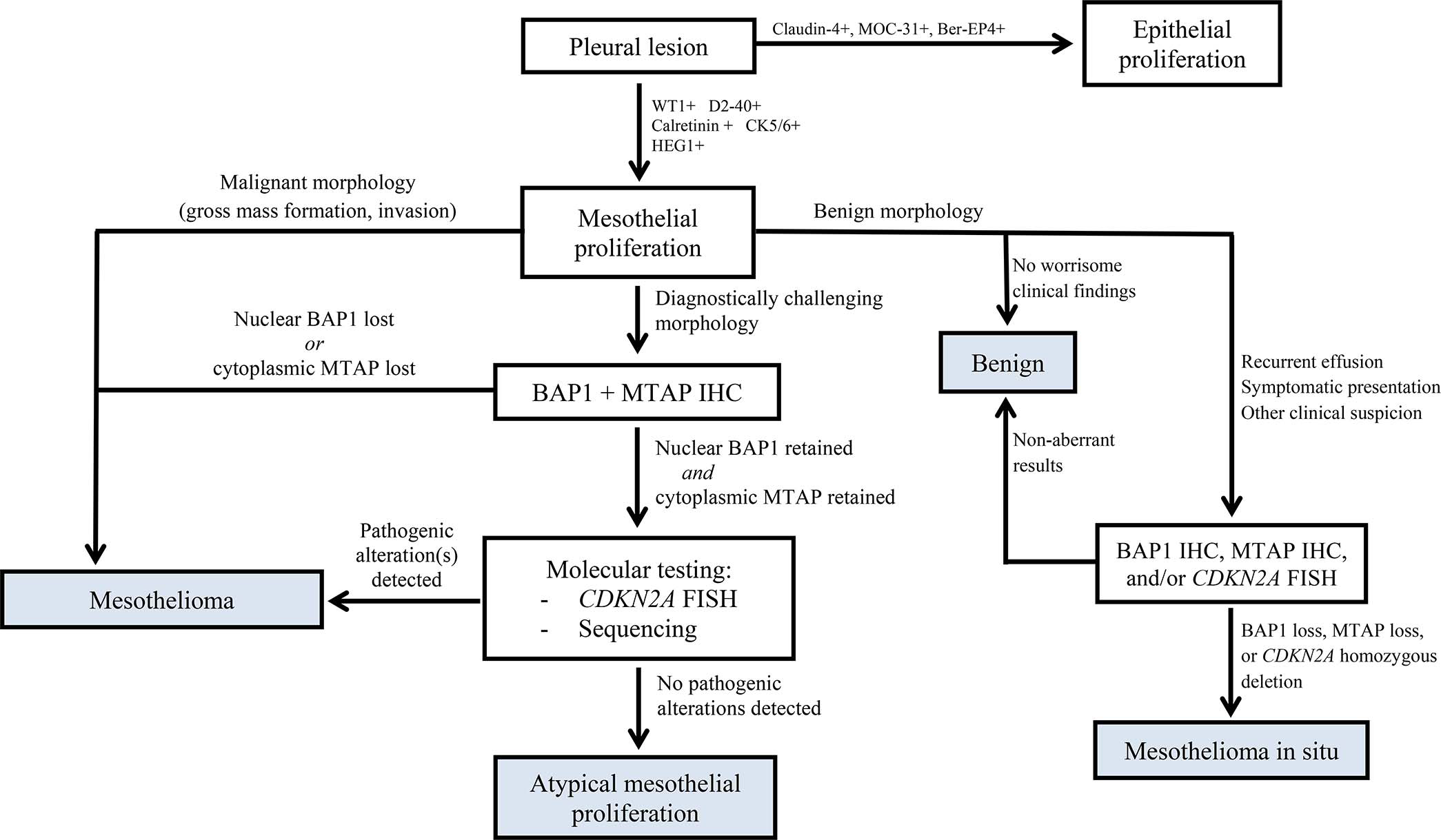
Establishing mesothelial lineage and accurately differentiating mesothelioma from mimicking tumors relies heavily on immunohistochemical markers. Commonly used markers include BAP1, MTAP, Merlin, p53, and FISH techniques to detect gene deletions. These markers help to delineate mesothelioma from other malignancies and benign conditions.
Diagnostic Recommendations
Pathologists should follow standardized reporting procedures for mesothelioma, incorporating key grading parameters and features characteristic of mesothelioma in situ, including cellularity, atypical mitotic figures, and architectural patterns.
Cytologic diagnosis techniques utilizing immunostains and molecular assays are vital for enhancing diagnostic accuracy, particularly in challenging cases where biopsies are limited.
Distinguishing Benign from Malignant
Identification of malignant features through ancillary tests is critical. Features such as increased nuclear-cytoplasmic ratio, atypical mitotic figures, and the presence of necrosis are correlated with malignancy.
Morphologic Classification of Mesothelial Tumors
The 2021 WHO classification maintains three major subtypes:
Epithelioid Mesothelioma: Accounts for 60-70% of pleural cases and 80-90% of peritoneal cases, exhibiting various architectural patterns (e.g., tubulopapillary, trabecular, micropapillary), which are associated with patient prognosis.
Sarcomatoid Mesothelioma: Represents 5-15% of pleural cases; it has distinct histological features and is associated with a poor prognosis due to its aggressive nature.
Biphasic Mesothelioma: Contains both epithelioid and sarcomatoid components and is diagnosed based on the relative proportions of each component. Accurate diagnosis is vital, as it impacts therapeutic strategies.
Prognostic Factors and Grading
Epithelioid Mesothelioma Grading: A newly validated 3-tiered and 2-tiered grading system based on mitotic activity and nuclear atypia helps predict patient outcomes more accurately. High-grade tumors are associated with poorer survival.
Molecular Factors: Deletions in CDKN2A and loss of MTAP indicate a more aggressive disease course, while the loss of nuclear BAP1 suggests better prognostic outcomes, informing clinical management.
Diagnostic Approach
Establishing Diagnosis: A combination of morphology, immunohistochemistry, and molecular pathology is critical for an accurate diagnosis of mesothelioma.
Cytologic Analysis: Cytologic specimens, often obtained via pleural effusion, can reveal mesothelioma with varying sensitivities across histological types. Ancillary studies using immunocytochemistry and FISH have demonstrated high specificity and sensitivity for identifying key markers in cytologic samples.
Implications for Treatment and Management
Germline Testing: It is recommended for all patients with mesothelioma to assess hereditary predispositions potentially linked with targeted therapies.
Targeted Therapies: There is a growing focus on therapies like PARP inhibitors and other targeted treatments based on identified molecular alterations, alongside immunotherapy approaches that may improve patient outcomes.
Conclusion: Given the complexities surrounding the diagnosis of mesothelioma, there is a pressing need for expert evaluation and morphological assessment, underscoring the importance of a multidisciplinary approach in managing and diagnosing this challenging malignancy.