The Carbon Cycle
Key Idea
The carbon cycle starts with carbon dioxide (CO₂) in the atmosphere.
Photosynthesis is the only way carbon enters the cycle.
Respiration is the main way carbon returns to the atmosphere.
Photosynthesis (Entry of Carbon)
Plants and algae take in CO₂ + water → glucose (using light energy).
Glucose used to make carbohydrates, fats, proteins in cells.
This is the only process that removes CO₂ from the air.
Respiration (Return of Carbon)
All living organisms (plants, animals, decomposers) respire.
Respiration releases CO₂ back into the atmosphere.
⚠ Respiration ≠ breathing → do not confuse the two.
Feeding and Transfer of Carbon
Plants and algae are eaten by animals → carbon compounds passed into animals.
Animals can be eaten by other animals → carbon transferred through the food chain.
Plants and animals both respire, releasing CO₂.
Decomposition
Animals produce waste products (e.g. faeces).
Plants and animals eventually die.
Decomposers (bacteria, fungi):
Break down waste and dead remains.
Respire → return CO₂ to atmosphere.
Release mineral ions into soil.
Decomposers are vital for cycling materials in ecosystems.
Fossil Fuels
If decomposers cannot act (e.g. low oxygen), carbon in dead material can form fossil fuels over millions of years.
In the last 200 years, humans have been burning fossil fuels (coal, oil, gas).
This releases large amounts of CO₂ back into the atmosphere.
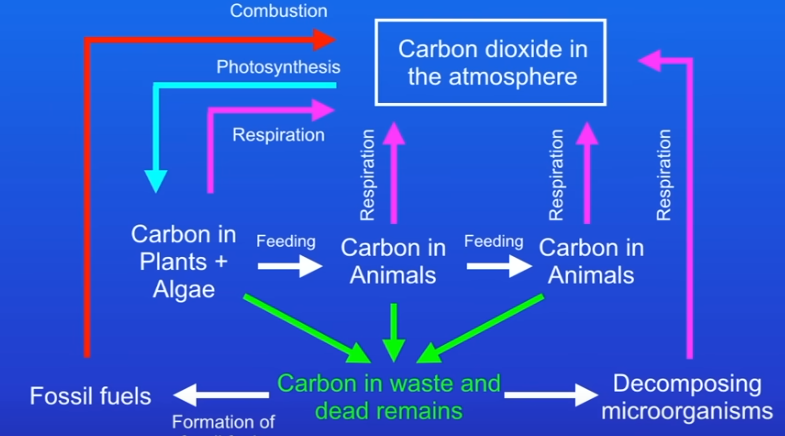
✅ Key Points / Summary
Photosynthesis: the only entry point for carbon.
Respiration: returns CO₂ to the air (all organisms respire).
Decomposers: recycle materials and release mineral ions.
Fossil fuels: store carbon; burning them releases it back.