L2 Extracellular Matrix
Objectives
Define Extracellular Matrix (ECM)
Discuss the Macromolecules present in the ECM '
Discuss the Disorders Associated with the Deficiency of Fibrous Proteins
Discuss Cell-Adhesion Molecules
What are the 4 different types of tissues mentioned
Epithelial, Muscle, Nervous, Connective
Which 3 are composed principally of Cells
Epithelial
covers entire body surface
first line of defense
used for protection, secretion, absorption, and filtration
Muscle
used for motion and contraction
Nervous
conducts impulses to control muscles, mental activity, and bodily functions
What is the ECM?
network of proteins and molecules that surround, support, and give structure to cells and tissues
What does the ECM contain?
proteins, polysaccharides, minerals
provides a scaffold for cell attachment
transmits chemical messengers to cells
What is the purpose of ECM
helps hold tissue together
supports plasma membrane
Is ECM the same all over the body?
no, varies per tissue
Why is Connective Tissue different from ECM?
fewer cells per volume than ECM
What is the purpose of connective tissue? What are some examples?
provides strength, protection, and elasticity
blood, bone, cartilage, fat, ligaments, lymph, tendons
contains many macromolecules in extracellular space
What are the 3 major categories of extracellular macromolecules in the ECM
Glycosaminoglycans (GAGs) & Proteoglycans
Fibrous Proteins
Collagen & Elastin
Adhesive Proteins
Fibronectin & Laminin
What are Proteoglycans
aggregates of GAG and Proteins
What are GAGs mostly made of chemical structure-wise
repeating Disaccharide chains
What is the most prevalent GAG? What are other examples?
Chondroitin Sulfate
Hyaluronic Acid (polymer of disaccharides), Keratin Sulfate, Dermatan Sulfate, Heparin, and Heparan Sulfate
What makes up Proteoglycan Monomers
core protein with GAG chains
How does Glycosaminoglycans help with joints?
helps lubricate joints
What was the examples given as OTC dietary supplements that can be used to reduce swelling and pain such as for osteoarthritis
Glucosamine and Chondroitin
What are the components of Fibrous Proteins
specific types of amino acids
What are the 2 major fibrous proteins in the ECM?
Collagen & Elastin
What is the most abundant protein in the human body ~30% total body protein mass?
collagen
Where is collagen the main type of protein?
Bone, Tendon, Skin
What is the structure of collagen
Three Helical Polypeptide Alpha Chains of Amino Acids
Repeating units of X-Y-Gly
X is Proline
Y is a modified form of Proline or Lysine
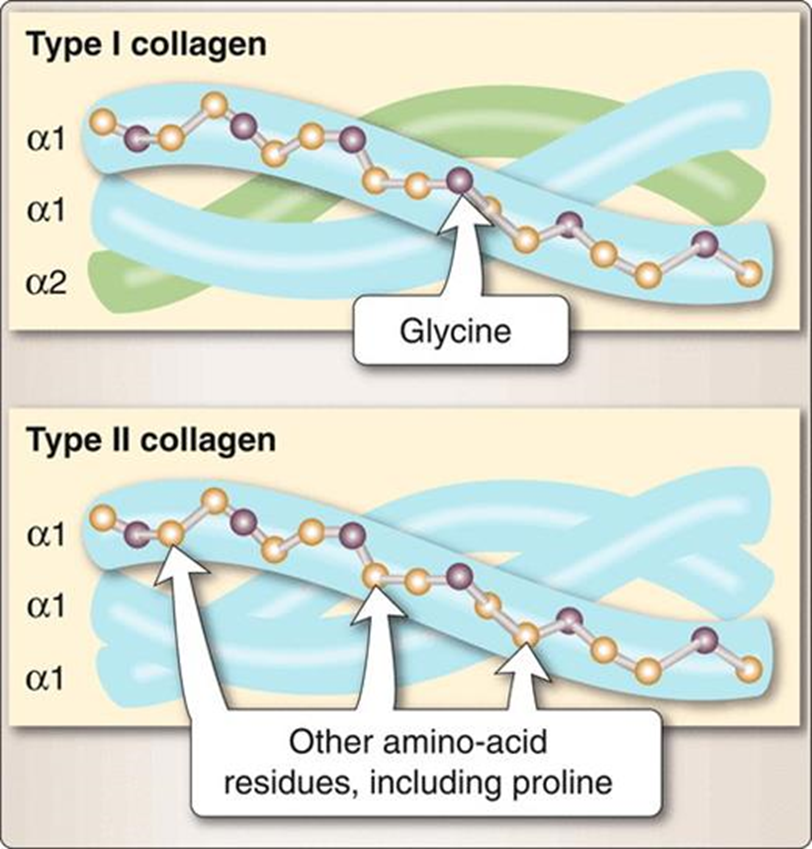
What specific amino acids were mentioned is abundant in collagen?
Proline (Pro) & Lysin (Lys)
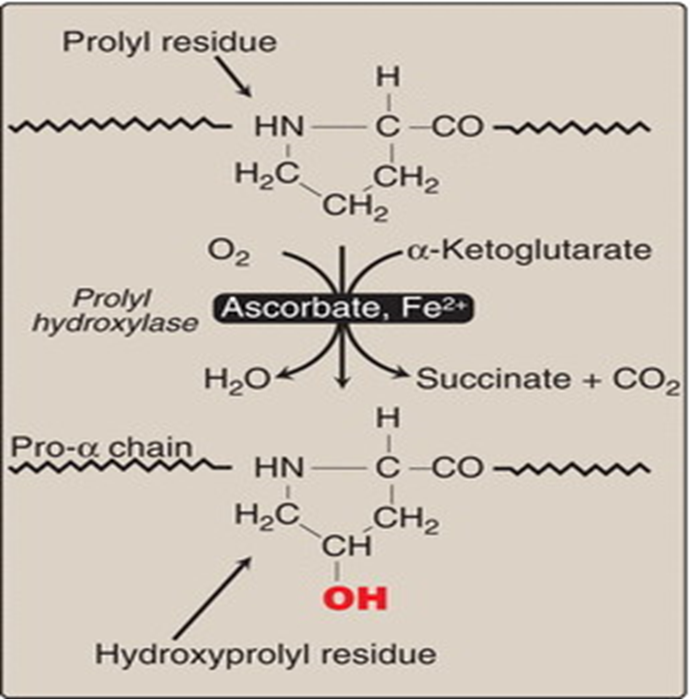
What type of reaction occurs for the synthesis of collagen? What are the required molecules needed?
Hydroxylation reactions
Oxygen, Ferrous Iron (Fe++), and Vitamin C (Ascorbic Acid)
List the types of Collagen where 90% resides in the body?
Type I
Skin, Bone, Tendon, Blood Vessels, Cornea
Type II
Cartilage, Intervertebral Disk, Vitreous Body
Type III
Blood Vessels, Skin, Muscle
Type IV
Basement Membrane
What can cause changes in skin structure?
Low Collagen
How does aging affect collagen fibers?
aging results in rigid collagen fibers
What slows down collagen damage?
Antioxidants
What stimulates new collagen fibers production in the skin?
Retinoic Acid
What amino acids are abundant in Elastin?
Glycine, Alanine, Proline, Lysine, and Hydroxyproline
What is the precursor for Elastin?
Tropoelastin
What type of linkage does Tropoelastin has to connect the elastin monomers?
Desmosine Cross-Link
allows Elastin to stretch
Tropoelastin has Lysyl side chains that are modified to become what type of side chains?
Allysyl Side Chains
Tropoelastin interacts with what Glycoprotein Microfibrils?
Fibrillin
What 4 examples were mentioned in relation to diseases related to fibrous proteins?
Scurvy
Vitamin C Deficiency
Hydroxylation cannot occur
unstable triple helices
Bleeding gums
Insufficient Collagen
reduced strength and stability in tissue
fragile blood vessels → bruising & slow wound healing
Gingival Hemorrhage & Tooth Loss
Osteogenesis Imperfecta: “Brittle Bone Disease”
Mutation in Collagen Gene
Abnormal Type I Collagen
Ehlers-Danlos Syndrome
defective structure, production, or processing of Fibrillar Collagen
Stretchy Skin
Marfan Syndrome
mutation in gene that codes Fibrillin-1 which is essential for elastin fiber maintenance
affects Aorta, Ligaments, and Eye
Tall stature, scoliosis, abnormal joint mobility, elongated finger/arm bones, and hyperextensibility of hands, feet, elbows, and knees
What cell-surface proteins that allows cells adhere with each other in ECM?
Cell Adhesion Molecules
What Adhesive Glycoproteins are secreted by cells in the extracellular space?
Fibronectin
connective tissues
Laminin
epithelial tissues
What are the 4 families of Adhesion Molecules?
Cadherins
holds sells together for tissue integrity
Selectins
WBC migration to sites of inflammation
Immunoglobulin Superfamily
facilitate adhesion of Leukocytes to Endothelial Cells that line blood vessels during injury or stress
Integrins
Alpha & Beta chains
Adhesion of Leukocytes
helps anchor cells to ECM
relays signals from ECM to cells
What 3 examples occur due to adhesion molecule defects?
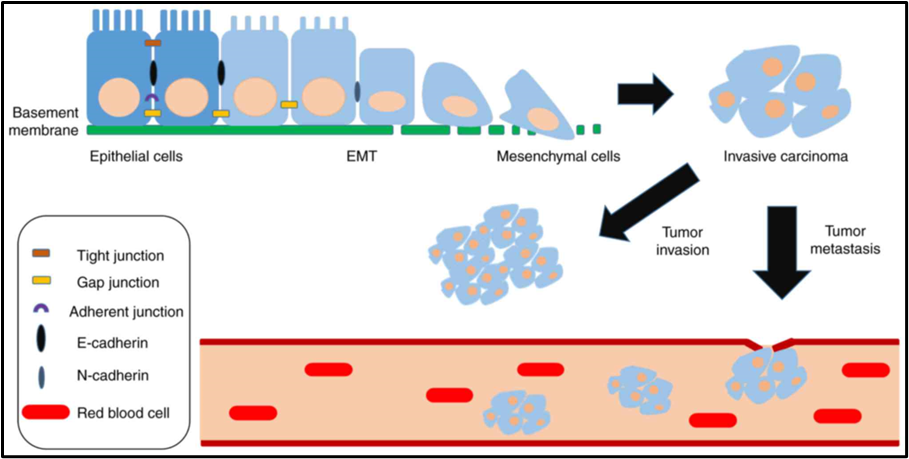
Epithelial-Mesenchymal Transition (EMT)
when epithelial cells undergo changes in adhesion and polarity
occurs in embryogenesis and cancer progression
Metastasis (tumor spreading)
loss of E-Cadherin-mediated cell to cell adhesion
Pemphigus
Autoimmune condition
disruption of Cadherin-Mediated Cell Adhesions
Auto-Abs bind to proteins in Cadherins subfamily
blistering conditions
What are 3 examples when there is increases adhesion molecule expression and inflammation
Asthma
increased ICAM-1 (intercellular adhesion molecule 1) expression in respiratory tract
Rheumatoid Arthritis
bone cells may have increases expression of adhesion molecules
Infection
adhesion molecules assist in viral infection