Module 1
Chpt 11 - Anesthetics
General Anesthetics
Alters CNS nerve impulses to reduce pain and other sensations
Complete loss of consciousness and respiratory drive depression
Types
Inhalation (Ex: Laughing gas in dental procedures)
Parenteral
Adjunct - Enhances clinical therapy when used simultaneously with another drug
Overton-Meyer Theory
Potency of anesthetics varies with lipid solubility
Fat-soluble drugs are more potent than water-soluble drugs because they easily cross the blood-brain barrier
Progression reduction of cerebral and spinal sensory function
Indications
Used during surgical procedures to produce:
Unconsciousness
Skeletal muscular relaxation
Visceral smooth muscle relaxation
Contraindications
Known drug allergy
Depending on drug type
Pregnancy
Narrow-angle glaucoma (causes increased intraocular pressure)
Acute porphyria (Metabolic disorder; triggers severe attacks)
Known history of malignant hyperthermia
Effects of Inhaled and IV General Anesthetics
Organ/System | Reaction |
Respiratory system | Impaired o2, depressed airway-protective mechanisms, airway irritation and possible laryngospasm |
Cardiovascular system | Depressed myocardium, hypotension and tachycardia, bradycardia in response to vagal stimulation |
Cerebrovascular system | Increased intracranial pressure |
Gastrointestinal system | Reduced hepatic blood flow and thus reduced hepatic clearance |
Renal system | Decreased glomerular filtration rate |
Skeletal Muscles | Skeletal muscle relaxation |
Cutaneous circulation | Vasodilation |
CNS | CNS depression; blurred vision; nystagmus; progression of CNS depression to decreased alertness, sensorium, and decreased consciousness |
Adverse Effects
Vary according to dosage and drug used
Sites primarily affected
Heart, peripheral circulation, liver, kidneys, respiratory tract
Myocardial depression is commonly seen
Malignant Hyperthermia
Occurs during or after volatile inhaled general anesthesia or use of th neuromuscular blocking drug (NMBD) succinylcholine
Sudden elevation in body temp (greater than 104 F)
Tachypnea, tachycardia, muscle rigidity
Life-threatening emergency
Treated with cardiorespiratory supportive care and dantrolene (skeletal muscle relaxant - administered via IV and looks like a bright orange tang juice)
Toxicity and management of overdose
In large doses, anesthetics are potentially life threatening
Cardiac and respiratory arrest ultimate causes of death in an overdose
Administered in a controlled environments
General anesthetics: interactions
Antihypertensives: increased hypotensive effecfts
Beta blockers: increased myocardial depression
Anesthetics
Drug Name | Classification and Schedule | Key Notes |
Dexmedetomidine (Precedex) | Alpha 2-adrenergic receptor agonist | Sedation, reduced anxiety, analgesia without respiratory depression. Short duration, quick awakening |
Ketamine | General anesthetic | General anesthesia, moderate sedation. Rapid onset, lower cardiovascular impact. May cause hallucinations |
Nitrous Oxide (aka laughing gas | Inhaled general anesthetic | Weakest anesthetic, mainly used for dental procedures or as a supplement |
Propofol (Diprivan) | Parenteral general anesthetic | Indication/maintenance of anesthesia. Sedation in ICU. Monitor triglycerides if used with TPN |
Sevoflurane (Ultane) | Inhaled general anesthetic | Rapid onset/elimination. Nonirritating, useful in outpatient and pediatric surgeries |
Moderate Sedation
Also called conscious sedation or procedural sedation
Does not cause complete loss of consciousness and does no normally cause respiratory arrest
Combination of an IV benzodiazepine (e.g., midazolam) or propofol and an opiate analgesic (e.g., fentanyl or morphine)
Local Anesthetics
Topical
Applied directly to skin or mucous membranes
Creams (ex: Emla to numb the skin), solutions, ointments, gels, ophthalmic drops, powders, suppositories
Parenteral
Injected IV or into the CNS by various spinal injection techniques
Types
Spinal or intraspinal
Infiltration
Nerve block
Topical
Peripheral nerve catheter attached to a pump containing the local anesthetic: Pain Buster and On-Q pump
Medications
Lidocaine
Bupivacaine
Chloroprocaine
Mepivacaine
Prilocaine
Procaine
Propoxycaine
Ropivacaine
Tetracaine
Drug Effects: Paralysis
First, autonomic activity is lost
Then pain and other sensory functions are lost
Last, motor activity is lost.
As local drugs wear off, recovery occurs in reverse order (motor, sensory, then autonomic activity are restored)
Indications for Local Anesthesia
Used for:
Surgical, dental, and diagnostic procedures
Treatment of certain types of chronic pain
Spinal anesthesia: to control pain during surgical procedures and childbirth
Local anesthetics are given by:
Infiltration anesthesia
Nerve block anesthesia
Adverse Effects
Usually limited
Adverse effects results if:
Inadvertent IV injection
Excessive dose or rate of injection
Slow metabolic breakdown
Injection into highly vascular tissue
Allergy
Generally limited
Most common with “ester type” anesthetics
Spinal headache
70% of patients who either experience inadvertent dural puncture during epidural anesthesia or undergo intrathecal anesthesia
Causes severe, postural headache (specifically when sitting up)
Usually self-limiting
Treatment: bed rest, analgesics, caffeine
Blood patch for severe cases (small amount of pt’s blood and injected into pt’s injection hole)
Neuromuscular Blocking Drugs
Also known as NMBDs
Prevent nerve transmission in muscle, resulting in muscle paralysis including those required to breathe
Used with anesthetics (as adjuncts for things like intubation) during surgery
Respiratory muscle paralysis occurs with these drugs
Does not cause an sedation (sedative needed)
Emergency ventilation equipment must be immediately available
Indications
Main use: facilitating controlled ventilation during surgical procedures
Endotracheal intubation (short acting)
To reduce muscle contraction in an area that need surgery
Contraindications
Malignant hyperthermia
Antidotes: anitcholinesterase
Two Categories
Depolarizing (Succinylcholine): Works similarly to neurotransmitter acetylcholine (ACh), causing depolarization
Succinylcholine isn’t broken down quickly, causing prolonged depolarization and preventing further muscle contractions
Used for rapid sequence intubation and short surgical procedures
Rocuronium: Rapid-to-intermediate acting
Rocuronium blocked ACh at the neuromuscular junction; can also lead to paralysis
Nursing Implications
Preop
Assess past surgeries and anesthesia response
Review allergies, medications, and medical history
Evaluate alcohol, illicit drug, and opioid use
Intraoperative
Vital signs
perform baseline lab tests and ECG
Ensure ABCs
Monitor all body systems
Postop
Watch for cardiovascular and respiratory depression
Identify anesthesia-related complications
Implement safety measures if motor/sensory loss occurs
Chpt 10 - Analgesics
Analgesics
Medications the relieve pain without causing loss of consciousness
“Painkillers”
Opioid analgesics
Adjuvant analgesic drugs
Pain
An unpleasant sensory and emotional experience associated with actual or potential tissue damage
A person and individual experience
Pain involved:
Physical factors
Psychologic factors
Cultural factors
Key Terms
Pain Tolerance: Amount of pain a person can endure without it interfering with normal function
Pain Threshold: Level of stimulus needed to produce the perception of pain
Nociception: Pain results from stimulation of sensory nerve fibers called nociceptors
Classification by Onset and Duration
Acute:
Sudden onset
Usually subsides once treated
Chronic:
Persistent or recurring
Lasts 3 to 6 months
Often difficult to treat
Tolerance of meds
Physical dependence of meds
Gate Theory of Pain Transmission
Most common and well-described theory
Uses the analogy of a gate to describe how impulses from damaged tissues are sensed in the brain
Many current pain management strategies are aimed at altering this system
Pain Transmission
Tissue injury causes the release of the following (all cause inflammatory response and pain):
Bradykinin
Histamine
Potassium
Prostaglandins
Serotonin
Body has endogenous neurotransmitters (that we make in our body to fight pain)
Enkephalins
Endorphins
Stopping Pain Transmission
Rubbing a painful area with massage or liniment stimulates large sensory fibers
Result
Closes gate
Reduces transmission
Adjuvant Drugs
Assist primary drugs in relieving pain
NSAIDS
Antidepressants
Anticonvulsants
Corticosteroids
Example: Adjuvant drugs for neuropathic pain
Amitriptyline (antidepressant)
Gabapentin or pregabalin (anticonvulsants)
World Health Organization: Three-Step Analgesic Ladder
Step 1: Nonopioids (with or without adjuvant medications) after the pain has been identified and assessed. If pain persists or increases, treatment moves to…
Step 2: Opioids with or without nonopioids and with or without adjuvants. If pain persists or increases, management then rises to
Step 3: Opioids indicated for moderate to severe pain, administered with or without nonopioids or adjuvant medications
Opioid Analgesics: Mechanism of Action
Three classification based on their actions
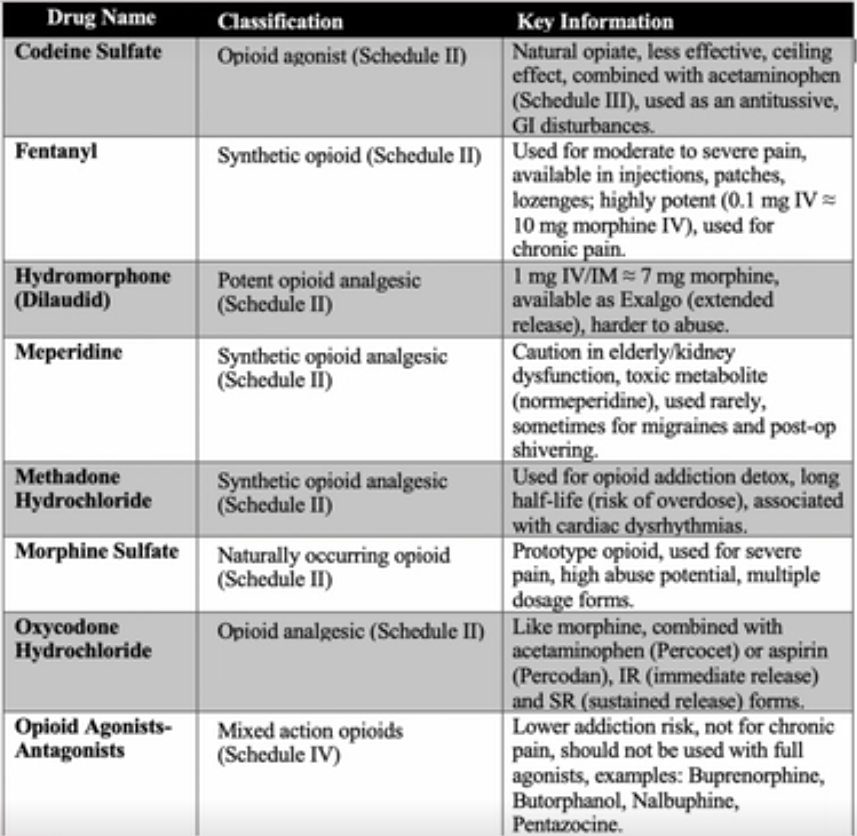
Agonists (Morphine, fentanyl): Activate opioid receptors and produce strong analgesic effect for pain management
Agonists-antagonists (Pentazocine, nalbuphine): Partially activate opioid receptors while blocking others for moderate pain relief and lower risk of respiratory depression or addiction
Antagonists (Naloxone, Naltrexone): Block opioid receptors to reverse overdoses of opioids (not for actual pain relief)
Opioid Drugs
Mild Agonists (moderate pain relief) (found in prescription pain meds and cough syrups)
Codeine
Hydrocodone
Strong Agonists (severe pain relief)
Morphine
Hydromorphone
Oxycodone
Meperidine
Fentanyl
Methadone
Equianalgesia
Ability to provide equivalent pain relief by calculating dosages of different drugs or routes of administration that provide comparable analgesia
Hydromorphone (Dilaudid): 7x more potent than morphine
Opioid Analgesics
Indications
Alleviate moderate to severe pain
Often given with adjuvant analgesics drugs to assist primary drugs with pain relief
Also used for:
Cough center supression
Treatment of diarrhea
Balanced anesthesia
Contraindications
Known drug allergy
Severe asthma
Use with extreme caution in patients with:
Respiratory insufficiency
Elevated intracranial pressure
Morbid obesity or sleep apnea
Paralytic ileus
Pregnancy
Adverse Effects
CNS depression
Leads to respiratory depression
Most serious adverse effect
Nausea and vomiting
Urinary retention
Diaphoresis and flushing
Pupil constriction (miosis)
Constipation
Itching
Opioid Tolerance
A common physiologic result of chronic opioid treatment
Result: Larger dose to maintain same level of analgesia
Physical Dependence (not psychologic)
Physiologic adaptation of the body to the presence of an opioid
Opioid tolerance and physical dependence are expected with long-term opioid treatment and should not be confused with psychologic dependence (addiction)
Psychologic Dependence
Pattern of compulsive drug use characterized by a continued craving for an opioid and the need to use the opioid for effects other than pain relief
Toxicity and management of Overdose
Opioid withdrawal or opioid abstinence syndrome
Manifested as:
Anxiety, irritability, chills and hot flashes, joint pain, lacrimation, rhinorrhea, diaphoresis, nausea, vomiting, abdominal cramps, diarrhea, confusion
Interactions
Alcohol
Antihistamines
Barbiturates
Benzodiazepines
Monoamine oxidase inhibitors
Others
Naloxone Hydrochloride (Narcan)
Pure opioid antagonist
Drug of choice for the complete or partial reversal of opioid-induced respiratory depression
Indicated in cases of suspected acute opioid overdose
Failure of the drug to significantly reverse the effects of the presumed opioid overdose indicates that the condition may not be related to opioid overdose
Management of Overdose
Naloxone now available without a prescription and is being used by 1st responders for opioid/illegal drug overdoses
Naltrexone
Opioid antagonist
Oral form
Used for alcohol and opioid addiction

Assessment
Thorough H&P
Thorough Pain assessment
Nursing Implications
Be sure to medicate patients before the pain becomes severe so as to provide adequate analgesia and pain control
Pain management includes pharmacologic and nonpharmacologic approaches; be sure to include other interventions as indicated
Take with food
Ensure safety measures (beware of falls)
Withhold dose and contact physician if there is a decline in the patient’s condition
Check dosages carefully
Constipation
Orthostatic hypotension
Monitor for:
Adverse effects
Vital sings change, patient’s condition declines, or pain continues
Respiratory depression
Therapeutic Effects
Decreased complaints of pain
Decreased severity of pain
Increased ability to perform ADL’s
Chpt 12 - CNS Depressants and Muscle Relaxants
CNS Depressants
aka Sedatives
Drugs that have an inhibitory effect on the CNS to the degree taht they reduce:
Nervousness
Excitability
Irritability
Hypnotics
Cause sleep
Much more potent effect on CNS than sedatives
A sedative can become a hypnotic if it is given in large enough doses
Sedative-hypnotics: dose dependent
At low doses, calm the CNS without inducing sleep
At high doses, calm the CNS to the point of causing sleep
Classified into three main groups
Barbiturates
Benzodiazepines (many end in pam)
Miscellaneous drugs
Sleep
Transient, reversible, and periodic state of rest
Decrease in physical activity and consciousness
Normal sleep is cyclic and repetitive
Sleep architecture - characterized by different brainwave patterns
R.E.M. sleep (causes dreams and muscles are paralyzed)
Said that it helps emotional regulation and consolidates memories
Non-rem sleep (3 Stages - N1, N2, N3)
N1 - Transition from wakefulness to sleep
N2 - Light sleep
N3 - Deep sleep
Stress, alcohol, some meds can affect REM sleep
After a period of REM sleep deprivation, individuals often will experience REM rebound where the proportion and intensity of REM sleep increases
A sleeping person is unaware of sensory stimuli within the immediate environment
Benzodiazepines
Most commonly prescribed sedative-hypnotic drug
Nonbenzodiazepines are currently more frequently prescribed for people who can’t sleep
Favorable adverse effect profiles, efficacy, and safety when used appropriately
Classified as either sedative-hypnotic (calm or sedate for sleeping purposes) and anxiolytics (treats anxiety)
Mechanism of Action
Depress CNS activity
Affect hypothalamic, thalamic, and limbic systems of the brain
Benzodiazepine receptors
closely linked (enhance)to the activity of Gamma-aminobutyric acid (GABA)
GABA is the brain’s major inhibitory neurotransmitter
Do not suppress rapid eye movement (REM) sleep as much as barbiturates do (to prevent grogginess and poor sleep quality)
Do not increase metabolism of other drugs
Drug Effects
Calming effect on the CNS
Useful in controlling agitation and anxiety
Reduce excessive sensory stimulation, inducing sleep
Induce skeletal muscle relaxation (for muscle spasms and muscle tension)
Indications
Sedation
Sleep innduction
Skeletal muscle relaxation
Anxiety relief
Anxiety-related depression
Treatment of acute seizure disorders
Treatment of alcohol withdrawal
Agitation relief
Balanced anesthesia
Moderate or conscious sedation
Contraindications
Drug allergy
Narrow-angle glaucoma
Pregnancy
Adverse Effects (Mild and Infrequent)
Headache
Drowsiness
Dizziness
Cognitive Impairment
Vertigo
Lethargy
Fall hazard for older adults
“Hangover” effect or day time sleepiness
Toxicity, Overdose and Interactions
Somnolence, Confusion, Coma, Diminished reflexes
Do not cause hypotension and respiratory depression unless taken with other CNS depressants
Treatment symptomatic and supportive
Flumazenil as an antidote
Interactions: things metabolized by the liver, opioids, Etoh, azoles, herbals, high protein
Common Benzodiazepines
Diazepam (Valium): first clinically available benzo used for anxiety, anesthesia adjunct, anticonvulsant and muscle relaxer (PO, IM, PR)
Midazolam (Versed): used for sedation, causes amnesia (IV, Liquid peds)
Temazepam (Restoril): intermediate acting, metabolite of diazepam, sleep inducted 20-40 min
Eszopiclone (Lunesta): First hynotic to be FDA approved
Ramelteon (Rozerem): Structurally similar to the hormone melatonin: works as an agonist at melatonin receptors in the CNS
Zolpidem (Ambien): Lower incidence of daytime sleepiness compared with benzodiazepine hypnotics
Barbiturates
First introduced in 1903; were the standard drugs for insomnia and sedation
Habit forming; low therapeutic index
Only a few are commonly used today partly because of the safety and efficacy of benzodiazepines
Indications
Ultrashort acting
Anesthesia for short surgical procedures
Anesthesia induction
Control of convulsions
Reduction of intracranial pressure in neurologic patients
Short acting
Sedation and control of convulsive conditions
Intermediate acting
Sedation and control of convulsive conditions
Long acting
Epileptic seizure prophylaxis
Contraindications
Drug Allergy
Pregnancy
Significant respiratory difficulties
Sever kidney or liver disease
Caution in older adults
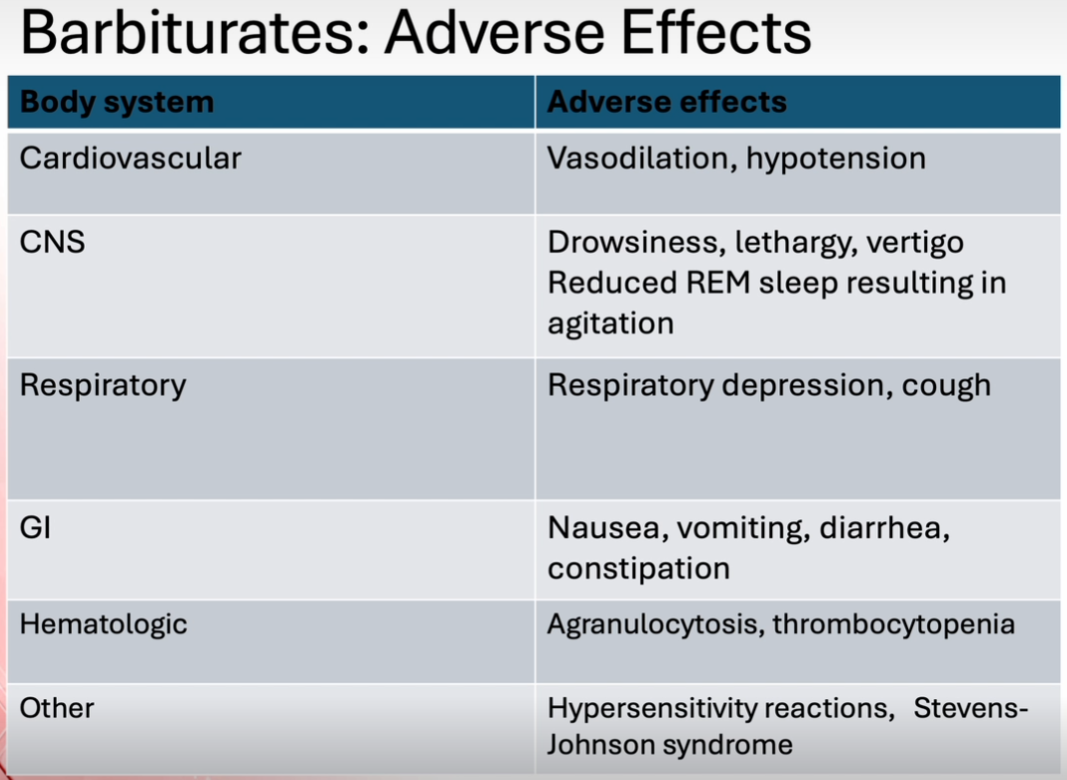
Toxicity and Overdose
Overdose frequently leads to respiratory depression and subsequent respiratory arrest
Overdose produces CNS depression (sleep to coma and death)
Can be therapeutic
Anesthesia induction
Uncontrollable seizures or severe head injury: “phenobarbital coma”
Treatment of overdose
Symptomatic and supportive
Maintain adequate airway
Assisted ventilation and oxygen therapy
Fluids
Pressor support
Urine alkalization (raising urine pH) to hasten elimination
Interactions
Additive effects
Alcohol, antihistamines, benzodiazepines, opioids, tranquilizers
Inhibited metabolism
MAOIs prolong the effects of barbiturates
Increased metabolism (enzyme inducers)
Reduces anticoagulant response, leading to possible clot formation
Drugs
Pentobarbital (Nembutal)
Long acting drug
Uses:
Preoperatively to relieve anxiety and provide sedation
occasionally to control status epilepticus
No longer used as a sedative hypnotic drug for insomnia
Phenobarbital
Prototypical barbiturate
Long acting
Uses
Prevention of generalized tonic-clinic seizures
Hyperbilirubinemia in neonates
Rarely used as a sedative
No longer recommended as a hypnotic
OTC Hypnotics
Nonprescription sleeping aids often contain antihistamines, which have CNS depressant effect
Doxylamine (Unisom) and diphenhydramine (Sominex / Benadryl), acetaminophen/diphenhydramine (Extra Strength Tylenol PM); melatonin
As with other CNS depressants, concurrent use of alcohol can cause respiratory depression or arrest
Muscle Relaxants MOA
Act to relieve pain associated with skeletal muscle spasms
Resemble GABA
Binds to GABA receptors and enhance sedation
Indications
Relief of painful musculoskeletal conditions
Work best when used along with physical therapy
Adverse Effects
Extension of effects on CNS and skeletal muscles
Euphoria
Lightheadedness
Dizziness
Drowsiness
Fatigue
Muscle weakness
Toxicity and Management of Overdose
Primarily involve the CNS
No specific antidote or reversal
If taken along with other CNS depressants
Adequate airway must be maintained
EKG monitoring
Administer fluids to avoid crystalluria
Caution with other CNS depressants
Benzodiaepines
Alcohol
Common Muscle Relaxants
Baclofen (Lioresal)*
Cyclobenzaprine (Flexeril)*
Dantrolene (Dantrium)*
Metaxalone (Skelaxin)
Tizanidine (Zanaflex)
Carisoprodol (Soma)
Chlorzoxazone (Paraflex)
Methocarbamol (Robaxin)
Nursing Implications
Before beginning therapy, obtain a thorough history regarding allergies, use of other medications, health history, and medical history
Obtain baseline vital signs and I&O, including supine and erect blood pressure
Assess for potential disorders and conditions that may be contraindications and for potential drug interactions
Give hypnotics 30 to 60 min before bedtime
Most benzodiazepines cause REM rebound
Instruct patients to avoid alcohol and other CNS depressants
Check with the prescriber before taking any other medications, including over-the-counter medications
Rebound insomnia may occur for a few nights after a 3 to 4 week regimen has been discontinued
Safety is important:
Keep side rails up or use bed alarms
Do not permit smoking
Assist patient with ambulation
Keep call light within reach
Monitor adverse effects
Age appropriate considerations
Monitor for therapeutic effects
Increased ability to sleep at night
Fewer awakenings
Shorter time for falling asleep
Few adverse effects, such as “hangover” effects
Improved sense of well-being because of improved sleep
For muscle relaxants: decrease spasticity, decreased rigidity
Chpt 13 - CNS Stimulants, and Related Drugs
CNS Stimulants
Drugs that stimulate a specific area of the brain or spinal cord
Neurons contain receptors for excitatory neurotransmitters, including dopamine (dopaminergic drugs), norepinephrine (adrenergic drugs), and serotonin (serotonergic)
“Sympathomimetic drugs”
Classification
Classified according to
Chemical structural similarities, amphetamines, serotonin agonists, sympathomimetics, and xanthines
Site of therapeutic action in the CNS
Major therapeutic uses: attention deficit hyperactivity disorder, antinarcoleptic, anorexiant, antimigraine, and analeptic drugs
Indications
ADHD
Narcolepsy
Obesity
Migraine
Analeptic Responsive type Syndromes
ADHD
Most common psychiatric disorder in children, affection 10.8% of school-age children
Boys are affected more often than girls (but girls may be underdiagnosed)
Primary symptoms of ADHD are inappropriate ability to maintain attention span (when things are boring to the person) or the presence of hyperactivity and impulsivity
Drug therapy for both childhood and adult ADHD is the same
Narcolepsy
Incurable neurologic condition in which patients unexpectedly fall asleep in the middle of normal daily activities. These “sleep attacks” are reported to cause car accidents or near-misses in 70% or more of patients
Cataplexy: sudden acute skeletal muscle weakness. Associated symptoms in at least 70% of narcolepsy cases. It involves sudden acute skeletal muscle weakness
Obesity
According to the National Institutes of Health and the Centers for Disease Control and Prevention, approximately 42.2% of Americans are obese
Higher incidence in women and minorities
Many associated health risks
Migraine
Common type of recurring headache, usually lasting from 4 to 72 hours
Typical features: pulsatile quality with pain that worsens with each pulse
Most commonly unilateral but may occur on both sides of the head
Associated symptoms: nausea, vomiting, photophobia (avoidance of light), and phonophobia (avoidance of sounds)
Aura
Analeptic-Responsive Respiratory Depression Syndromes
Neonatal apnea
Common in 70% of premature infants born before 34 weeks’ gestation
Bronchopulmonary dysplasia
Postanesthetic respiratory depression
Treated with analeptic drugs such as theophylline, aminophylline, caffeine, doxapram
Drugs for ADHD and Narcolepsy
CNS stimulants are first line drugs
Amphetamines: methylphenidate (Ritalin)
Nonamphetamine stimulants
Modafinil (Provigil)
Atomoxetine (Strattera): nonstimulant drug that is also used to treated ADHD
Lisdexamfetamine (Vyvanse) prodrug for dextroamphetamine
Mechanisms of Action and Drug Effects
Amphetamines
Stimulate areas of the brain associated with mental alertness
CNS Effects
Mood elevation or euphoria
Increased mental alertness and capacity for work
Decreased fatigue and drowsiness
Prolonged wakefulness
Respiratory effects
Relaxation of bronchial smooth muscle
Increased respiration
Dilation of pulmonary arteries
Contraindications
Known drug allergy
Cardiac structural abnormalities
Recent MAOI usage
Adverse Effects
Wide range; dose related
Tend to “speed up” body systems
Common adverse effects:
Palpitation, tachycardia, HTN, angina, dysrhythmias, nervousness, restlessness, anxiety, insomnia, nausea, vomiting, diarrhea, dry mouth, increased urinary frequency, others
Anorexiants
Any substance that suppresses appetite
Used to treat obesity
Anoxrexiants
Phentermine (Ionamin)
Benzphetamine (Regimex)*
Methamphetamine (Desoxyn)*
Diethylpropion (Tenuate)
*Only ones approved for treatment of obesity
Mechanism of Action
Suppress appetite control centers in the brain
Increase the body’s basal metabolic rate
Mobilization of adipose tissue stores
Enhanced cellular glucose uptake
Reduce dietary fat absorption
Other Drugs to Treat Obesity
Qysmia (phentermine and topiramate)
Orlistat (Xenical): related nonstimulant drug used to treat obesity
Works locally in the small and large intestines, where it inhibits absorption of caloric intake from fatty foods
Inhibits enzyme lipase
Contrave ER (naltrexone and bupropion)
Saxenda (liraglutide)
Liraglutide, when marketed as Victoza, is used to treat type II diabetes
Indications/Contraindication of Anorexiants
Indications
used to treat obesity along with behavior medications (diet exercise)
Most often used in higher-risk patients
Contraindications
Drug allergy
Sever cardiovascular disease
Uncontrolled HTN
Hyperthyroidism
Eating disorders
MAOI usage
Adverse Effects of Anorexiants
Possible elevated blood pressure and heart palpitations
Anxiety Agitation
Dizziness
Headache
Orlistat: fecal incontinence with oily stools (reduces body’s ability to absorb fat)
Antimigraine Drugs
Antimigraine (serotonin agonists; also called triptans)
Sumatriptan (Imitrex)
Others but all end in triptan
Ergot alkaloids (largely replaced by triptans for first line therapy)
Ergotamine tartrate with caffeine (Cafergot): tablet form
Mechanism of Action and Drug Effects
Triptans
Stimulate 5-HT receptors in cerebral arteries, causing vasocontriction and reducing headache symptoms
Reduce the production of inflammatory neuropeptides
Abortive therapy for migraines
Ergot alkaloids
Narrow or constrict blood vessels in the brain
Adverse Effects of Antimigraine Drugs
Triptans
Vasoconstriction
Irritation at injection site
Tingling, flushing
Ergot alkaloids
Nausea and vomiting
Cold or clammy hands and feet
Muscle pain
Dizziness
Others
Drug for Specific Respiratory Depression Syndrome: Analeptics
Used less frequently
Still used for neonatal apnea
Examples
Doxapram (Dopram)
Methylxanthines, such as aminophylline, theophylline, and caffeine
Mechanism of Action of Analeptics
Stimulate areas of CNS that control respiration
Methylxanthines
Inhibit phospodiesterase, leading to buildup of cyclic adenosine monophosphate (cAMP)
Caffeine
Antagonizes adenosine receptors
Analeptics
Caffeine
Found in:
Over-the-counter drugs: NoDoz
Combination prescription drugs: Fioricet, Fiorinal
Food and beverages
Use with caution in patients with a history of:
Peptic ulcer
Recent myocardial infarction
Dysrhythmias
Intravenous: caffeine citrate and caffeine sodium benzoate
Doxapram (Dopram)
Treatment of respiratory depression associated with anesthetic drugs an drugs of abuse, COPD-induced hypercapnia
Monitor deep tendon reflexes, in addition to vital signs and heart rhythm, to prevent overdosage of this drug
Adverse Effects of Analeptics
Vagal
Stimulation of gastric secretions, diarrhea, and reflex tachycardia
Vasomotor
Flushing, sweating
Respiratory
Elevated respiratory rate (usually the desired effect)
Musculoskeletal
Muscular tension and tremors
Nursing Implications of Analeptics
Assess for:
Potential contraindications
Potential interactions, including herbal therapies
Condition such as abnormal cardiac rhythms, seizures palpitations, liver problems
For children, assess baseline height and weight
Nursing Implications of ADHD Drugs
Last daily dose should be given 4 to 6 hours before bedtime to reduce insomnia
Take on an empty stomach 30 to 45 minutes before meals (except for Strattera = nonstimulant for ADHD)
Needs to be taken with protein or else nausea or vomiting happens
Drug “holidays” may be ordered
Take breaks from stimulants if they don’t have to be at work or school (if they don’t need it)
Instruct parents to keep a journal to monitor the child’s response to therapy
Monitor the child for continued physical growth, including height and weight (can decrease appetite)
Nursing Implications of Anorexiants
Follow instructions for diet and exercise
Take in the morning
Avoid caffeine
Fat-soluble vitamin supplementation may be needed
Nursing Implications (Cont.)
Selective serotonin receptor agonists (SSRAs)
Dissolvable wafers, nasal spray, and self-injectable forms
Provide specific teaching about correct administration
Instruct patients to keep a journal to monitor response to therapy
Ergot alkaloids
Chest pain, confusion, slurred speech, and vision changes need immediate medical attention
Analeptics
Pay close attention to the ABCs because of the patient’s diminished sensorium
Monitory for therapeutic responses
ADHD, decrease hyperactivity, increased attention span and concentration
Anorexiant: appetite control and weight loss
Narcolepsy: decrease in sleepiness
Serotonin agonist: decrease in frequency, duration, and severity of migraines
Monitor for adverse effects