Saul, Jonathan & David
Saul
Saul was a good and faithful king for around two years. As time went on, however, Saul became less humble and less faithful to God. Saul chose three thousand men to be with him. He had two thousand men at Michmash and the hill country of Bethel. Jonathan, his son, had a thousand men with him at Geba. The Philistines raised a great army to fight Israel and camped at Michmash. When the Israelites saw the large Philistine army, they hid in caves. Some of them crossed the Jordan to get away.
Saul was at Gilgal waiting for Samuel, and when Samuel did not come, Saul called for a burnt offering to make to God. He did this without having the authority of a priest. When Saul finished making the offering, Samuel asked Saul what he had done. Saul explained to Samuel that when he saw the people running away, and Samuel had not yet come, he had to do something. Samuel told him that he had made a terrible mistake by making an unauthorized offering. For Saul's disobedience, Samuel warned Saul that God had sought out a man after His own heart who would be Israel's future king.
While Saul and his army hid, Jonathan took action. He chose one other man—his armor-bearer—and went into the camp of the Philistines. When the Philistines saw Jonathan and his armor-bearer, they made fun of them, saying that the Hebrews were coming out of their holes in the ground. Jonathan told his armor-bearer to follow him, and he said that the Philistines had been delivered into the hands of Israel. The two of them attacked the Philistines, quickly killing about twenty men. The Philistines grew afraid, and God made the ground shake. This caused the Philistines to start fighting amongst themselves and to run away.
Meanwhile, Saul called for the ark to be brought up. The Israelites hiding in the hills came up when they heard that the Philistines were running away, and they fought the Philistines. God had once again saved the people of Israel. Saul made a vow that none should eat that day until evening, and no one did—except for Jonathan, who had not heard Saul's command. Jonathan ate some honey he had found and then told the people with him to eat. The Israelites had struck down many Philistines, and they were hungry. They ate meat without getting rid of the blood (which was a sin). When Saul heard this, he told the people to bring oxen, and he built an altar and instructed the people not to eat meat with the blood and to sin no more.
Then, Saul told the people to go into the land of the Philistines and plunder their camp. Saul said not to leave a single man alive. According to 1 Samuel 14:36 (ESV®), the people of Israel said, "'Do whatever seems good to you.' But the priest said, 'Let us draw near to God here.'" When Saul received no direction from God, Saul asked Jonathan what he had done, and Jonathan told him that he had tasted honey. The people said Jonathan should be spared for doing a great thing for Israel. Saul quit pursuing the Philistines and went home.
Saul and the Amalekites
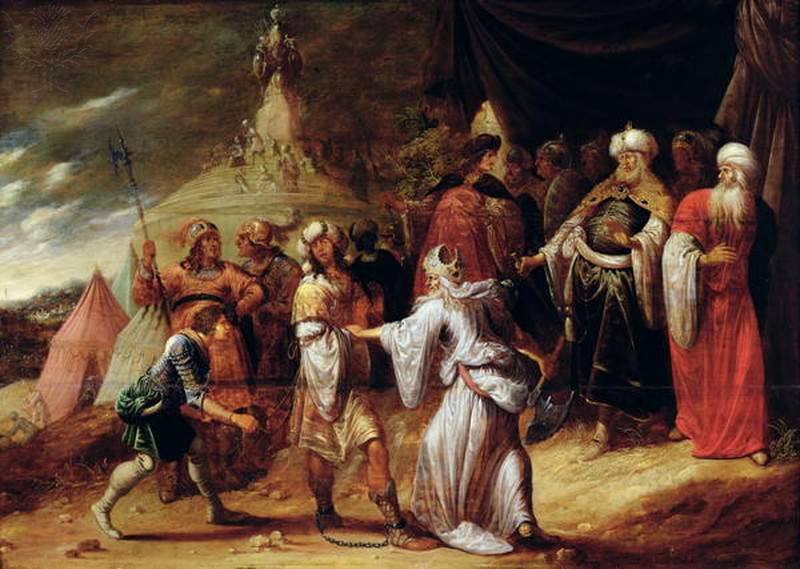
Saul fought enemies on all sides of Israel—the Moabites, the Ammonites, the Edomites, the kings of Zobah, the Philistines, and the Amalekites. Samuel reminded Saul that God had anointed him king over Israel. Samuel told Saul that he was to attack Amalek and destroy everything—men, women, children, oxen, sheep, camels, and donkeys. Saul warned the Kenites to get away from the Amalekites. Saul then defeated the Amalekites. He took Agag, the king of the Amalekites, and spared him, along with the best of the animals and all that was deemed good.
God told Samuel that He regretted making Saul king because Saul had disobeyed Him. This made Samuel angry. Samuel went to confront Saul, and Saul claimed that he had done what God had told him to do. Samuel asked Saul why he heard the animals. Saul said they had spared the best animals to sacrifice to God. Samuel reminded Saul that he was king of Israel and that God had sent him on a mission to destroy all Amalekites. Samuel told Saul that obeying God was better than sacrifices. Samuel scolded Saul about how he had rejected God's commands, and he told Saul that now God was rejecting him as king. Saul pleaded with Samuel to ask God for forgiveness and to go with him to bow before God. Samuel refused to go. Saul again asked Samuel to go back with him, and Samuel turned back after Saul.
Samuel had Agag, king of the Amalekites, brought before him. Samuel then hacked Agag to death. Samuel went back home to Ramah, and Saul went home to Gibeah. Samuel and Saul did not see each other again until the day of Samuel's death.
David Anointed King
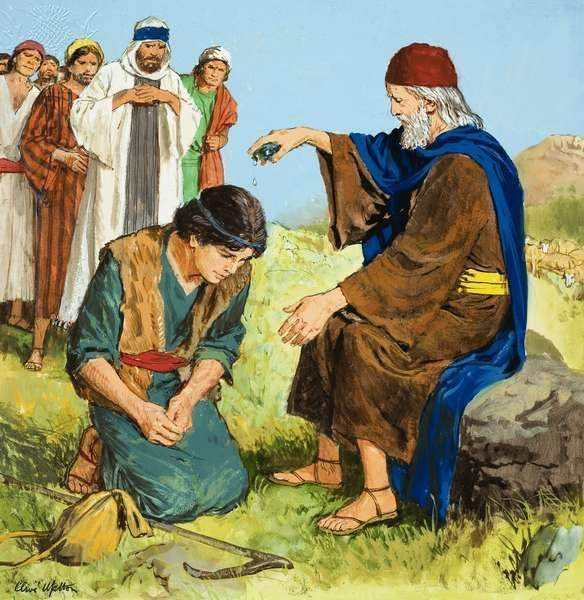
Saul was still king, but God regretted making Saul the king of Israel (in this sense, God regretting means that He was sorrowful). Samuel grieved over it, and God asked Samuel how long he would grieve over Saul being king. Then, God told Samuel to fill his horn with oil and go and anoint the new king from among the sons of Jesse of Bethlehem. God commanded Samuel to take a heifer with him to sacrifice and to invite Jesse to the sacrifice. As instructed, Samuel brought Jesse and his sons to the sacrifice. Jesse had his sons pass before Samuel, and all of them were rejected. Samuel asked Jesse if this was all his sons, and Jesse told him that his other son was watching the sheep. This boy's name was David. Samuel asked that David be brought to him, and when David came, he was anointed, and the Spirit of the Lord rushed upon him. After this, Samuel left and went to Ramah.
David and Goliath
David Serves Saul
When the Spirit of the Lord left Saul, a harmful spirit overtook him. Saul's servants sought someone to play the lyre, a type of harp. They found David and sent him to play the lyre to comfort Saul. Saul grew to love David. He made David his armor-bearer and told Jesse that he wanted David to stay in his service. When Saul became upset, David's playing calmed him.
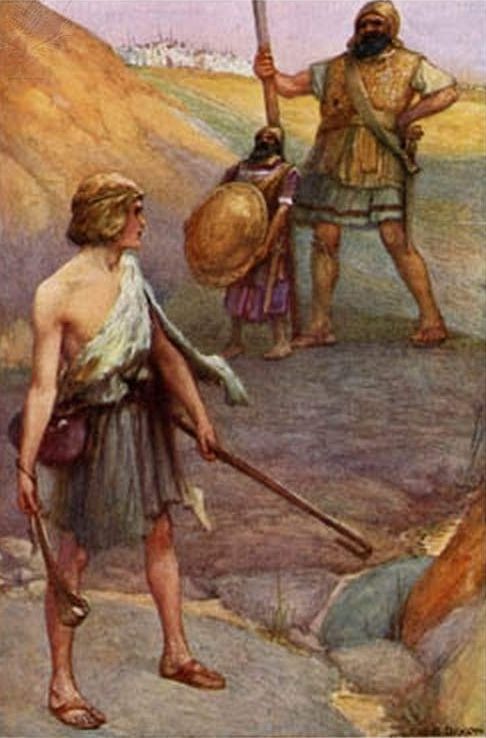
Soon after this, the Philistines gathered an army for battle. They went to Socoh. Saul and the Israelite army camped in the Valley of Elah and prepared for battle. The Philistines had a champion named Goliath. He was a giant of a man covered in armor. Goliath told the Israelites to choose a man to come and fight him. Goliath promised that if the man won and killed him, the Philistines would be Israel's servants. Goliath said that the Israelites would be the Philistines' servants if he won.
David was not with the Israelite army—he was with the sheep because he still went back and forth from Saul to his home to care for them. Jesse sent David to carry bread to his brothers. When David arrived and sought out his brothers, his oldest brother gave him a hard time for coming, asking David who was watching the sheep. David then went to Saul and told him he would fight the Philistine. Saul said he could not go, but David recounted how he killed a bear and a lion while tending to the sheep. Saul, hearing this, told David to go, and Saul said that God was with him.
Saul then clothed David in Saul's armor, but David said that he had not tested the armor and stripped it off. David then picked up five smooth stones. When Goliath saw David, he mocked David and asked David if he thought he was a dog because he was coming at him with sticks. David told Goliath that Goliath was coming at him with a sword, a spear, and a javelin, but David was coming against Goliath in the name of God. When Goliath came at David, David drew out a stone and slung it, sinking it deep into Goliath's forehead. Then David ran over, drew Goliath's sword, and cut Goliath's head off. When the Philistines saw this, they ran away. Saul then asked whose son David was, and David told Saul that he was the son of Jesse from Bethlehem.
David and Jonathan
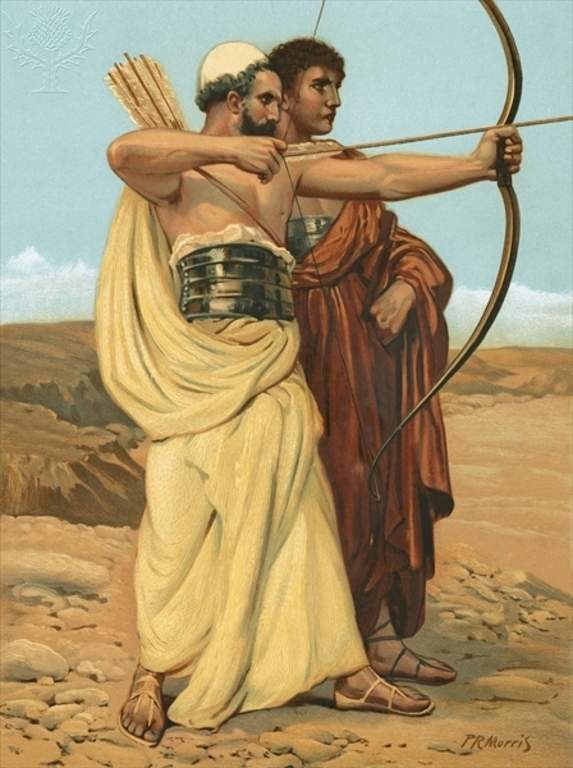
Jonathan (Saul's son) and David became great friends. Jonathan gave David his robe, armor, sword, and bow. David went out wherever Saul sent him, and David was successful. Saul became jealous of David after women came out singing about David killing tens of thousands and Saul killing thousands.
The next day, Saul tried to hit David with a spear when he came to play the lyre. Saul feared David because he knew that God was with David but had left him. Saul did not want to see David, so he made him a commander of thousands. At this time, Saul also discovered that his daughter Michal loved David, which pleased Saul. He thought this could be David's downfall, so he encouraged the union, and David married Michal.
Saul wanted to kill David, and Jonathan warned David and helped David hide. Jonathan then went to Saul and spoke well of David. He asked Saul why he would want to kill David when David had been such a good servant. Saul said that he would not harm David, and David returned. There was another battle with the Philistines, and David was victorious. A spirit came over Saul, throwing his spear at David, but David got away. David fled to Ramah and told Samuel all that Saul had done.
David and Samuel were at Naioth in Ramah, and Saul pursued them. The Spirit of the Lord came over Saul, and he stripped his clothes off and laid before Samuel. David fled again, and Jonathan came to David and asked David what he was to do. David went into a field to hide.
Summary
Saul was a good and devout king until he lost his humility and failed to obey God. Jonathan took action as the Philistines surrounded Saul, and Jonathan attacked with just his armor-bearer, which led to a defeat of the Philistines. God chose David to replace Saul as king, and Samuel anointed David to be the future king. This was because Saul had disobeyed God on several important occasions, including when he spared Agag, the king of the Amalekites, along with the best of the animals and all that was good. David killed Goliath, and Saul became jealous of David and tried to kill him.

Application and Reflection
Application
King Saul had an opportunity to be a great king of Israel. All he had to do was obey God's will. Instead of doing this, he sought to make himself greater. He disobeyed God when he spared the king of the Amalekites. He then made it worse by lying to Samuel. When Saul did this, he showed God that he could not be trusted to lead God's people.