Chapter 3
Transduction- word of the day for this chapter
Defining Sensation- where our senses pick up stimuli
Motivations of behavior are many like
religion
fear
etc
Overview
The Process of Sensation
Vision
Hearing and Balance
Smell, Taste, and Touch
Influences on perception
Principles of Perception
The Process of Sensation
Sensation
process whereby senses pick up visual, auditory, and other sensory stimuli from the environment
Information (in the form of neural impulses) is then transmitted to brain to be processed (or perceived)
how the body receives stimuli
Perception
process whereby the brain actively organizes and interprets sensory information
provides the “finished” product
How we understand our world
what is your brain going to do with the information
Sensory Receptors
highly specialized cells in the sensory, organs, skin, muscles, tendons etc..
detect and respond to one type of sensory stimuli
transduce (convert) stimuli into neural impulses (brain communication)
provide the link between the physical, sensory world and the brain
Transduction
process by which sensory receptors “convert” sensory stimulation into neural impulses
Sensory Adaptation
Process whereby sensory receptors grow accustomed to constant, unchanging levels of stimuli (auditory, olfactory especially) over time
Not likely to occur in the presence of sa very strong stimulus
getting used to very dark spaces or loud levels of sound
The Process of VIsion
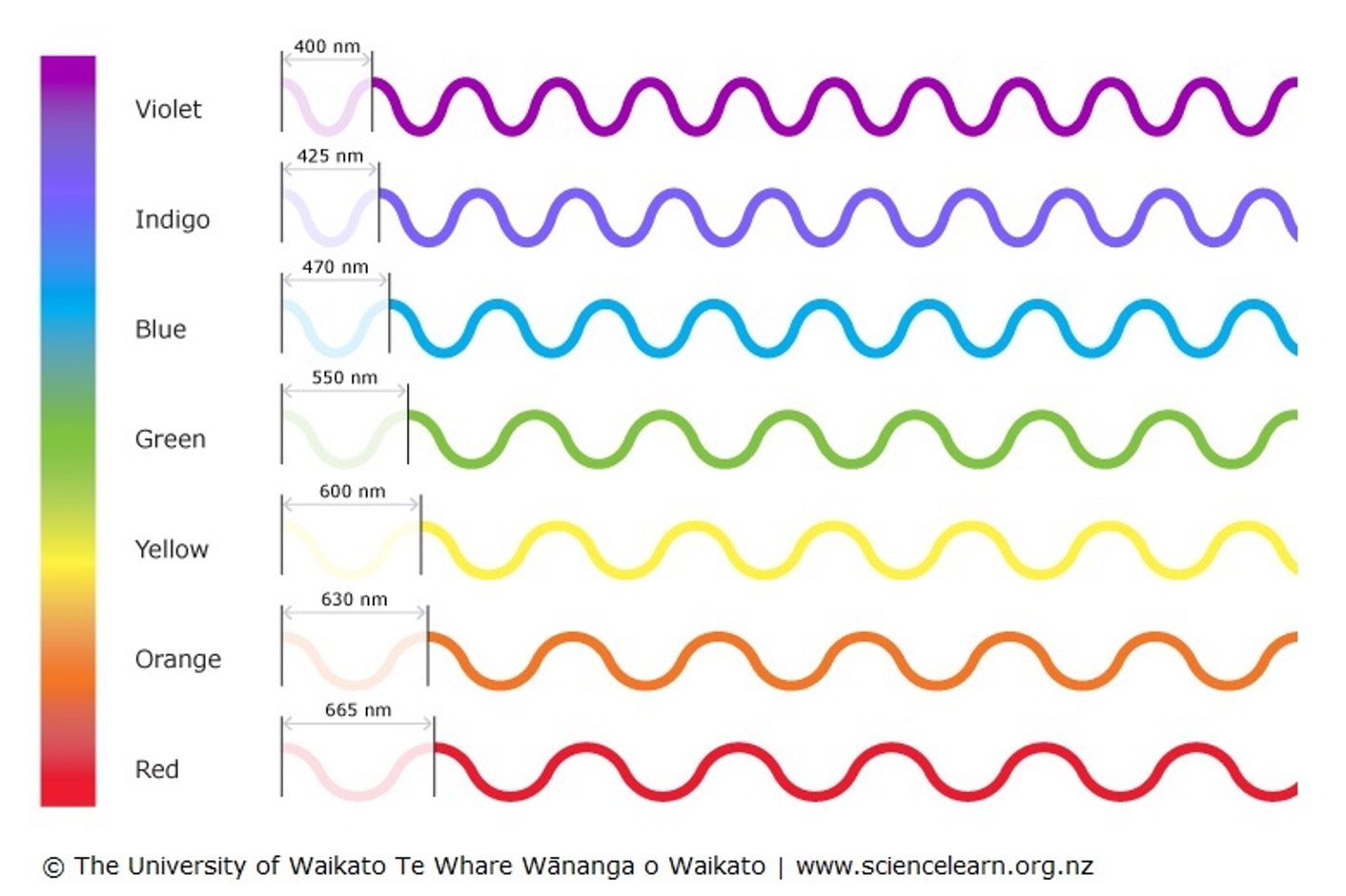
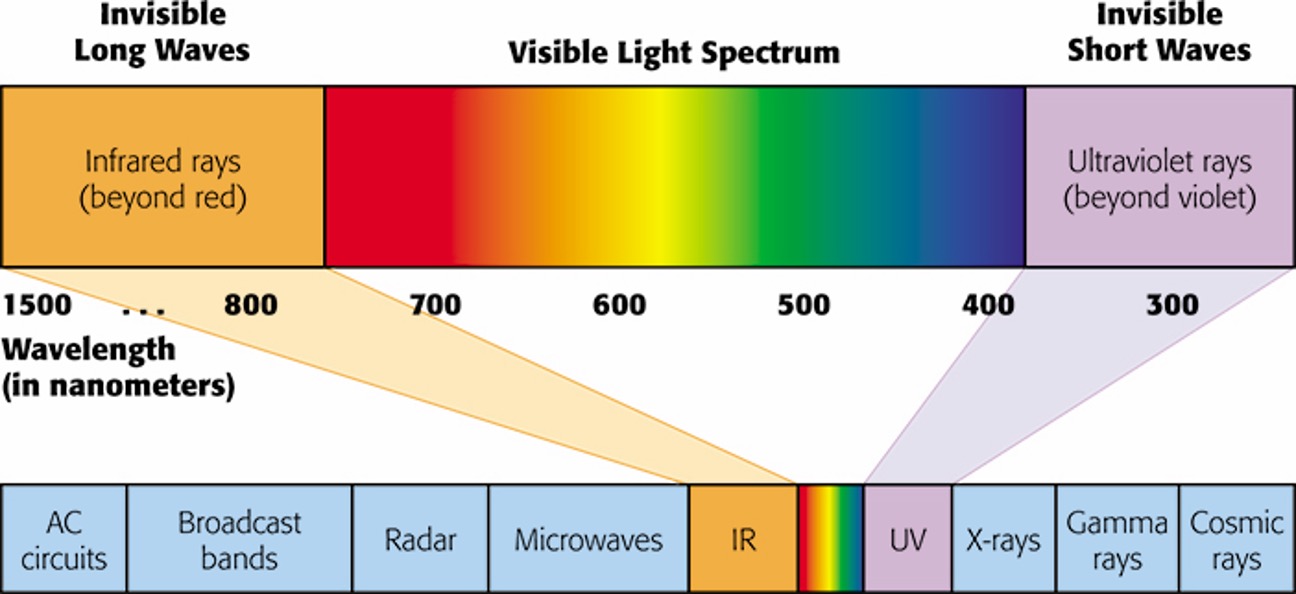
Our eyes respond only to visible light waves
Light waves form a small subgroup of electromagnetic waves called the visible spectrum
Electromagnetic waves are measured in wavelengths
the distance from the peak of a light wave to the peak of the next wave
Light occurs in waves
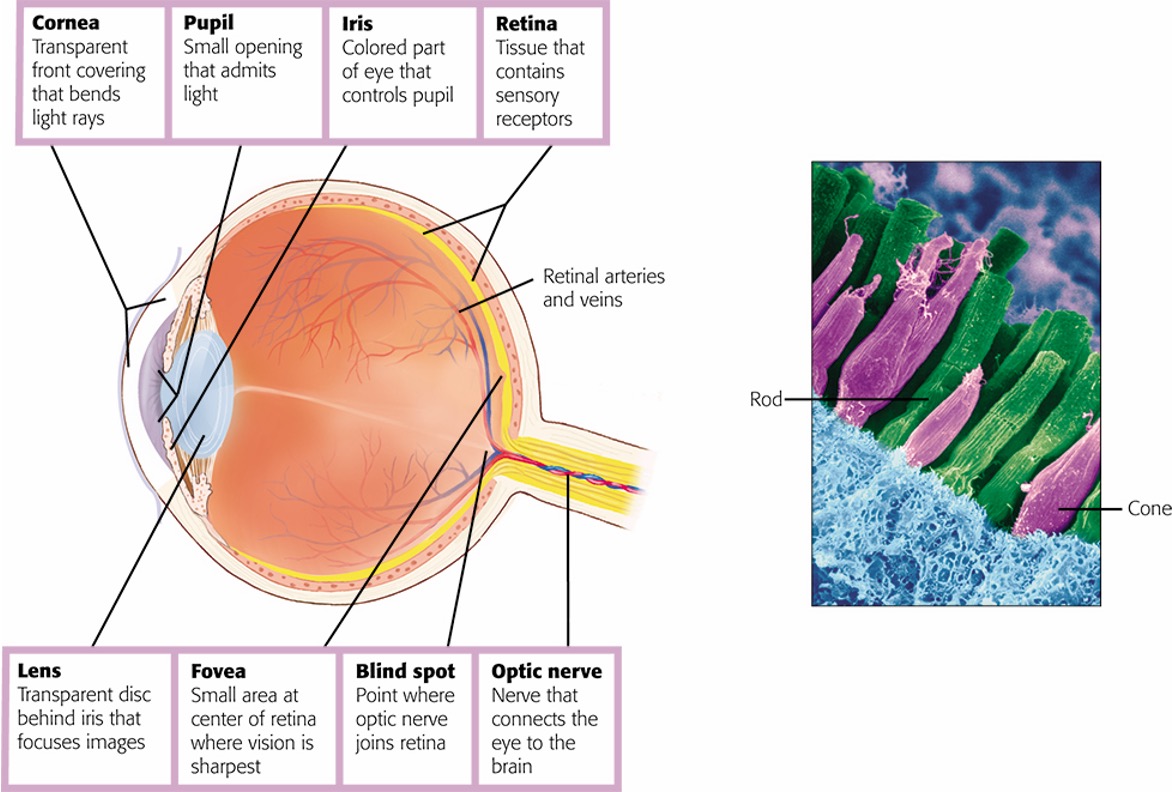
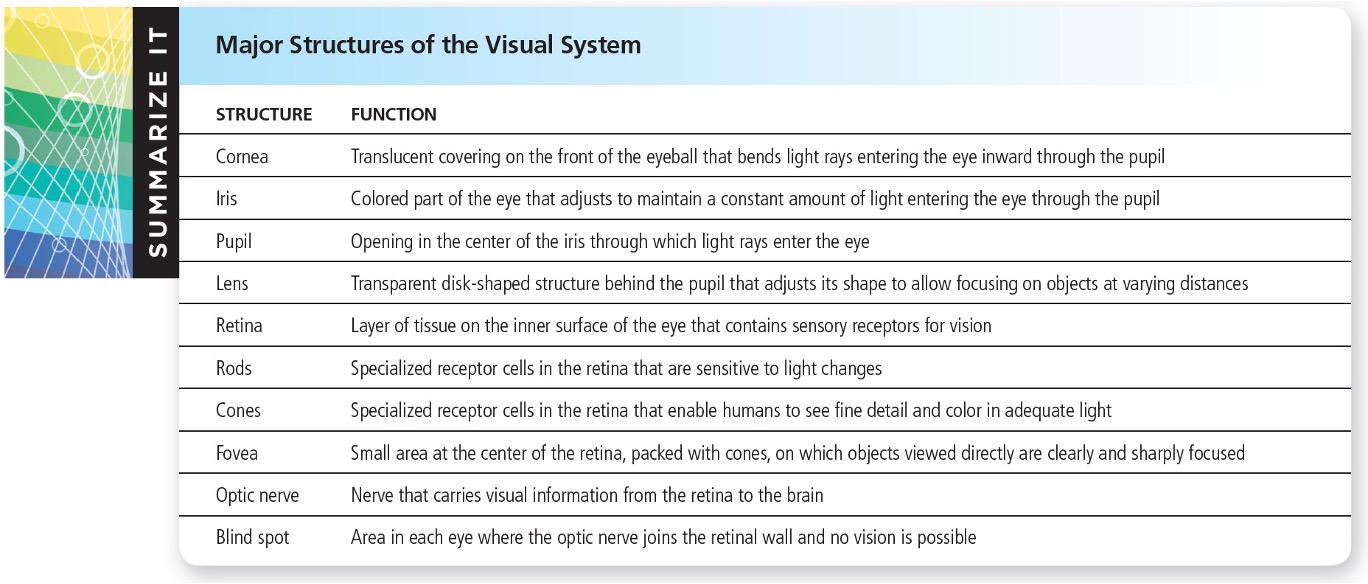
Light first enters the eye through the cornea
bends light rays inward
directs the light rays through the pupil
The iris contracts and dilates the pupil to regulate the amount of the light entering the eye
The lens focuses on the viewed objects, directs images to the retina
Accommodation: flattening and bulging action of lens. Presbyopia: age-related loss of flexibility in the lens
Retina: tissue lining the back of the eye (inside the eye) contains specialized neurons that transduce light stimulation into neural impulses
full of specialized receptor cells
where transduction occurs
its inside the back of the eye
The image projected onto the retina is upside down and reversed from left to right
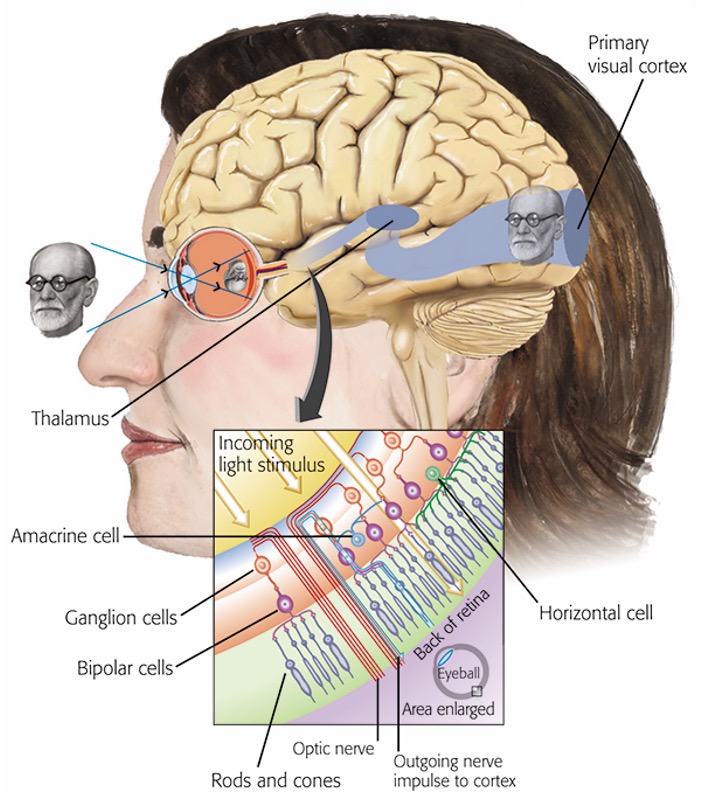
Rods and Cones arrears light-sensitive receptor cells located at the back of the eye in the retina
There are 120 million rods and 6 million cones in each retina
What kind of receptor cells exist on the retina
Rods
Cones
Horizontal cells
Ganglion cells
Bipolar Cell
Transduction occurs when light stimulates the receptor cells, which in turn trigger the neural impulse.
Rhodopsin in the rods enables adaptation to light
2 components
opsin and retinal
light adaptation: opsin and retinal break apart
dark adaptation: opsin and retinal bond, forming rhodopsin
getting together and breaking apart to regulate
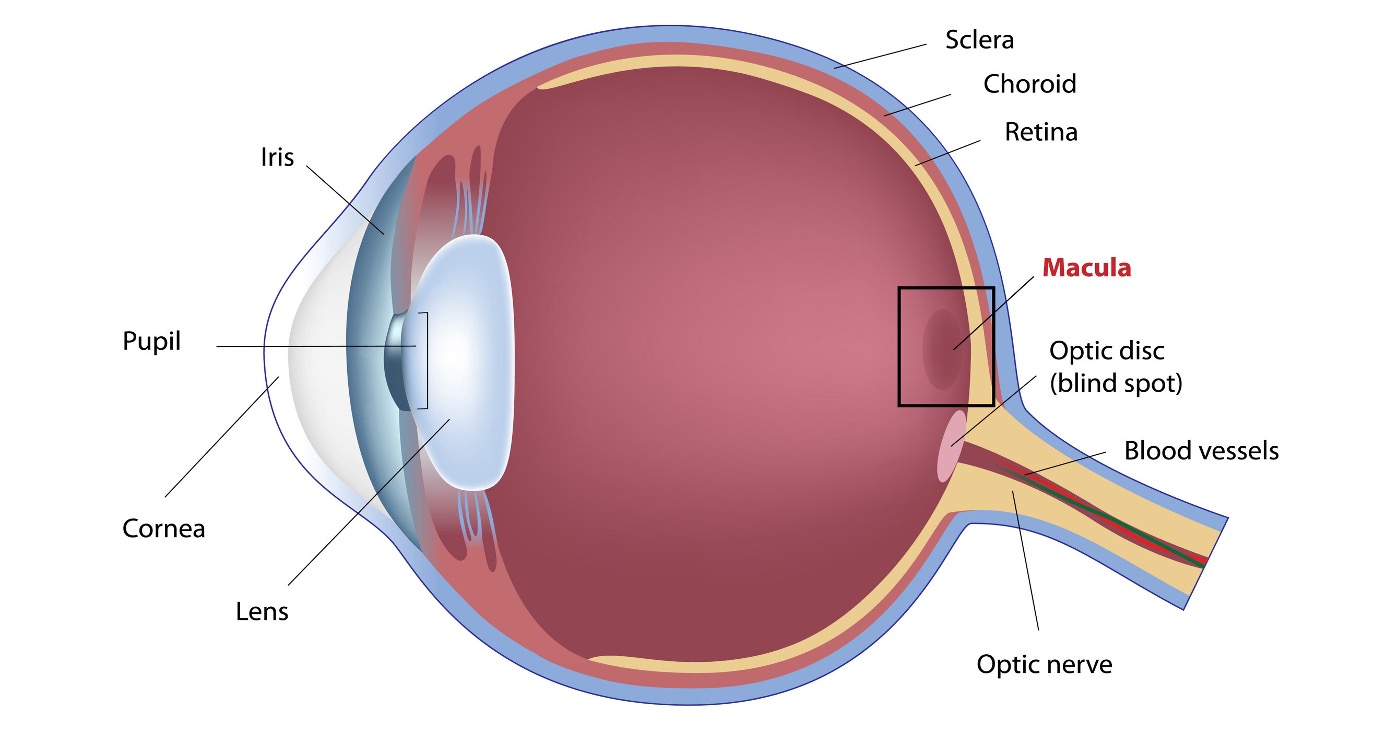
Macula: functional center of the retina, gives us the ability to see 20/20 vision. About 5 mm in diameter. Can be damaged by diabetes or degeneration.
Fovea: Large concentration of cones only; produces our clear sharp vision. The fovea is the pit inside the macula
allows you to focus sharply on something and have your perepheriral vision
Light passes through 4 layers of tissue in the retina after reaching the rods and cones
Each layer contains specialized neurons
Axon-like extensions of of ganglion cells are bundled together in a pencil-sized cable (optic nerve) exiting the retina
blind spot
no rods or cones present
located where the ganglion cable exits the retina
Optic nerve - formed by Bundled ganglion cells
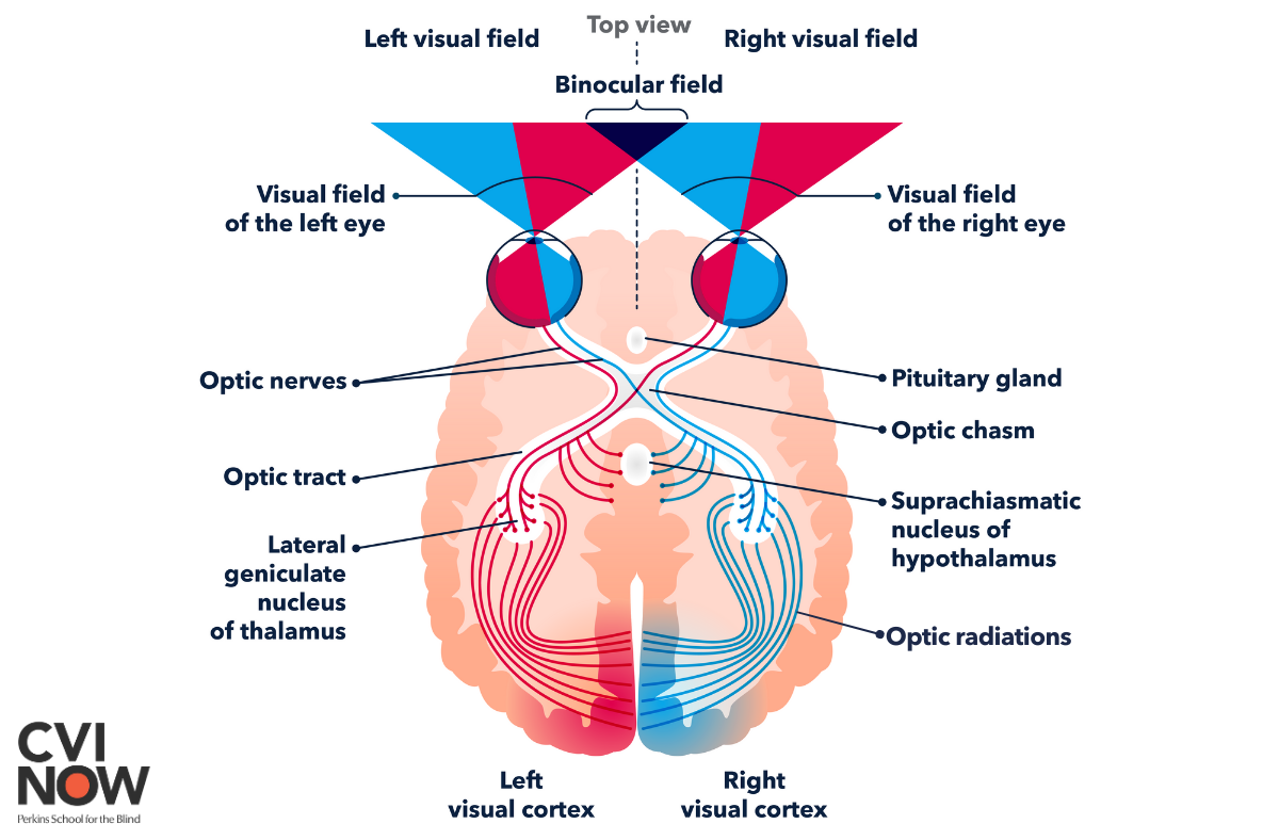
Optic Chiasm
point where some optic nerve fibers cross to opposite side of brain
crossing over allows the image to be projected to both hemispheres of the brain
Nerve fibers extend from the optic chasm to the thalamus, transmit neuronal impulses to the primary visual cortex, where they are processed and perceived
The primary visual cortex is located in the occipital lobes in the back of your head
Feature Detectors
specialized neurons of the primary visual cortex
respond only to specific visual patterns (
like angles
curves
color
ect
coded at birth to make their unique responses
Perception of Color
results from reflection of particular wave lengths of the visual spectrum
three dimensions of light produce color distinctions
Characteristics of light
Hue
the specific color perceived
Saturation
the purity of a color
Brightness
the intensity of the light energy perceived as a color
Color Vision Theories
Trichromatic Theory
there are 3 types of cones in the retina
each is sensitive to and responds to 1 of 3 colors
red, blue, or green (RBG)
Opponent-Process Theory
Cells respond by increasing or decreasing their rate of firing when different colors are present
red/green cells: increase rate with red, decrease with green
yellow/blue cells: increase with yellow, decrease with blue
white/black cells: increase rate with white, decrease with black
Afterimage
visual sensation that remains after the stimulus is withdrawn
The brain will give the sensation of the opposite color
Each theory explains a different phase of color processing
Trichromatic theory best explains cone processing of color
opponent-process theory: cones pass on information about wavelengths to ganglion cells
they’re both correct
The process color vision continues in the visual cortex found in the back of the brain
Colorblindness
Inability to distinguish certain colors from one another
8% of makes and 1% of females experience difficulty distinguishing colors.
Genetic cause due to X-Y chromosome
Distinguishing red from green is the most common form of color blindness
Sound
Sound waves require a medium, such as air or water, through which to move
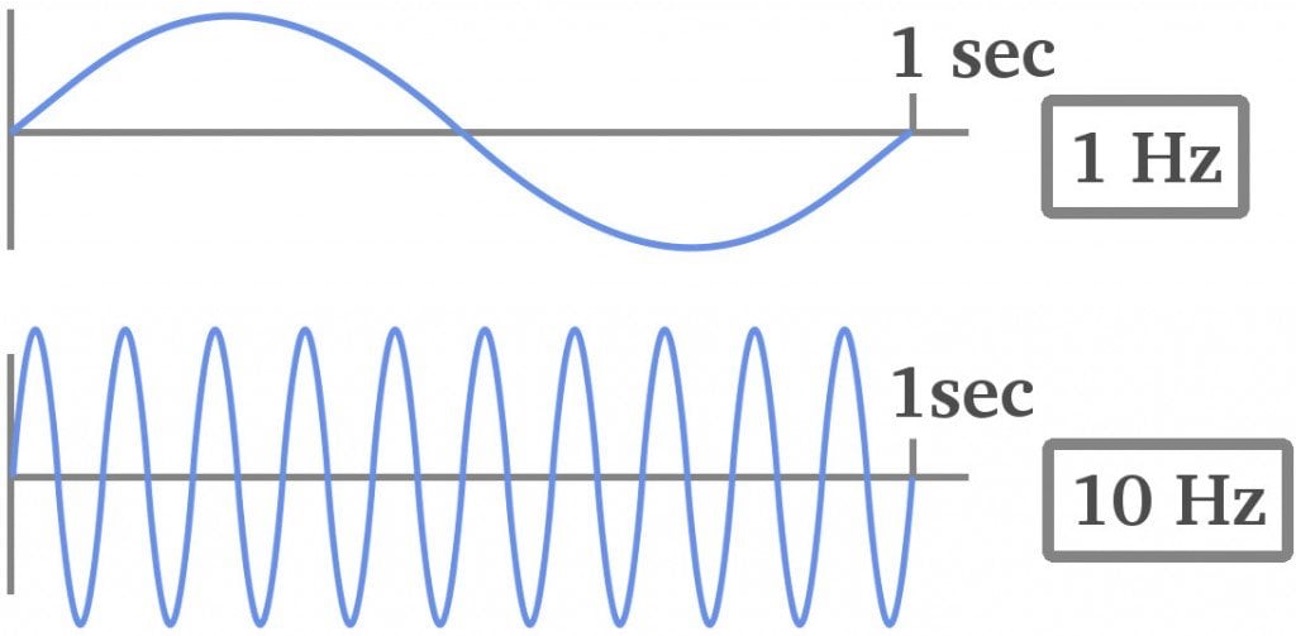
Frequency
number of cycles per second completed by sound wave
determined the pitch of a sound
measured in hertz (Hz)
Range for humans 20-20,000Hz
Amplitude
loudness of sound
measured in decibels
Timbre
quality of a sound that distinguishes it from other sounds of the same pitch and loudness
Pitch
The quality of a sound governed by the rate of vibrations producing it
how high or low the sound is
Amplitude is measured in decibles
Each increase of 10 decibles makes a sound 10 times louder
Exposure to 130 decibels or higher creates a risk for hearing damage
Audition the sensation and process of hearing
Outer Ear
pinnae and auditory canal
Middle Ear
ossicles
hammer, anvil, and stirrup
Inner Ear
cochin and semicircular canals
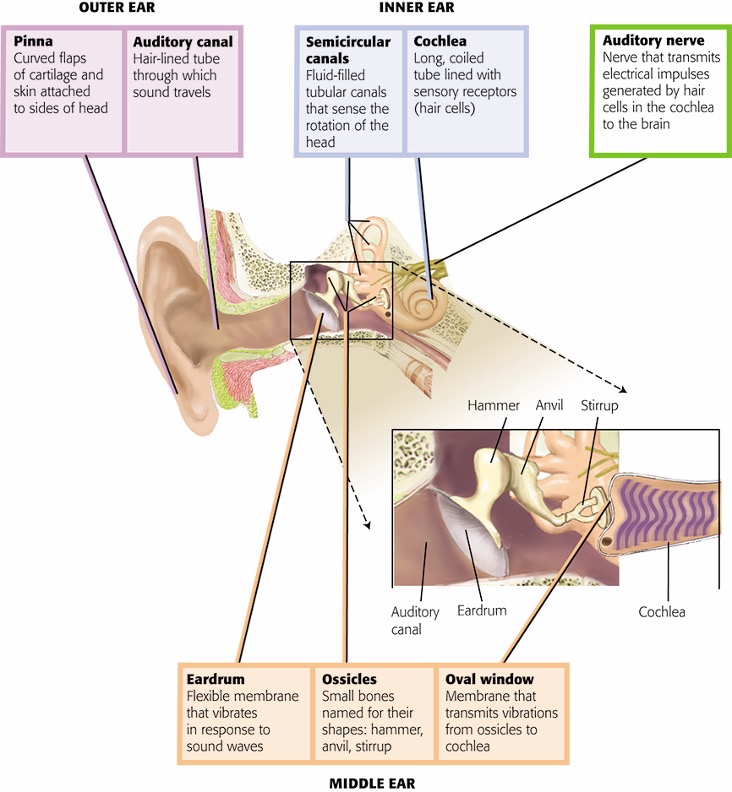
Sound waves enter the pinna, the visible part of the outer ear.
Waves travel the auditory canal, which causes the eardrum to vibrate
Ossicles in the middle ear amplify sound waves
Amplified waves cause vibration of the oval window
The oval window initiates activity, stimulating the cochlea. Fluid in the cochlea sets in motion.
Hair cells attached to the basilar membrane inside the cochlea are stimulated
These specialized receptor hair cells, now activated, transcode (translate) or convert vibrations into neural impulses
Neural impulses travel through the auditory nerve to the brain
Hearing theories
Place theory
Specialized receptor cells located along the basilar membrane vibrate in response to differently pitched sounds
this theory explains how we hear sounds with frequencies higher than 150 Hz
Frequency theory
Hair receptors vibrate the same number of times per second as the frequency of the sound waves that stimulate them
A tone of 500 Hs would stimulate the hair cells to vibrate 500 times per second and even up to 1000Hz
This theory explains how lower frequency sounds are heard
The source of sound is determined bu the difference in intensity and timing of the sound waves reaching your ear and the position of your head
Kinesthetic Sense
Provides info about:
the position of body parts in relation to each other
movement of the entire body to its parts
Information detected bye receptors in nouns, ligaments, and muscles
Other senses provide additional information about body position and movement (primarily vision)
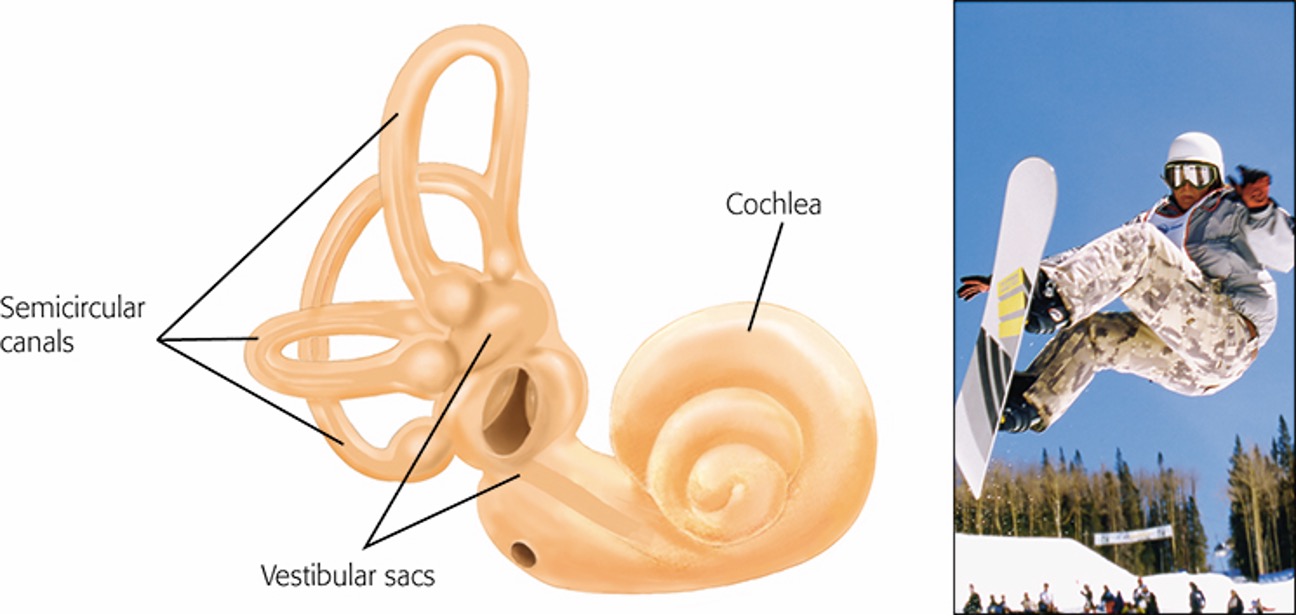
Vestibular Sense
Detects movement, information about body’s orientations in space
Located in semicircular canals and vestibular sacs of the inner ear
Motion activates sensors
semicircular canals sense rotation of head
canals filled with fluid
moving fluid moves hair cells
stimulating specialized receptors located at the base of the base of the hair cells, creating the neural impulse (transduction)
neural impulses conveyed to the brain (motor cortex) for processing
Olfaction: sense of smell
aids in survival
influences emotional states
serves as a memory cue
Most substances in the environment release odor molecules which make their way into our nose
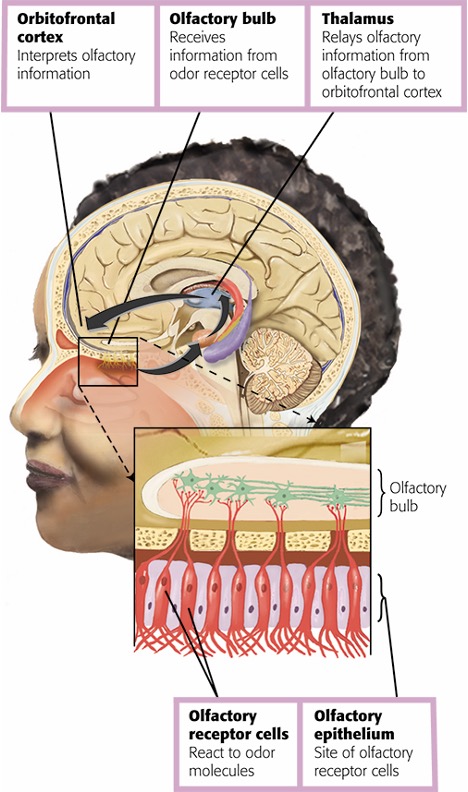
Olfactory Epithelium
one-inch square patches of tissue
one at the top of each nasal cavity
contain olfactory neurons which connect directly to the olfactory bulbs. Smell sensations then travel to the amygdala for emotional interpretation and to the orbitofrontal cortex for cognitive interpretation
Orbitofrontal Cortex
receives messages from olfactory bulbs via the thalamus
10 million olfactory neurons
Each neuron contains only 1 of 1000 different types of odor receptors
we’re able to detect 10,000 different odors
Taste sensations
Gustation : sense of taste
Five primary taste sensations have been identified
sweet
sour
salty
bitter
Umami - produced by amino acids and glutamate, resulting in a meaty, soy-like taste
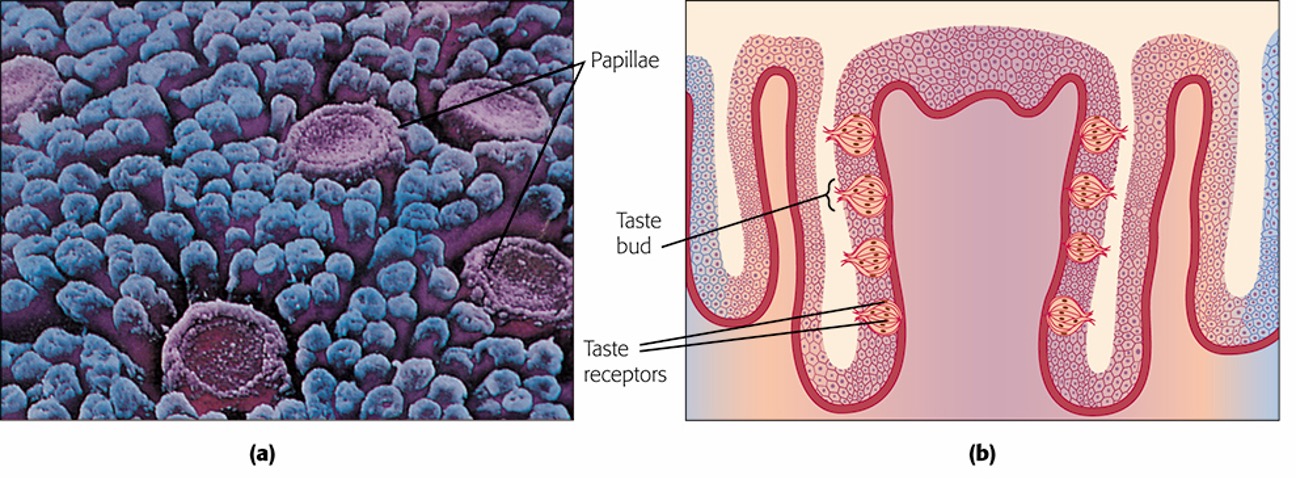
Papillae
small bumps on the tongue
Taste buds lie alongside some of the papillae
each taste bud is composed of 60 to 100 receptor cells
All 5 taste sensations can be detected on all locations of the tongue
Transmission of Touch Sensation
Tactile information is conveyed to the brain: the skin is pressure and temperature sensitive
One or more of several types of receptors are stimulated
Touch messages are sent through nerve connections to the spinal cord
The message is relayed next to the somatosensory cortex of cerebrum
Pain: The Gate Control Theory
An area in the spinal cord acts as a gate and blocks or transmits pain messages to the brain
Pain messages are carries by small, slow-conducting nerve fibers, reach gate and open it
Large, fast-conducting nerve fibers carry other sensory messages
Messages from fast-conducting fibers
“tie up” gate
prevent pain message form transmission to the brain
Rub or apply gentle pressure to injury
Large, fast-conducting nerve fibers are stimulated
Pain message is blocked
Functions of pain
Pain can be a valuable warning and a protective mechanism
Pain motivates people to tend to an injury, to restrict activity, and to seek medical help
Certain medical, physiological, and pharmacological conditions can distort our perception of pain
Pain: Perception and Cross-cultural Variations
Distraction can be effective with short-term pain, but not long-term pain
Cross-cultural variations in chronic pain may be linked to differences in people’s emotional states
Endorphins
Endorphins are natural painkillers produced by the body
block pain and produce a feeling of we’ll being
Some individuals release endorphins when they think they are receiving pain medication (placebo effect)
The body produces 20 different types of endorphins and are found in the pituitary gland and other places
Perception
Process of assigning meaning and intensity to environmental stimuli that has been received and processed by sensory organs into neural impulses
Influences by 3 factors
attention and focus
Prior knowledge/experience, preference
Cross-modal perception, ie., 2 or more senses working in unison
When attention is focuses on some sensations, and others are missed altogether or misperceived
inattention blindness
fail to notice changes in objects not receiving direct attention
cocktail party phenomenon
Auditory attention focuses on information that is personally meaningful
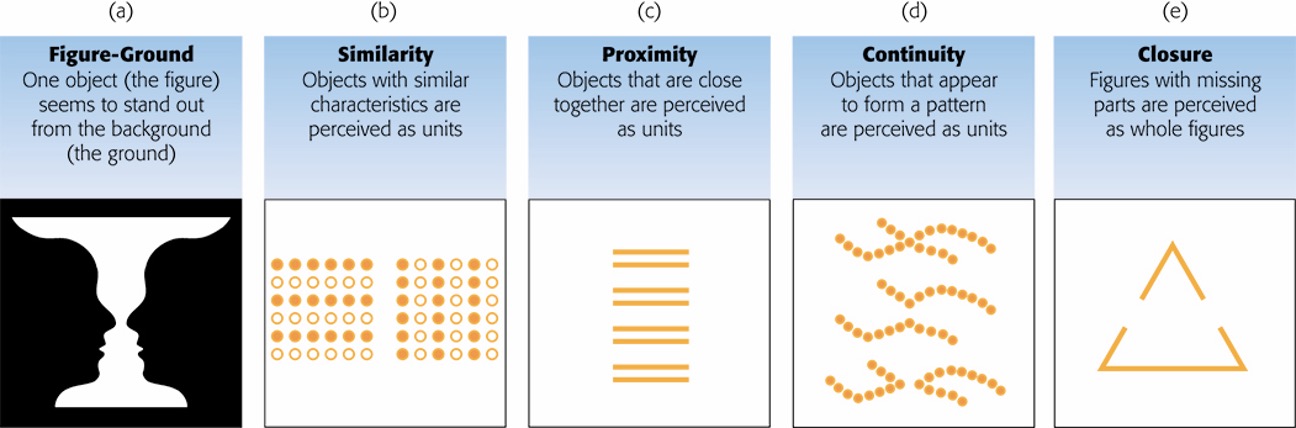
Principles of Perceptual
Sensory elements experience brought together as a whole
Gestalt: a German word that refers to the whole form, pattern, or configuration that a person perceives
Sensory experience is organized according to basic principles of perceptual organization
Perceptual Constancy
Objects maintain their physical properties, such as size, shape and brightness, despite differences in distance, viewing angles, and lighting
Depth perception
Our ability to perceive the visual world in 3 dimensions and to judge distances fairly accurately
Our eyes are able to create dimensionality from a one-dimensional image on the retina due to depth cues.
monocular
types include: interposition, linear perspective, relative size, texture gradient, atmospheric perspective, shadow or shading, and motion parallax.
binocular
types include: convergence and binocular (retinal) disparity
Brian perceives real motion by comparing the movement of images (light) across the retina to visual reference points
assumes points to be stable