Red Cross Notes
Beginning of the Red Cross
^^Jean Henri Dunant^^
- Swiss Businessman
- Founder/ Father of the Red Cross Movement
| Red Cross Movement Origin (1859) | Wrote a book (1862) | Committee(1863) |
|---|---|---|
| Battle of Solferino, Italy | Publication of the “Memory of Solferino” | Establishment of the “Committee of Geneva“ |
| Henri Dunant initially wanted to look for the French Emperor until he noticed the injured soldiers from the war | The book had two main ideas (written below this table) | Foundation of the first relief |
| 2 veterinarians - the only healers of the war | ||
| Out of 350,000 soldiers, 40,000 soldiers were seriously injured | ||
| Dunant decided to gather volunteers, young men or women, to assist in treating the wounded |
TWO IDEAS OF THE MEMORY OF SOLFERINO
- led to the ^^creation of the Movement^^
- led to the ^^development of modern International Humanitarian Law^^
Red Cross
- also referred to as “Red Crescent” ( to those who are uncomfortable because of their religion)
- In 192 countries
- considered to be the Guardians of the International Humanitarian Law
- Is not under the government
-- 3 COMPONENTS OF THE RED CROSS MOVEMENT --
- ^^International Committee of the Red Cross Movement (ICRC)^^
- 1863
- responsible for helping victims of war and conflict
- promotes international humanitarian law
- ^^International Federation of Red Cross and Red Crescent Societies (IFRC)^^
- extends help to victims of natural disasters
-contributes to capacity building of National Societies
- ^^National Societies (NS)^^
- helps both ( victims of calamity and natural disasters)
- renders health/ services/ social activities
International Humanitarian Law
- Protects those not or no longer participating in hostilities
- Restricts the use of weapons and methods of warfare
- Aims to protect human dignity, reduce suffering
When does IHL apply?
IHL applies to all parties to a conflict regardless of who started it and regardless of formal declarations on the existence of an armed conflict
7 Fundamental Principles of Red Cross
^^HINIVUU^^ → Acronym
- ***“***We serve people but not systems”
→ protect life; being humane
→ promote mutual understanding, friendship
- “We care for victims w/o discrimination”
→ makes no distinctions
→ gives priority to the most urgent cases of distress
- “We take initiatives but never sides”
→ do not take sides
- “We bow to need but not to any person”
→ Red Cross is independent and not controlled by the gov ; is auxiliary
- “We work around the clock but never for personal gain”
→ being passionate to serve and help others in need
- “We have many talents but a single idea”
→ open to all; treat each other as family
- “We respect nations but our work knows no bounds”
→ has the same goal
EMBLEMS OF HUMANITY
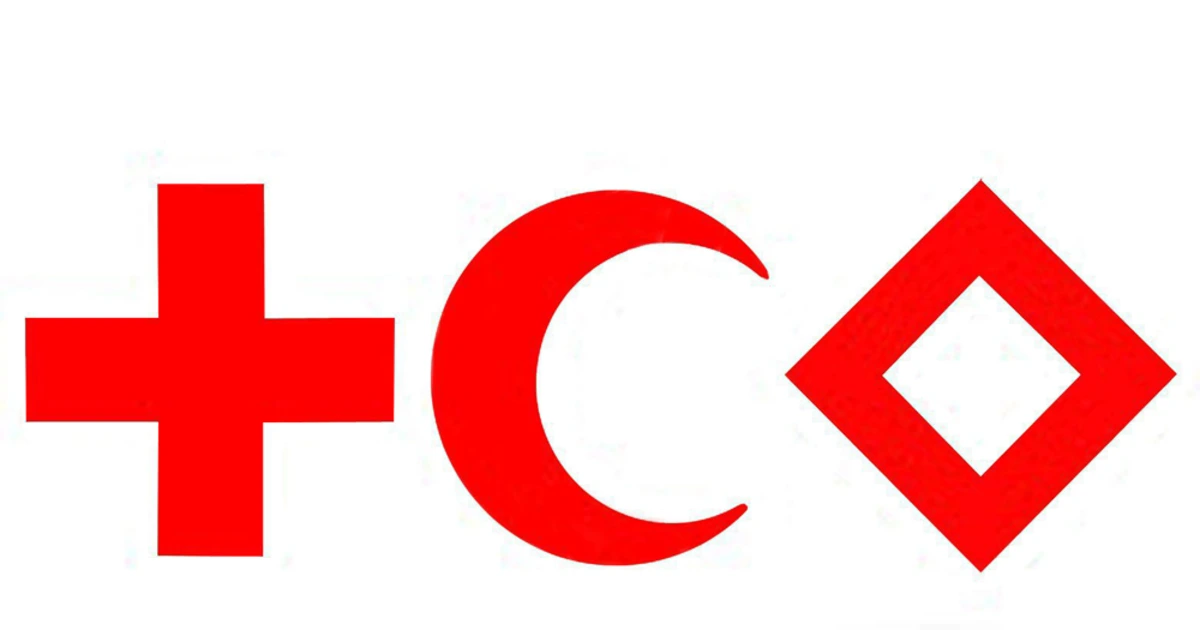
- the Red Cross, Red Crescent, and Red Crystal. All the Emblems enjoy the same legal status and may be used as protective devices
- All should be on a white background (protocol)
Red Cross (1864)
Based on the flag of Switzerland
Red Crescent (1929)
based on the flag of Turkey
Red Crystal (2005)
USES OF EMBLEMS
- mainly in ^^peace time^^
- small and must bear additional information
- in ^^armed conflict^^
- should be large as possible with no other information
The Red Cross and Other Emblems Act of 2013
R.A. 10530
- Act of of the Red Cross, Red Crescent and Red Crystal Emblems, providing protection
- state that the
R.A.10072
- The PRC shall be recognized as the society
Emblems are protected by the R.A. 10072, R.A. 10530, and the GENEVA CONVENTIONS
EXCLUSIVE USE :
- AFP MEDICAL SERVICES
- PHILIPPINE RED CROSS
- ICRC
- IFRC
MISUSE OF EMBLEM
- ^^IMITATION^^
- ^^IMPROPER USE^^
- ^^PERFIDIOUS USE^^
The Red Cross Movement in a nutshell
- The ^^Largest Humanitarian Network Worldwide^^
- Guided by the Fundamental Principles
- ^^Prevents^^ ^^and^^ ^^alleviates^^ ^^human suffering^^ and does its best to ensure respect for human dignity, particularly in times of armed conflict and other emergencies
- Encourages ^^voluntary services^^ ^^and^^ ^^constant readiness^^ of the members of the movement to help
- INDEPENDENT
PHILIPPINE RED CROSS
→ Existing as a ^^National Society^^ since 1947
→ The PRC has evolved into one of the ^^most admired National Societies in the world^^ through becoming the in the country
→ committed to ^^providing quality life-saving services^^ that protect the life and dignity, especially of indigent Filipinos in vulnerable situations
BACKGROUND OF PRC
1892 → established as Philippine Women’s Red Cross
1947 → The Philippine National Red Cross was officially founded (original charter); R.A 95
2010 → Philippine Red Cross (new charter); R.A. 10072
VISION
→ To be the foremost humanitarian organization ready to meet challenges and capable of rapid delivery of humanitarian services in order to prevent and alleviate human suffering and uplift the dignity of the most vulnerable
OUR ORGANIZATION
- Member of an International Movement
- Governed by 30 board governments ( Board of Governors)
- Headed by a Secretary General
- 80% of manpower are Volunteers
- More than 1,000 staff nationwide
- Funded through Public Donations
143 - 44 members ( 1- adviser; 43 members)
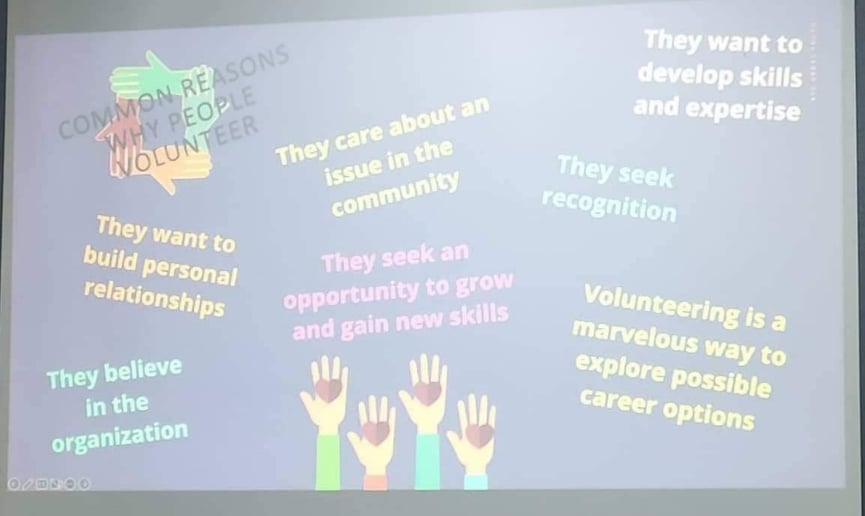
Volunteers
- the backbone of the organization
- Red Cross began because of the act of volunteering
OUR SERVICES
NSHDMWR → acronym
- ** **
→ Mission: To save lives by providing safe blood and blood products in a cost-effective manner as a fulfillment social responsibility of the PRC, a humanitarian and Voluntary Service Organization
- ** **
- ** **
- ** **
Disaster Risk Reduction and Management → Disaster Preparedness → Disaster Response → Disaster Recovery
Successful and Effective Disaster Response
**Volunteers + Logistics + Information Technology =** ***RED CROSS (*** *Always First, Always Ready, Always There)*
- ** **
- ** **
PRC IN A NUTSHELL
- ^^Largest humanitarian network^^ in the country
- Funded by voluntary contributions and public donations
- ^^Auxiliary to the government in the humanitarian field^^
- Member of the International Federation of Red Cross and Red Crescent Movement
- Currently with ^^104 chapters^^ strategically positioned all over the country
Other
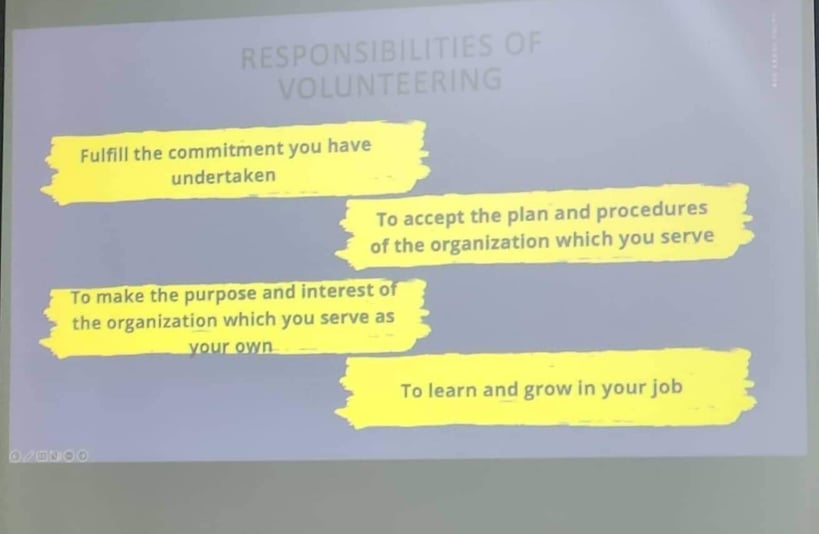
^^Volunteerism^^ - is one who serves his own free will and is bound by the rules and regulations of the Organization
^^Service^^ - is and the things that you do or the skill that you use in an organization
^^Organization^^ - and according to some recognized plan of work
RCY CATEGORIES
Junior Red Cross ( Elementary Students)
Senior Red Cross Youth ( Junior High School)
Senior Plus Red Cross Youth ( Senior High School)
College Red Cross (College Students)
Community Red Cross Youth ( Young Professionals & Out of School Youth)