Red Algae + Intro to Non Vascular Plants
Phylum Rhodophyta
Habitats: Marine and Freshwater
Pigments: Contain mostly Phycoerythrin (red pigment)
This breaks down when algae dies = white color
Also absorbs blue light, for deeper habitats
Special Features
Floridian Starch: (similar to laminarin in brown algae) used for carb storage.
Carrageenin (in Irish moss): Protective outer layer for red algae similar to algin in brown
A cell wall polysaccharide used as a thickening agent
Nori for Sushi - made into thin glossy white sheets
Unique Life Cycle (Alt. of Generations)
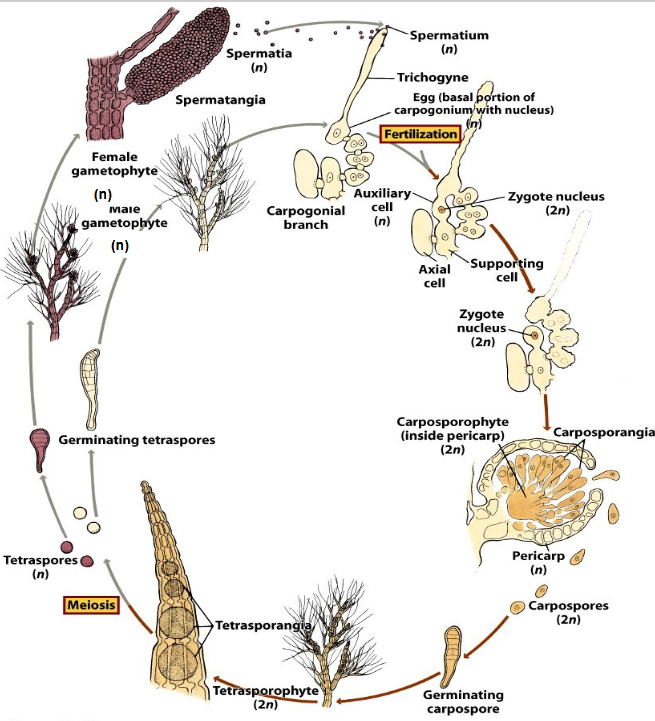
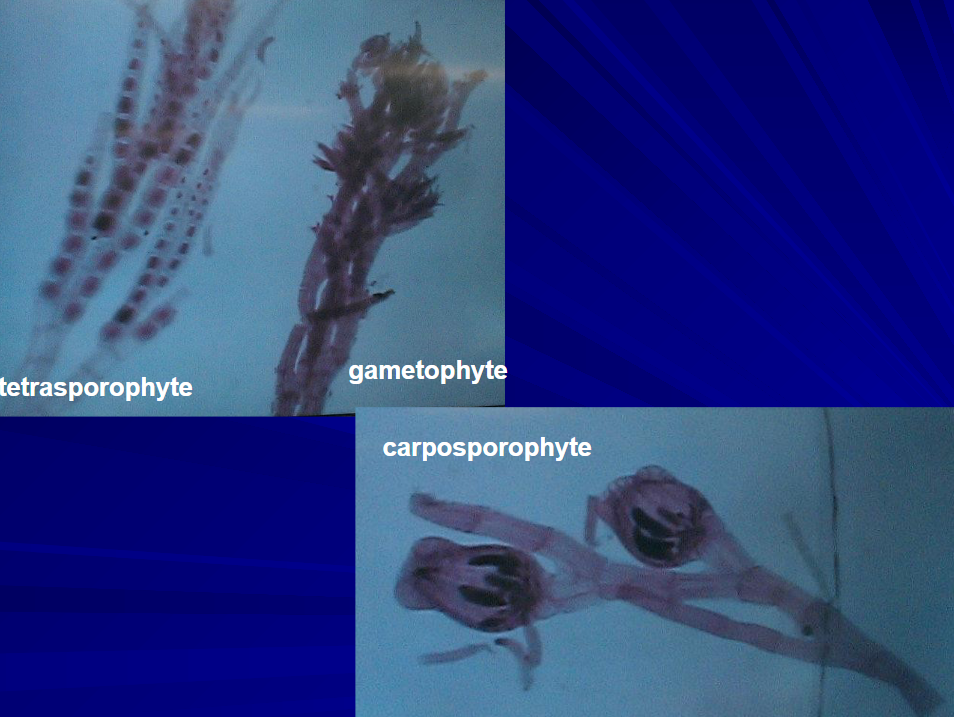
Has 3 generations = 1 Gametophyte + 2 Sporophytes (Tetro-spore and Carpospore 2n)
2n Tetro-sporophyte produces 1n Tetro-spores
Those make their way to a male + female Gametophyte
Male gametangia sends sperm to Female gametangia to form 2n Zygote
Inside the Pericarp of female gametangia, Carpo-sporophyte produces 2n Carpospores
That spore germinates in to Tetro-spore (Restarts)
Non Vascular Plants - No Xylem or Phloem
Consists of Liverworts (Hepatophyta), Hornworts (Antocerophyta), and Mosses (Bryophyta)
Green Algae → Plants
Plants only share some similarities with Algae: Pigments, starch storage, cell division, and cellulose in cell walls
5 Major Key Trait Differences
ALL plants have Alt. of Generations; Charophyceae has Zygotic
Angiosperms - Sporophyte Dominant; Everything Else - Gametophyte Dominant
Plants have sporopollenin-walled spores for protection
Nourishment dependent Embryophyte (multicellular embryo protected by tissue)
Multicellular Gametangia (Anther = Male; Arche = Female)
Apical Meristems for primary growth (root and shoot tip growth)
Evolutionary timeline of Plants
Silurian Period (440 - 410 mya)
Plants invade Earth
Devonian Period (410 - 360 mya)
Early Tracheophytes
Carboniferous Period (360 - 290 mya)
Seedless Tracheophyte forests, Origin of Seeded Tracheophytes
Permian Period (290 - 250 mya)
Most Gymnosperms present
Triassic Period (250 - 215 mya) + Jurassic Period (215 - 145 mya)
Dominance of cycads + conifers
Cretaceous Period (145 - 65 mya)
Angiosperm origin and spread
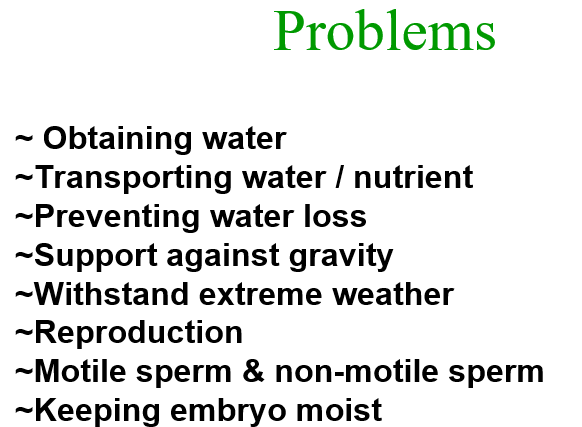
Trends in Plant Evolution
Nonvascular --> Vascular
Haploid --> Diploid Dominance
Homospory --> Heterospory
Motile Gametes --> Nonmotile
Seedless --> Seeds