Lecture 26- Carboxylic Acid Derivatives
Carboxylic Acid Derivatives
Overview
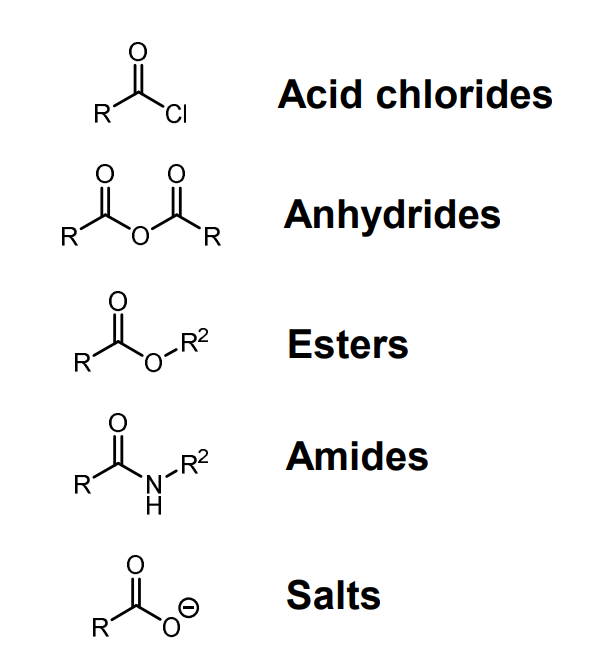
This unit covers carboxylic acid derivatives, including:
Acid chlorides
Most reactive derivatives
Anhydrides
Esters
Amides
Salts
Least reactive derivatives
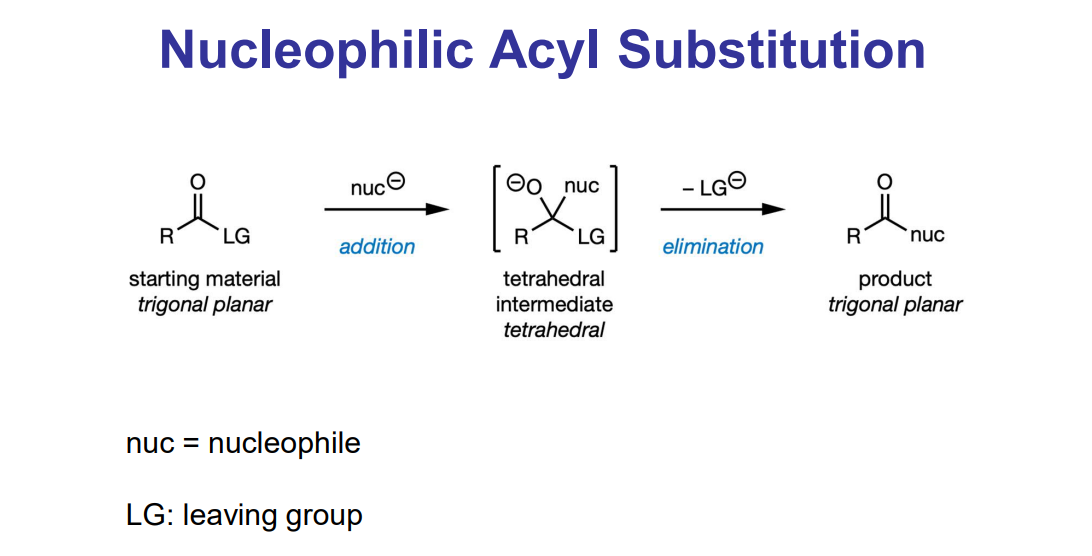
Nucleophilic Acyl Substitution
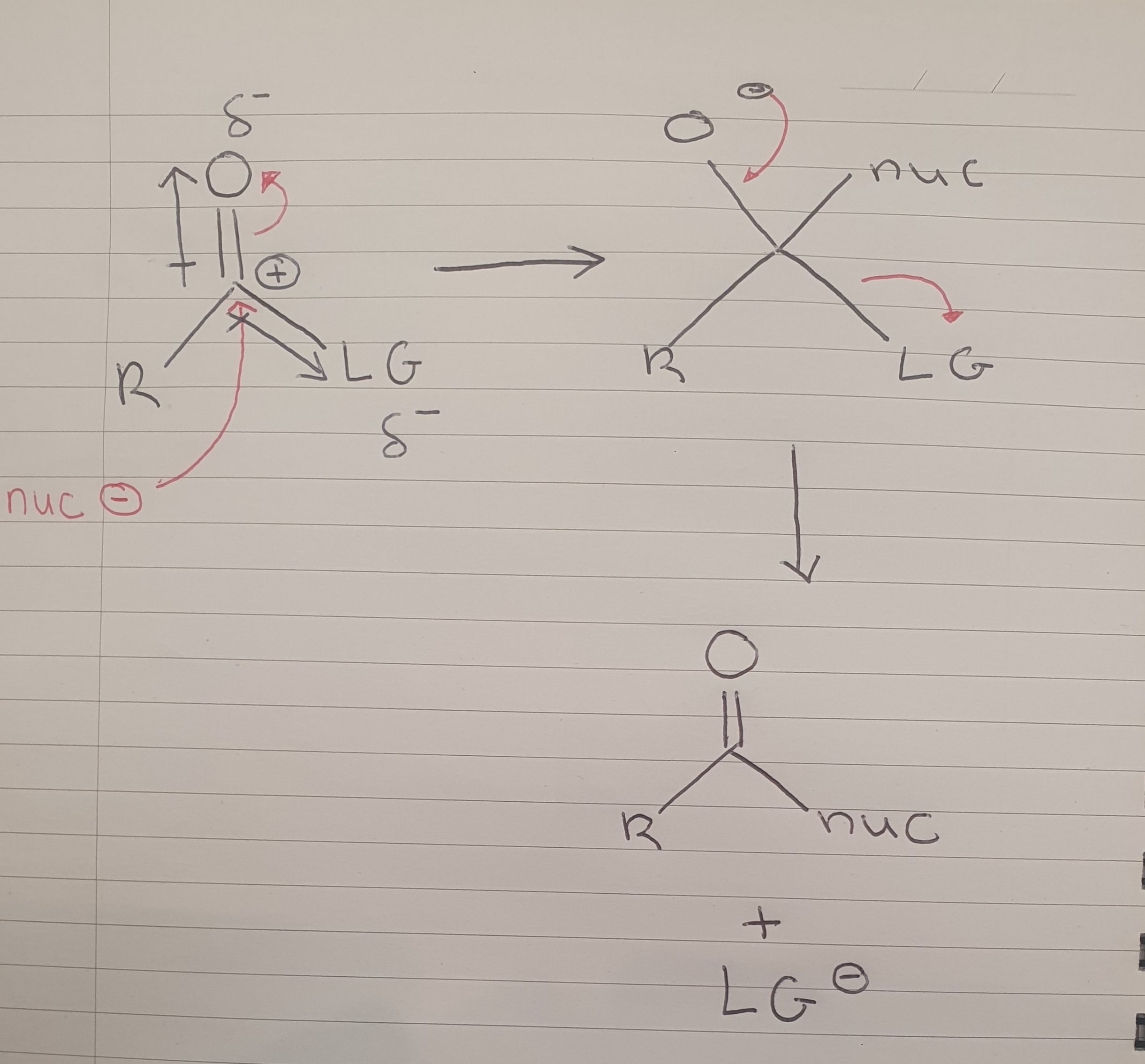
Key process involving a nucleophile (nuc) and a leaving group (LG).
The leaving group is often also a electron withdrawing group(electronegative atom).
Forms intermediate
Leaving Groups
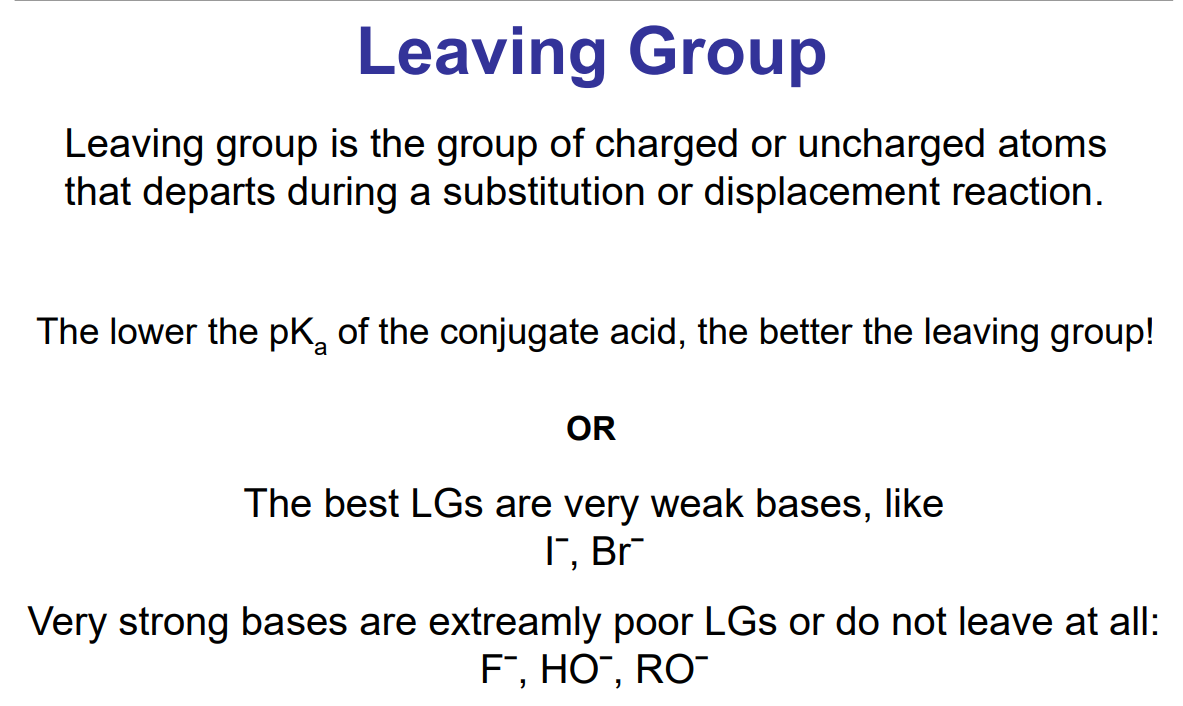
Leaving group: A group of charged or uncharged atoms that departs during a substitution or displacement reaction.
The lower the of the conjugate acid, the better the leaving group.
or
Good leaving groups are weak bases (e.g., , ).
You want it to have low reactivity so that it dosen’t reattack the carbonyl.
Poor leaving groups are strong bases (e.g., , , ).
They often won’t leave.
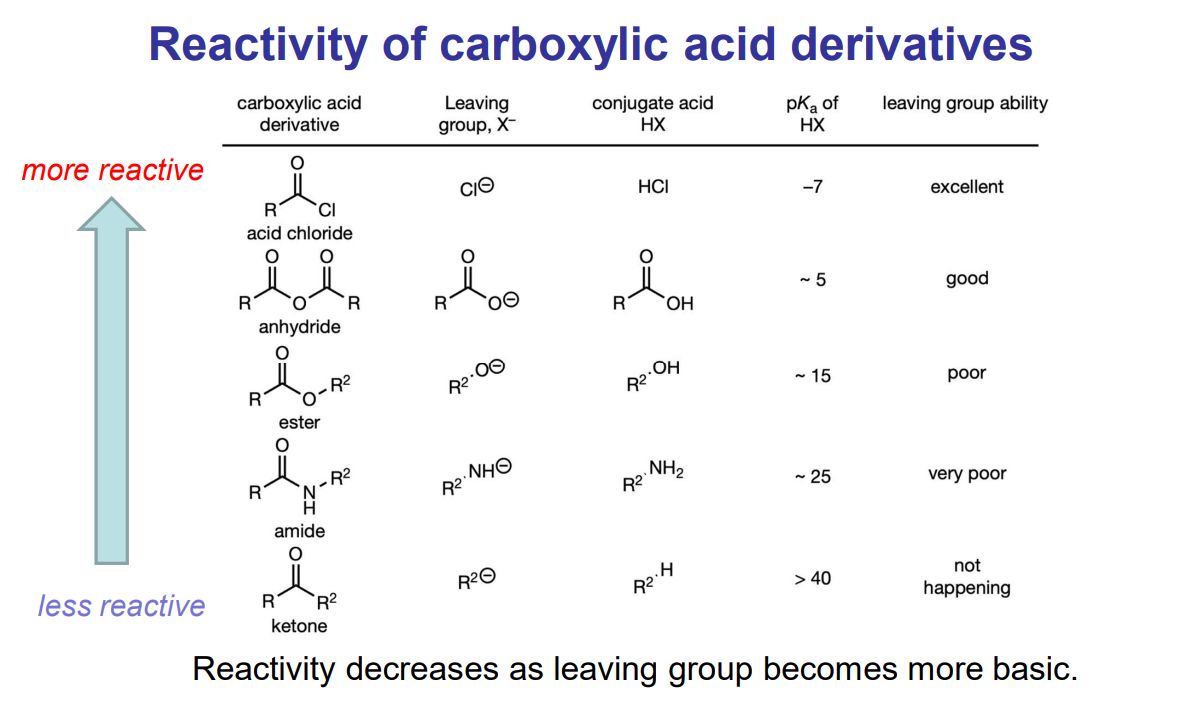
Reactivity of Carboxylic Acid Derivatives
Reactivity decreases as the leaving group becomes more basic.
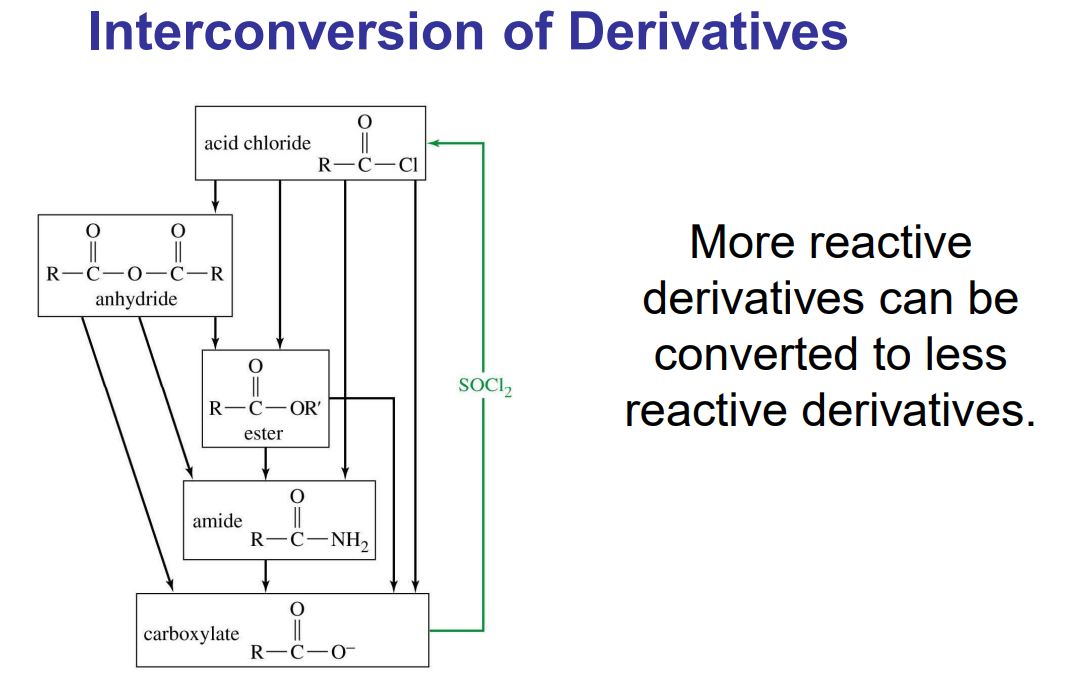
More reactive derivatives can be converted into less reactive ones.
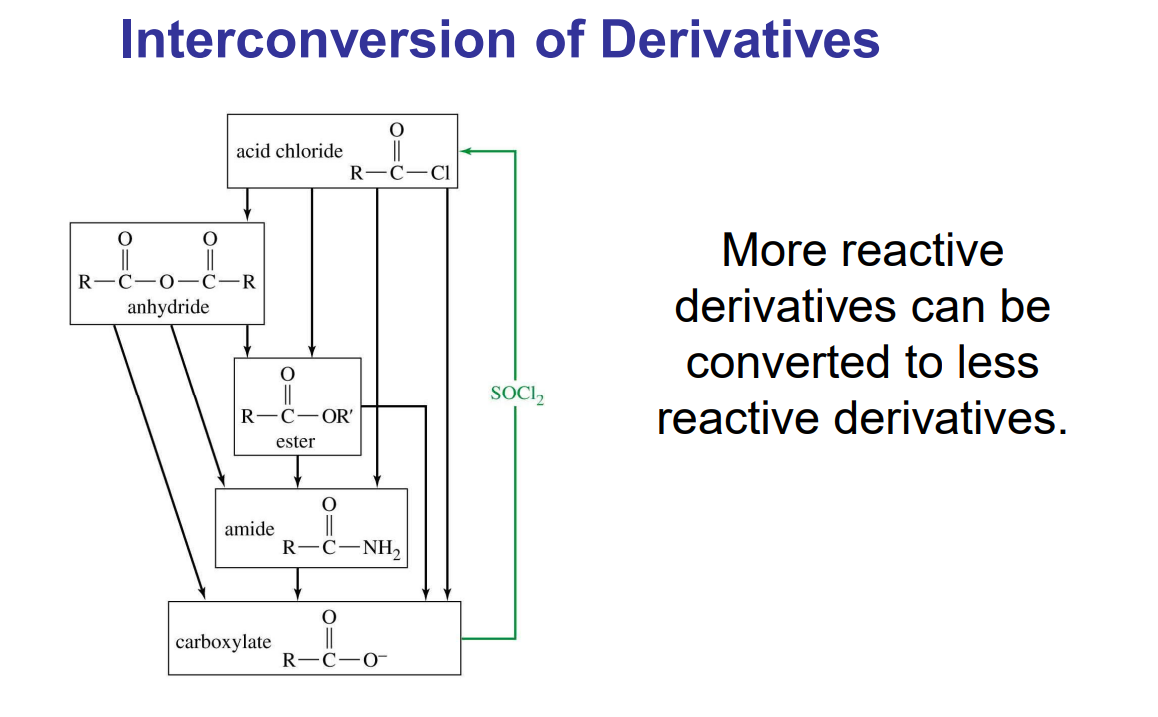
Can go from least reactive derivative(carboxylate salt) ,using SoCl2, to the most reactive(Acid Chloride)
Acid Chlorides
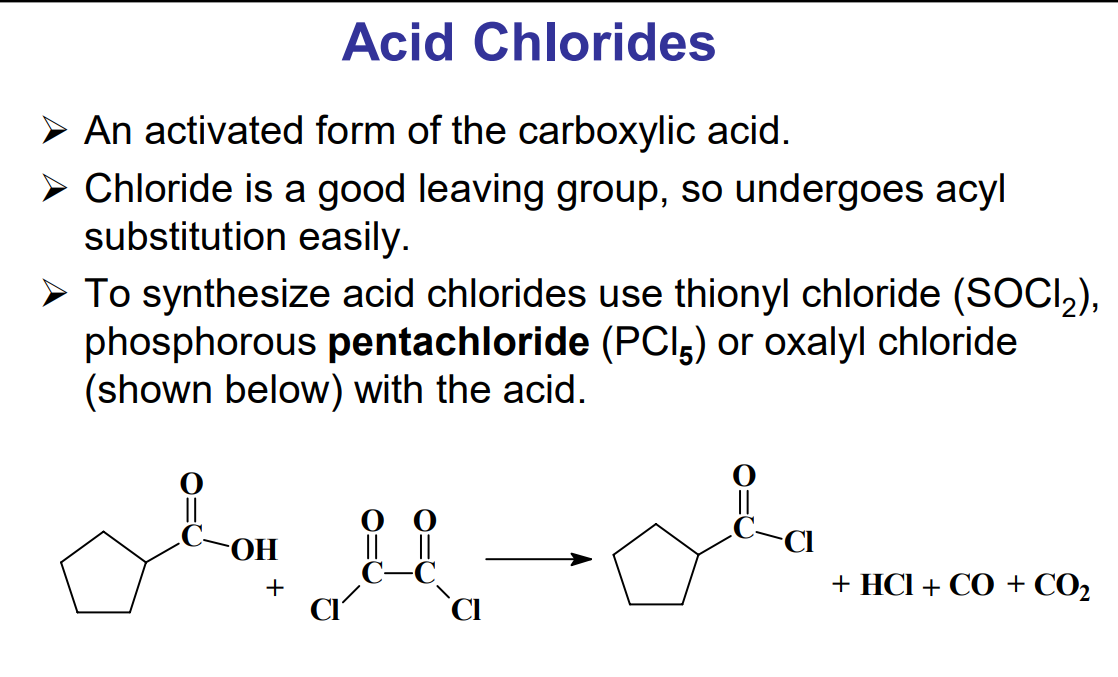
An activated form of a carboxylic acid.
Chloride is a good leaving group, facilitating acyl substitution.
Synthesized using thionyl chloride ), phosphorus pentachloride ( or oxalyl chloride.
Example reaction using oxalyl chloride:
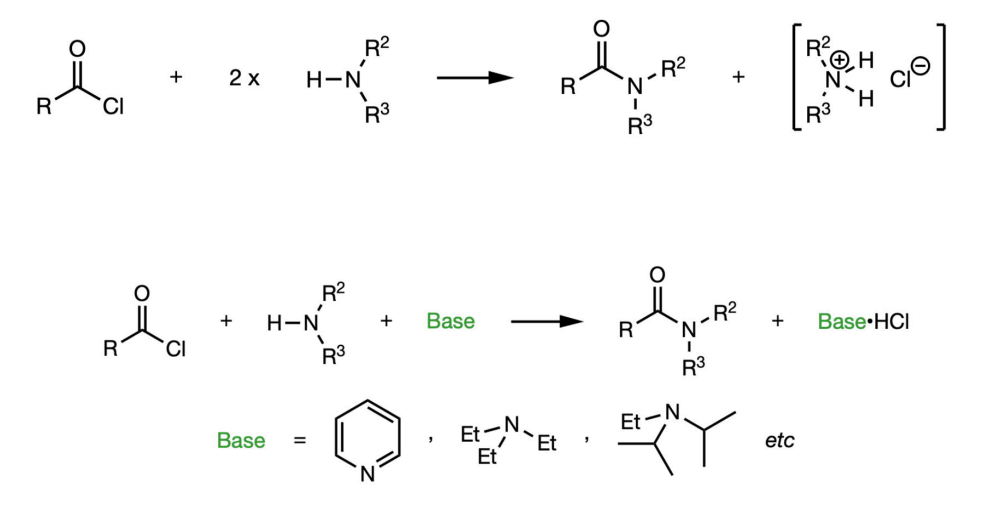
Acyl Chlorides and Amines
Reaction mechanism for acyl chloride and amine.
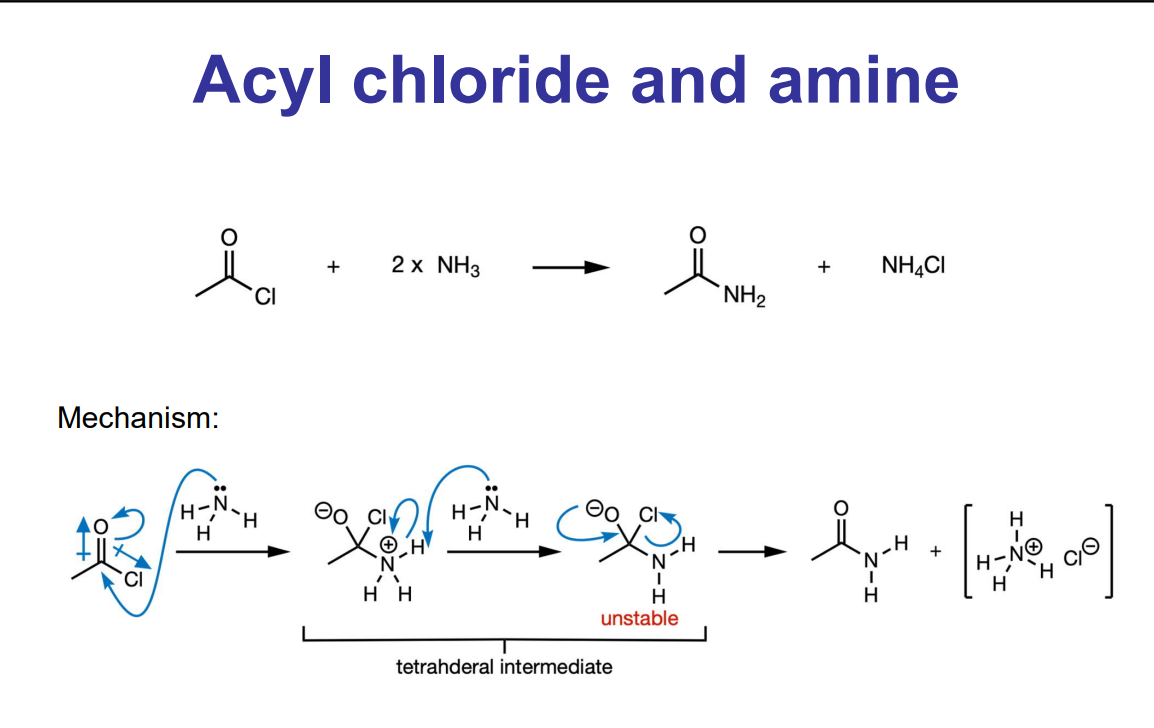
Protonation step in the Intermediate.
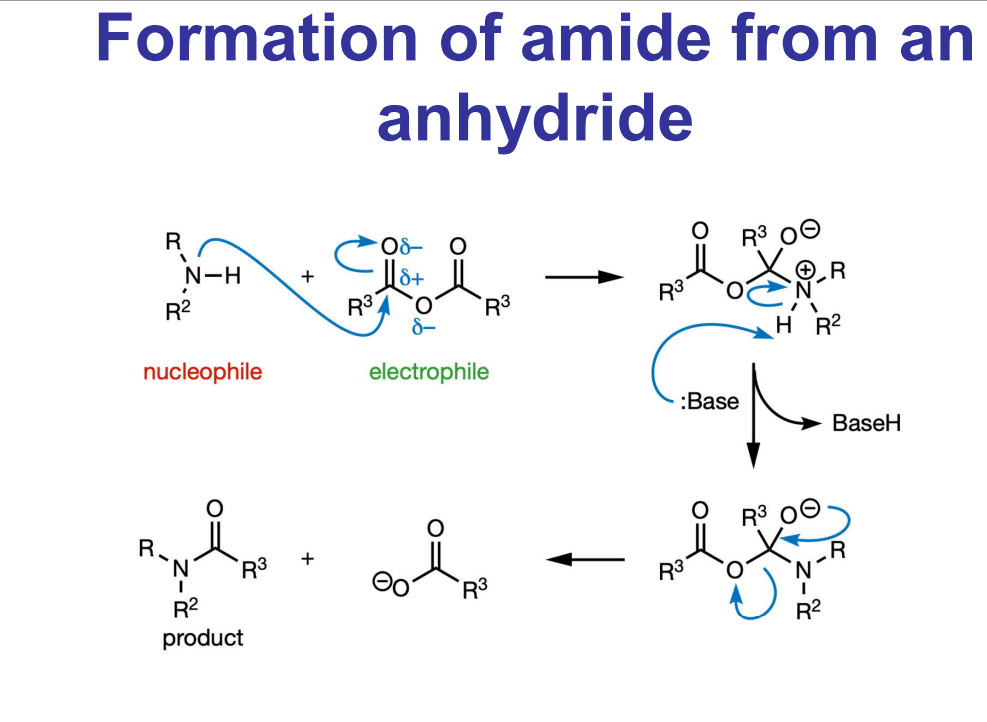
Formation of Amides from Anhydrides
Amides can be formed from anhydrides.
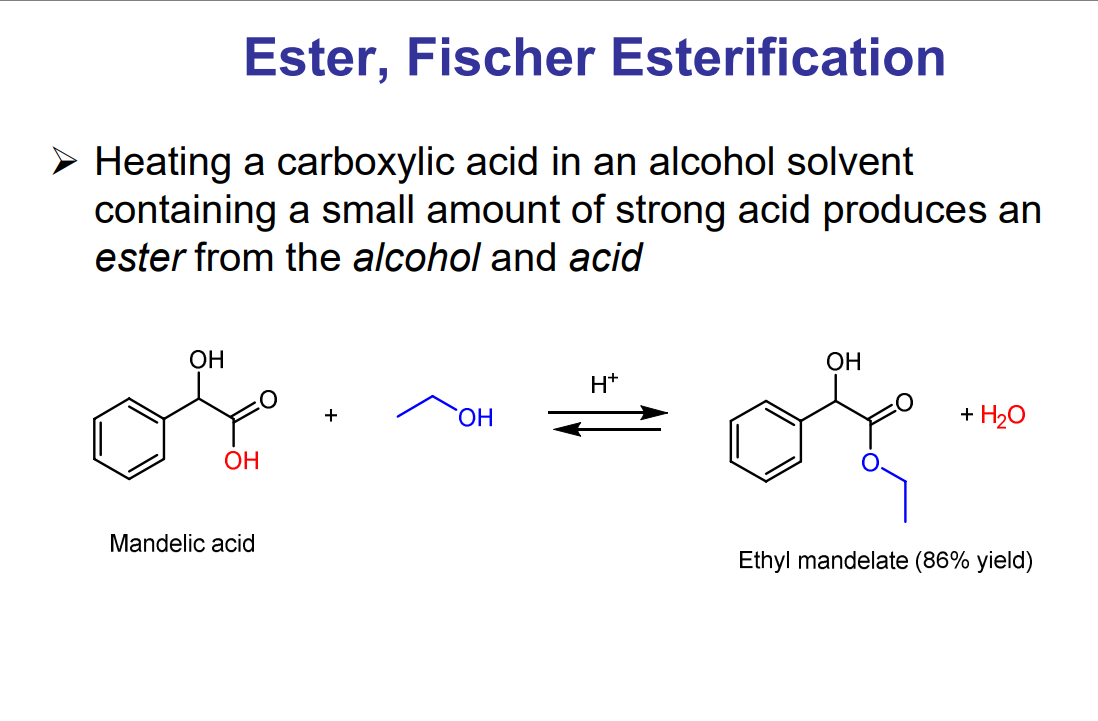
Esters: Fischer Esterification
Esters are produced by heating a carboxylic acid in an alcohol solvent with a small amount of strong acid.
Mechanism of the Fischer Esterification
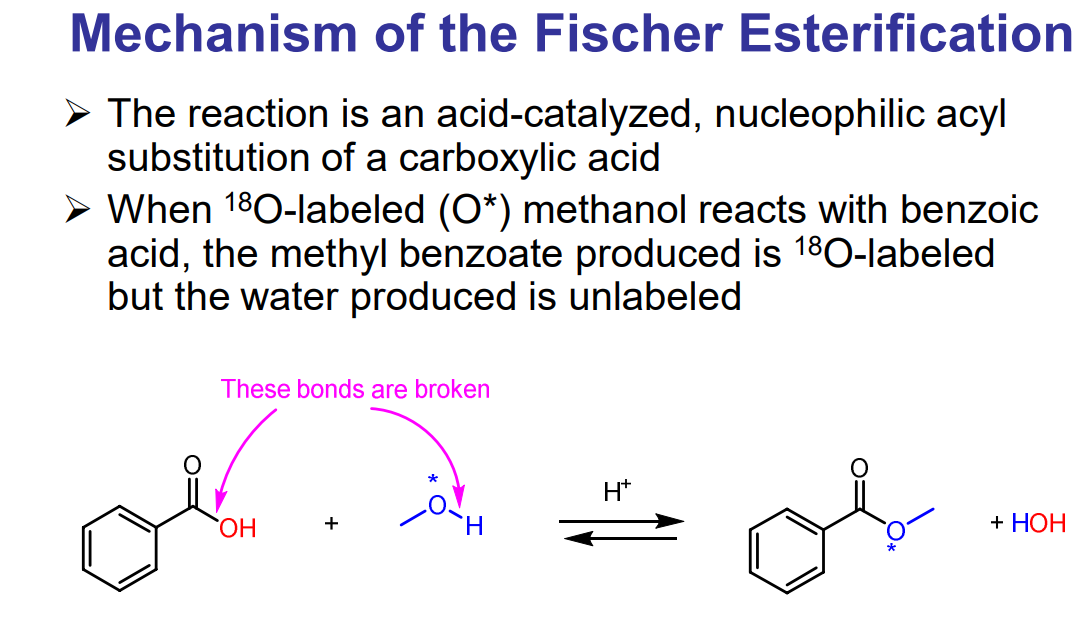
Acid-catalyzed nucleophilic acyl substitution of a carboxylic acid.
Requires the H+ catalyst.
When -labeled methanol reacts with benzoic acid, the methyl benzoate produced is -labeled, while the water is unlabeled.
It is the alcohol that carboxyl that ends up on the ester.
This is because OH minus is a bad leaving group but water is.
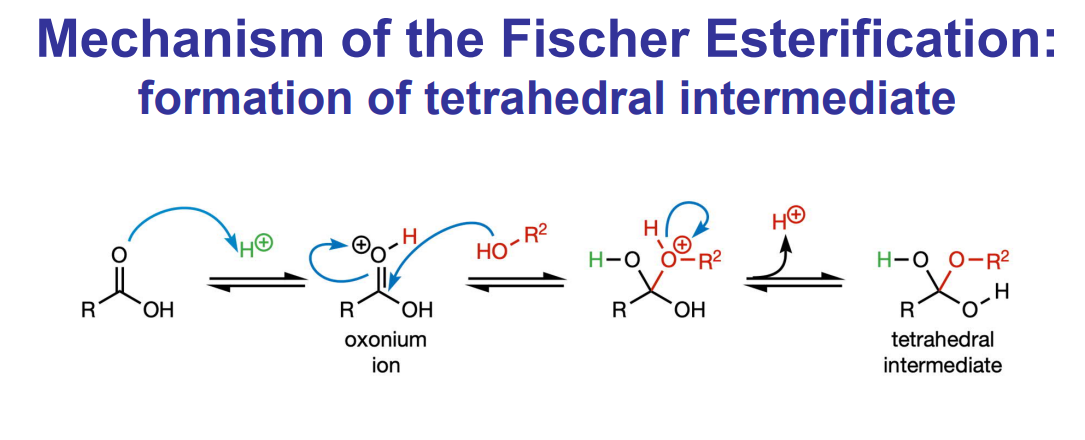
Involves the formation of a tetrahedral intermediate.
Creation of a leaving group and product formation.
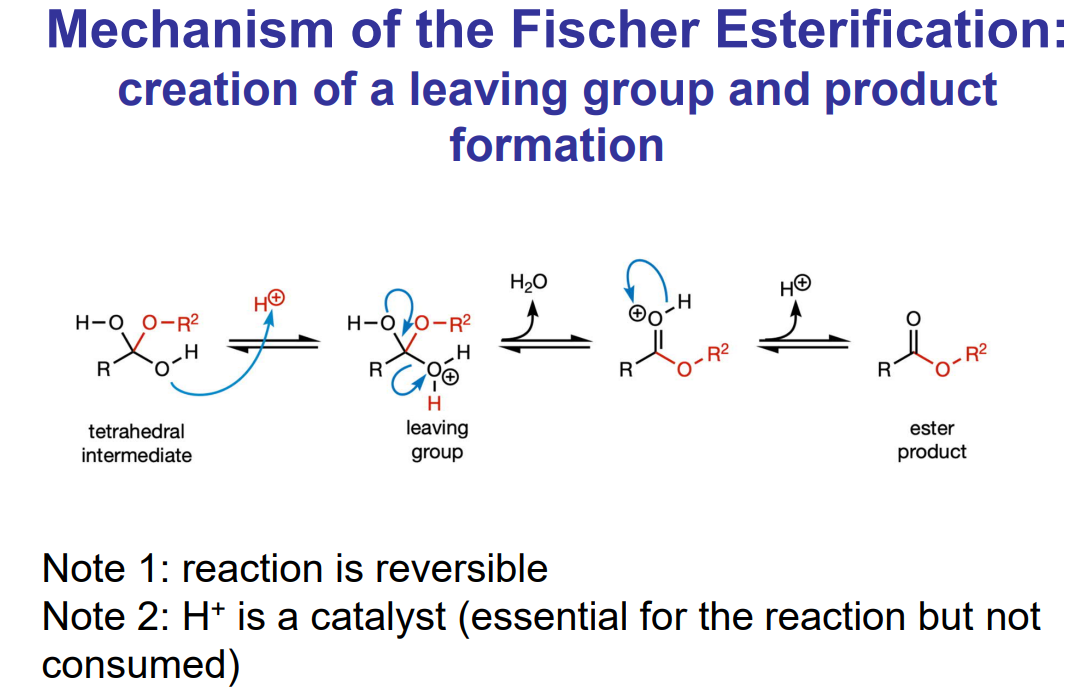
Note: The reaction is reversible.
Note: is a catalyst (essential for the reaction but not consumed).
Ester Formation and Hydrolysis
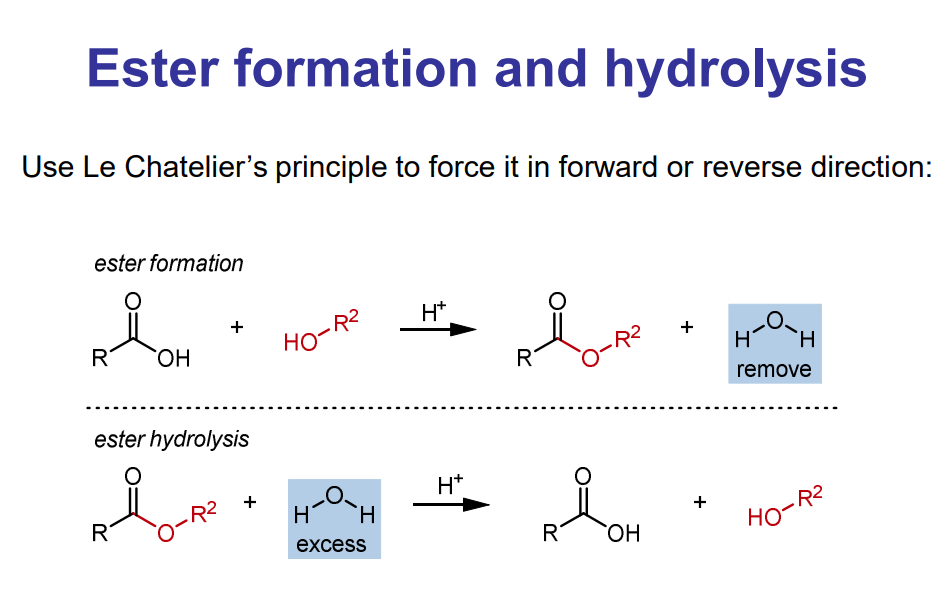
Le Chatelier’s principle can be used to force the reaction in the forward or reverse direction.
Carboxylic Acid into Amides
Carboxylic acids can be converted to amides.
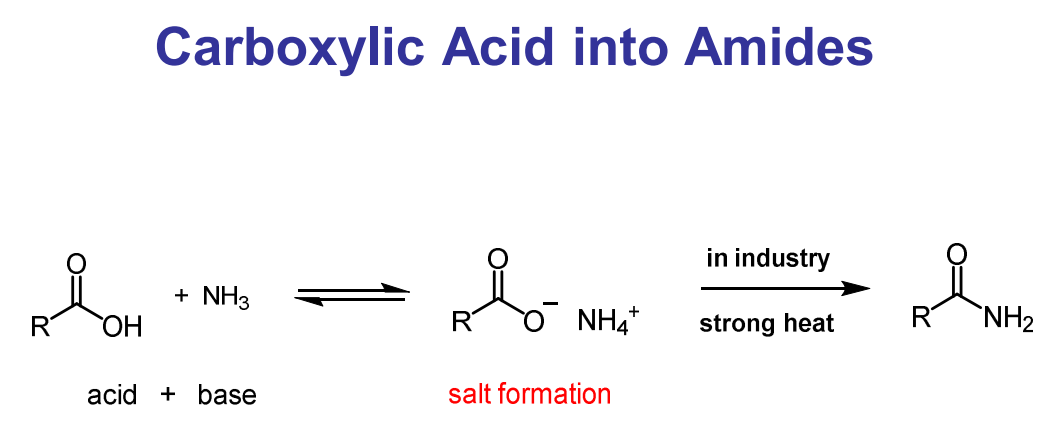
Forms intermediary salt.
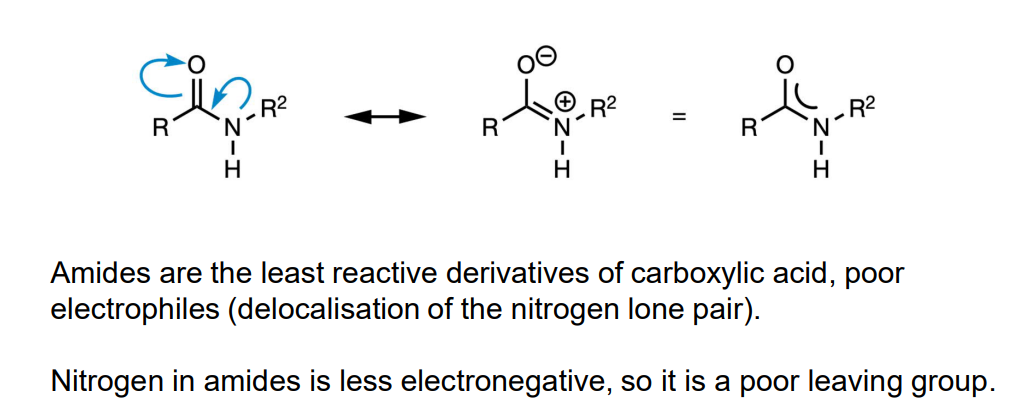
Amides
Least reactive derivatives of carboxylic acids; they are poor electrophiles due to delocalization of the nitrogen lone pair.
Nitrogen in amides is less electronegative, making it a poor leaving group.
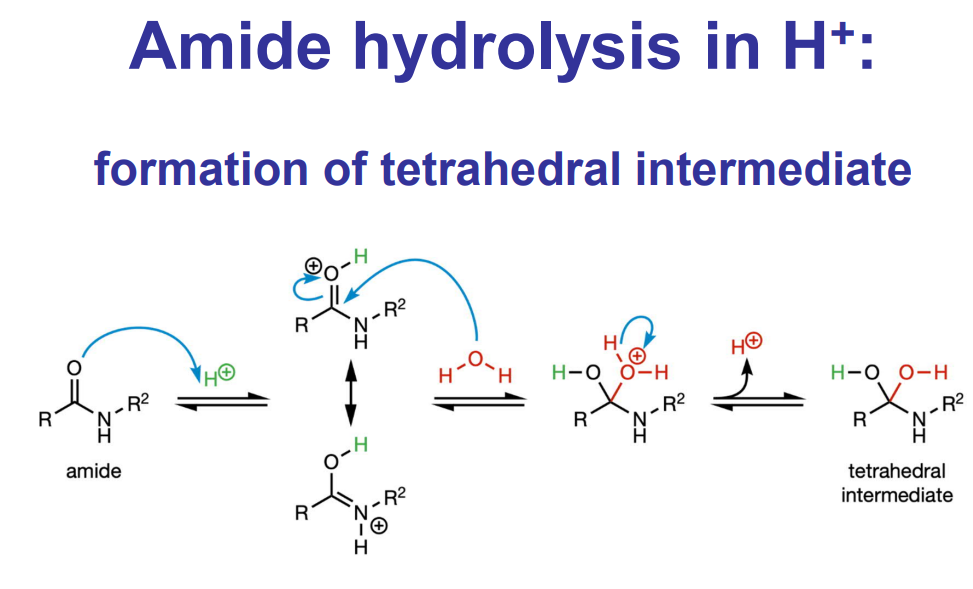
Amide Hydrolysis in Acid ()
Formation of a tetrahedral intermediate.
Collapse of the tetrahedral intermediate and product formation.
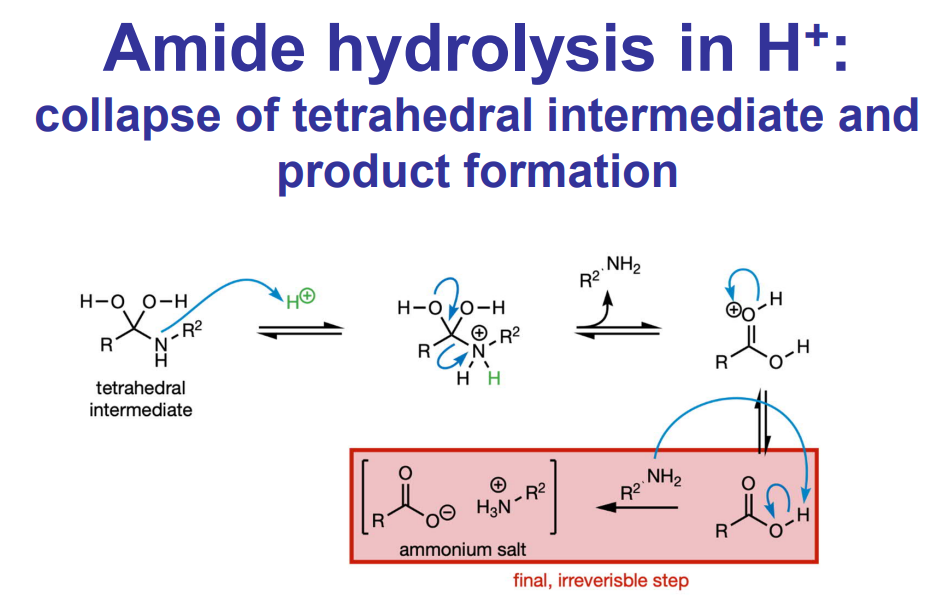
Nitrogen has been protonated and is no longer a good nucleophile.
Base-Catalyzed Amide Hydrolysis
Amide hydrolysis can also occur under basic conditions.
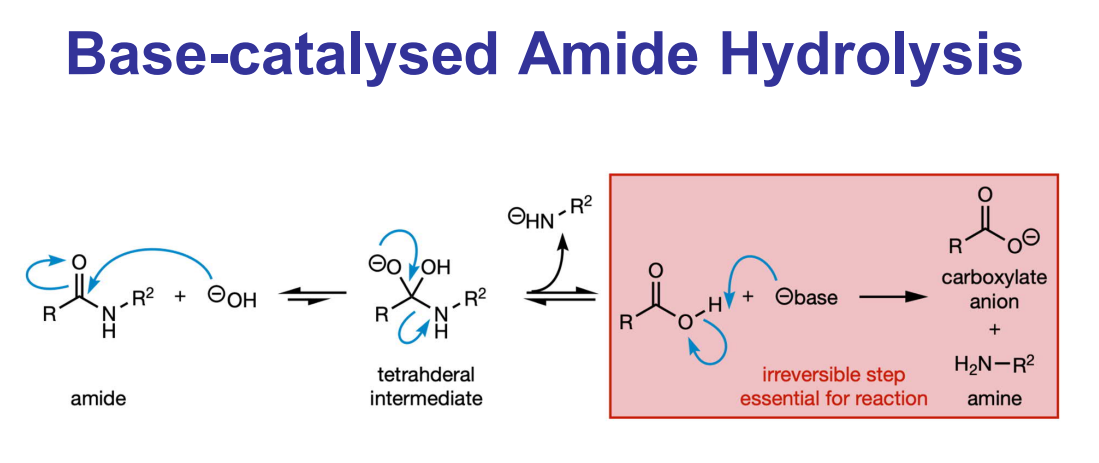
Use OH- to attack the carbonyl
Amides: Chemical Synthesis
Chemists use protecting groups to temporarily stop unwanted reactivity and use specialized reagents.
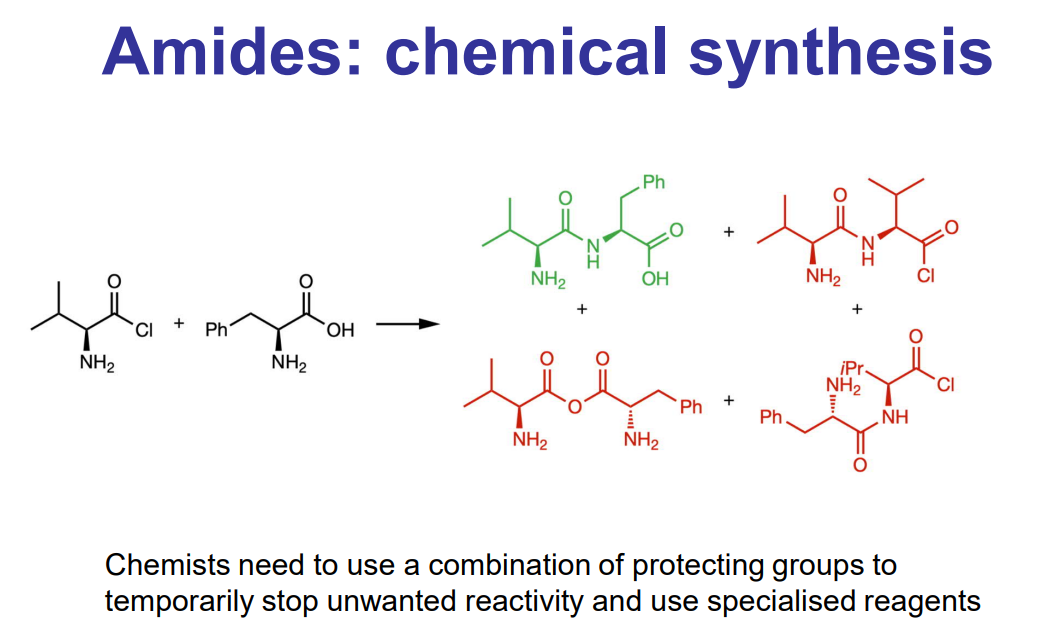
Creates many different types of products.
Protecting groups can be used to make functional groups unreactive, creating the selected products.
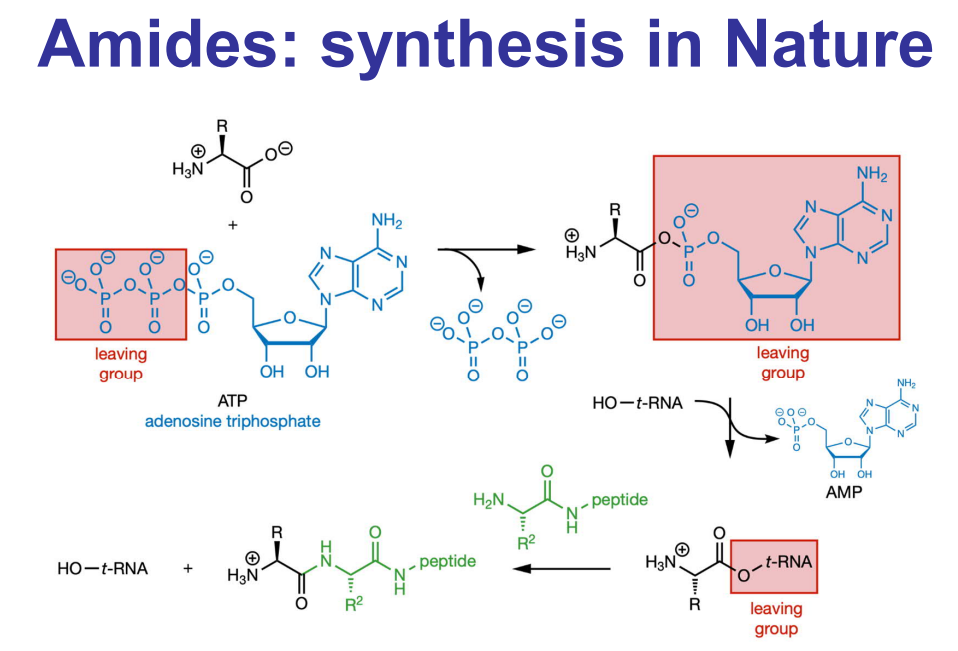
Amides: Synthesis in Nature
Amides are synthesized in nature through various biological processes.
Example in nature for the synthesis of a protein.
Interconversion of Derivatives
More reactive derivatives can be converted to less reactive derivatives.