Section 4.5-4.6 Lecture Notes
The Budget
the federal government budget covers expenses for the fiscal year (October to September)
recent budgets have been in the trillions
mandatory spending: spending required by existing laws that is “locked in” the budget
entitlement program: programs that provide benefits for those who qualify under the law, regardless of income
interest on federal debt
discretionary spending: spending for programs and policies at the discretion of Congress and the president
military, education, scientific research, agriculture
Political Contributors
budget process involves both the President and Congress
President submits a budget for congressional organization
Congress produces a budget resolution providing broad spending goals
appropriations committees allocate for specific programs
Congress passes, then the President signs
Taxation, Deficits, and Debt
the government takes in revenue via income taxes
the government spends the money via budget
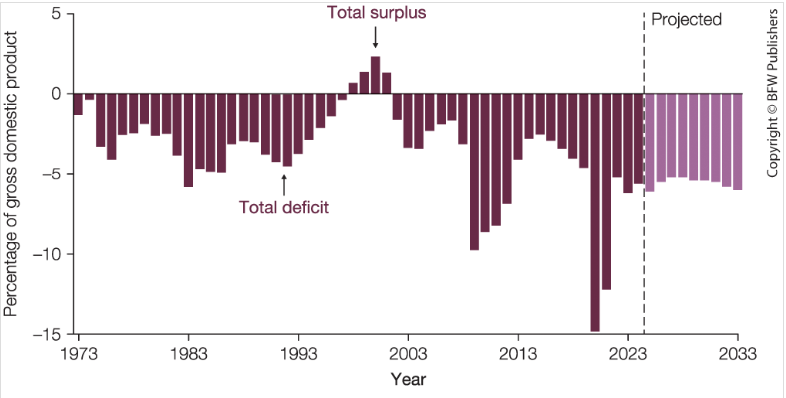
surplus: when government spending is less than government revenue
deficit: when government spending is greater than government revenue
debt: when multiple deficits add up over time
Congress and Public Policy: Social Insurance
the largest piece of the budget pie is entitlement spending
Social Security: entitlement program
created in 1935 as old-age pension/insurance via payroll tax
designed to be self-funding
the ratio of contributors to beneficiaries is declining as more people from the Baby Boomer generation are retiring
concerns about long-term solvency of this program
potential options for solving Social Security:
raising payroll taxes
raising the age to collect
privatizing the system via investments
since it’s mandatory spending, can’t reduce the amount people collect
Challenges of Representation
members of Congress are pulled in several directions
delegate role: main duty of a member of Congress is to vote the way their constituents wish
voters need to have a preference and to provide this information to the member for this to work
trustee role: member of Congress makes decisions using their own knowledge and judgement
politico role: emphasizes that Congress is a politicized body, and members of Congress balance their choices with the interests of constituents and parties
A Partisan Body
recent Congresses are paralyzed by partisanship (known as gridlock: a slowdown or halt in Congress’s ability to legislate and overcome divisions)
gridlock is more common when party control of the presidency and one or both chambers of Congress is split (divided government)
polarization has led to a lack of bipartisanship: agreement between the parties to work together to pass legislation
Types of Representation
descriptive representation: Congress members mirror the makeup of the country
means that Congress should have more minority population, to better reflect the population
substantive representation: Congress members mirror their constituents’ interests and policy views regardless of their demographics
means that Congress needs to represent the unconsidered views of its constituents