⭐TEST REVIEW
TOPICS ☑️
Aggregate Demand
Aggregate Supply
Short-Run Aggregate Supply
Long-Run Aggregate Supply
Graphs, shifts, etc.
Consumption Function
From a graph, from a table
Spending Multiplier
Why is tax impact stronger than government spending?
Private sector spending vs. government spending
Impact on equilibrium GDP / output
Keynesian Cross Diagram
Classical vs. Keynesian
Interpret
2 types of inflation
Define and understand them
Fiscal Policy
Problems, definition of problems, types (discretionary, automatic stabilizers)
Money
Federal Reserve System
FDIC
M1 vs. M2
Supply Side Economics
Taxes, Laffer Curve
CH 13, pg. 284
Regulations
Recognize recessionary / inflationary gaps in AD & AS graphs
Consumption function
CH 13 — Q’s 9, 10*
Investment (interest rates)
Remember the relationship, and how higher interest rates impact consumption
*CH 13 — Q’s 9, 10
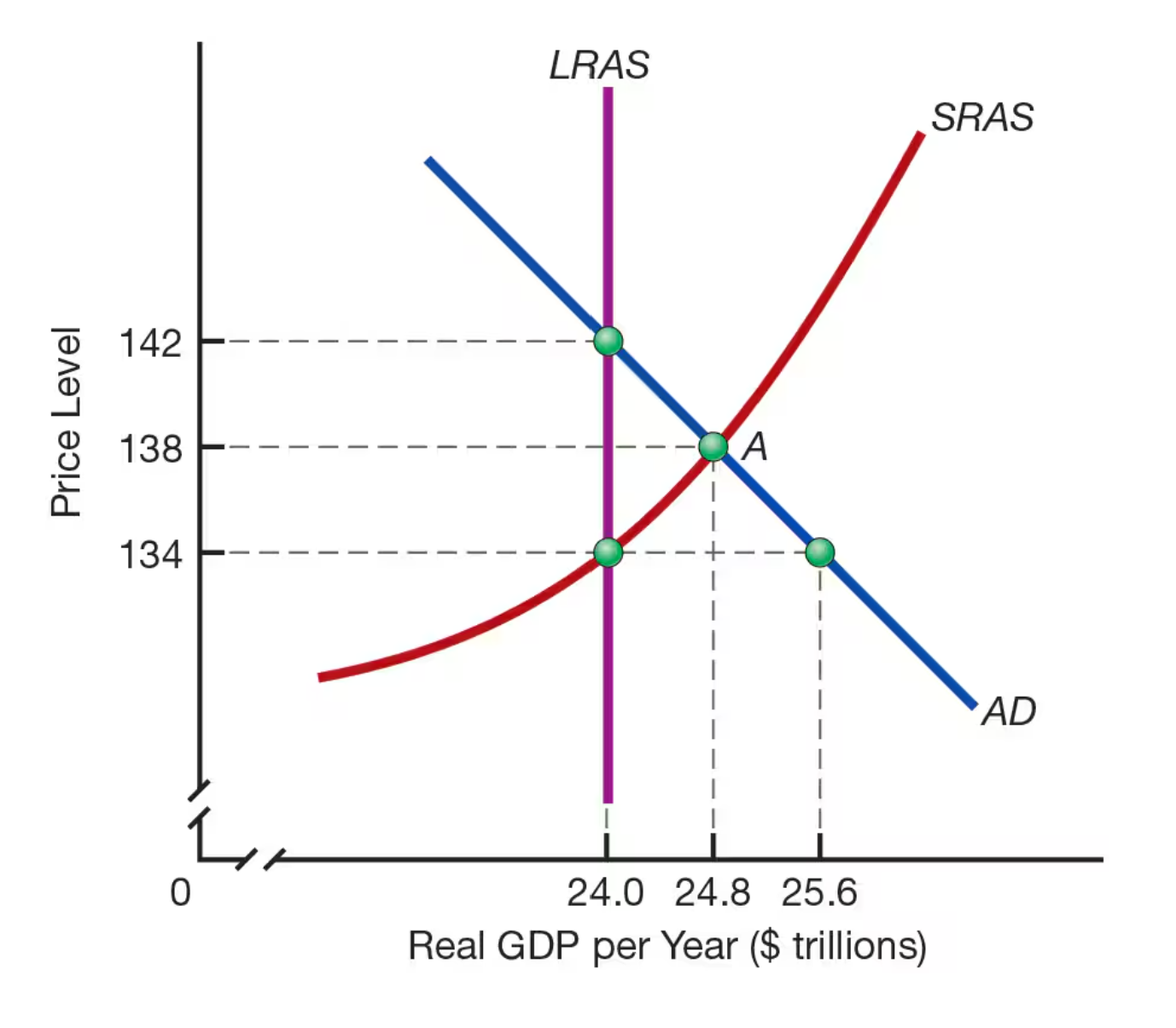
13-9: Consider the first diagram, in which the current short-run equilibrium is at point A, and answer the questions that follow.
a. What type of gap exists at point A?
b. If the marginal propensity to save equals 0.20, what change in government spending financed by borrowing from the private sector that shifts the aggregate demand curve by a sufficient horizontal distance could eliminate the gap identified in part (a)? Explain.
ANSWER
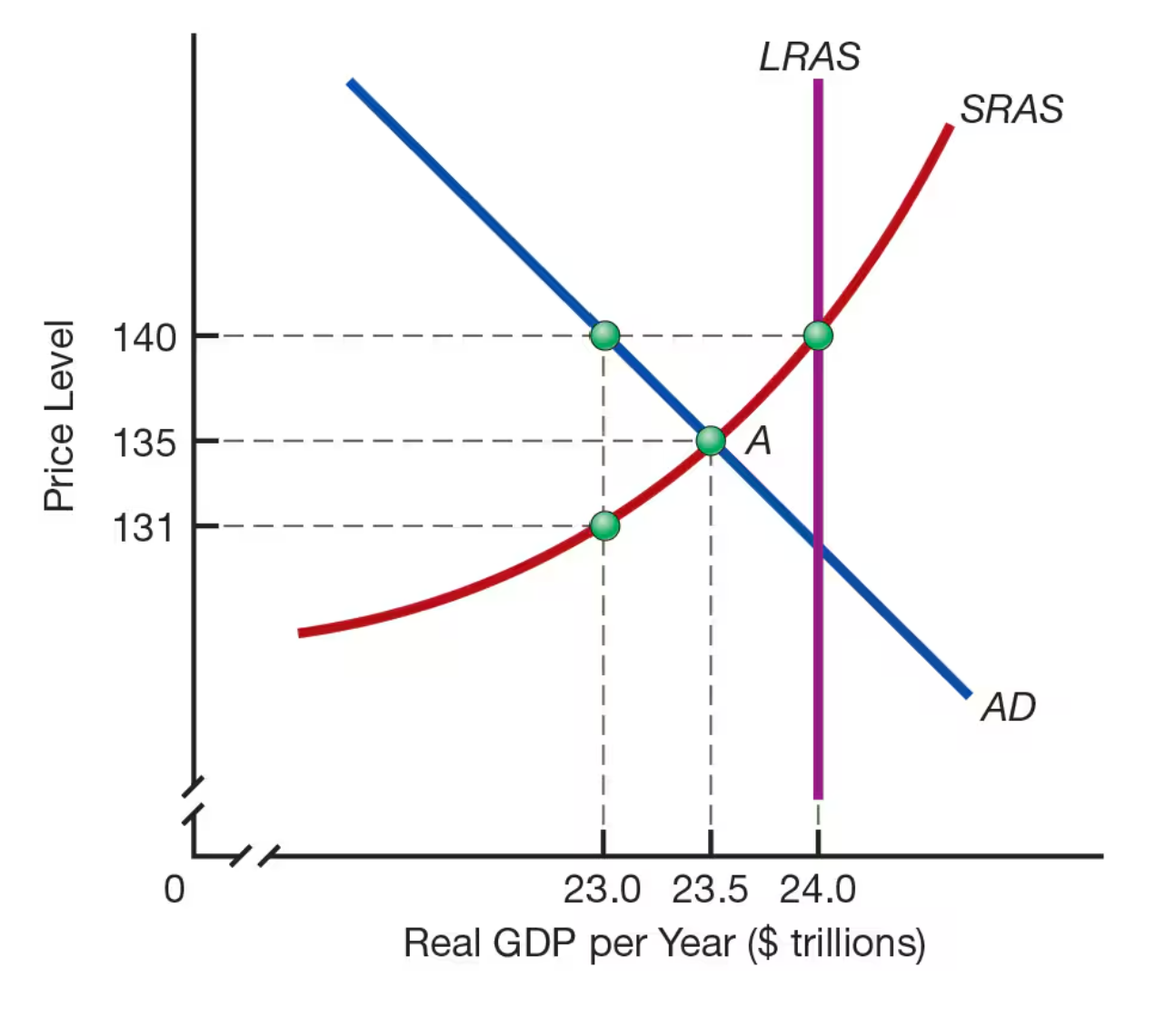
13-10: Consider the second diagram, in which the current short-run equilibrium is at point A, and answer the questions that follow.
a. What type of gap exists at point A?
b. If the marginal propensity to consume equals 0.75, what change in government spending financed by borrowing from the private sector that shifts the aggregate demand curve by a sufficient horizontal distance could eliminate the gap identified in part (a)? Explain.