Leture 1: Caribbean Civilisation: The Concept of Civilisation, History, and Ancient World Systems
Foundations of Historical Study and the Rejection of 'Pre-History'
Historical study is rooted etymologically in the ancient Greek word historia, defined as "inquiry, knowledge acquired by investigation." Fundamentally, history is defined as the systematic study of the past—specifically, the rigorous examination of eras, societies, and civilisations that can no longer be directly witnessed or experienced by contemporary scholars or students.
Understanding the past requires bridging an inherent temporal and cultural divide summarized by the principle: "The past is like a foreign country." Just as international travel requires official credentials to enter foreign territory, exploring past eras requires symbolic conceptual passports.
Historians function as the primary creators of these passports to the past. Through meticulous research, recovery of physical and written remnants, and the development of critical interpretive frameworks, historians reconstruct lost historical periods. These passports take various tangible forms, including published historical literature, preserved physical artifacts, and documented oral accounts.

A critical distinction exists between recorded history and unrecorded human existence:
Recorded History: Refers to human societies and eras following the invention and adoption of written language. The written record constitutes the primary corpus of conventional historical study.
Unrecorded Past: Refers to human existence prior to the creation of written scripts, relying entirely on archaeological and physical evidence for reconstruction.
Rejection of the Term 'Pre-History': The traditional term "pre-history" is a misleading misnomer and carries derogatory implications by suggesting that human life before literacy was devoid of history or human agency.
Pre-Literate Societies: A far more accurate and scholarly description is "pre-literate." Pre-literate societies possessed complex social organization, technological systems, belief systems, and rich historical experiences, even though they lacked formal alphabetic or written record-keeping.
The Importance of History and Historical Revisionism in the Caribbean
Developing a deep, critical sense of history is uniquely vital to post-colonial Caribbean societies. Historical consciousness serves five central socio-cultural functions:
Centrality to Identity: Provides the essential foundation for understanding collective and individual selfhood in a region shaped by migration, colonial domination, and cultural syncretism.
Familiarity with the Past: Cultivates a clear awareness of ancestral origins, migratory journeys, and cultural legacies.
Validation of Actions and Understandings: Offers context that validates contemporary Caribbean societal structures, linguistic expressions, religious practices, and social behaviors.
Guidance for the Future: Provides critical lessons, insights, and historical precedents necessary for navigating present-day socio-political and economic challenges.
Escape Route from Colonial Narratives: Serves as a conceptual tool to break free from Eurocentric mentalities and colonial ideological constructs.

Historical narrative construction depends heavily on who holds the power to create historical records. History written strictly from the perspective of colonial oppressors ("Massa") presents a fundamentally biased and distorted narrative compared to history constructed from the lived experiences of enslaved or colonized populations.
Historical Revisionism is the formal, scholarly process of re-examining historical events from new perspectives and re-interpreting traditional viewpoints. Revisionist history is essential for:
Incorporating the suppressed voices, agency, and experiences of marginalized, enslaved, and indigenous populations.
Conducting deeper and broader analytical inquiries into historical events to reveal factual accuracy.
Rigorously challenging, rethinking, and dismantling entrenched colonial dogmas and Eurocentric biases.
Categorization and Analysis of Historical Sources
Historical research relies on information gathered from two primary categories of sources:
Primary Sources: First-hand accounts, original artifacts, or raw evidence produced directly during the specific historical period under investigation. Examples include plantation sale ledgers, personal letters, state records, eye-witness testimonies, and physical tools.

Secondary Sources: Works written, compiled, or presented by historians based on the analysis and interpretation of primary documents. Secondary sources represent analytical interpretations and are inherently subject to authorial bias, perspective, and ideological framework.

Historical evidence is further divided by media type into written and non-written sources:
Written Sources: Inscriptions carved into stone, parchment manuscripts, papyrus scrolls, paper documents, and contemporary computer-readable digital files.
Non-Written Sources:
Human biological remains (skeletal and dental material).
Material culture, including architectural structures, urban ruins, pottery, tools, weapons, and household artifacts.
Artistic works, including cave paintings, sculpture, photography, film, and textiles.
Cultural performance practices, folklore, folk dance, and musical traditions.
Understanding spoken historical transmission requires distinguishing between Oral History and Oral Tradition:
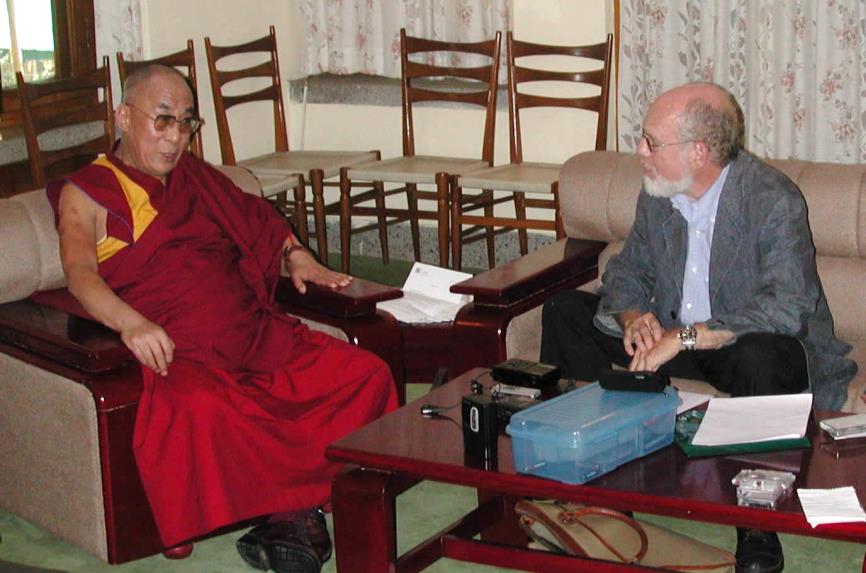
Oral History: First-hand verbal statements gathered from a living individual who personally witnessed or participated in the events described. The source is referred to as an informant, and data collection must occur during the informant's lifetime.
Oral Tradition: Verbal memories, stories, historical accounts, and cultural practices passed down through generations across time. The narrator does not need to have been an eyewitness to the events. Oral tradition is indispensable for reconstructing the histories of pre-literate civilisations.
Historiographical Methodology: External and Internal Criticism
Historians apply a rigorous, two-part methodology to evaluate the validity and meaning of historical sources:
External Criticism (Authenticity Analysis):
Investigates whether a document or artifact is genuinely authentic rather than forged, altered, or misattributed.
Examines physical properties, material composition (such as ink, paper, or stone type), linguistic style, paleography, and provenance.
Internal Criticism (Credibility and Meaning Analysis):
Analyzes the internal content of the source to determine its true meaning, accuracy, and trustworthiness.
Evaluates the author's purpose, potential bias, context, internal consistency, and how effectively the content provides accurate insight into the historical period or civilisation.
Human Evolution and the Neolithic Revolution
The trajectory of human development spans several millions of years across distinct evolutionary and technological epochs:
years ago: Formation of planet Earth.
years ago: Appearance of the earliest hominids (human-like creatures) in Africa.
years ago: Emergence of erect, tool-using human species spread across Africa, Europe, and Asia.
years ago: Evolutionary emergence of Homo sapiens.
years ago: Date of the earliest fossil remains of anatomically modern humans.
For the vast majority of human existence, populations lived in the Palaeolithic Era. palaeolithic humans were nomadic hunter-gatherer-fishers who continuously moved across landscapes in direct pursuit of wild game, fish, and seasonal vegetation.

Around , human society underwent the Neolithic Revolution, marking a monumental transition from food gathering to food production. This revolution was defined by the domestication of animals (animal husbandry) and the systematic cultivation of plants (agriculture).

The shift to sedentary agriculture triggered structural societal transformations:
Agricultural Yields & Irrigation: Systematic cultivation and water control dramatically increased food production, fueling unprecedented population growth.
Urbanization: Permanent agricultural settlements expanded into organized towns and cities, creating complex infrastructure, industry, and commerce.
Social Division of Labor: Food surpluses freed portions of the population from direct food production, giving rise to specialized occupations (artisans, builders, administrators, priests) and formal social stratification.
Cultural Systems: Dense urban living necessitated structured forms of communal identity and governance, driving the development of writing, formal religion, specialized visual art, and music.
Defining Civilisation and Culture
A Civilisation is defined as a complex, highly organized society structured around a dense community, an established culture, institutional governance, social specialization, and a shared way of life.
Culture represents the comprehensive way of life of a specific group of people. It encompasses the varied lifestyles, values, behavioral practices, belief systems, and worldviews found across human communities globally. Bikhu Parekh (2000) defines culture as:
"A body of beliefs and practices in terms of which a group of people understand themselves and the world and organize their individual and collective lives."
Culture functions as an essential, defining subset of a broader civilisation. It manifests throughout an entire society or within distinct sub-groups (subcultures) operating within that society.
The core structural elements of culture include:
The organization of economic production methods within the group.
The foundational structure and dynamics of the family unit.
The framework of social, political, and economic institutions.
Established modes and symbols of communication.
Human Construct: Culture is a unique human creation that fundamentally separates human societies from the animal kingdom.
Generational Transmission: Culture is learned rather than biologically inherited; it is systematically taught, internalized, and transmitted across successive generations.
Culture as a Unifying and Divisive Dynamic
Culture operates simultaneously as both a unifying and a divisive force within human societies:
Unifying Force: It creates strong internal cohesion, mutual understanding, shared belonging, and solidarity among individuals who share identical cultural norms, values, and traditions.
Divisive Force: It creates lines of exclusion against those who do not share the culture, categorizing non-members as "the other."
Barrier to Integration: Cultural misunderstandings and ethnocentrism can act as significant obstacles to regional integration and cross-cultural unity.
Hierarchical Discrimination: Historically, dominant societies have utilized arbitrary markers of "progress" and "civilisation" to construct cultural hierarchies, branding non-conforming cultures as "inferior" or "primitive."
Two prominent historical markers used to enforce cultural discrimination include:
Religion: Monotheistic European Christian doctrines were historically weaponized during colonial expansion to label Indigenous and African spiritual traditions as "uncivilized" or "savage."
Literacy: Eurocentric frameworks equated civilisational progress strictly with alphabetic writing, dismissing rich, highly developed pre-literate oral cultures as lacking history.
The Nile Valley Civilisation
European colonial expansion popularized the derogatory myth of Africa as the "dark continent" to obscure and erase the sophisticated histories of African societies prior to European intervention. The Nile Valley Civilisation completely refutes this false narrative.
Situated along the Nile River in Northeast Africa (Egypt and Nubia), the Nile Valley Civilisation was a multi-ethnic society formed by the synthesis of diverse regional cultural groups.

The economy was built upon a highly organized, natural agricultural cycle governed by the annual rhythm of the Nile:
Akhet (The Inundation / Flooding Season, June–September): The river flooded the surrounding valley, depositing a thick layer of nutrient-rich black silt that naturally fertilized the soil.
Peret (The Planting / Growing Season, October–February): Farmers ploughed and seeded the fertile silt beds, managing crop growth through complex irrigation channels.
Shemu (The Harvest Season, March–May): Crops were harvested, processed, and stored in state granaries before the return of the annual flood.
The Nile River served as the essential lifeline for this civilisation by providing:
Abundant fresh water for drinking, domestic consumption, and agricultural irrigation.
Rich aquatic food resources, including diverse fish species and waterfowl.
Essential building materials, specifically river mud and clay used for brickmaking and pottery.
A continuous transportation and trade highway linking Upper and Lower Egypt.
The logistical capacity to transport massive stone blocks quarried from distant regions, enabling monumental state building projects (pyramids, temples, and palace complexes).

The Indus Valley (Harappan) Civilisation
Emerging around along the Indus River basin in present-day Pakistan and northwest India, the Harappan Civilisation comprised over 100 planned urban centers and agricultural villages. Its primary metropolises were Mohenjo-daro and Harappa. The archaeological ruins of this civilisation were rediscovered in the 1920s.

The socio-economic foundation of the Indus Valley Civilisation was defined by highly developed specialization:
Agricultural Systems: Extensive farming sustained by advanced canal irrigation schemes; cultivated diverse crops (wheat, barley, cotton) and domesticated cattle, sheep, and goats.
Commercial Trade Networks: Manufactured and traded fine cotton textiles, intricate gold and bead jewellery, copper mirrors, metal razors, ceramic toys, and fish hooks. Maintained long-distance maritime and overland trade routes extending to the Persian Gulf and Mesopotamia.
Advanced Metallurgy: Mastered large-scale industrial smelting and working of metals, including copper, bronze, lead, and tin.
Indus Valley cities demonstrated unprecedented standards of urban town planning:
Grid Architecture: Urban streets were laid out in precise, right-angled grid patterns using standardized, fire-baked clay bricks.
Municipal Sanitation: Houses featured private bathrooms connected to sophisticated, covered municipal drainage systems running beneath the streets.
Civic Architecture: Built massive public structures, including granaries and the Great Bath at Mohenjo-daro.
Technological Innovations: Invented wheeled wooden carts for land transport, constructed single-masted sailing vessels for riverine and sea navigation, and established centralized political and administrative systems.


Significance of Ancient Civilisations to Contemporary Caribbean Identity
The study of major Neolithic civilisations, such as the Nile Valley and Indus Valley civilisations, carries deep relevance for Caribbean people:
Direct Ancestral Lineage: The descendants of the ancient African (Nile Valley) and Asian (Indus Valley) civilisations constitute the vast demographic majority of the contemporary Caribbean population.
Refutation of Colonial Lies: Demonstrating that non-European societies achieved extraordinary levels of scientific, urban, agricultural, and artistic development thousands of years ago completely dismantles colonial ideologies that labelled non-European peoples as "uncivilized."
Empowerment and Self-Determination: Reclaiming this rich historical reality provides Caribbean societies with an undeniable foundation of ancestral accomplishment, fostering historical pride, intellectual independence, and a unified post-colonial identity.