Unit 7: ASIA AC Cram Sheet
SOUTHEAST ASIA
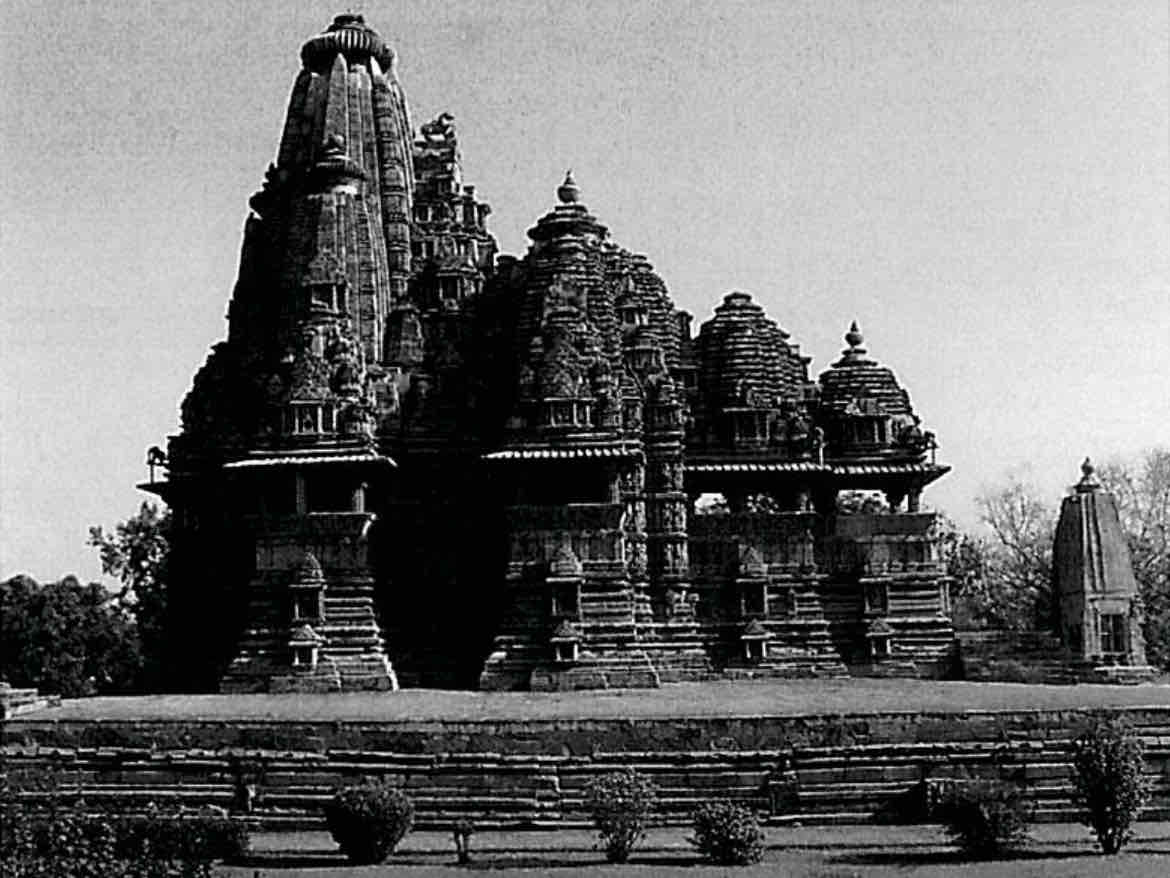
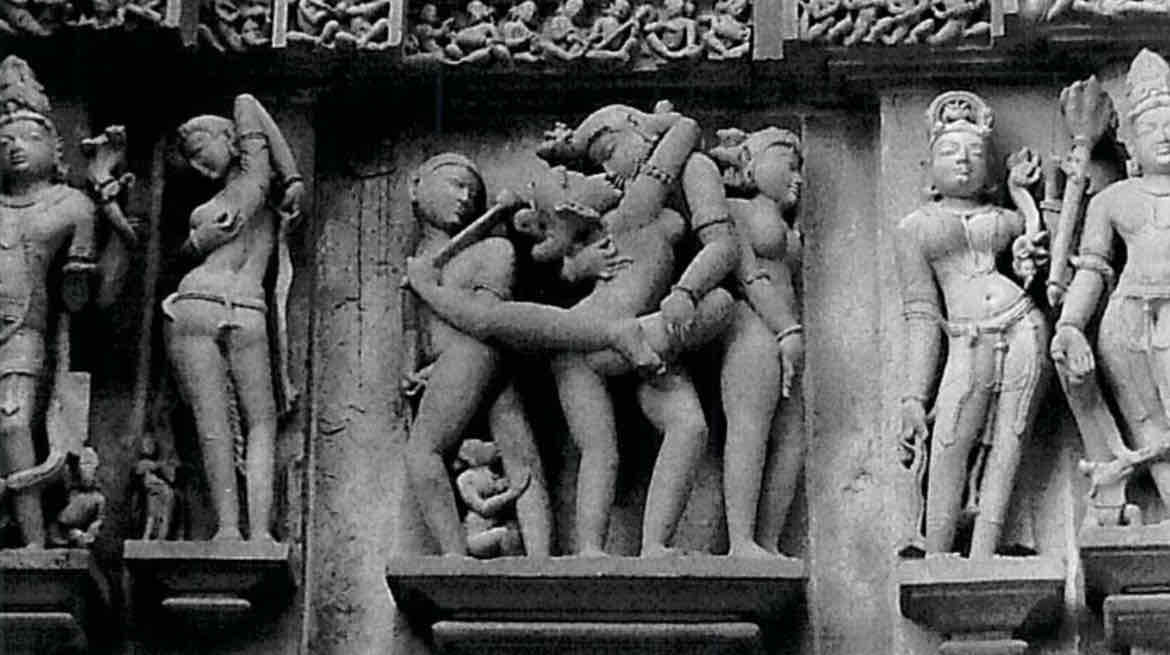
Lakshmana Temple — Sandstone
Form:
Symmetrical, orderly, mysterious and complex
Mandala: sacred geometric design of the universe; spiritual journey
Structure is aligned w/ solstice and equinox — connects earth to the cosmos
Womb Chamber: room with sculpture of the Deity (Lakshmana holds statue of Vishnu)
Very small, priest enters
Axis Mundi: tips of layered spires
Visual way of connecting womb chamber to heavens and earth — connects Vishnu
Lithuania: sculptures of people having sex at back of temple
Christianity: sex is a sin
Hinduism: sex = good, orgasm = closest sensation to moksha
Function:
Hinduism temple
Content:
Layered spires are reference to Mount Meru — believed to be where Gods from
Mandala: physical representation of the shape of the universe
Endless (infinite), also possesses form
Mysterious, perfect, beautiful (but incomprehensible)
NOT RATIONAL
Mandala also represents a JOURNEY
Hinduism: going through diff lives (caste system) until you achieve moksha (liberation of the soul)
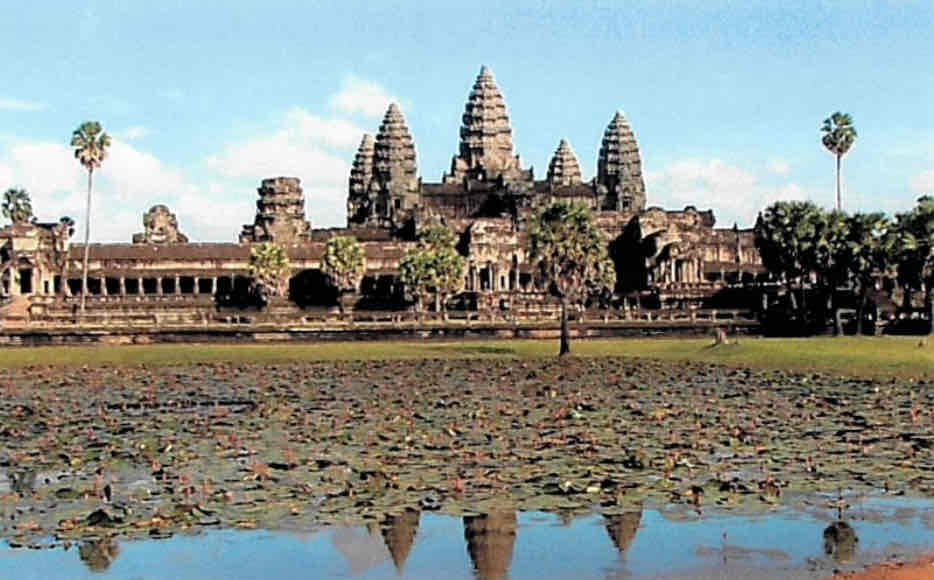
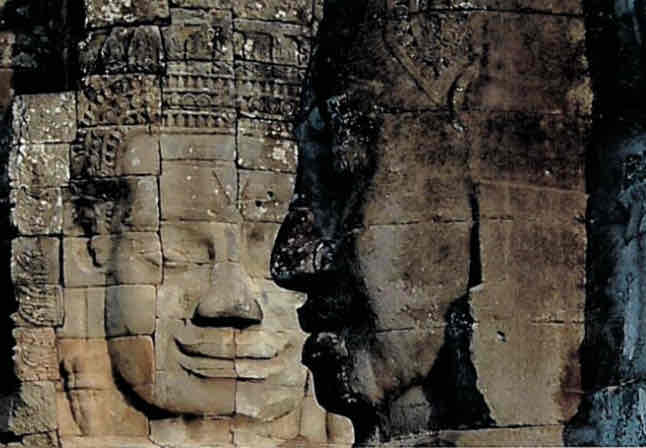
Temple of Angkor Wat — stone masonry, sandstone
Form:
5 towers representing Mount Meru
Shape of Mandala
Axis Mundi
Function:
Hinduism temple
Lakshmana but big…
Architecture to establish political power
complex dedicated to Vishnu
Believed that King’s power was connected to whether or not the Gods were present
King was insecure, needed to prove he had support of Gods in order to establish political power
Content:
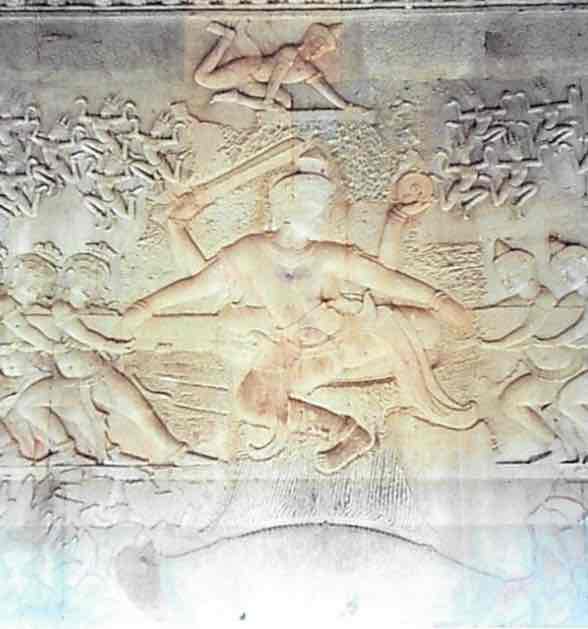
Churning of the Ocean of Milk
“Tug of War” between good and evil
Vishnu in middle
Belief that world began as milky ocean
Angkor Thom
Lots of depiction of Buddhism
Spread into Southeast Asia — pushes Hinduism out
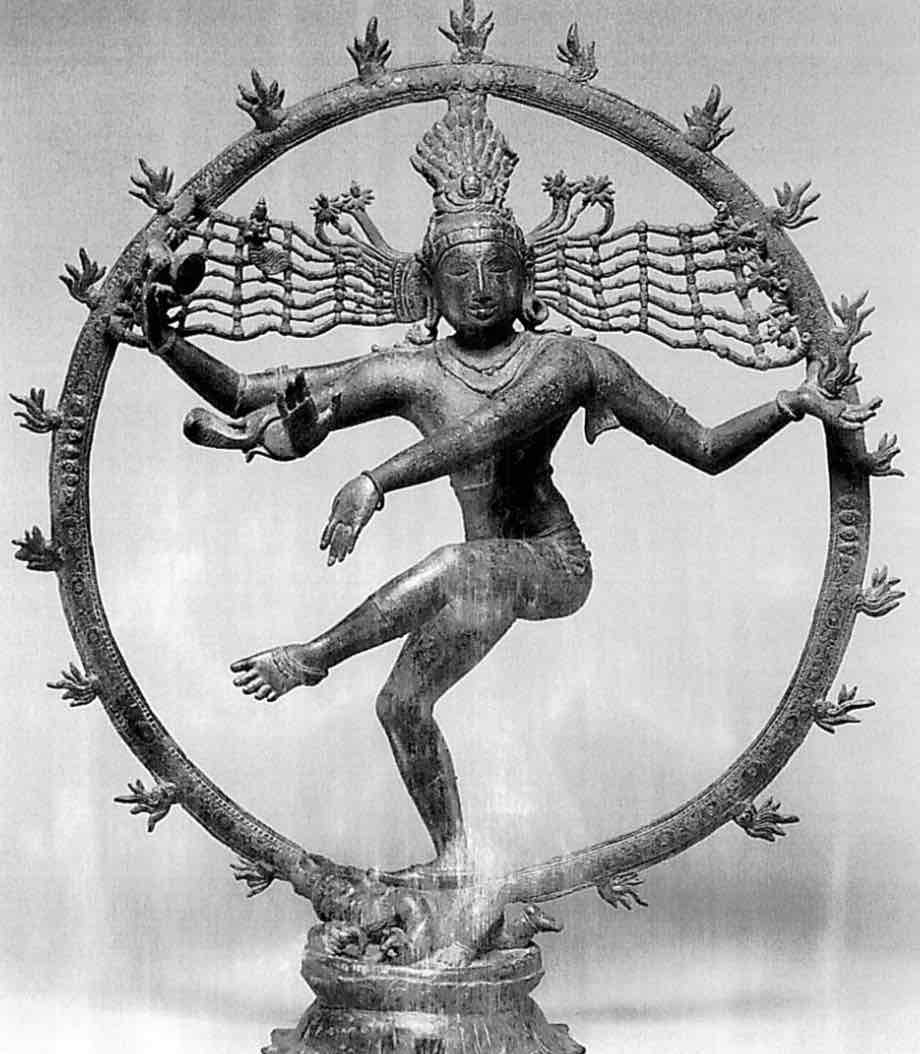
Shiva as Lord of Dance (Nataraja) — cast bronze
Form:
Multiple arms — Divine, represents God
Indicates he’s spinning — hair flying to sides, after images of multiple arms
Visualizes movement
Hands? Fire? Dance of destruction
Stepping on baby — Dwarf of Ignorance
Hinduism hates spiritual ignorance — not understanding destruction is necessary part of life
Vertical third eye — sees ALL
Gesture of calm and smile
Shiva is part of trio of gods, preserves balance to world
Destruction = GOOD
Shiva (all Hindu gods) always adorned in flowers, clothing, never seen bare
Function:
Depicts Vishnu
Hindus carried sculpture around for ceremonies to celebrate the religion
Adorned with jewelry
Content:
Transcends gender — androgynous (between male & female)
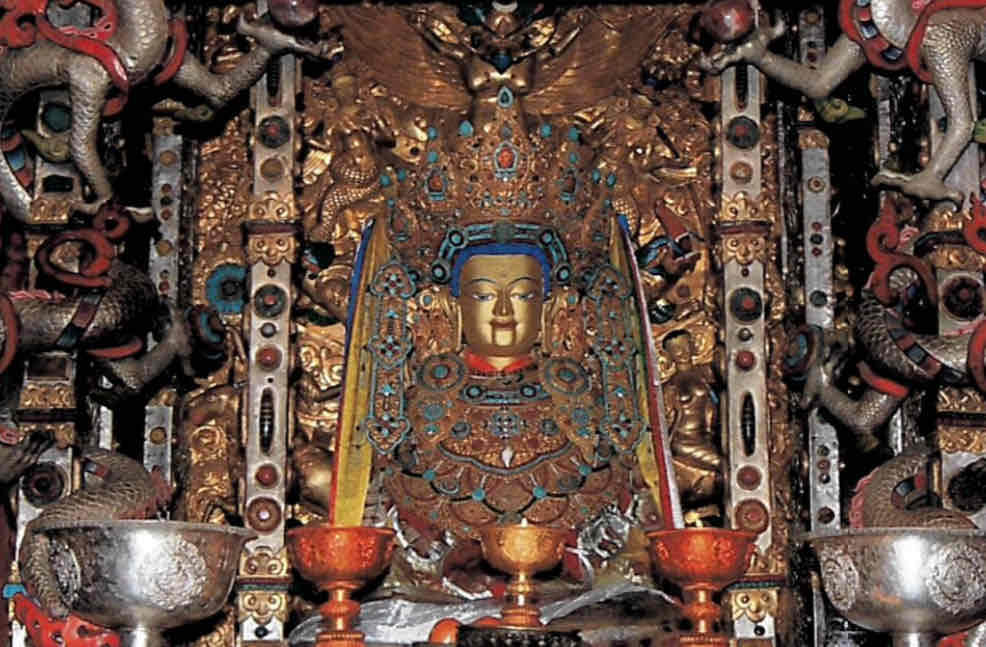
Jowo Rinpoche, Enshrined in the Jokhang Temple
Form:
Frontal pose
Robed
Slight smile, meditative, detached
Top knot/bun - AXIS MUNDI: connected to all
Long ears, reminder of what he gave up (prince wore heavy earrings)
THIRD EYE
“Lotus” Position — shows wheel on bottom of foot
Madras: hand gestures, references aspect of Buddhist teaching
Fat Buddha — Fat = abundant (Chinese culture)
Function:
Sculpted by artist to model after Buddha
Buddha blessed this to help people understand his message and ideas
Purpose: act as Buddha’s proxy after he leaves the world
Content:
Buddha: NOT a god, remarkable human — model for Buddhists
People need something physical to guide them
Adorned w/ simple monk’s robe — later adorned in crown and regalia
Buddha = no extravagancy… why?
People leave riches behind — best place to leave is to Buddha (not affected)
Only way to celebrate Buddha — misaligns w/ beliefs but only human way to express gratitude
Context:
Buddhism 101
Founded by Prince Siddhartha Gautama
Born w/ wheel on foot: prophecy that he would become great king/religious leader
Lived life of luxury — then left palace
Realized suffering of people worldwide
Looked for cause of human suffering
Conclusion: desire is basis for human suffering
Asceticism: follow noble 8 fold path
End all desire in order to achieve
Nirvana: physical selves left on Earth, become contented
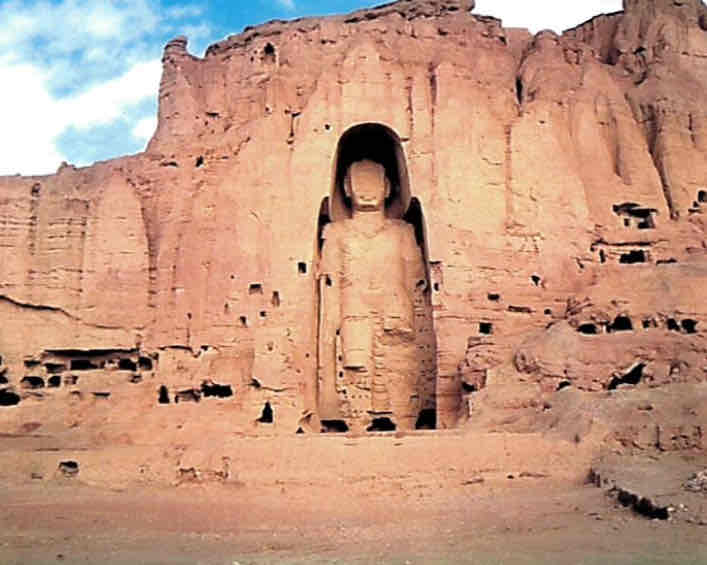
Buddha
Form:
3 giant statues erected of Buddha
Standing Buddha
Brightly painted, hands have been broken
Mandorla: sacred space around Jesus
Similar to why Buddha is placed in niche
Function:
Pilgrimage site for prayer/meditation
Content:
Buddhism spreads west to Afghanistan
End of Silk Road
Context:
No longer exists
Destroyed by the Taliban in 2001 (blown up)
Attempted to recreate w/ holographs
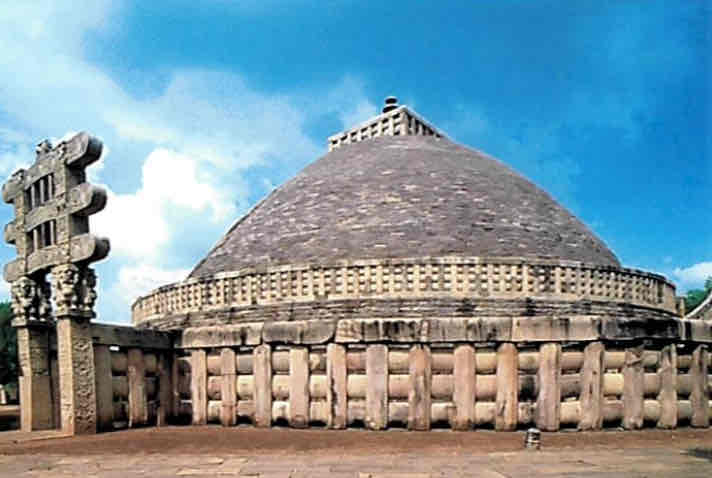
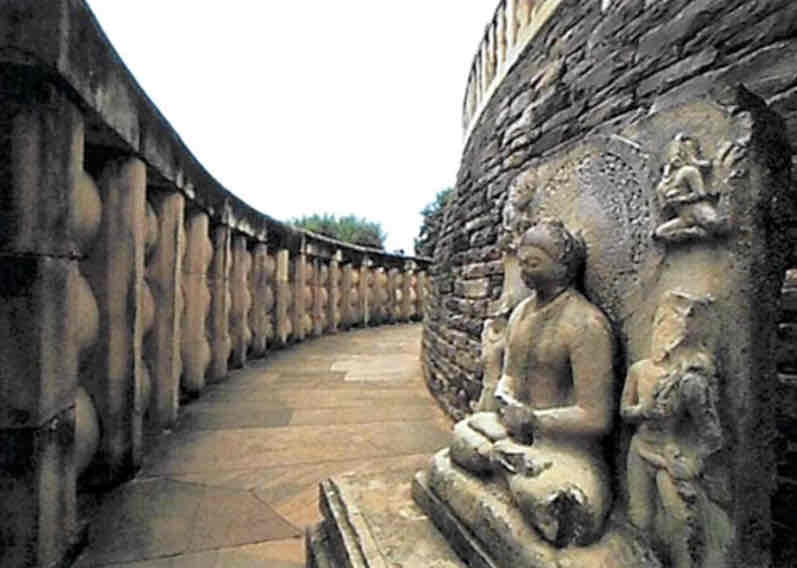
Great Stupa at Sanchi — Stone masonry, sandstone on dome
Form:
Dome w/ axis mundi: simple, consistent w/ message of Buddha
Roundness: symbolizes totality — “nothing is everything”
Circumambulation: meditate while moving around dome
Buddhism is journey upper level — getting closer to Nirvana — journey of Buddhism: upwards spiral
Axis Mundi: referred as “Mast”
shaped like tree, reference to Buddha sitting under tree
Toranas
4 gates to Great Stupa
Cardinal points (totality)
Hindu influenced
Function:
8 Stupas: biggest is Great Stupa at Sanchi
Technically reliquaries: holds relics
Buddha’s remains divided into 8 parts and buried w/ structures
Content:
Yakshi-fancy dancing girl on Toranas along w/ other intricate designs
Going through gates: abandoning worldly pleasures
Context:
Asoka
Warrior emperor of India
Converted to Buddhism
Demonstrates power and reach
Series of pillars proclaiming Buddhist ideas
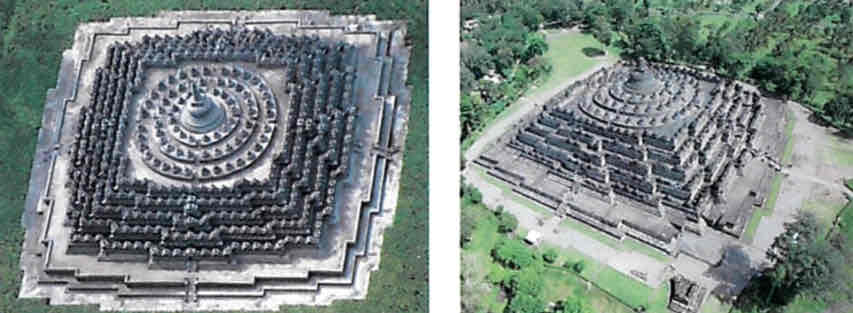
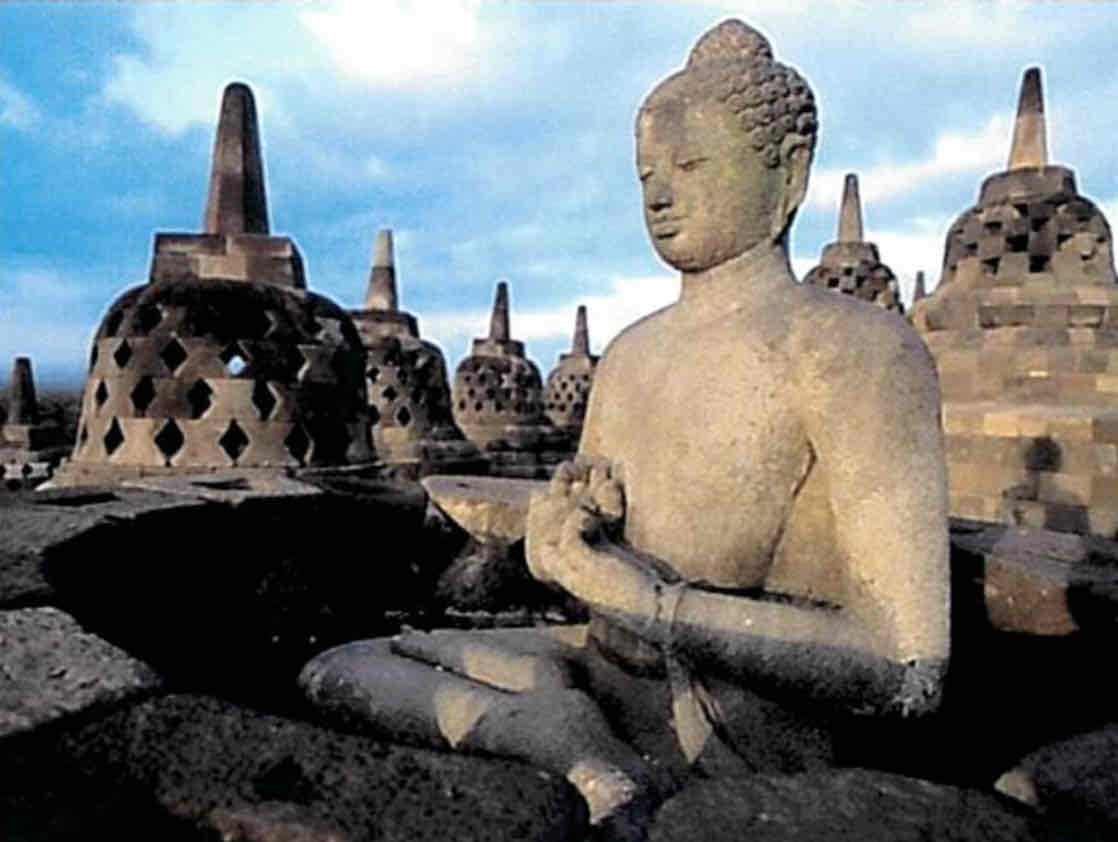
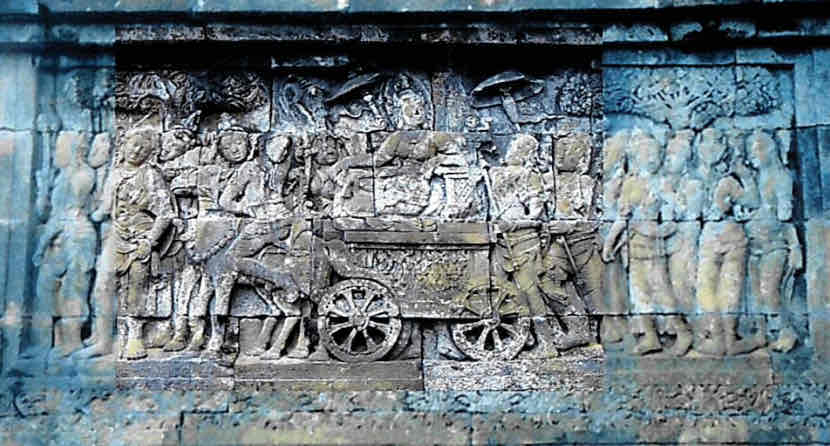
Borobudur Temple — Volcanic-stone masonry
Form:
Central Java: highest point, beautiful visa
Mandala shape: shape of universe, journey to Enlightenment
STUPA: dome, Buddhist shrine w/ axis mundi
Function:
Early pilgrimage site
Content:
10 levels
Five lower levels: imposing, scary, long, dark w/ many turns
Relief sculptures telling the life of Buddha —
Queen Maya Riding a Horse Carriage
Retreating to Lumbini to give birth to Buddha
As you get closer to the top, becomes more open
Visuals become more abstract and symbolic rather than stories representing Buddha as a person — he is ENLIGHTENED FIGURE
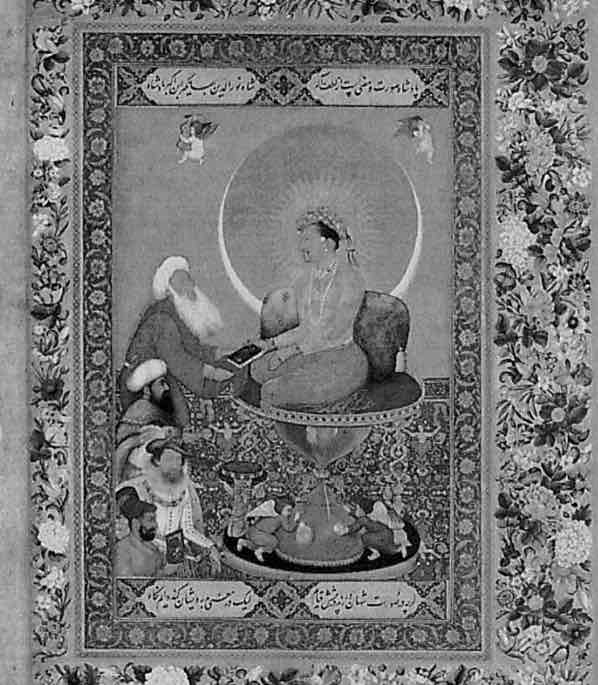
Jahangir Preferring a Sufi Shaikh to Kings — watercolor, gold, and ink on paper
Form:
Sitting on hourglass throne: references time
Calligraphy inscription on hourglass: “May he live a thousand years and his reign never end”
Sun disc and crescent moon
Angels: stole imagery from Christianity?
Hierarchy of scale: Jahangir is biggest
Function:
Illuminated manuscript
Content:
Depicts Bichitr, artist
Sufi Shaikh, religious figure interacting w/ Jahangir to show importance of religion
Context:
Jahangir: father of Shah Jahan
“Seizer of the world” or “Light of the world”
CHINA
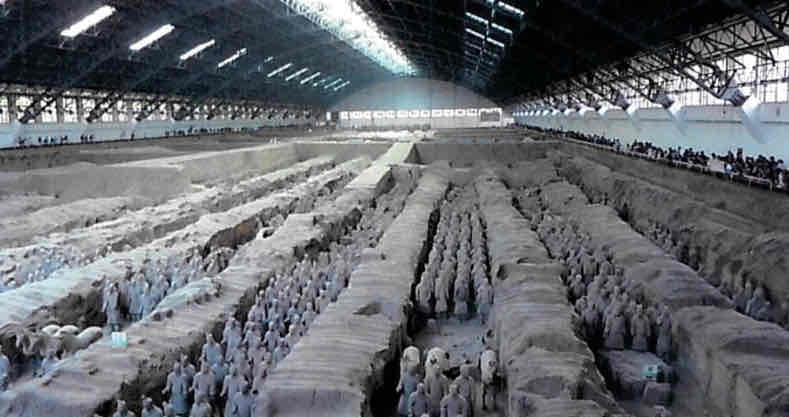
Terra Cotta Warriors — painted terra cotta
Form:
8000 terracotta sculptures, painted
NOT portraits of army — interchangeable
Characteristics used in different combinations to create infinitely unique soldiers
Function:
Shi Huangdi built army for afterlife along w/ mausoleum: free-standing building; monument, encloses the burial chamber of deceased person/ people
Content:
City of Emperor
Complete reaction of Palace and town surrounding it
Hasn’t been dug out: ceremonial rivers tipped w/ mercury — land was prob poisoned
Context:
Taoism, Confucianism, Legalism
Legalism Emperor Qin Shi Huangdi
Powerful ruler, began Great Wall
Ruled China w/ iron fist and fear
Killed mother — her lover attempted to kill him when he was a child
Spent life in paranoid — prepared for death
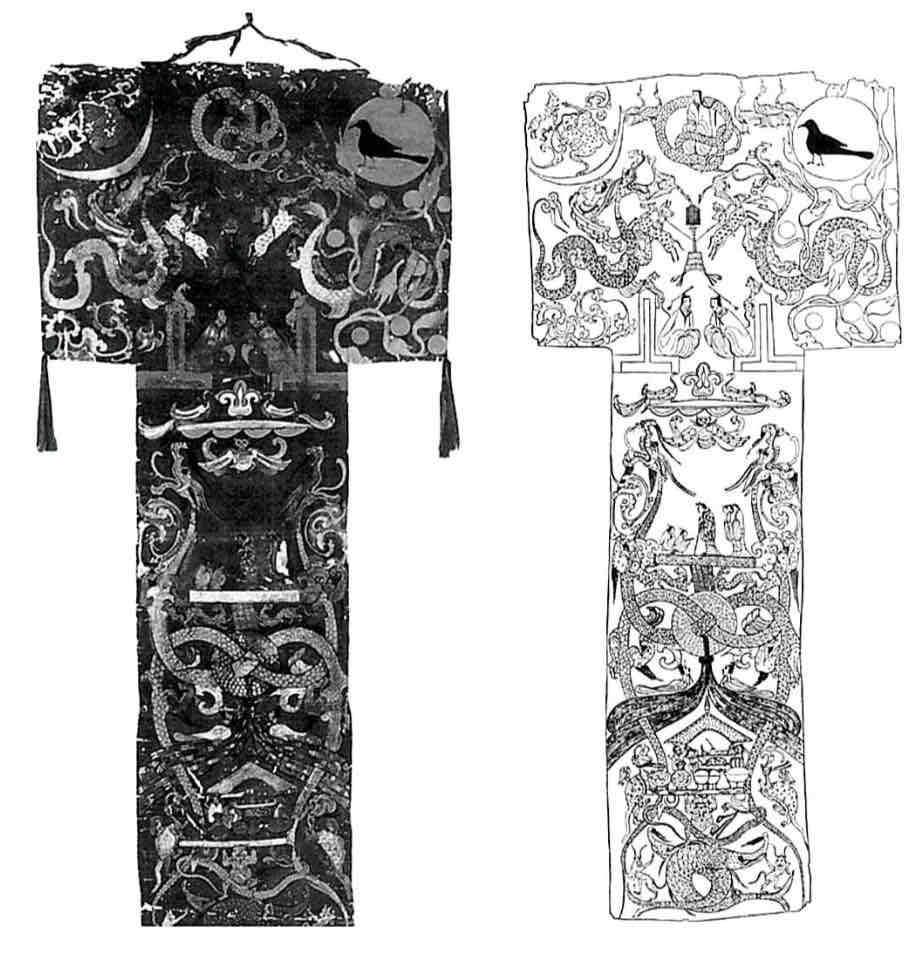
Funeral banner of Lady Dai (Xin Zhui) — painted silk
Form:
Painted silk
Function:
Laid across body of important person when they died
Very well preserved, buried in many layers of lacquer boxes
Content:
Lady Dai in middle
Heaven above
Hell (underworld) below
Dragon motif ran along the sides
Context:
Silk became most important export of China
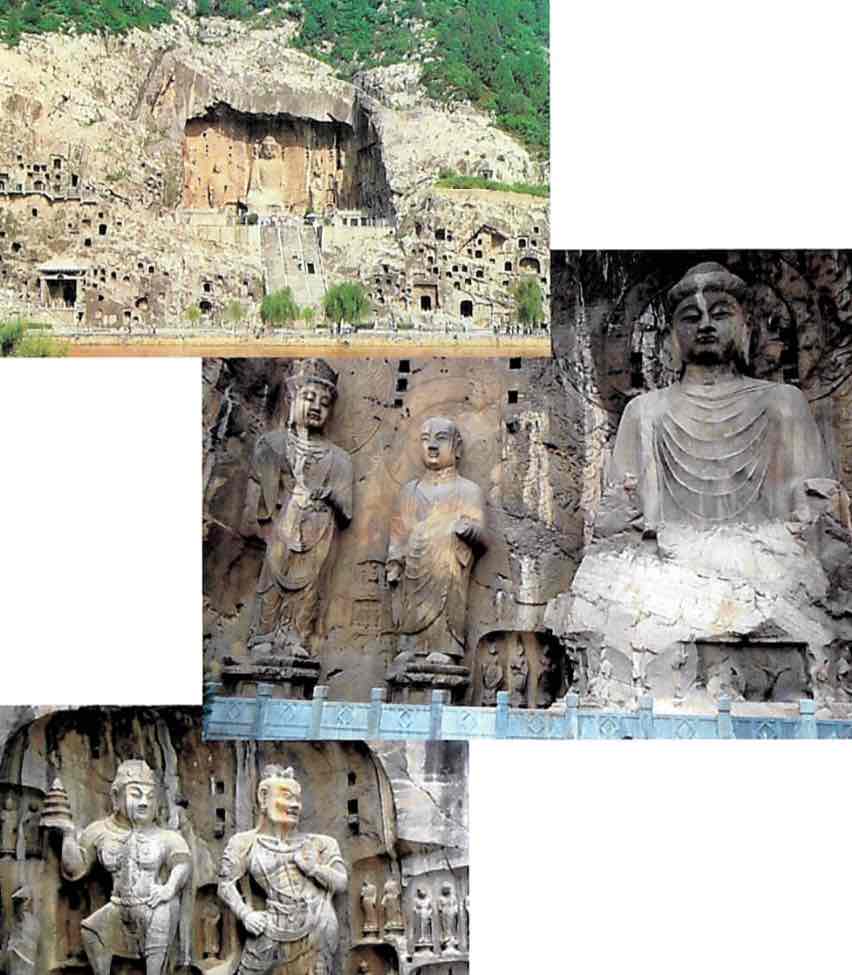
Longmen caves — limestone
Form:
Would’ve been brightly painted
Bodhisattvas (Assistant Buddhas): people who became close to achieving Nirvana but chose not to in order to help others
Guardian Figures: PROTECTED BUDDHA
Function:
Pilgrimage site for Buddhists
Context:
Partially destroyed in Communist Revolution
Buddhism spreads rapidly through Silk Road into China
China did not have any full religion — only philosophical ideas
Empress Wu: indulged in Buddhism to gain favor from the people
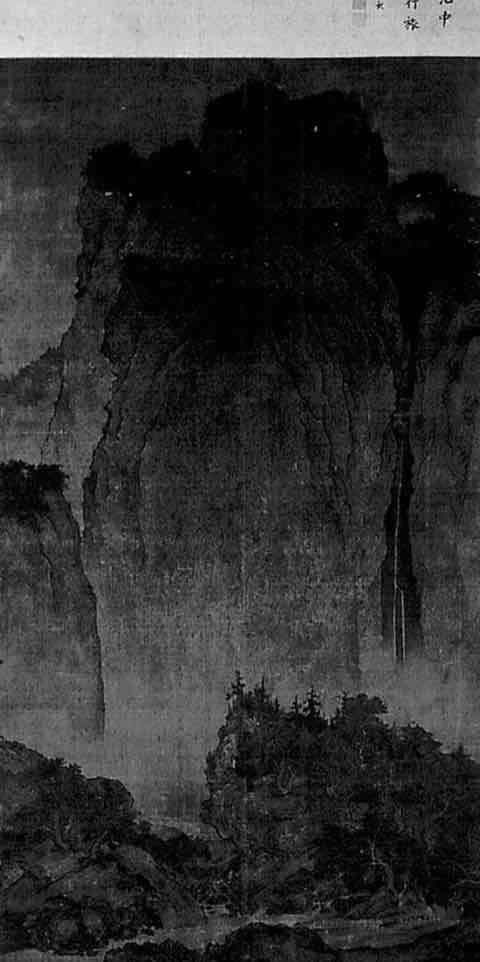
Travelers among Mountains and Streams — ink on silk
Form:
Read left to right
Square red markings used to identify artist and owner
Colophon: side text part, gives detail on the piece
Western art: focused on capturing visual accuracy
Chinese painting: philosophical argument, conceptual (not realistic)
Openness and density: balance of opposites in nature, visual harmony
Some parts left unpainted, others extremely detailed
Depth/perspective achieved using negative space (unpainted area)
Function:
Hanging scroll: never displayed permanently — art is looked at w/ intention
Art always left out loses meaning/less special
Content:
Ink on silk — Chinese parents very conscious of technique
NO change in brush direction
Strokes are deliberate and careful
Varied brush pressure creates dynamic, expressive lines
NO redo/repaint lines
Textures created by making brush drier/wetter
Context:
Daoism: interested in relationship between man and natural order of universe
Submit to nature, allow things to happen w/o resisting
“Better to be the reed that bends with the wind than the oak that breaks in a storm”
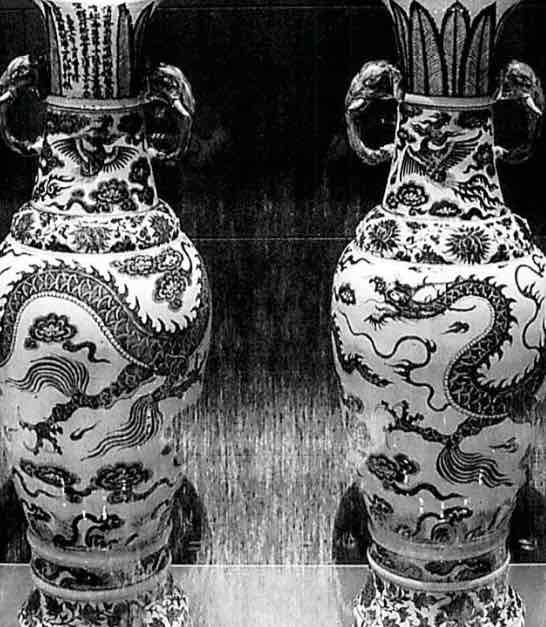
David Vases — white porcelain with cobalt-blue underglaze
Form:
3 layers: porcelain, cobalt, clear glaze then fired at high temp
Great dragon motif + floral motifs
~2.5 ft tall
Function:
Placed in temples in China
Content:
Has colophon inscription on side of vase that helped date porcelain works
Context:
China produced lots of porcelain
Porcelain: actually product of multicultural interactions
Blue color created w/ mineral cobalt from IRAN
Named after Percival David (British guy who bought it)
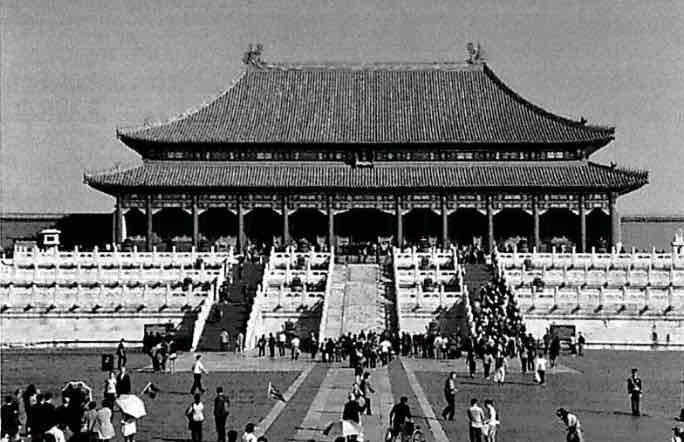
Forbidden City — stone masonry, marble, brick, wood, and ceramic tile
Form:
30 feet high wall + 52 meter moat surrounding city
90 palace complexes
Chinese wood beam construction, buildings were painted wood, swoops roofs
Interlocking geometric shapes: squares within squares
Symbolizing relationship between people, emperor, God
Consistent colors: yellow = sun, red = earth, blue = heaven
Hall of Supreme Harmony
Center of Forbidden City
Main throne room for Emperor, tallest point
Ceremonial center of complex
Giant ramp where king was carried on throne — dragon symbolism
Palace of Tranquility and Longevity
Private quarters for King and his wives
Function:
Outer court: ceremonial buildings for king to been seen and celebrated
Inner court: private area where king lived
Content:
Forbidden City, Front Gate (Tiananmen Square): 1990s China modernizes economically
Push for democracy — students protest, they die
Picture of Mao Ze Dong (founder of Chinese Communism)
Context:
Ming Dynasty: built to symbolize power after tumultuous period
Mandate of Heaven: Emperor had right to rule — given approval from God
Turning point in history
End explorations of pacific and Indian oceans
Decided China was the BEST — others were inferior in technology and advancements
Renaissance: European revolutions happen — China turns inwards, spends lot of resources and money on themselves
Europe RISES, China FALLS
KOREA
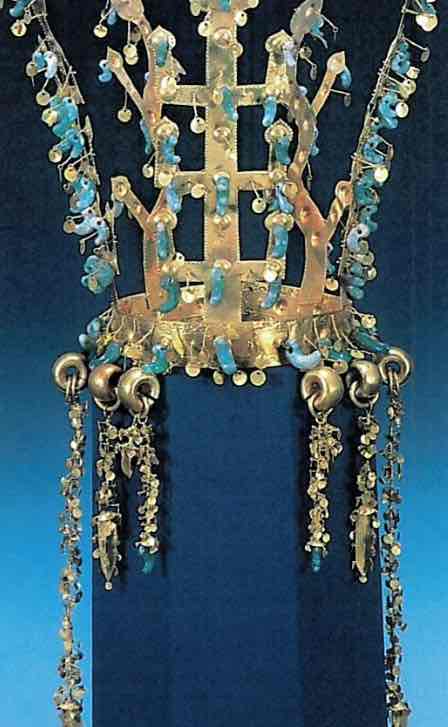
Gold and jade crown — metalwork
Form:
Gold w/ pieces of jade dangling off
Comes with belt
Function:
Royal Regalia, typically worn by Korean king
Content:
Antlers, trees
Connection to spiritual energy of nature
Hanging pieces, jade shapes, gold, fruit: ABUNDANCE
Context:
Three Kingdoms Period: Korea was number of different Kingdoms, at many points was controlled by Chinese
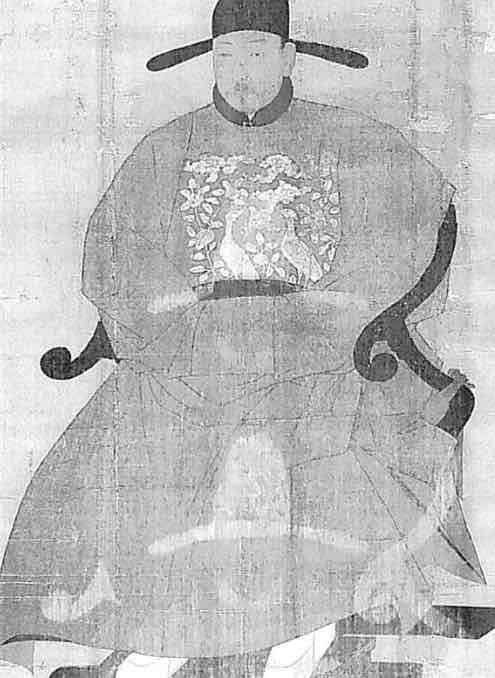
Portrait of Sin Sukju — hanging scroll (ink and color on silk)
Form:
Painted Silk
Badges
Emblazened in gold
Insignia of rank using birds (MING tradition, China): peacocks signified high status/power
Made in pairs (another on his back)
Function:
Hanging scroll
Content:
Asian art doesn’t care about visual accuracy
Stylized portrait: goal is to capture symbolic representation of why figure is important, NOT exact likeness
Hands folded
Flattened figure
¾ view
Face meant to exude wisdom and intelligence — present and there
Connected to Ancestral worship
Confucianism empathized filial piety
Context:
Sin Sukji
Prime minister who served king (who wore Gold and Jade Crown)
JAPAN
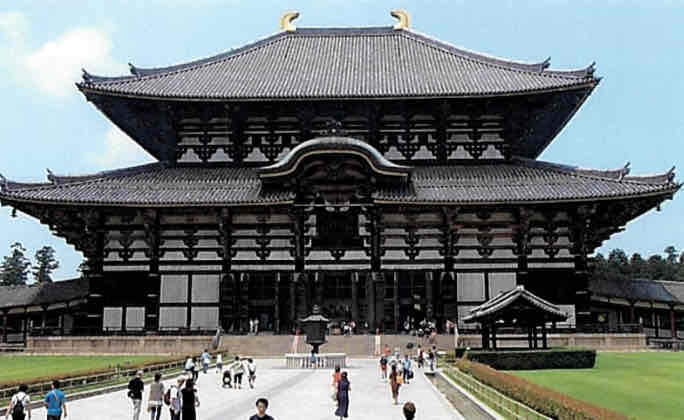
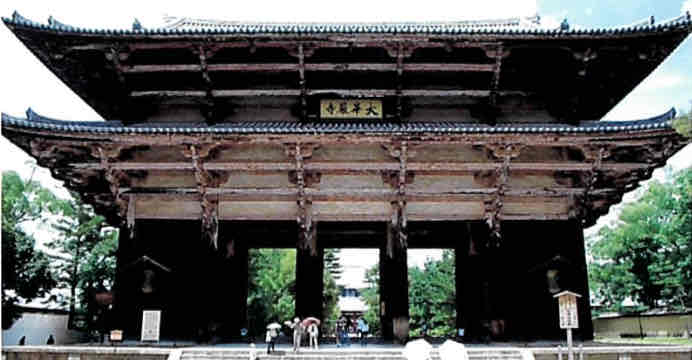
Todai Ji — bronze and wood (sculpture); wood with ceramic-tile roofing (architecture)
Form:
Simple, natural light, minimal
In harmony w/ nature
Decorations
Tree covered in green moss
Framed by window
Speaks with connection to nature
Tatami mats
Used wood grain as part of design
Everything is unpainted
Wabi Sabi: beauty in minimalism
Kintsugi: taking broken pieces and repairing them
Emphasizes imperfections
Symbolizes age and decay
Chinese influence: flared roof, similar general structure
Daibutsuden: giant statue of Buddha
Supposedly used up all of copper in Japan to build — almost bankrupted country
Surrounded by Bodhisattva
Buddha’s Nostril: hole in pillar, if you crawl in it’s good luck!
Entrance gate
Deer, guardian figures displayed
Function:
Buddhist temple
Content:
Japan consists of serval thousand volcanic islands
Sits in Ring of Free — tectonic plate that produces earthquakes, volcanic eruptions, tsunami
Relationship between beauty and danger of nature
Context:
Emperor Shomu
Embraces Buddhism as claim to power — built Toadi Ji as symbol of unity
Links himself to Buddhism to secure position
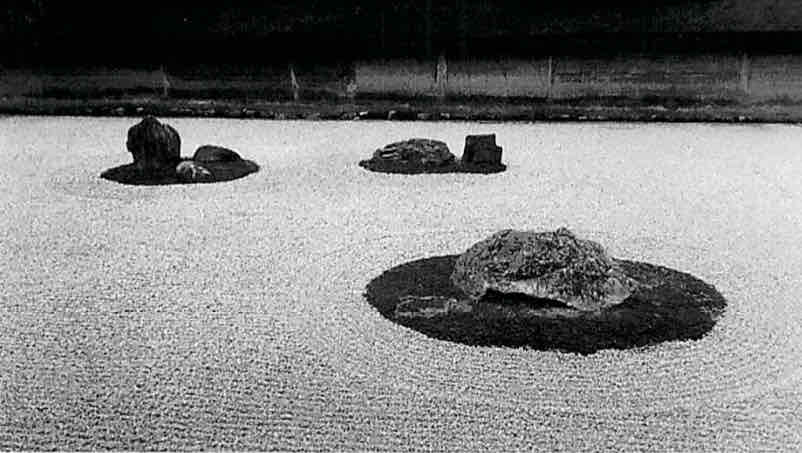
Ryoan-Ji — rock garden
Form:
Traditional Japanese rock garden
Part of Japanese monastic complex
15 set of rocks arranged so you never see them all at once
Designed to draw eyes across garden rhythmically
Each set had own visual relationships/contrasts
Light + perspective make them change even though they never change in position
Thought to represent mountains peaking out from clouds/stones moving through stream of water
Symbolizes strong and weak permanence and impermanence
Rocks never change, but nature around them do
Truth in simplest forms
By seeing and paying attention, we heighten our awareness
Function:
Used for meditation
Content:
Zen — form of Chinese Buddhism
Buddhism + Tao/Shinto
Problem w/ being human — thinking too much about mundane things
Labor & meditation — uses physical exertion to distract mind
Restraint — reflected in architecture & art
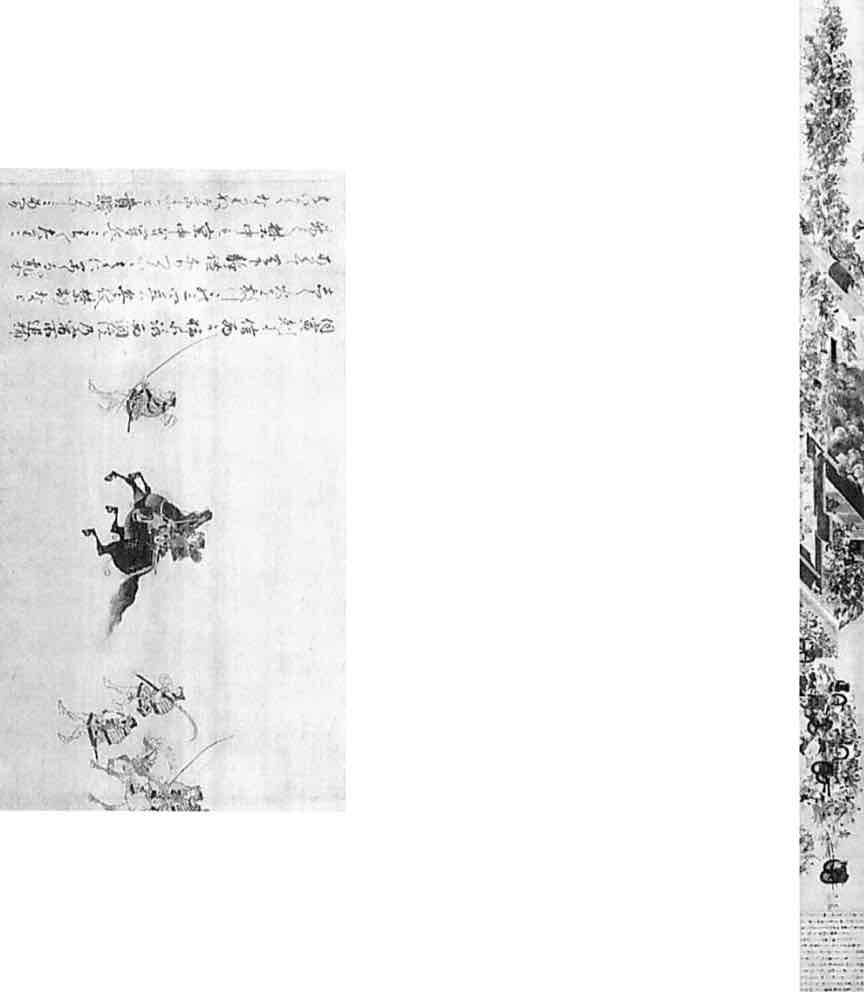
Night Attack on the Sanjo Palace — ink, watercolor, and gold leaf on paper
Form:
25 foot long hand scroll
Layering figures on top of another
Uniquely Japanese angle
Function:
Handscroll
Political propaganda — aristocrats w/ very fine, human features while attackers are animal-like
Content:
Designed to be seen only one section at a time
Same characters appear throughout — continuous narrative
Considered “men’s paintings” — brutal, political, war
Describes horrors of war in vivid way
Context:
Civil war in Feudal Japan
Warlords (upstart nobles) — aristocrats did not like to follow rules, attacks royal palace in Kyoto
Takes emperor + his sister hostage
Kills everyone in palace and burns it to the ground
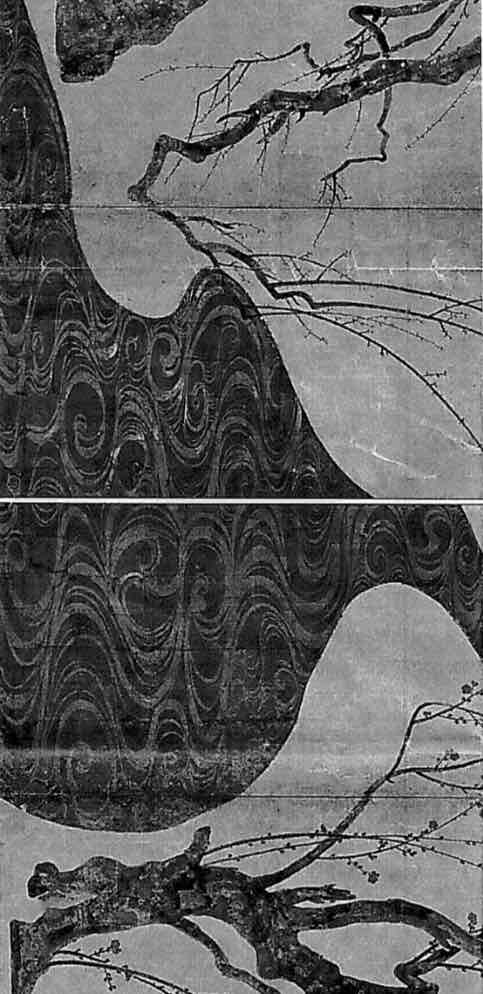
White and Red Plum Blossoms — hand-scroll (ink and color on paper)
Form:
Painting on 2 folding screens
Used of gold metallic paint makes it look different depending on lighting
Tarashikomi: painting technique — dripping wet pigment onto already wet pigment, creates natural-looking blending
Wabi Sabi
Function:
Folding Screen: Used to separate rooms rather than walls as they were lighter material
Content:
Swirly water: journey of life
Old & young tree on opposite sides of river
Profound question of age + youth
Red blossoms: youth
White blossoms: wisdom, age
Being old is not a bad thing! Appreciating oldness while also acknowledging stereotypes
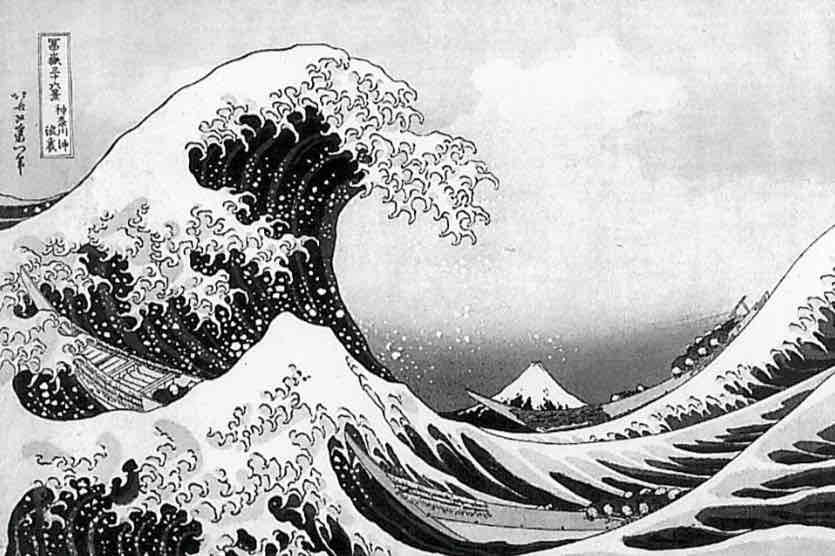
Under the Wave off Kanagawa (The Great Wave) — polychrome woodblock print made of ink and color on paper
Form:
Ukiyo-e prints (Japanese woodcut prints): inexpensive art, could be bought by regular people
Inexpensive b/c they could be reused
Carved wood block covered in ink then transferred to paper (stamp)
Function:
Tourist souvenirs
Depicted intimate, personal moments of human life, sometimes pornography (for men)
Content:
Mount Fuji: stunning symbol nature — also dangerous & destructive
Idea of BEAUTY and POWER of nature
Minimal images, abstract + cropped, left to imagination
Perceived differently based on perspective, season, weather but NEVER CHANGES
Water droplets look like snow, references to Mt. Fuji
European influence
Vibrant colors set it apart from other works
Used synthetic European paint (Prussian blue)
Perspective, depth — learned from Europe
Context:
Tokugawa Shogunate — brings order + peace
Creation of cities: Edo (Tokyo), Japan