The Physiology of Epithelial and Connective Tissues
what is tissue?
epithelial tissue
Key physiological function: protection
key physiological function: permeability control and selective transport
key physiological function: secretion
key physiological function: rapid cell replacement
anatomy: highly cellular
anatomy: vascular
anatomy: polarity
tight junction
anchoring junction
gap junction
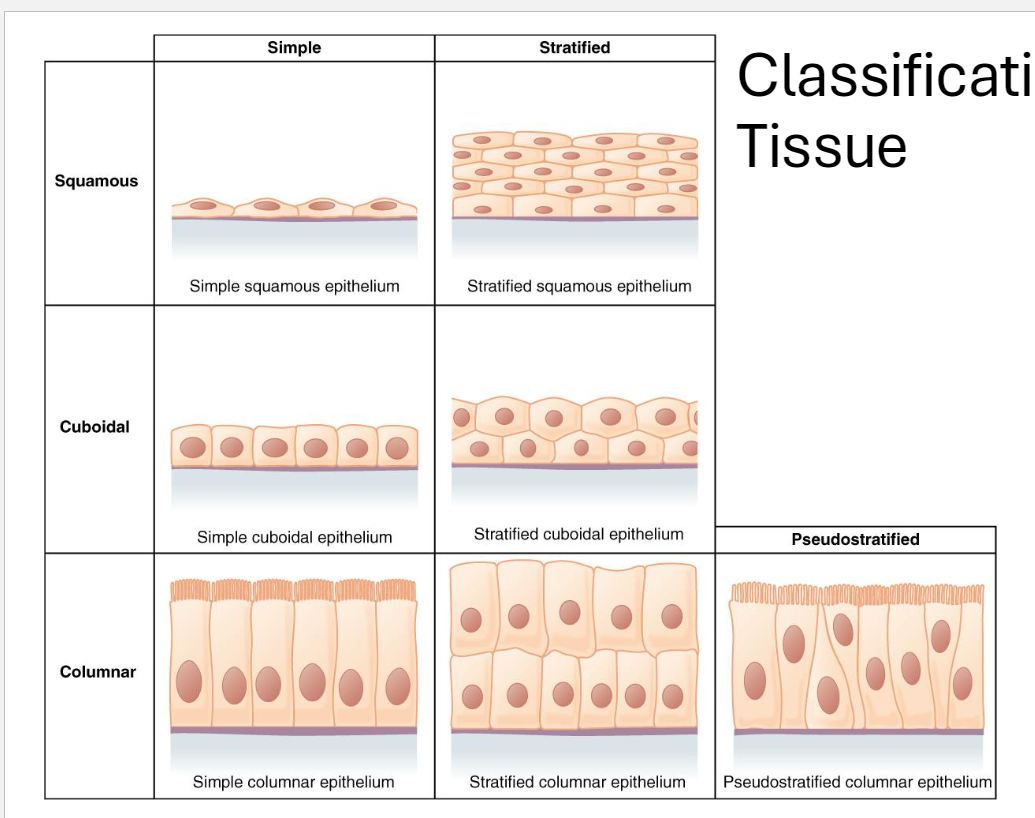
classification of epithelial tissue
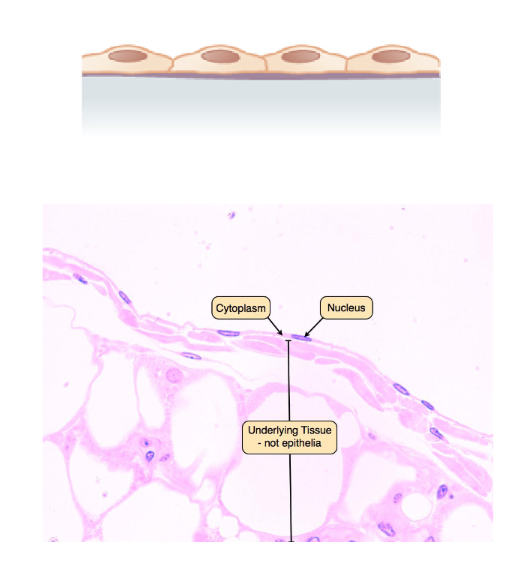
simple squamous
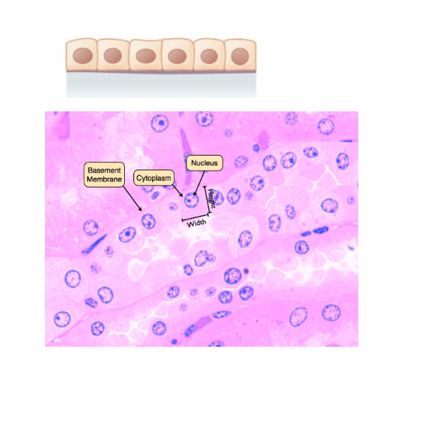
simple cuboidal
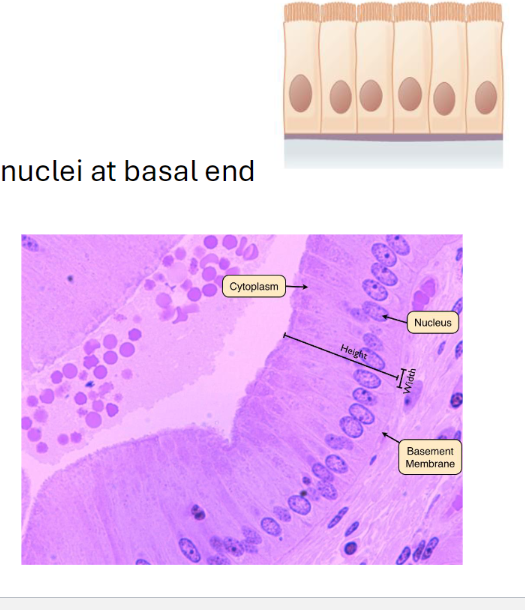
simple columnar
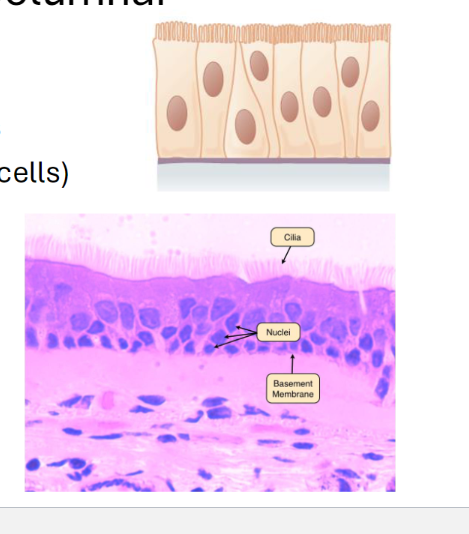
pseudostratified ciliated columnar
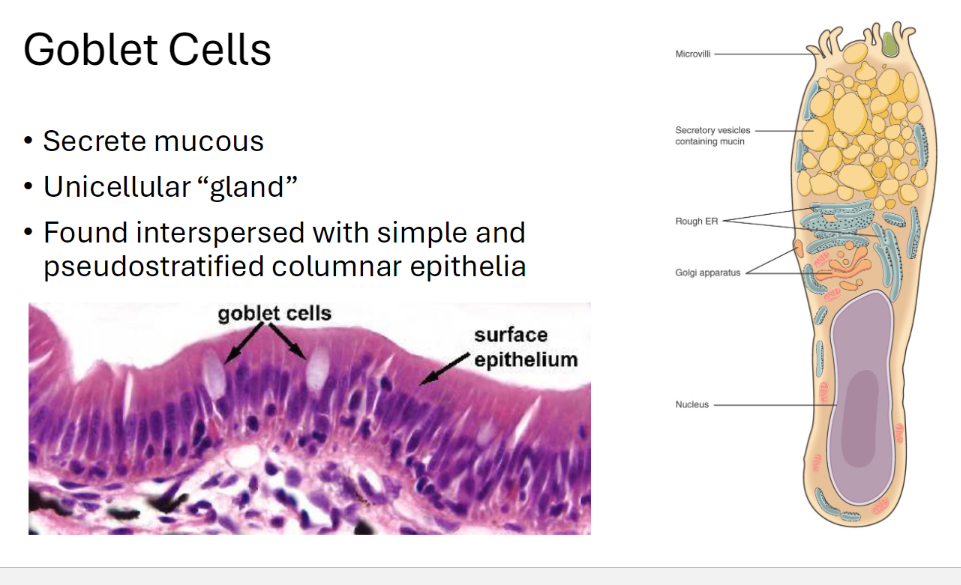
goblet cells
why is simple squamous tissue ideally suited for lining alveoli in the lungs and capillaries?
A. Its thin, flat cells minimize diffusion distance for rapid exchange
B. Its thick layers protect against abrasion
C. Its tall, column-shaped cells allow secretion of mucus
D. Its thin, flat cells provide strong protection against mechanical stress
A pentose sugar is part of a monomer to build which type of macromolecule?
. Polysaccharide
. Glycogen
. Phosphorylated Glucose
. Nucleic Acid
What facilitates the movement of ions across the plasma membrane?
. Simple diffusion
. Channel Proteins
. Transport proteins
. Osmosis
specialized structure
cilia
- hair-like
- found in respiratory tract
- move substances across cell surface
microvilli
- finger-like
- found in intestinal lining
- increase surface to absorption and secretion
stratified squamous
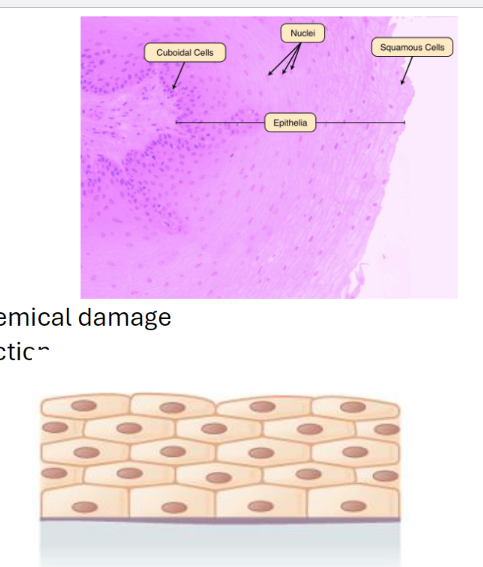
transitional epithelium
glandular epithelium
glandular structure
connective tissue
key function: support and connection
key function: protection
key function: transport
anatomy: Abundant extracellular matrix
anatomy: ground substance
cell type: fibroblasts