Chapter 11
- Structure and function of Eukaryotic chromosome
- Copy Cat (left) is clone of Rainbow (right)
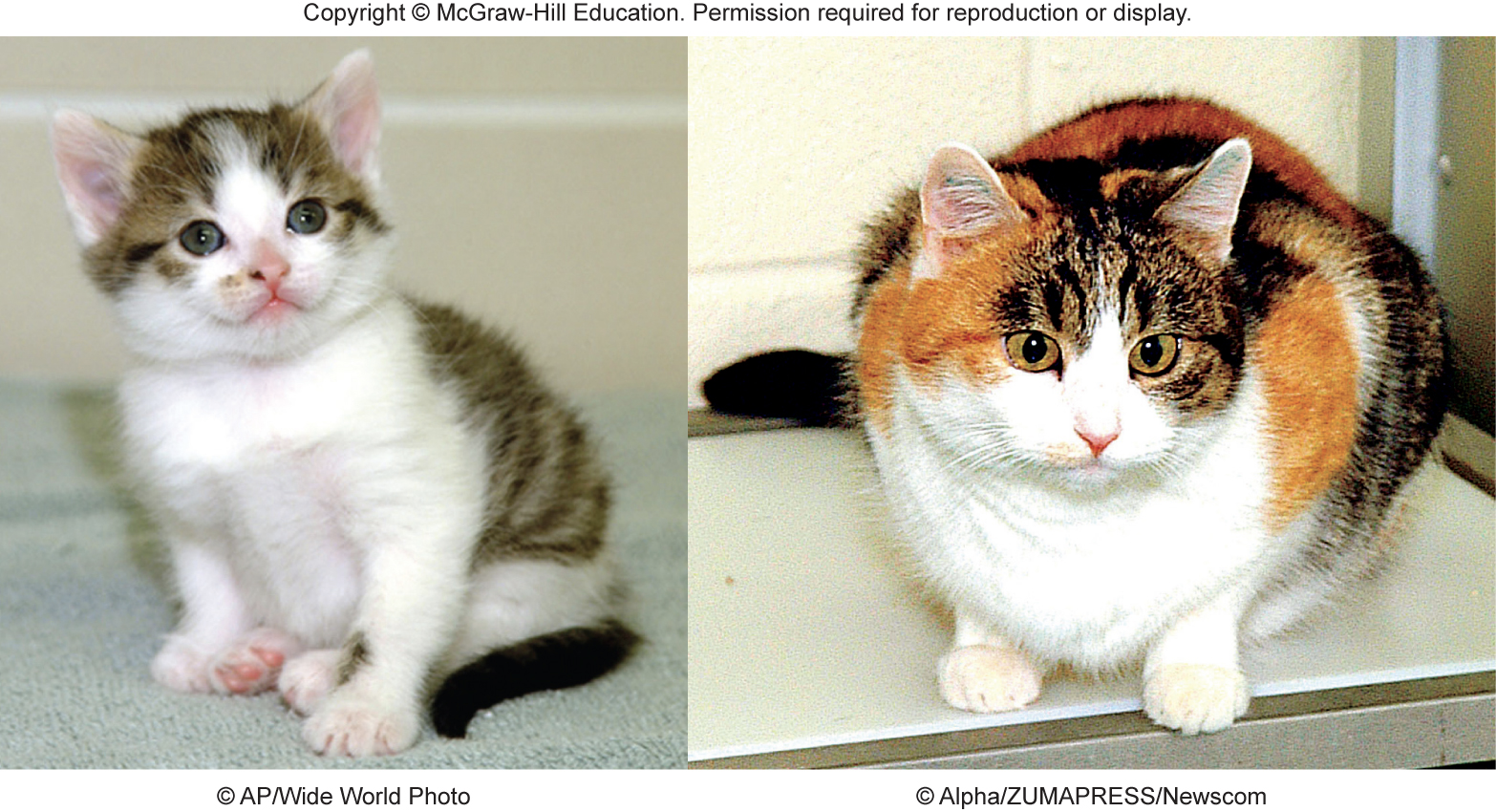
- all cells have identical DNA
- each cat has many types of cells
- cats are dissimilar in many phenotypes
- Chromosomal DNA and proteins
- chromosomes support packaging, replication, segregation, and expression of genetic information
- chromatin: generic term for any complex of DNA and protein found in a nucleus of a cell; 1/3 DNA, 1/3 histones, 1/3 non-histone proteins
- chromosomes: separate pieces of chromatin that behave as a unit during cell division
- DNA interaction with histones and non-histone proteins produces sufficient level of compaction to fit into a cell nucleus
- Different levels of chromosome compaction
- if stretched out, total DNA in a single cell would be about 6 ft long
- compaction allows DNA to fit in cell nucleus
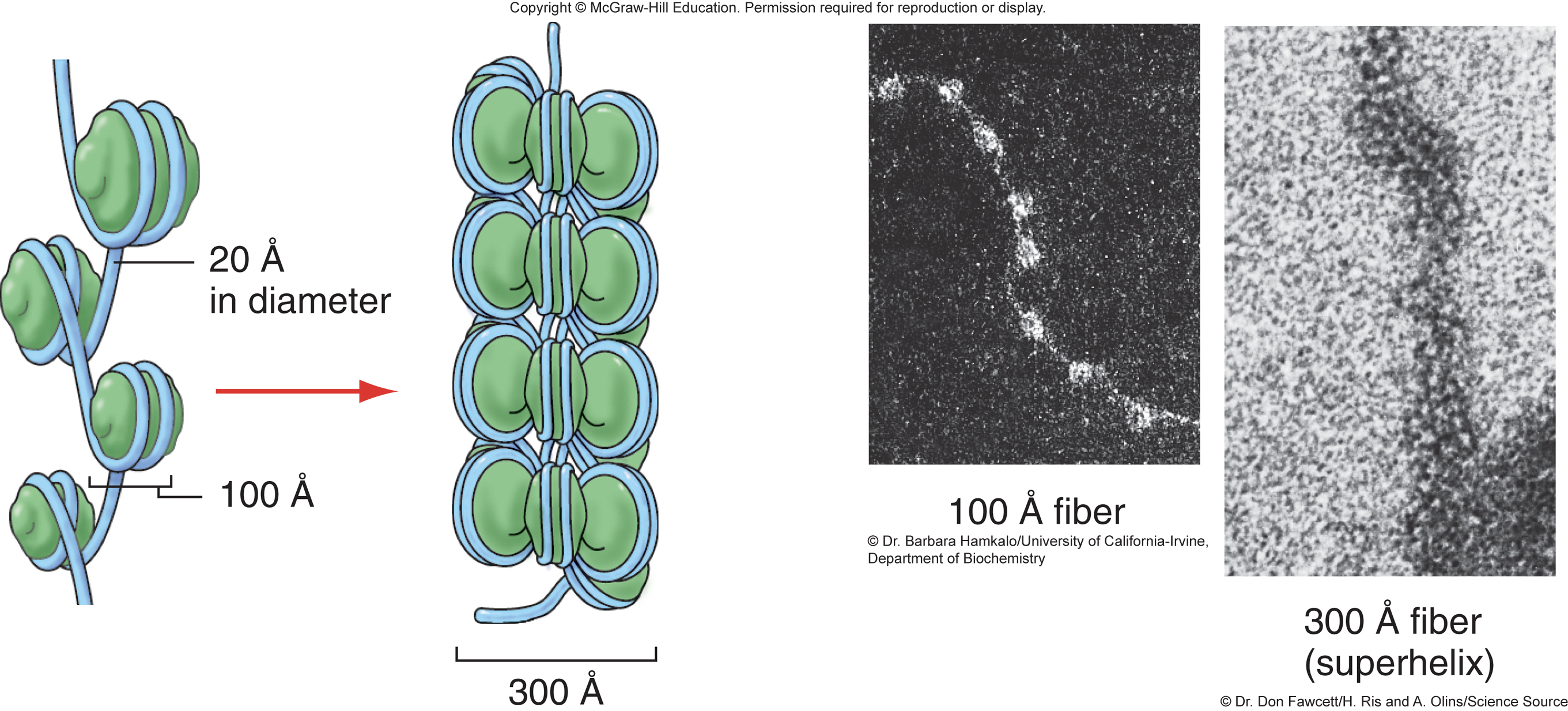
- Nucleosome: confirmed by crystal structure; condenses naked DNA 7-fold to a 100 A fiber
- Supercoiling: hypothetical model (300 A fiber predicted has been seen); causes additional 6-fold compaction, achieving a 40- to 50-fold condensation relative to naked DNA
- Redial loop-scaffold: hypothetical model (preliminary experimental support); through progressive compaction of 300 A fiber, condenses DNA to rodlike mitotic chromosomes that are 10,000 times more compact than naked DNA
- Histone proteins
- histones: small, positively charged, highly conserved; bind to and neutralize negatively charged DNA
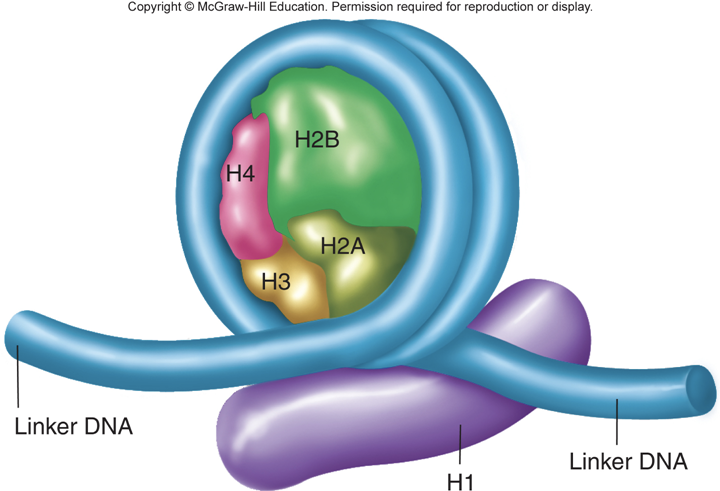
- ==5 types of histones: H1, H2A, H2B, H3, and H4==
- core histones 2x (H2A, H2B, H3, and H4) make up the nucleosome
- Non-histone proteins
- hundreds of other proteins that make up chromatin and are not histones
- 200-200,000 molecules of each kind of non-histone protein
- functions of non-histone proteins: structural role (chromosome scaffold), chromosome replication, chromosome segregation, active in transcription
- Nucleosome is the fundamental unit of chromosomal packaging
- nucleosomes resemble beads on a string
- spacing and structure of nucleosomes affect genetic function
- accessibility for proteins that initiate transcription, replication, and further compaction
- arrangement along chromatid is highly defined and varies in different cell types and under different conditions
- Nucleosome core is an octamer of 2 of each of histones H2A, H2B, H3, and H4
- 160 bp of DNA wraps twice around a nucleosome core
- 40 bp of linker DNA connects adjacent nucleosomes
- Histone H1 associates with linker DNA as it enters and leaves the nucleosome core
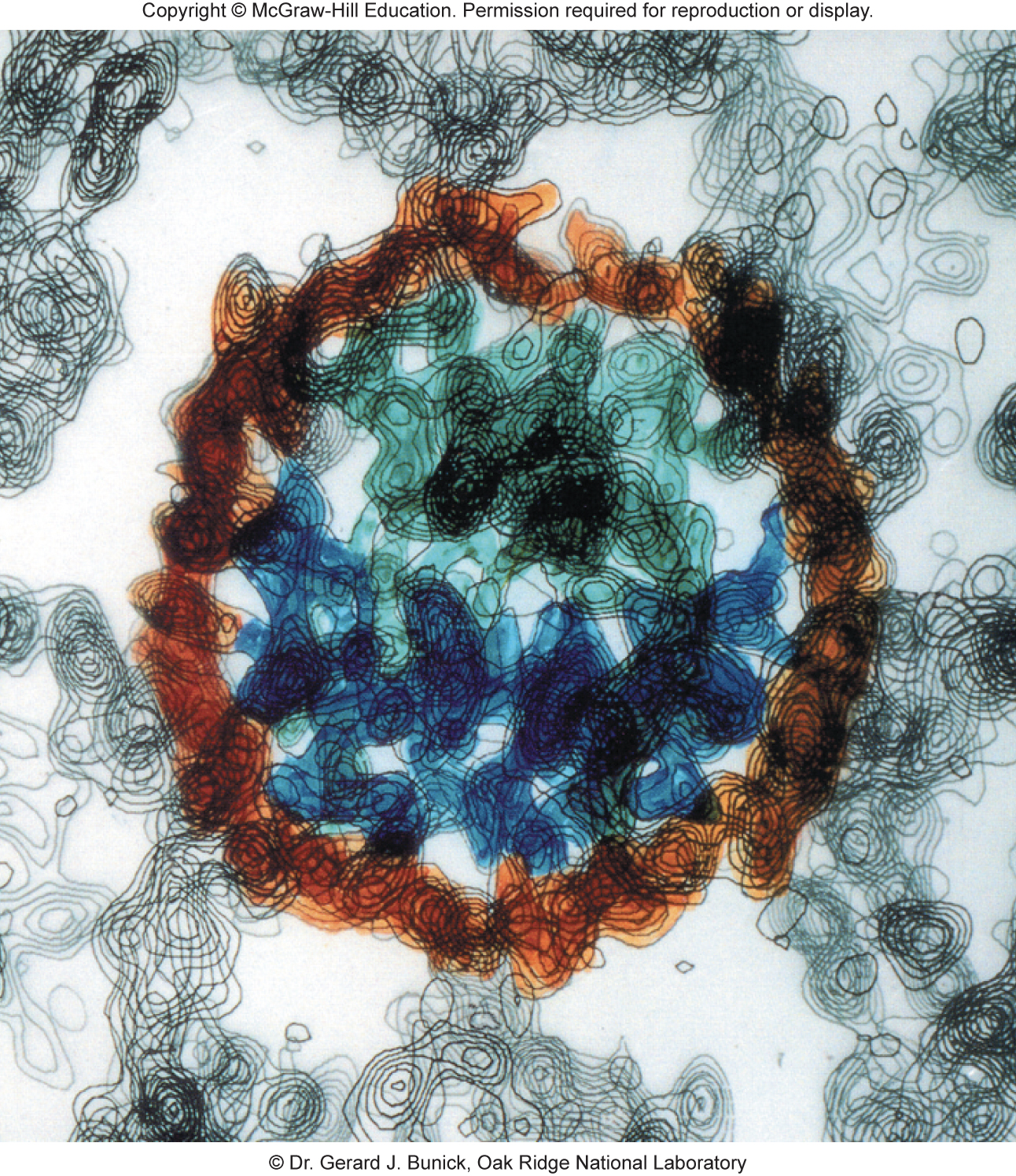
- X-ray crystallography of a nucleosome
- DNA bends sharply at several places as it wraps around the core histone octamer
- base sequence dictates preferred nucleosome positions along the DNA
- Nucleosome supercoiling model of higher-order packaging
- 100 A nucleosomal chromatin is compacted into 300 A fiber by supercoiling
- The radial loop-scaffold model for higher level of compaction
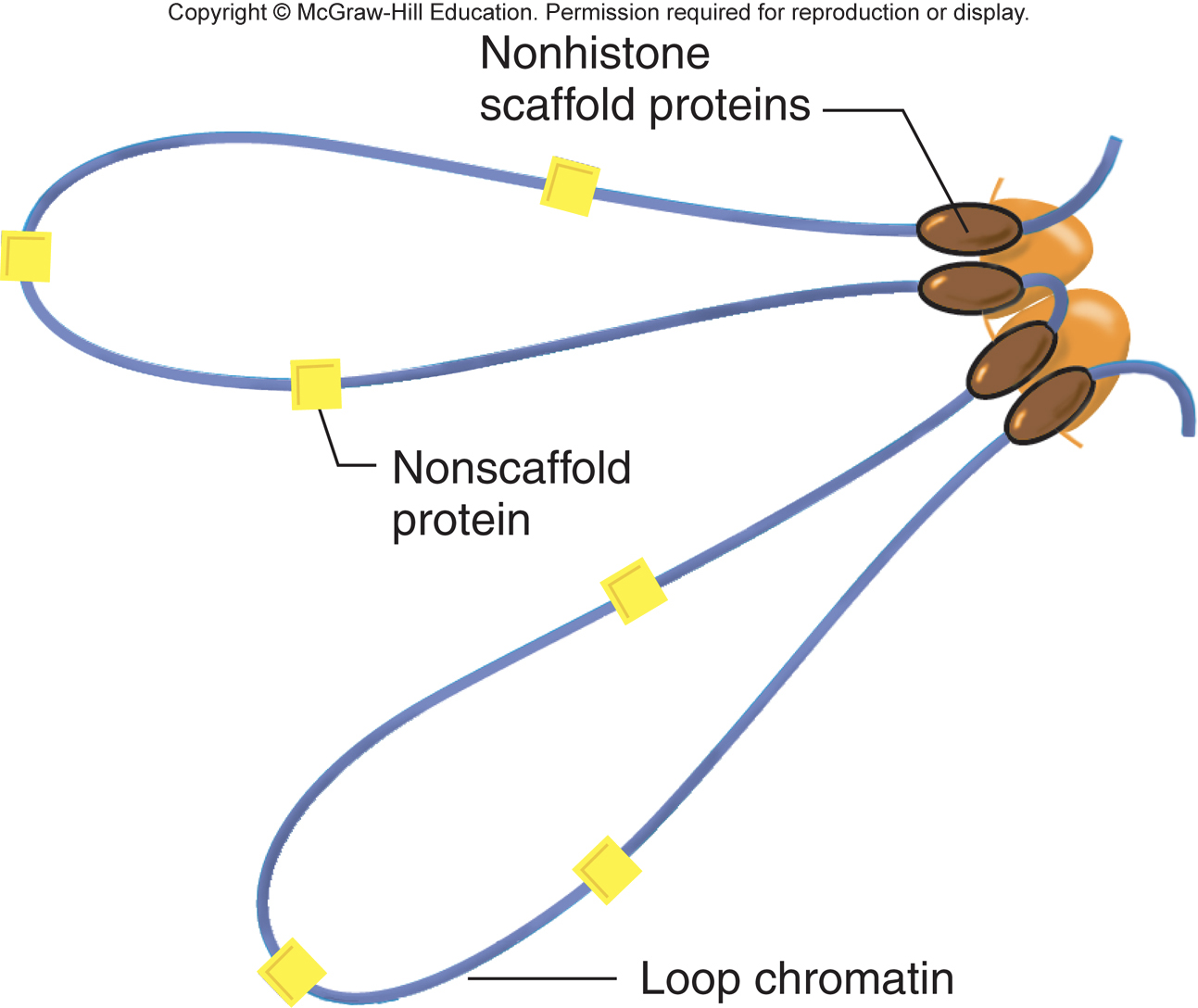
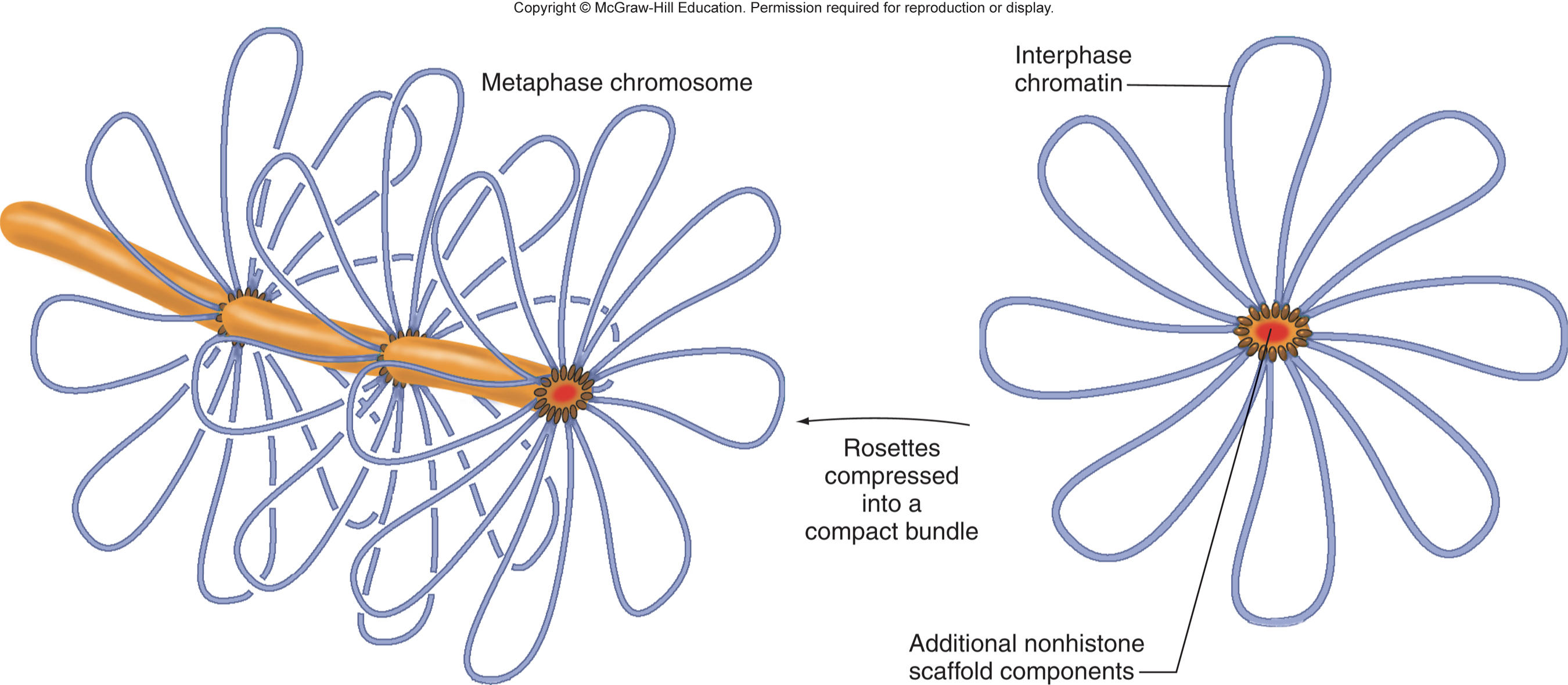
- several non-histone proteins (NHPs) bind to chromatin every 60-100 kb and tether the 300 A fiber into structural loops
- other NHPs gather several loops together into daisy-like rosettes
- condensins may further condense chromosomes into a compact bundle for mitosis
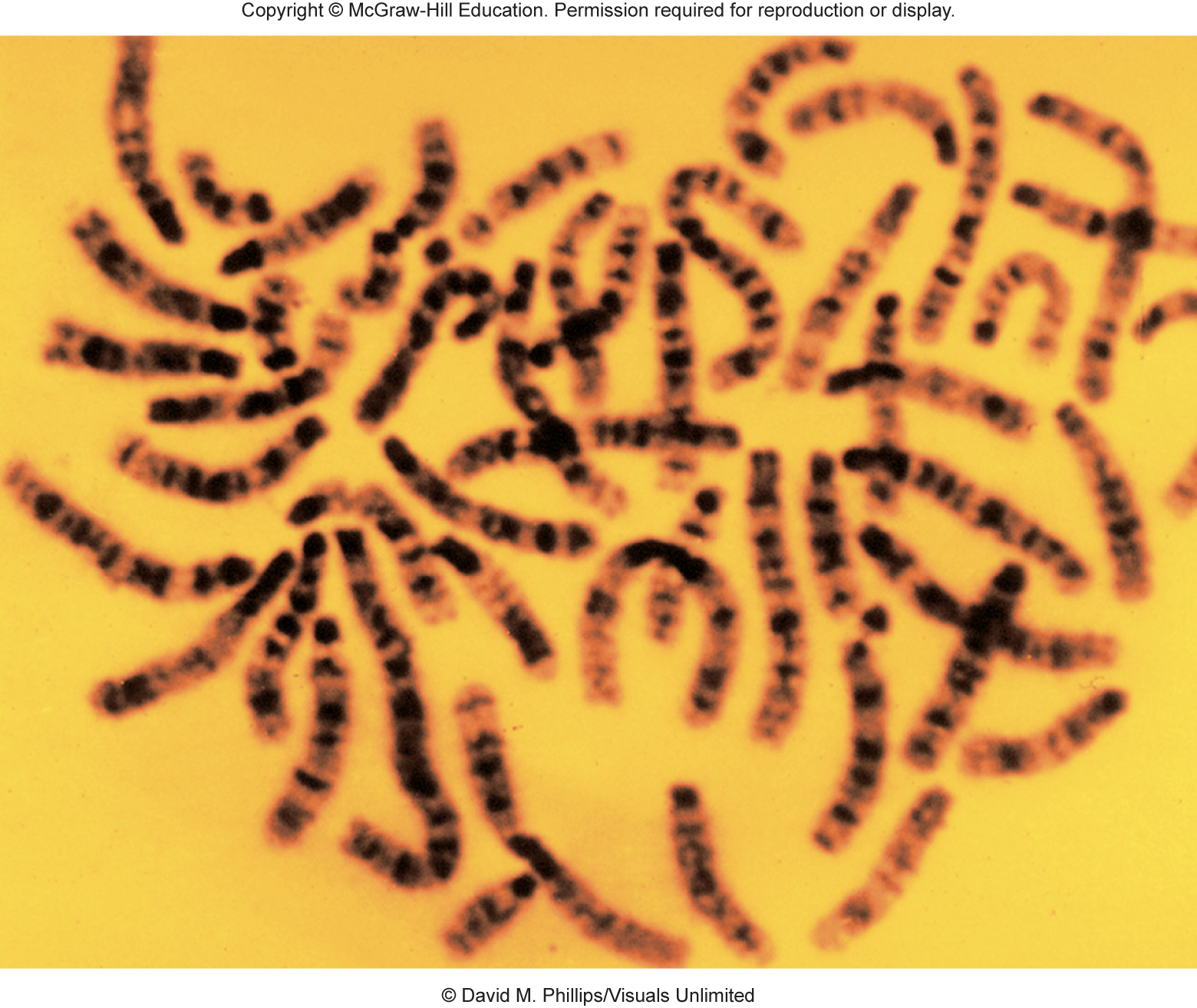
- The karyotype of a human female examined by a high-resolution G-banding
- metaphase chromosomes stained with Giemsa stain have alternating bands of light and dark staining
- each band contains many DNA loops and ranges from 1 to 10 Mb in length
- banding patterns on each chromosome are highly reproducible
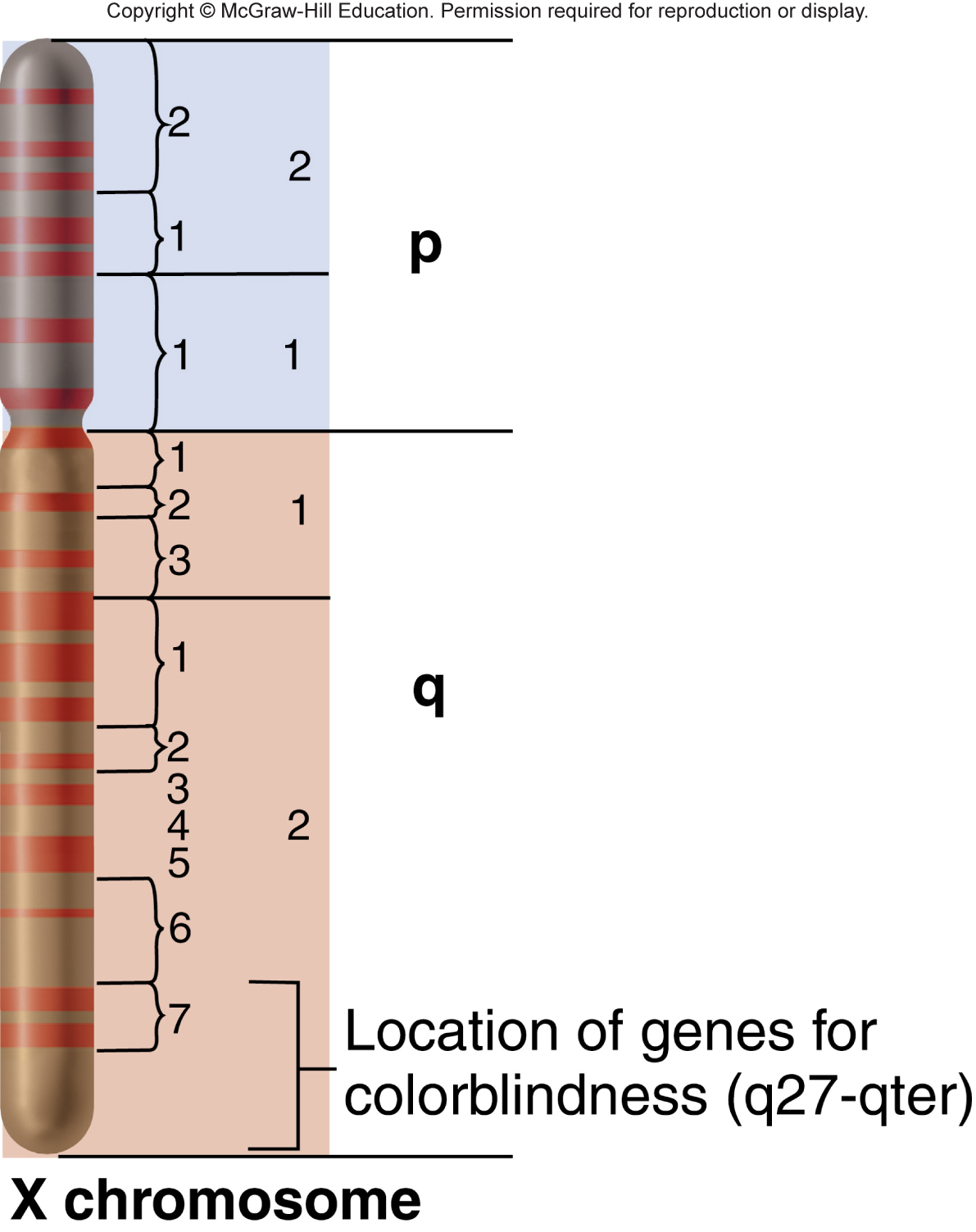
- Locations of genes in relation to chromosomal bands
- short arm: p arm
- long arm: q arm
- within each arm, light and dark bands are numbered consecutively
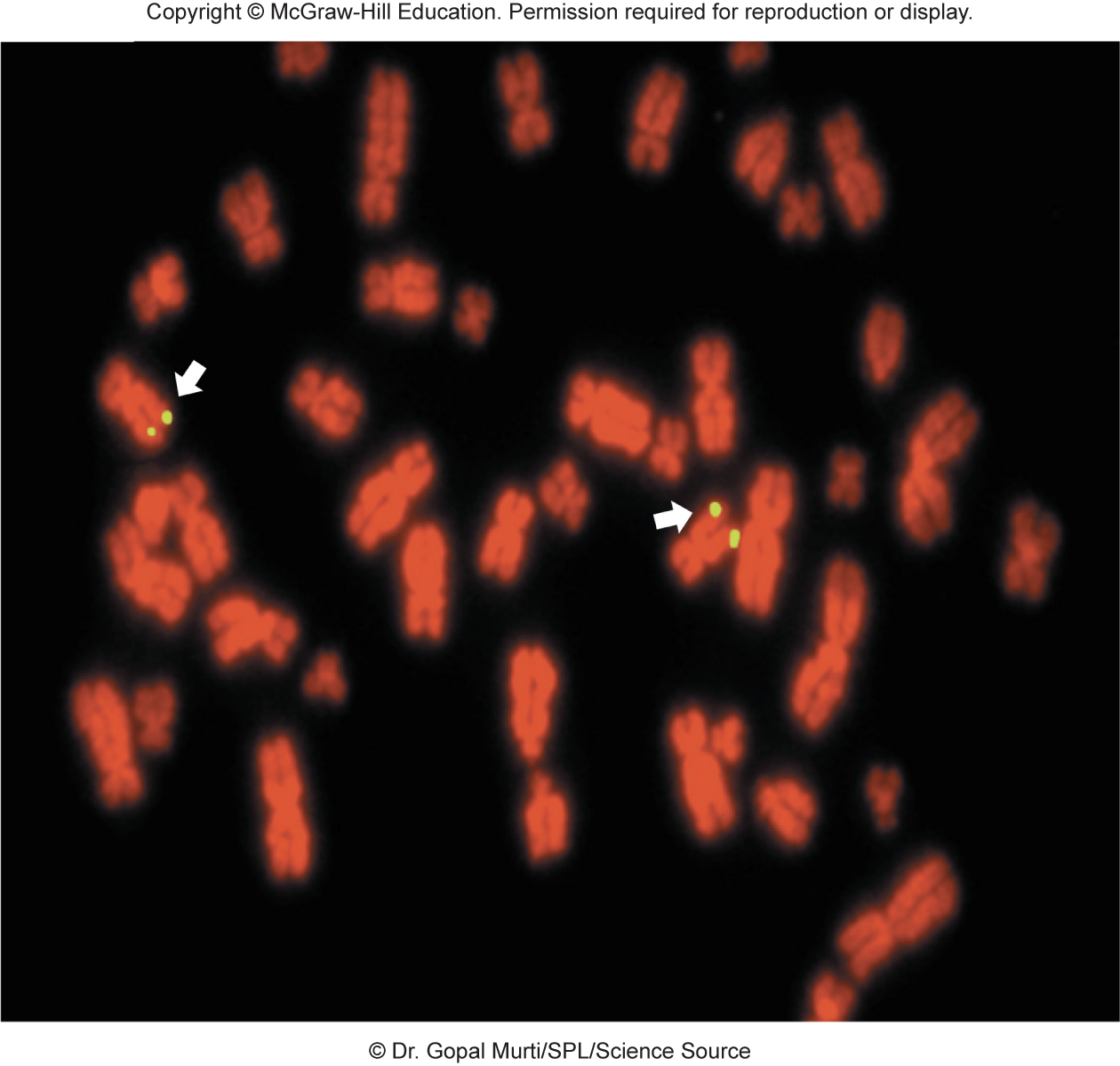
- Fluorescent in situ hybridization (FISH) is used to characterize genomes
- FISH depends on hybridization between metaphase chromosomes and a labeled DNA sequence
- In FISH, chromosomes are spread on a glass slide and denatured to make them single stranded, a DNA sequence is labeled with a fluorescent tag to make a probe, and the probe hybridizes to chromosome at complementary region
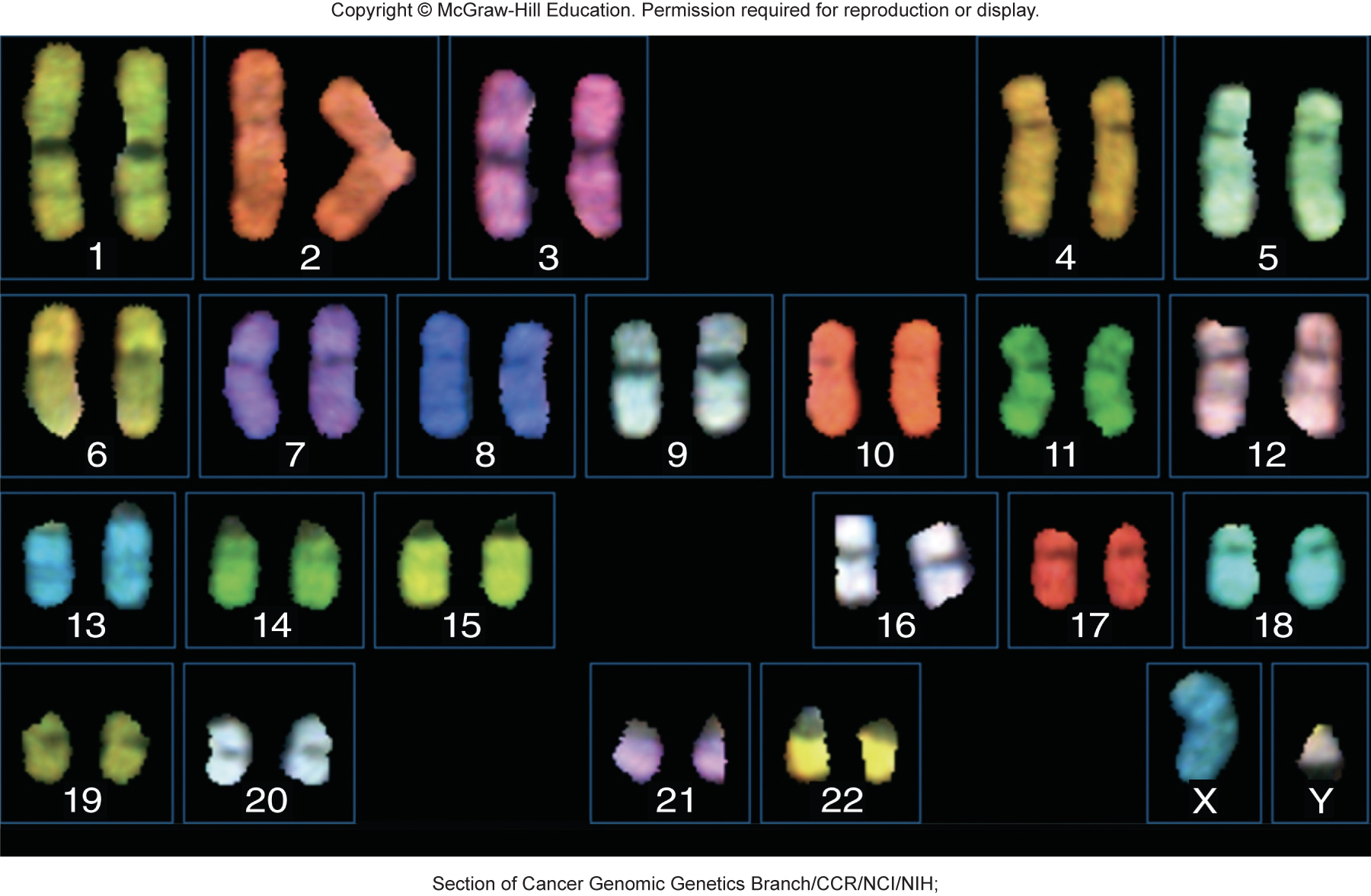
- Spectral karyotyping (SKY) is a variation of FISH
- in SKY, probes specific for each chromosome are labeled with a different fluorescent dye
- Chromosomal packaging and function
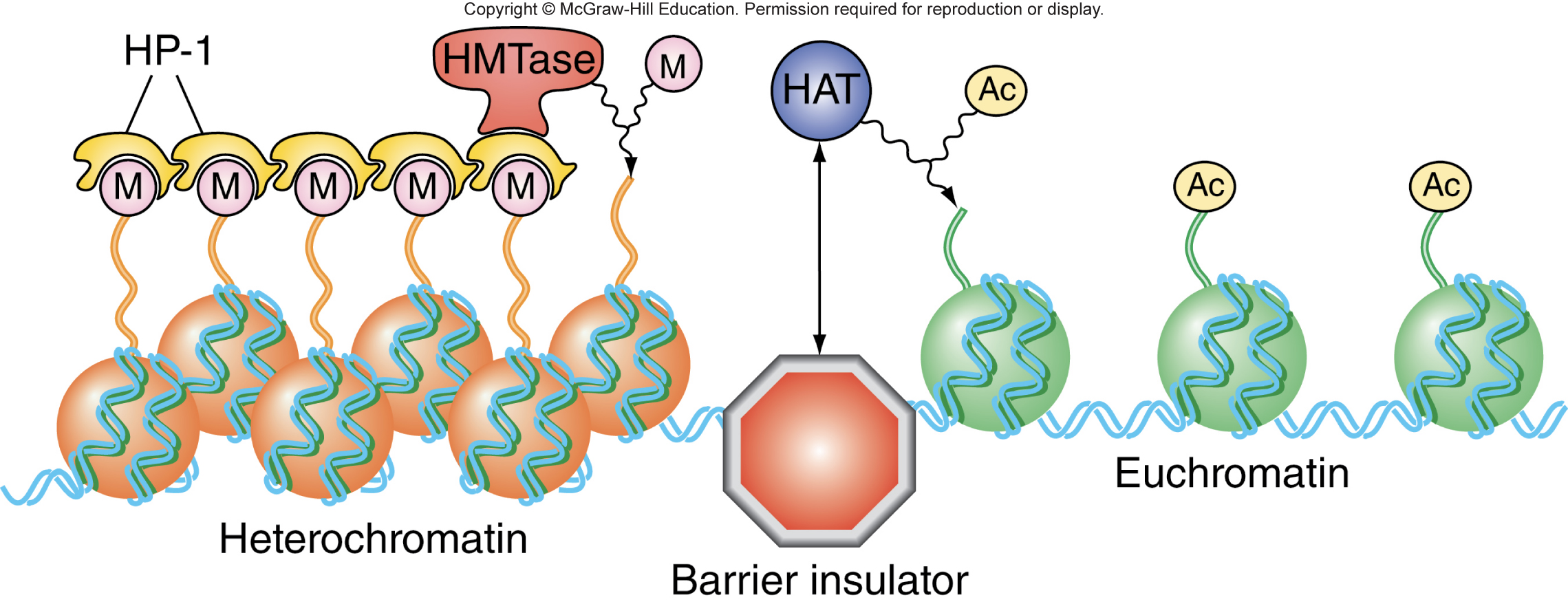
- heterochromatin: highly condensed, usually inactive transcriptionally
- darkly stained regions of chromosomes
- constitutive: condensed in all cells
- facultative: condensed in only some cells and relaxed in other cells
- Euchromatin: relaxed, usually active transcriptionally
- lightly stained regions of chromosomes
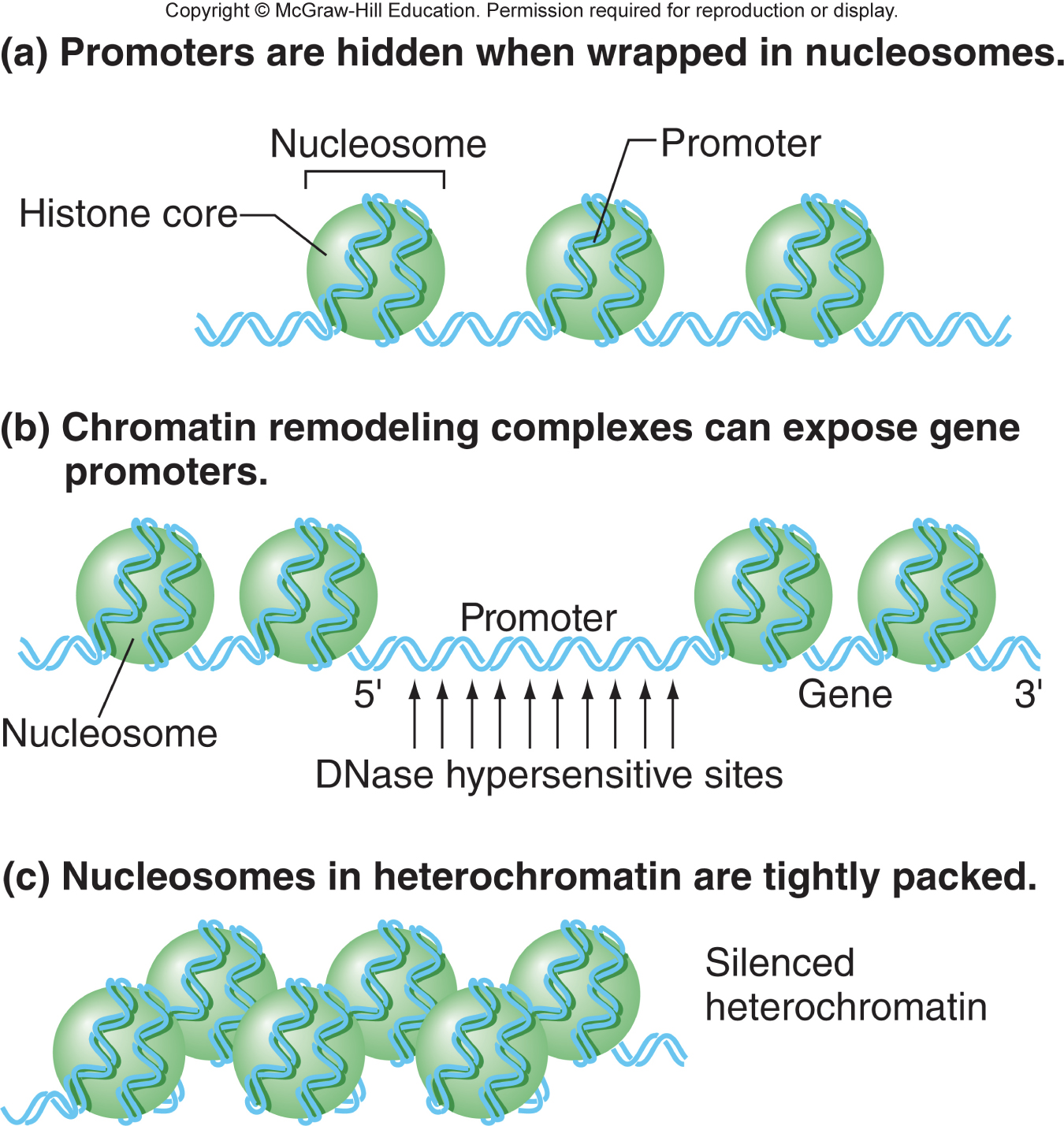
- Transcription requires changes in chromatin structure
- promoters of inactive genes are hidden in nucleosomes
- to activate a gene, transcription factors bind to enhancers and recruit chromatin remodeling proteins
- promoters are exposed by removing or repositioning nucleosomes
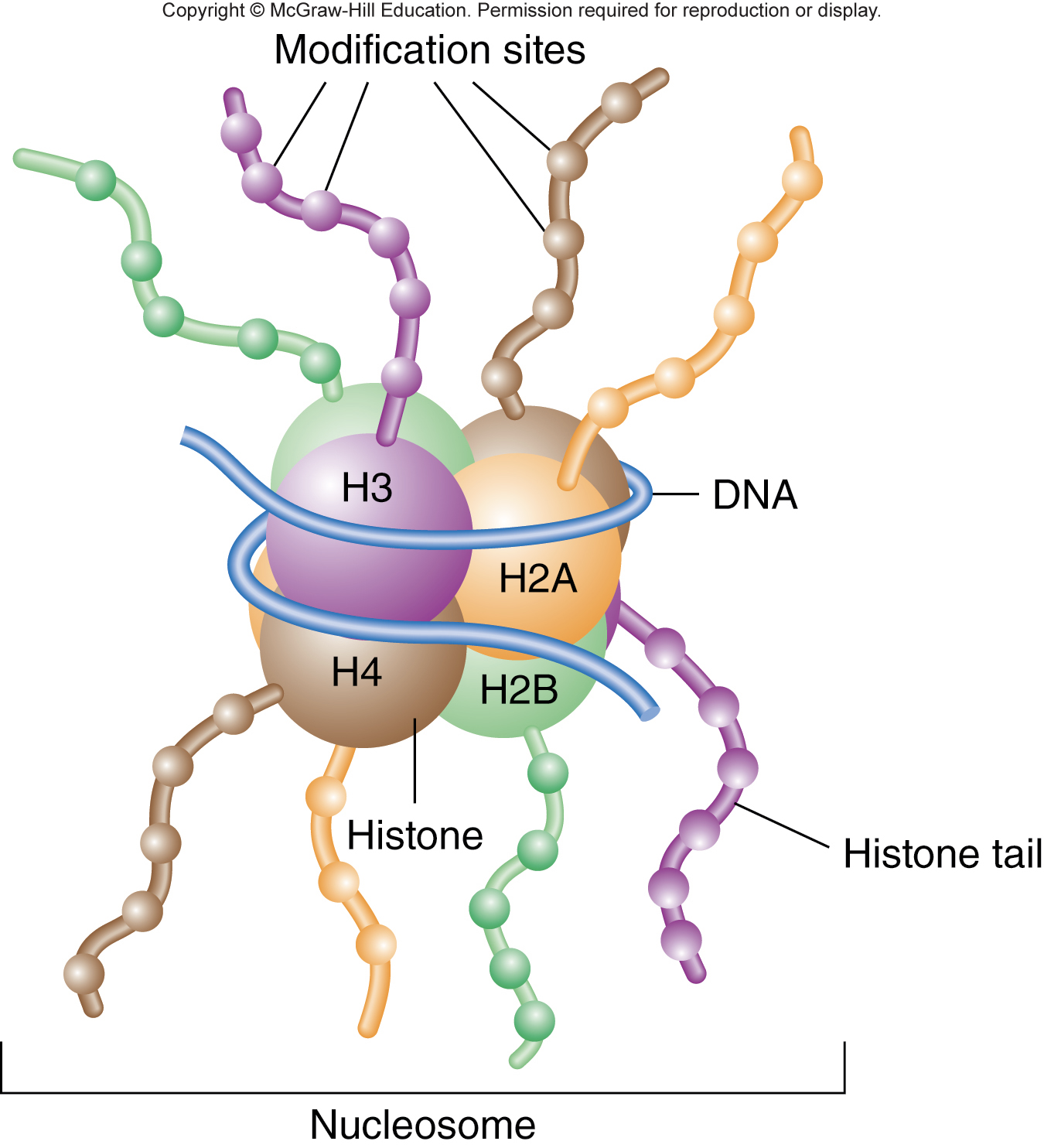
- The four core histone tails can be modified with chemical groups
- tails extend outward from nucleosome
- enzymes can add chemical groups
- modified tails can alter nucleosomes and bind chromatin modifier proteins
- Histone tail modifications alter chromatin structure
- methylation: histone methyltransferase adds methyl group to histone tails
- methylation affect depends on specific amino acid modified
- adding methyl group to H3 lysine 9 favors heterochromatin formation
- methylation reversed by mehtyltransferases
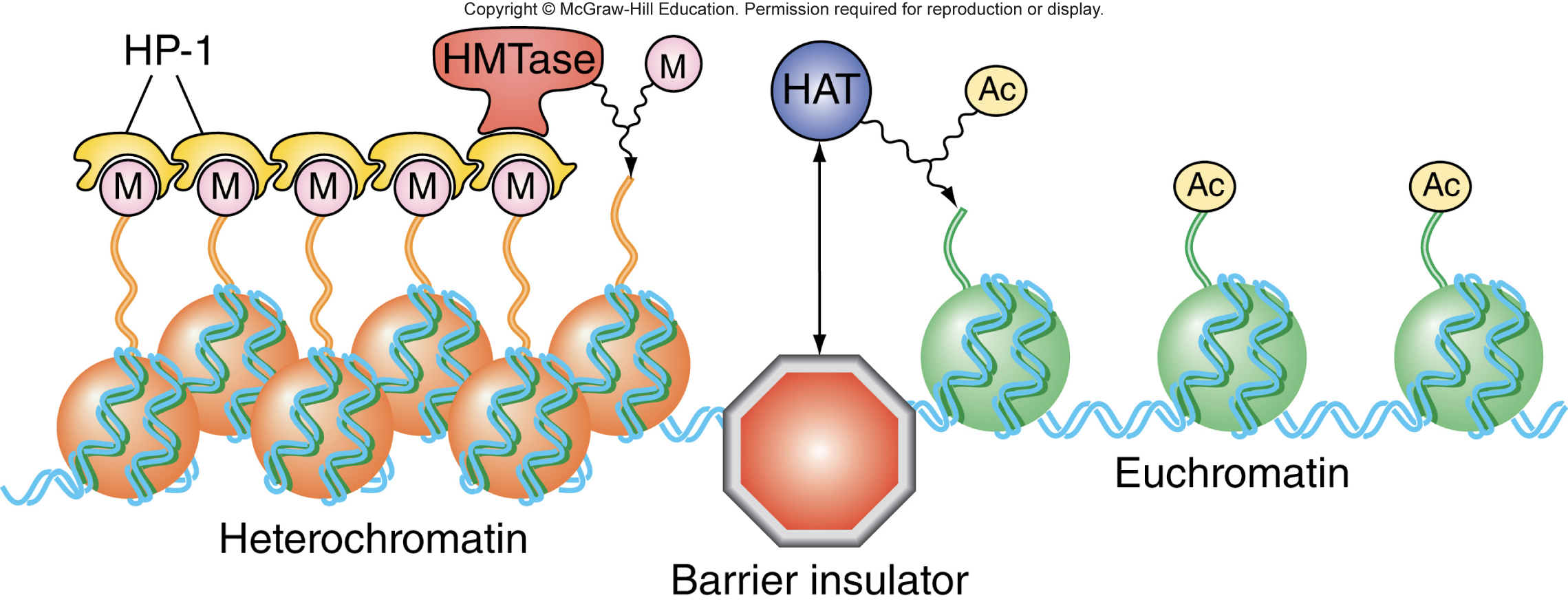
- Acetylation: histone acetyltransferase adds acetyl group to histone tails
- Acetylation prevents close packing of nucleosomes
- Acetylation favors expression of genes in euchromatin
- Acetylation reversed by deacetylases
- X-chromosome inactivation in female mammals occurs through heterochromatin formation
- example of heterochromatin
- dosage compensation in mammals so that X-linked genes in XX and XY individuals are expressed at same level
- random inactivation of all except 1 X chromosome in each cell