UNIT 2 MANAGING CLIENT CARE
Nurses must effectively manage time and organize client care activities. Be aware of everyone’s roles.
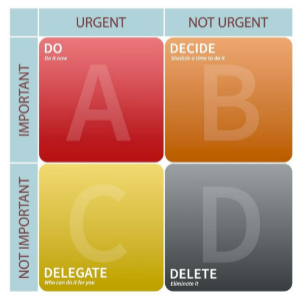
Time Management: process of planning the time available in accordance with goals to achieve.
Time Management Matrix-
 SMART GOALS:
specific, measurable, attainable, realistic, timely
SBAR:
Situation- background- assessment- recommendation
calling the dr, or situation handoff
SOAP:
Subjective, Objective, Assessment, and Plan
Way for nurses to organize thoughts and activities in factual manner.
MEASURING CLIENT ACUITY LEVELS
Acuity- time you have with a patient
Acuity calculation tool- helps ensure client assignments are consistent and fair. Priorities by critical care.
DISCHARGE PLANNING SHOULD; (IDEAL)
i- include client and caregivers (must talk to patient, give education)
d- Discuss the 5 key areas:
@@medications,@@
@@home life@@ (making sure they have what they need at he house or things to get rid off, rugs, handle bars, does the patient need care at home),
@@warning signs@@(no smoking)
@@test results@@(all test results must be given to the patient, so the patient knows or follow up),
@@follow up-@@ patient follows up with doctor.
E- Educate the client; condition discharge process, next step
A- Assess effectiveness of education ( how to and when to use medication)
L- Listen to the clients goals and preferences ( does the patient need to go to assistive living or can patient go home)
Delegation- as one person assigning tasks to another person.
%%A.P ( assistive personnel):%% have personal responsibility to know what their role and scope of practice entails.
Know your scope of practice
Know the scope of practice of the people’s above and under you.
Orders are needed to change or place a bandaid
^^THE 5 RIGHTS OF DELEGATION^^
RIGHT TASK-
RIGHT CIRCUMSTANCE-
RIGHT PERSON-
RIGHT DIRECTIONS AND COMMUNICATION-
RIGHT SUPERVISION AND EVALUATION- if you delegate who is ultimately responsible (you)
TEAM NURSING
Pairs two or more nurses together as a team to care for a group of clients
collaborating with other nurses with different levels and skills while sharing the responsibility.
INTERPROFESSIONAL COLLABORATION
Due to the ever-increasing complexity of client health conditions and treatments, the need of interprofessional collaboration and communication has never been greater.
%%BARRIERS TO INTERPROFESSIONAL COLLABORATION%%
MISCOMMUNICATION
DISTRUST
LACK OF RESPECT AMOUNG PROVIDER TYPES
DIFFERENT LEVELS OF PERCEIVED IMPORTANCE
MISUNDERSTANDING OF EACH OTHERS ROLES
%%INTERPROFESSIONAL EDUCATION COLLABORATIVE%%
- Values and ethics for
interprofessional practice - Roles and responsibilities - know your workers
- Interprofessional communication
- Teams and teamwork
%%NONCOMPLIANCE-%% failure to act in accordance with a care plan. Nurses dealing with nonadherent client should document all resources.