GASTROINTESTINAL SYSTEM
overiew of digestion
digestion → breakdown of large insoluble molecules into smaller soluble molecules than can be absorbed into the blood
nurtients that are broken down release chemical energy that organisms need
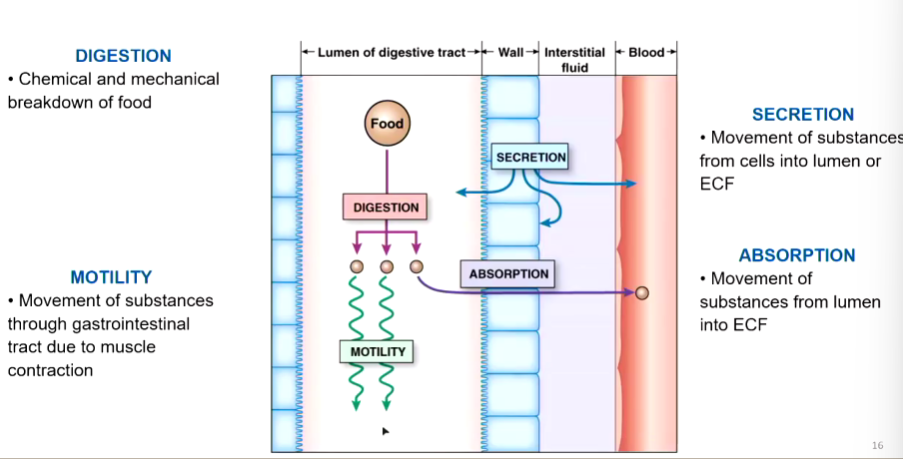
food is broken down chemically and or mechanically ← this is done by either the gastrointestinal/digestive tract
nutrients
major nurtient classes are proteins, lipids, carb
also require vitamins and mineral nurtients
vitamins :
chemically unrelated molecules w diverse functions ( solubity is vital )
water soluble vitamins - excrted in water
lipid soluble vitamins - stored in fat
mineral nutrients
metallic elements involved in various mechanisms
transported into the body via channels, carriers and pumps
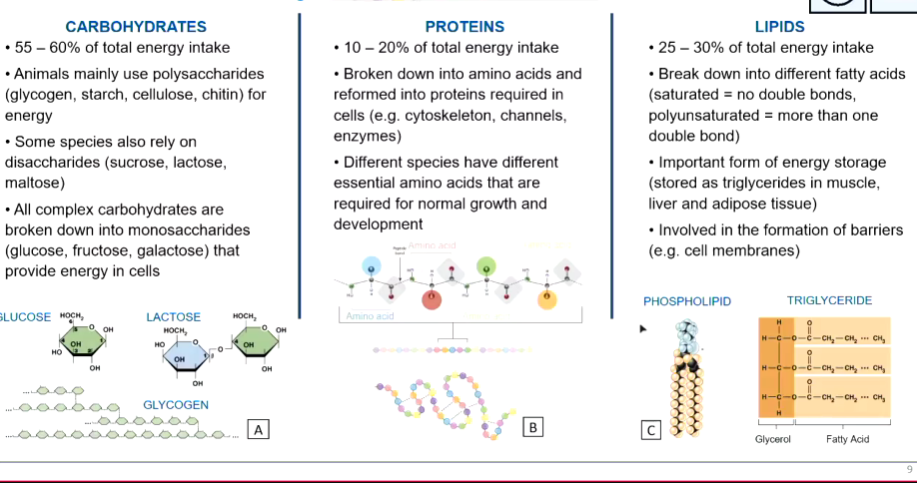
nutrient transport
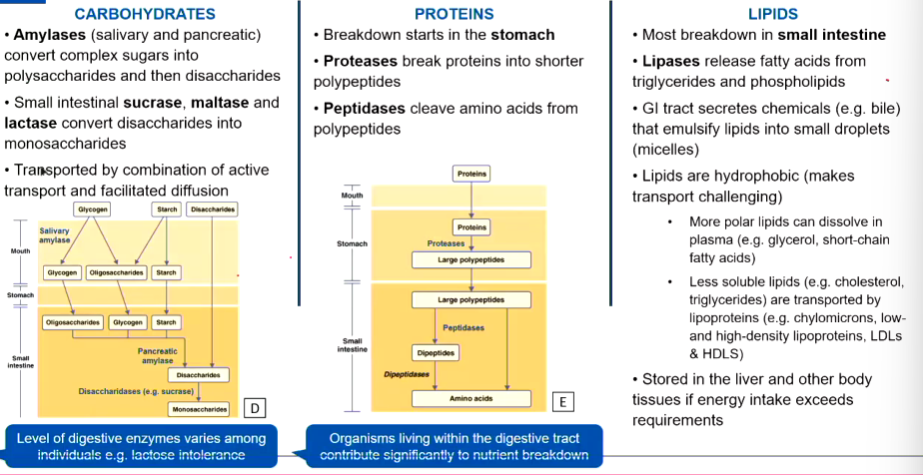
evolution of gasintestintal
-most aniamls use an inner lumen lined with epithelial cells to digest
simple organisms use phagocytosis
aquatic organisms can absorb food across outer ephthelial layer
isolating food in an internal chamber - can be flooded with digestive enzymes can allow many foods to be broken down
next part - is to ensure theres a structure that has 2 ends → there was a shift from one end to 2 ends
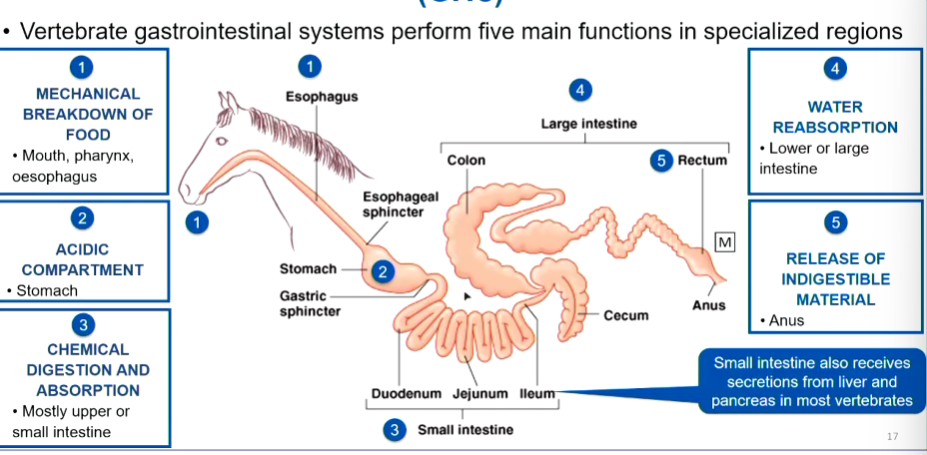
major functions of gasintestinal rract
major regions