Chapter 20
- Population genetics studies the transmission of genetic variation in populations
- Population genetics is an extension of Mendel’s basic principles and a tool to learn about biological function, evolutionary mechanisms, and human history
- Population: a group of interbreeding individuals of a single species living in the same time and place
- Gene Pool: the total of all alleles carried in all members of a population
- Sample: a number of individuals used to make inferences about the entire population
- Phenotypic frequency: proportion of individuals in a population that have a particular phenotype
- Ex. A_ = 16/20 = 0.8
- aa = 4/20 = 0.2
- Genotypic frequency: proportion of individuals in a population that carry a particular genotype
- Ex. AA = 12/20 = 0.6
- Aa= 4/20 = 0.2
- aa = 4/20 = 0.2
- Allelic frequency: proportion of gene copies in a population that are of a given allele type
- in 20 people, there are 40 alleles (12 AA individuals, 4 Aa individuals, 4 aa individuals)
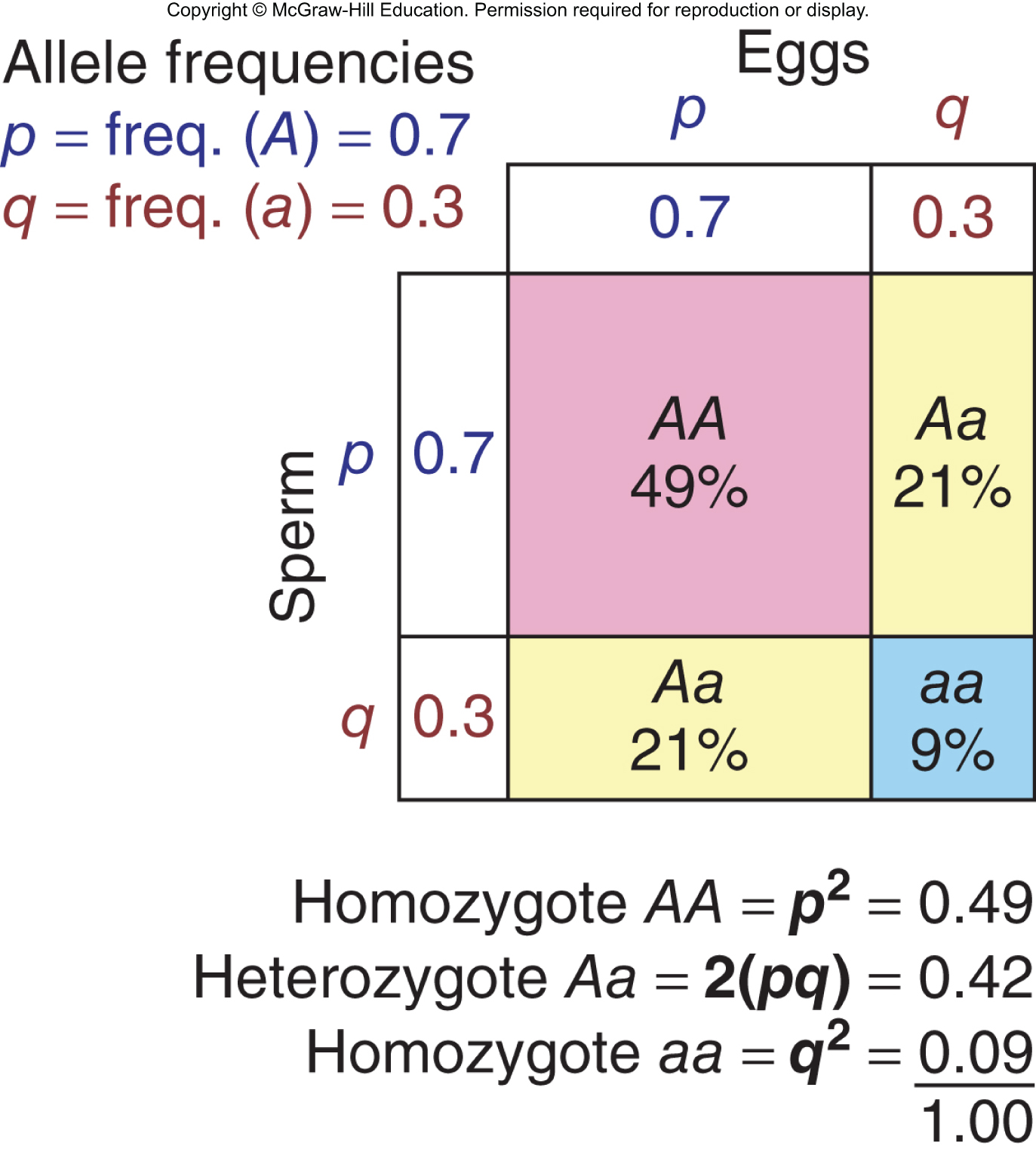
- Frequency of A= (24+4)/40 = 0.7
- Frequency of a= (8+4)/40 = 0.3
- Hardy-Weinberg equilibrium: correlates allele ang genotype frequencies
- HWE- developed independently by Hardy and Weinberg in 1908
- assumptions of HWE- population has infinite number of individuals, individuals mate at random, no new mutations appear, no migration in or out of population, and genotypes have no effect on ability to survive and transmit alleles to the next generation
- HWE- allele and genotype frequencies will not change unless one of the above conditions is violated
- allele frequencies should be same in adults as in gametes
- allele frequencies in gametes can be used to calculate expected genotype frequencies in zygotes of next generation
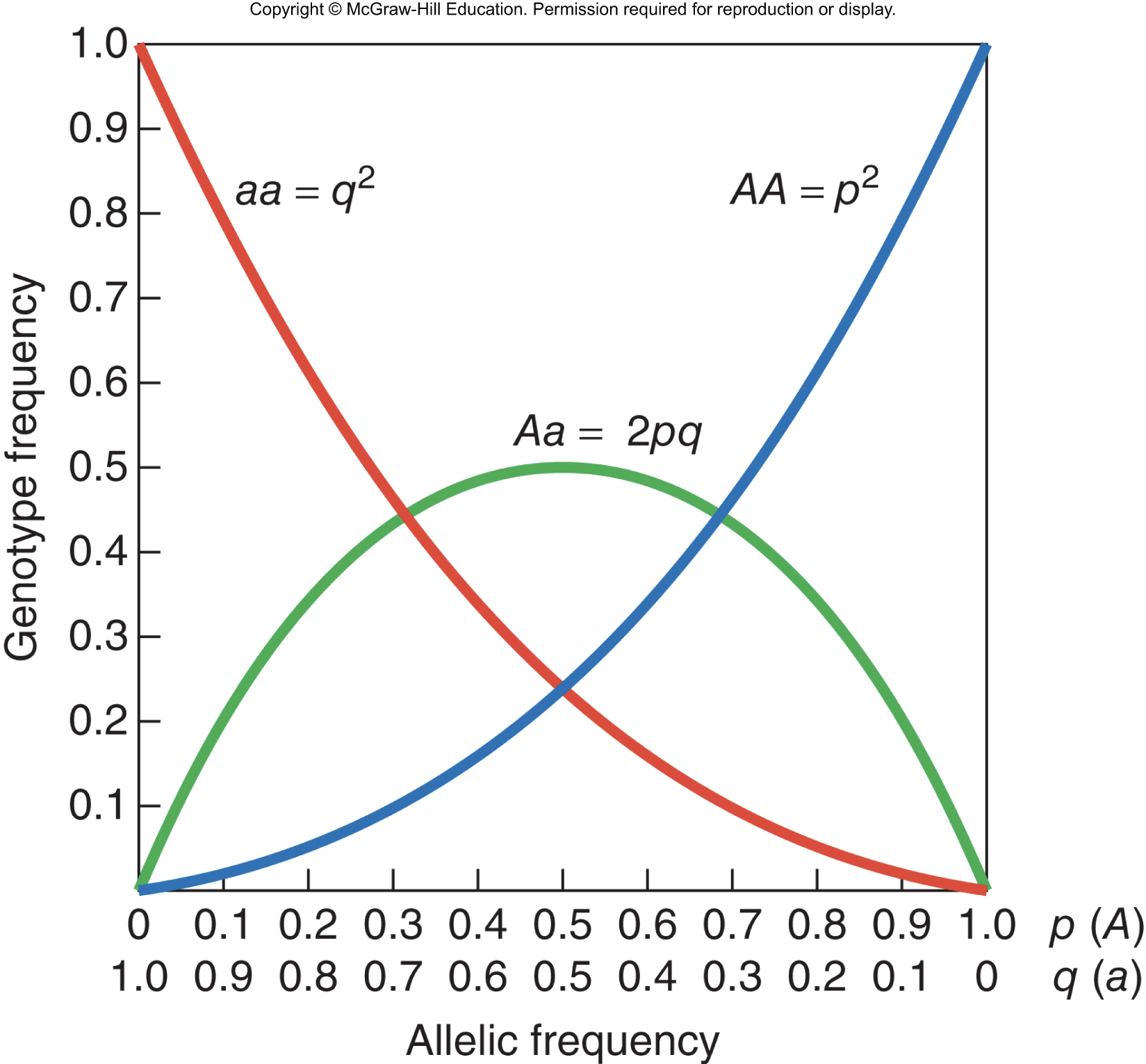
- HW proportions expressed in p^2+2pq+q^2=1 (p= frequency of A; q= frequency of a)
- one set of allele frequencies corresponds to one set of genotype frequencies
- Random mating shapes genotype frequency
- in a population not at HWE, one generation of random mating can reshuffle alleles into equilibrium. Allele frequency remains constant, but genotype frequency changes
- Gen 1- b= 0.5, all are Bb
- Gen 20 b= 0.5, 25% BB, 50% Bb, 25% bb (p^2, 2pq, q^2
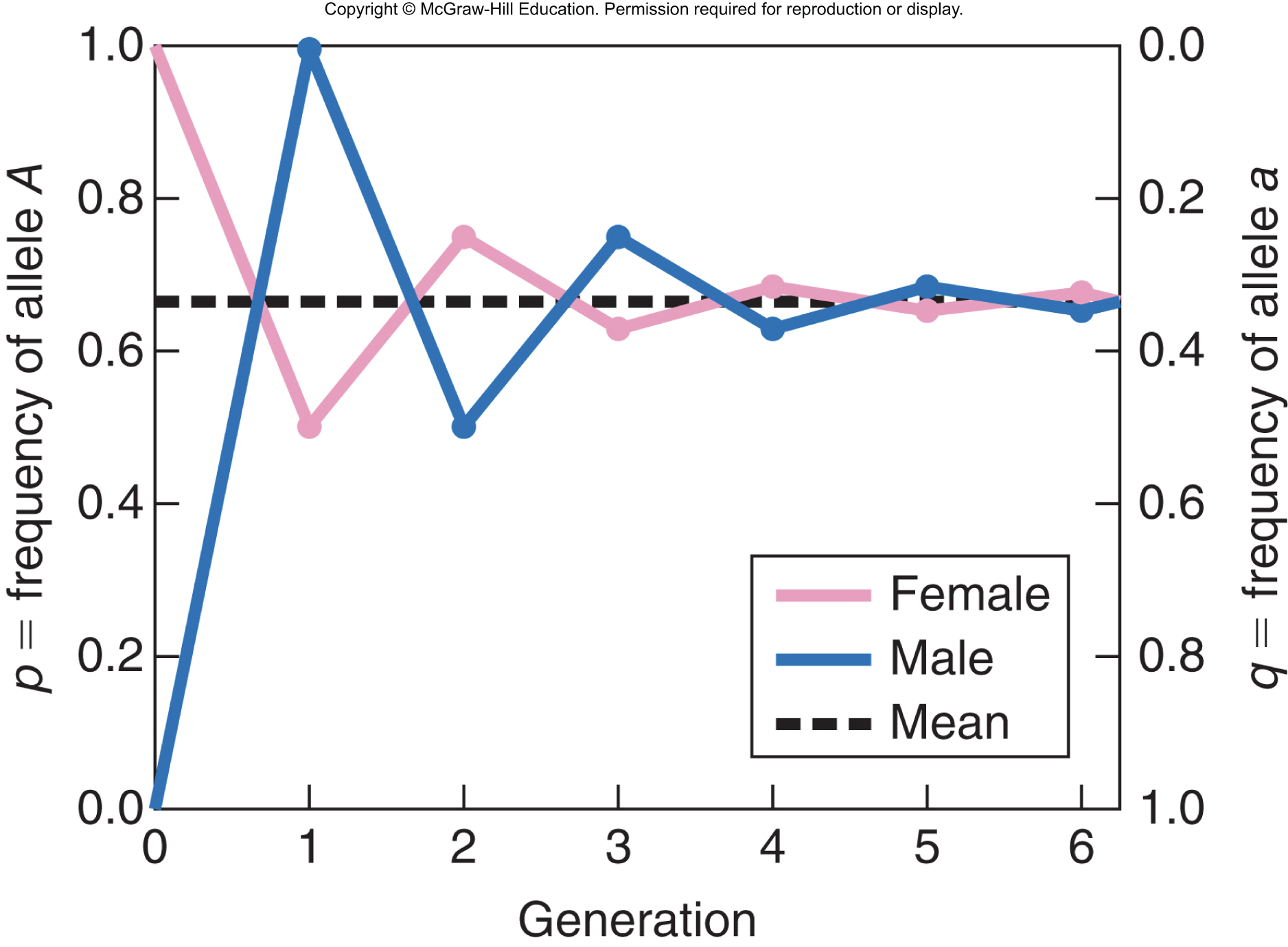
- Sex-linked genes require several generations to reach HWE
- Many human loci are near HWE
- Random mating may seem unrealistic in humans, but humans rarely select mates based on specific genotype. Many loci do not affect phenotype and are used in solving crimes and in identifying human remains.
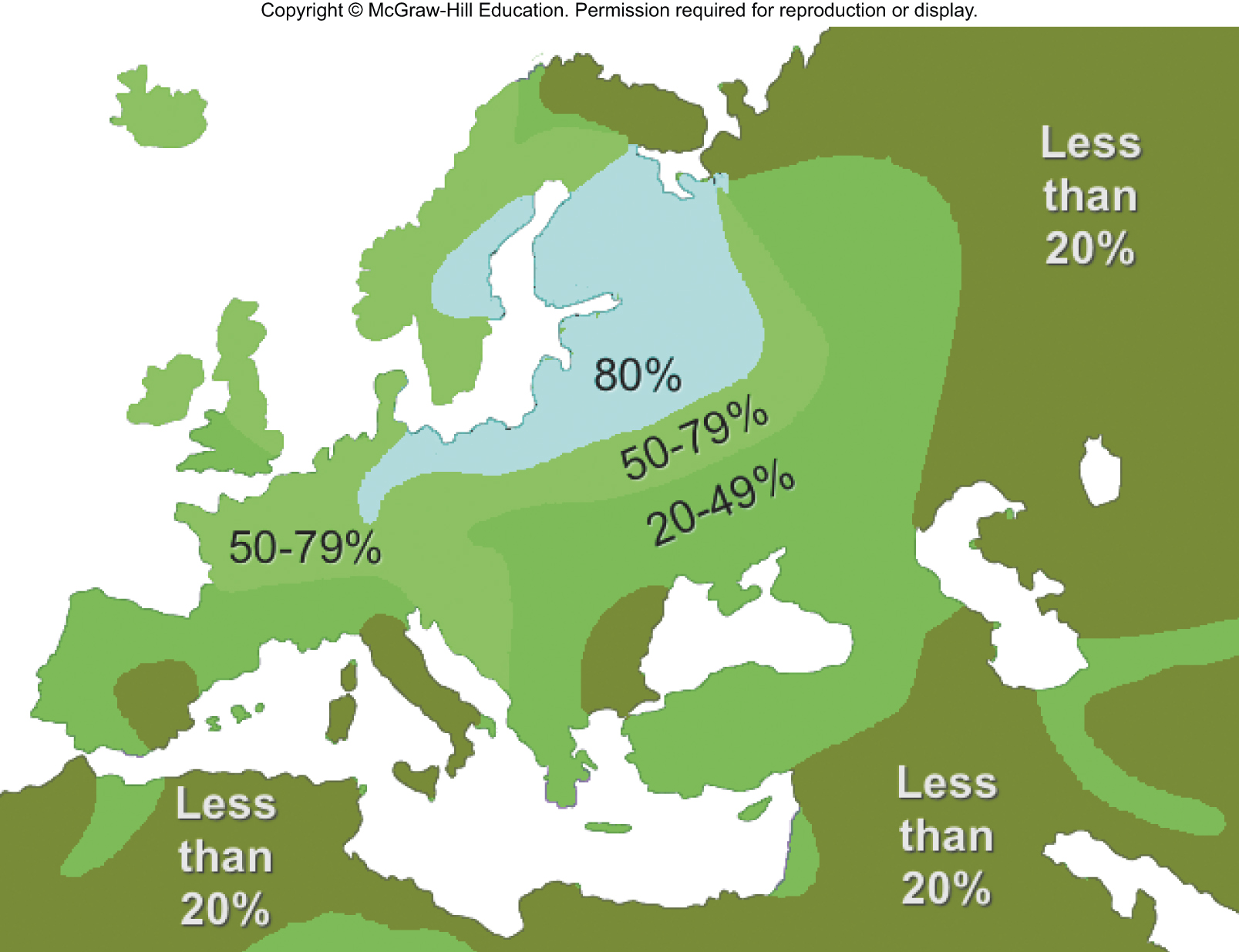
- Geographic differences in proportions of blue eyes in European populations
- HWE would predict that allele frequencies are forever unchanging, so they should be the same everywhere
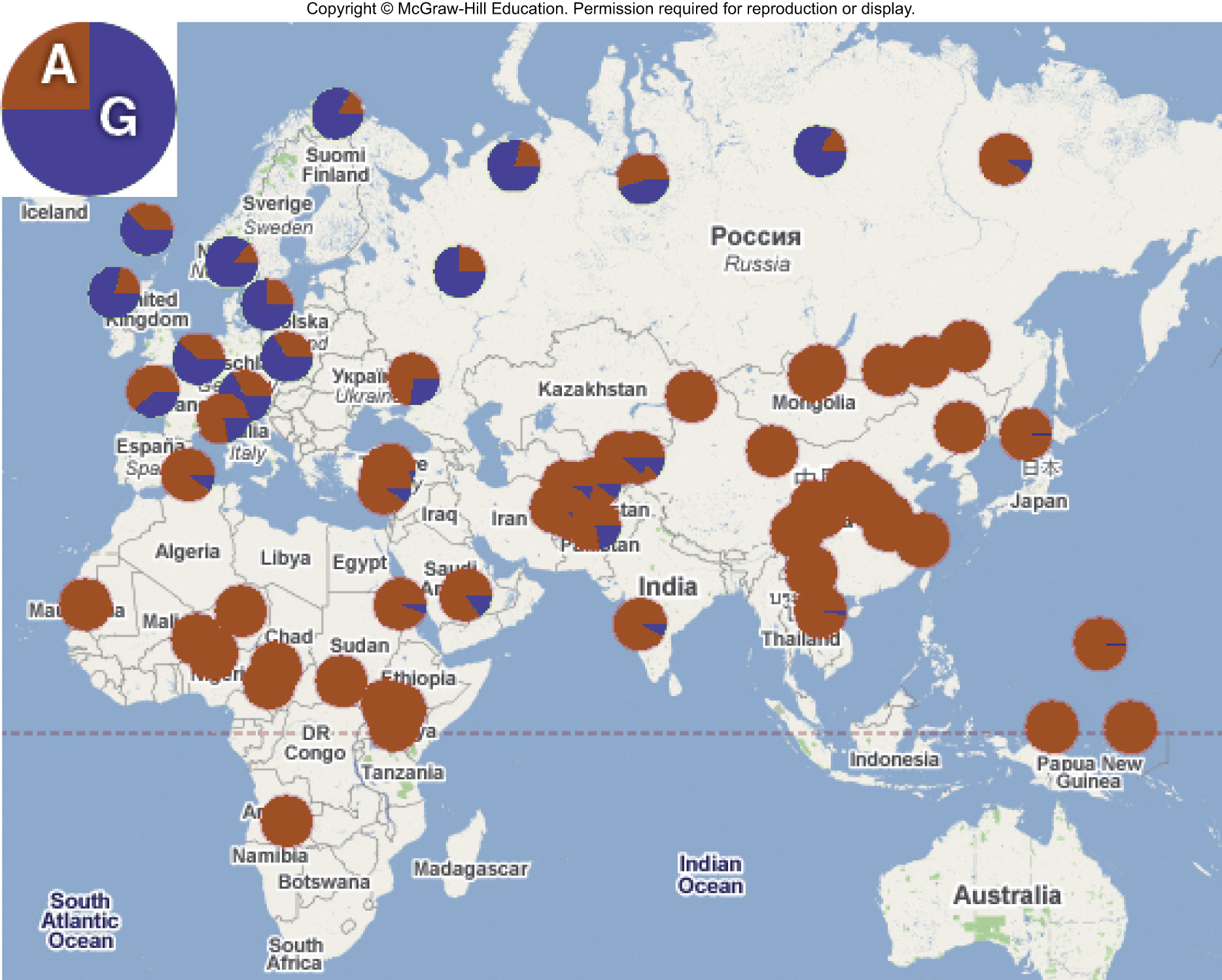
- Blue-eye color in humans is recessive to brown eyes and arose 6,000-10,000 years ago, common in Europe, but rare elsewhere
- Frequencies of A and G alleles of the OCA2 eye color gene in different populations (p=A=brown, q=G=blue)
- HW provides a starting point for modeling population deviations
- natural populations rarely meet HW
- new mutations, no population infinitely large, migrations of small groups occur, mating not random, genotype-specific differences in fitness
- HW equation is useful for estimation for a few generations, not for long-term
- Using Monte Carlo simulations to model long-term changes in allele frequencies
- Monte Carlo simulations- use a computer program to model possible outcomes of randomly chosen matings over a designated number of generations
- Starting population has defined number of individuals that are homozygous and heterozygous
- mating pairs chosen through random-number generating program
- offspring genotypes based on probabilities
- at each generation, total offspring number and parental population size are equal. parental generation discarded and offspring become parents.
- multiple, independent simulations performed
- each simulation represents possible pathway of genetic drift
- genetic drift- change in allele frequencies as a consequence of randomness in inheritance due to sampling error from one generation to the next
- Modeling genetic drift
- 6 MC simulations run with 2 initial populations of heterozygous individuals, no selection
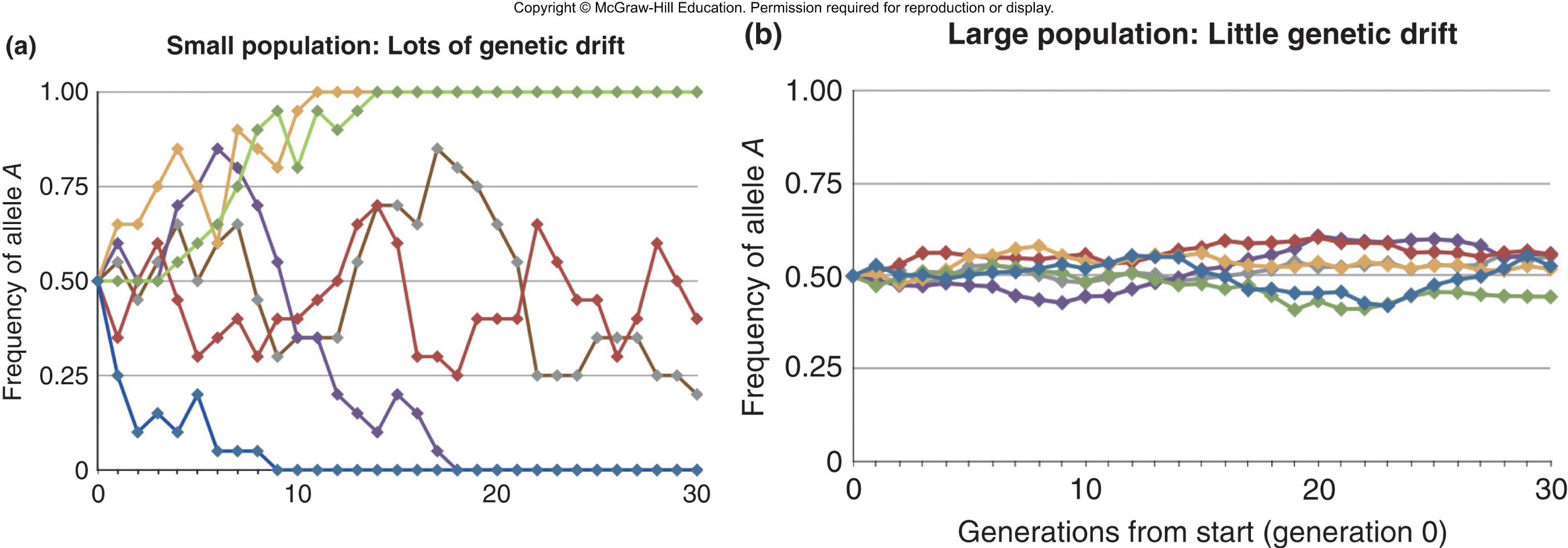
- Population size and time to fixation
- fixation- when only one allele in a population has survived and all individuals are homozygous for that allele; no further changes occur
- at each generation, changes in allele frequencies are relatively small
- over many generations, there can be large changes in frequency
- in populations with 2 alleles present at equal frequencies, median number of generations to fixation is roughly equal to the total number of gene copies in breeding individuals (population of 10, median fixation 20 generations)
- Genetic drift is accelerated by founder effects and population bottlenecks
- Founder effects- a few individuals separate from a larger population and establish a new population
- population bottlenecks- large proportion of individuals die (e.g. from environmental disturbances)
- Mutations introduce new genetic variation
- mutation- variant DNA sequence in individual genome that was not present in either parent
- deleterious: disrupt important function
- beneficial: provide selective advantage
- neutral: no benefit or harm
- molecular clock- mutations accumulate at fairly constant rate over time, DNA differences between organisms can be used to estimate how long ago they shared a common ancestor
- Natural selection acts on differences in fitness to alter allele frequencies
- Fitness- individual’s relative ability to survive and transmit its genes to the next generation
- cannot be measured in individuals in a population
- can be measured in all individuals of the same genotype in a population
- viability and reproductive success
- Natural selection- process that progressively eliminates individuals whose fitness is lower
- individuals whose fitness is higher become parents of next generation
- occurs in all natural populations, results in decreased genetic diversity
- Example of natural selection in pocket mice in New Mexico
- mice in regions with light colored solid and rocks have light fur and volcanic rock have dark fur, loss of genetic information
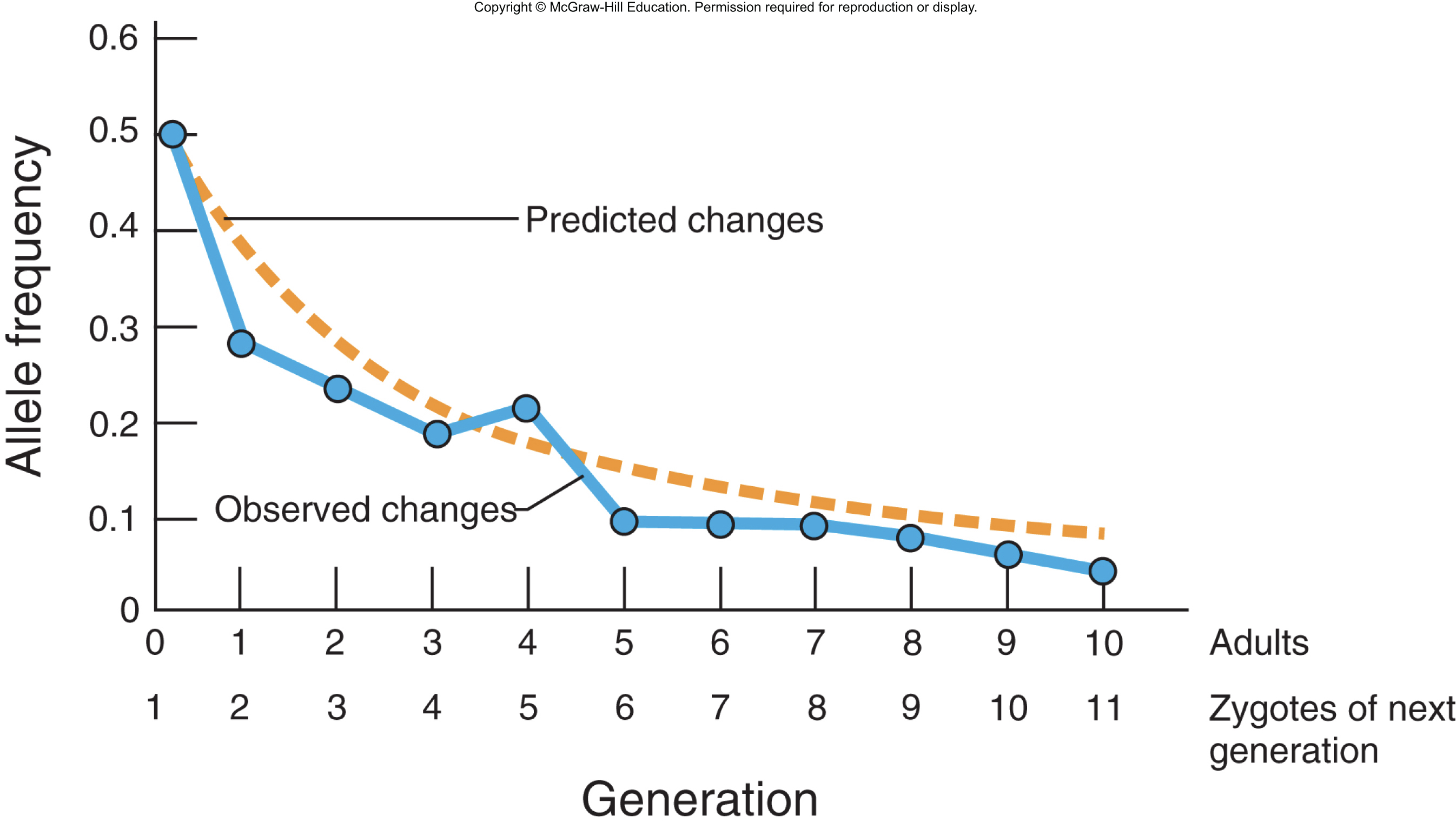
- Frequency of a lethal recessive allele decreases over time
- Monte Carlo modeling of natural selection- population with 500 individuals (1 Rr, 499 rr) and ran 6 simulations
- in 3 simulations, R goes extinct in <100 generations
- in 3 simulations, R moves to fixation
- The fitness of alternative genotypes in different environments
- H. sapiens migrated out of northeast Africa 70,000 years ago
- exposure to UV rays from sun decreases with increasing distance from equator
- affects vitamin D production and skin cancer incidence
- close to equator, dark skin protects against skin cancer
- farther from equator, lighter skin allows more UV for sufficient vitamin D production
- skin pigmentation is a complex quantitative trait and is determined by alleles at many genes
- alleles of several genes show strong associations with different populations around the world
- Evolution of pesticide resistance
- large scale use of DDT and other synthetic insecticides began in 1940s
- DDT is a nerve toxin in insects
- Dominant mutations in a single gene confer resistance through detoxification of DDT
- with insecticide application, strong selection favors heterozygotes by 1984, there were >450 species of mites and insects that had become resistant
- Changes in genotype frequencies in mosquitoes in response to DDT
- Use of DDT in Bangkok to control A. aegytpi mosquitoes began in 1964 and discontinued in 1967
- RR genotype confers resistance, but with fitness cost: absence of insecticide, resistance subject to negative selection