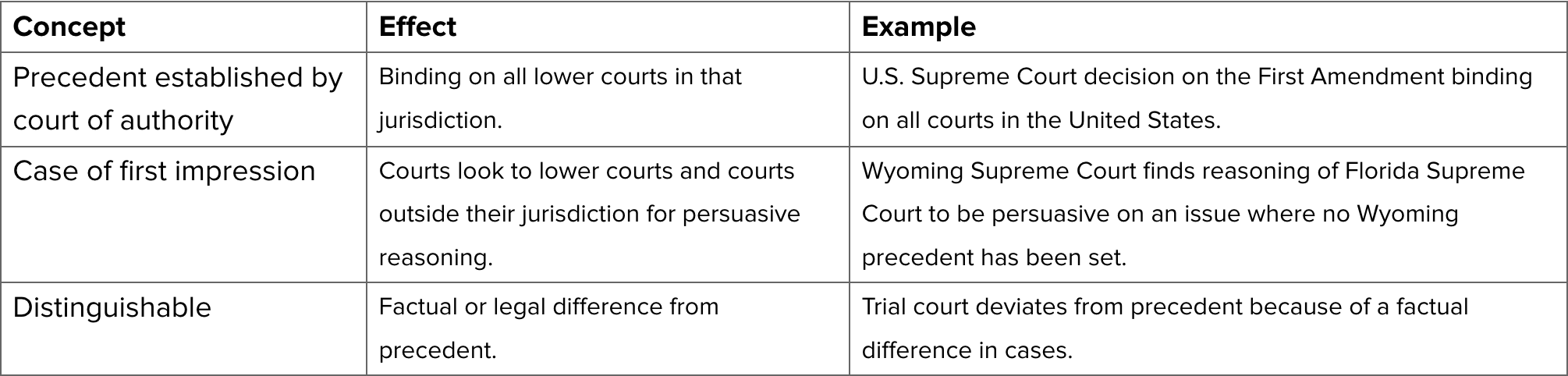
applying precedent
Applying Precedent
Courts Setting Precedent: Only appellate courts have the authority to set precedent, which is the basis for the doctrine of stare decisis (let the decision stand).
Binding Authority
Definition: Binding authority refers to the obligation of lower courts to follow the rulings made by higher courts with authority.
Example:
The federal District Court of New Jersey is required to follow decisions set by the U.S. Court of Appeals for the Third Circuit since it falls within its geographical jurisdiction.
Conversely, the District Court is not obliged to follow rulings from other U.S. Courts of Appeals.
State Law: The highest appellate court in a state establishes binding precedent for all lower courts within that state.
Persuasive Value
No Binding Authority: In the absence of binding authority on a legal issue, courts may look to decisions from lower courts or appellate courts outside their geographic jurisdiction for guidance.
Cases of First Impression: This term refers to cases where a legal issue has not been previously settled; courts may consider the reasoning of other jurisdictions as persuasive value.
Distinguishable Cases
Definition: If a lower court deviates from a binding precedent regarding a well-established legal issue, it must justify its decision.
Justification: The justification involves demonstrating a significant factual or legal difference between the new case and the precedent case.
TAKEAWAY CONCEPTS: Applying Precedent