light-dependent reactions
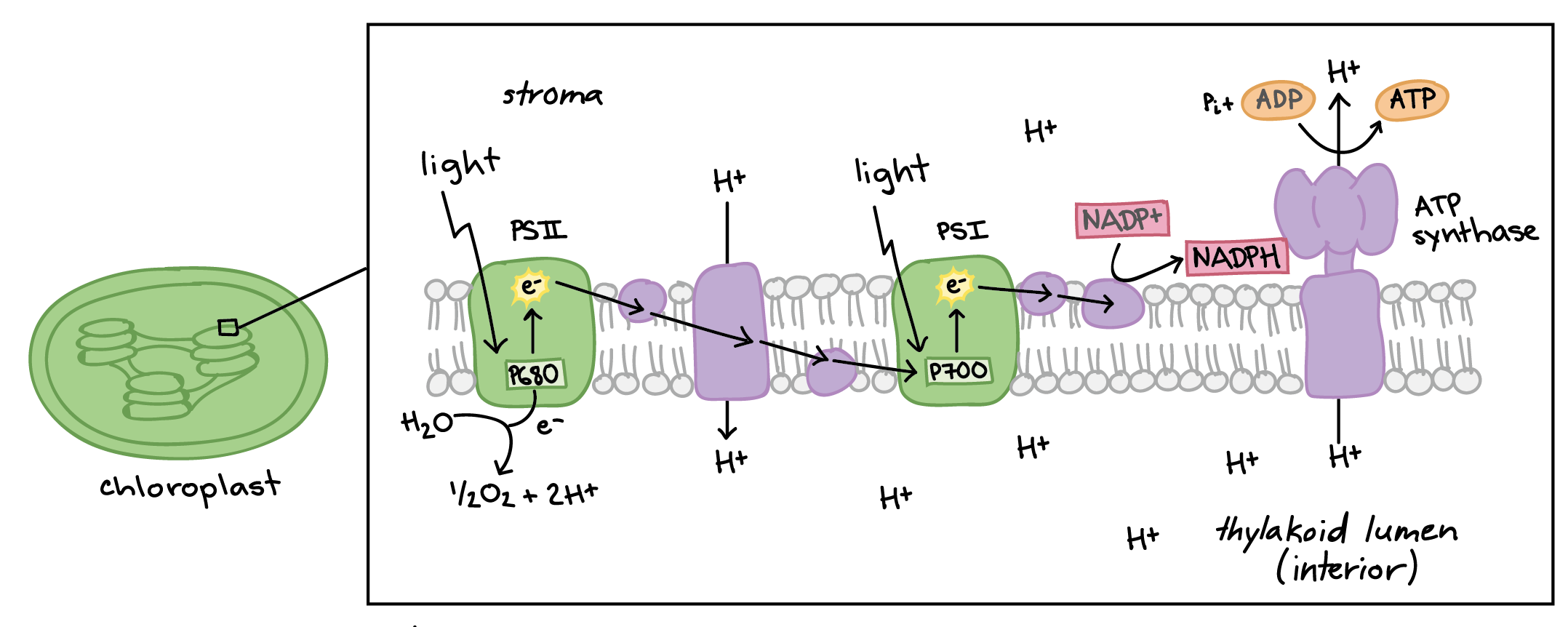
PSII - the site of photolysis
photons of light hit the photosystem containing chlorophyll (pigment) - split water molecules into oxygen gas, hydrogen ions, and electrons which enter the electron transport chain
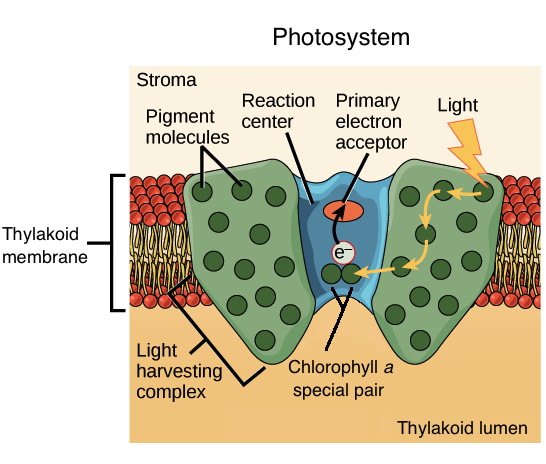
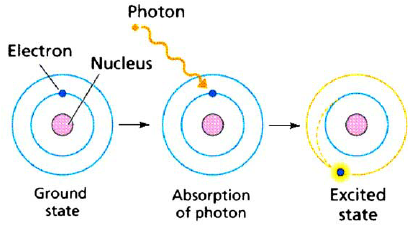
Reaction center, when excited, transfers electrons to acceptors - acceptors get reduced, oxidizing the reaction center - the first redox reaction in the ETC series
On a larger scale - ETC is a large-scale redox reaction - the source of electrons is water, the energy source is light, the ultimate electron acceptor is NADP+
Pigments are specialized - harness light at very specific wavelengths - organisms with more variation in their pigments have a fitness advantage because more pigments allows them to absorb more light (→ more photosynthesis)
Most plants contain chlorophyll a and b, which absorb slightly different wavelengths of blue and red light, and carotenoids (accessory pigments) which absorb wavelengths chlorophyll can’t
O2 released as a waste product
Hydrogen ions build up in the thylakoid lumen - electrochemical gradient
Electrons move through the electron transport chain via electron carriers, moving w/ redox reactions that release small amounts of energy - this energy is used to pump H+ ions from the stroma, furthering the gradient
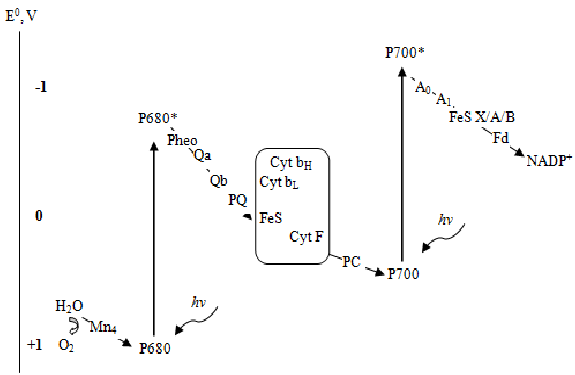
PSI - electrons re-energized via photons of light and pigments again
Electron carrier NADP+ reduced to NADPH
At the end of the ETC - ATP synthase - H+ ions slide via facilitated diffusion through the enzyme/channel protein down the electrochemical gradient, creating mechanical rotational energy which can be harnessed and used to catalyze the addition of a phosphate group to ADP, synthesizing ATP
Phosphorylation = a phosphate group being added to a molecule
Photophosphorylation = phosphorylation powered by solar energy