Forensic Photography Lecture Notes
Course Overview - FIVS 210: Forensic Photography
Instructor: Professor Shelby Kmidowski Moran
Key Camera Terminology
Types of Cameras:
SLR (Single Lens Reflex)
DSLR (Digital Single Lens Reflex)
DSLM (Digital Single Lens Mirrorless)
Camera Components:
Pentaprism, Eyepiece, Film Plane, Focal Plane Shutter
Examples of models: Nikon D800, Canon 200
Camera Nomenclature
ISO Speed:
Defined as the measure of sensitivity of the camera’s imaging sensor to light.
Controls on Camera:
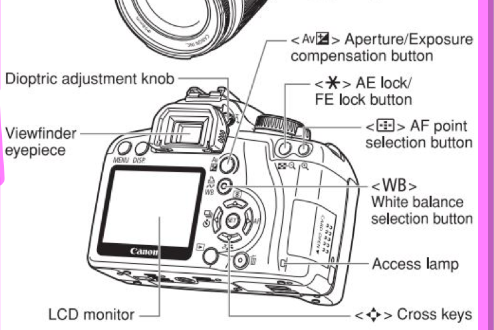
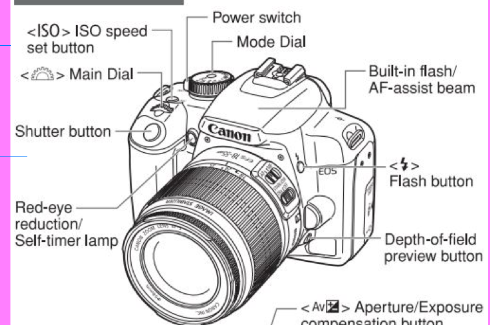
Set Button, Main Dial, Power Switch, Mode Dial, Built-in Flash, AF-assist Beam, Shutter Button, Red-eye/Reduction Self-timer Lamp, Dioptric Adjustment Knob, and others.
Back of Camera :
Face of Camera :
Essential Camera Functions
Menu Controls:
Options including Image Quality, ISO settings, Flash Control, and Beep settings.
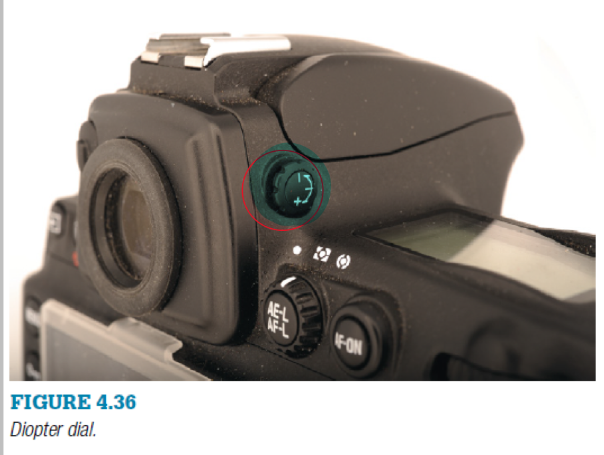
Diopter Adjustment for Viewfinder:
Adjustment allows photographers to see clearly through the viewfinder based on an individual’s vision.
Memory and Storage
Memory Cards:
Types include CompactFlash and Secure Digital High Capacity (SDHC) Cards.
Battery Specifications:
Importance of ensuring battery and memory storage are managed correctly.

Lenses and Filters
Zoom Lenses:
Used for convenience, emergency, versatility; specific examples include Nikon DX AF-S NIKKOR 55-200mm.
Camera Filters:
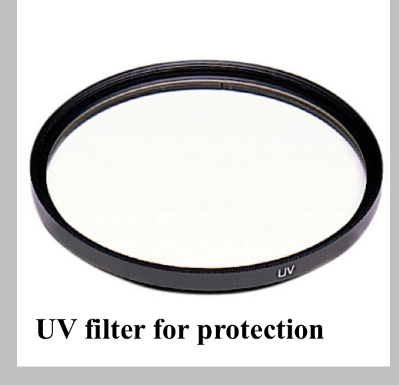
UV Filters for lens protection, haze reduction, and warming.
UV Filter:
Polarizing Filters for enhancing color and reducing glare.
Polarizer:
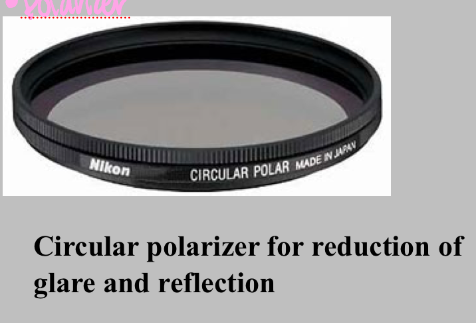
Understanding Optical Distinctions
Normal Lens (50mm):
Specific focal lengths for different formats to maintain image integrity, with details on various formats.
Fundamental Terms
Exposure:
The amount of light reaching the camera sensor which creates visual data over time.
Exposure Stops:
Changes in the original exposure that either halve or double light intensity.
Depth of Field:
Defined as the distance between the nearest and furthest objects in “acceptably” focus.
ISO:
A camera setting that measures the level of the sensor’s light sensitivity.
Perspective in Photography
Normal lens focal length for sensor format produces the most accurate “picture” or reality
WHY IT IS IMPORTANT:
- Do not want to produce any warped of distorted images that impact the validity/accuracy of the crime scene OR piece of evidence.
- MAIN PICTURE GOALS: The photograph production should be replicated as if you are viewing the crime scene in person.
Lenses Note:
Certain cameras will only obtain zoom lenses, because of this, it is important to ensure awareness of the focal lens length
Only use wide angle and telephoto focal lengths when necessary
Inverse Square Law (*)
Description:
The law describes how light intensity decreases as distance from the source increases.
Inverse proportional relationship
Quantitative Impact:
If the distance is doubled, the intensity of light is quartered
If the distance is halved, intensity of light is quadrupled.
Practical Example:
Changes in exposure settings (sun, street lamp, flashlight) as one moves further or closer to a light source.
Main takeaway: The larger the distance is from the light source, the smaller/decrease there is of light to be able to reach you.
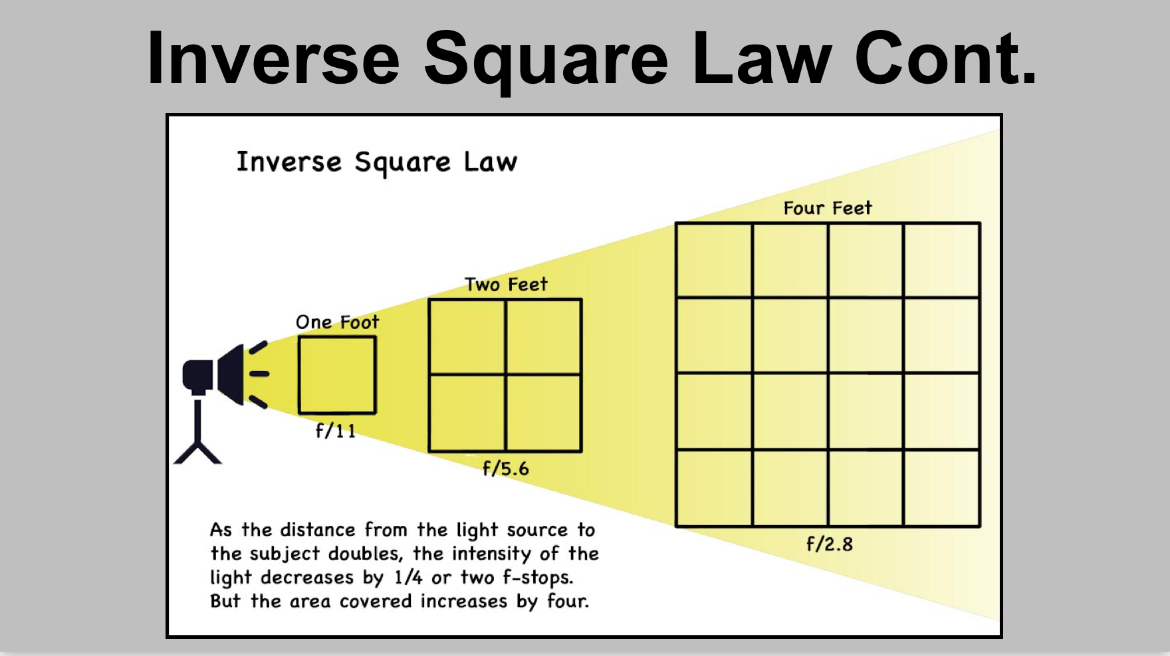
Exposure Variables
Four main variables affecting exposure:
Shutter Speed
Aperture
Film Speed/Digital ISO
Ambient Lighting of scene of lighting that can be used
The Exposure Triangle
Components:
ISO, Aperture, Shutter Speed
Visual Representation:
More Noise = Brighter
More Motion Blur = Brighter
More Shallow DOF = Brighter
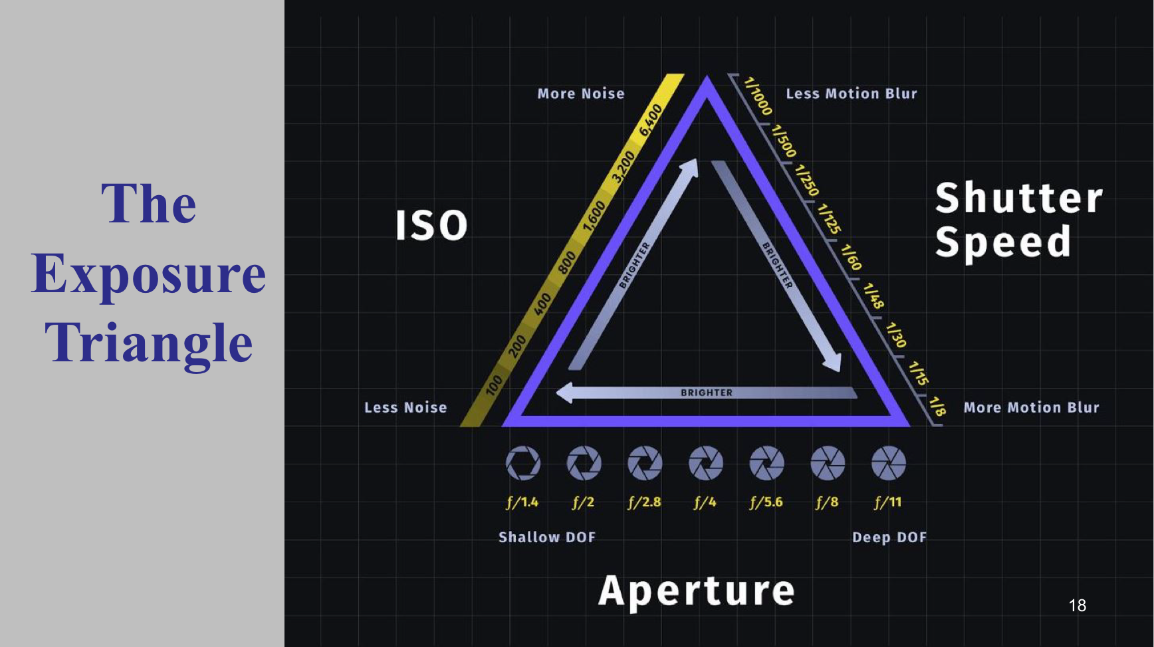
NOTE^: The opposite of these parameters is still proportional. Example : Less Noise = Less Brighter/Dimmer
Noise
Definition of noise in photography and its relation to high ISO settings
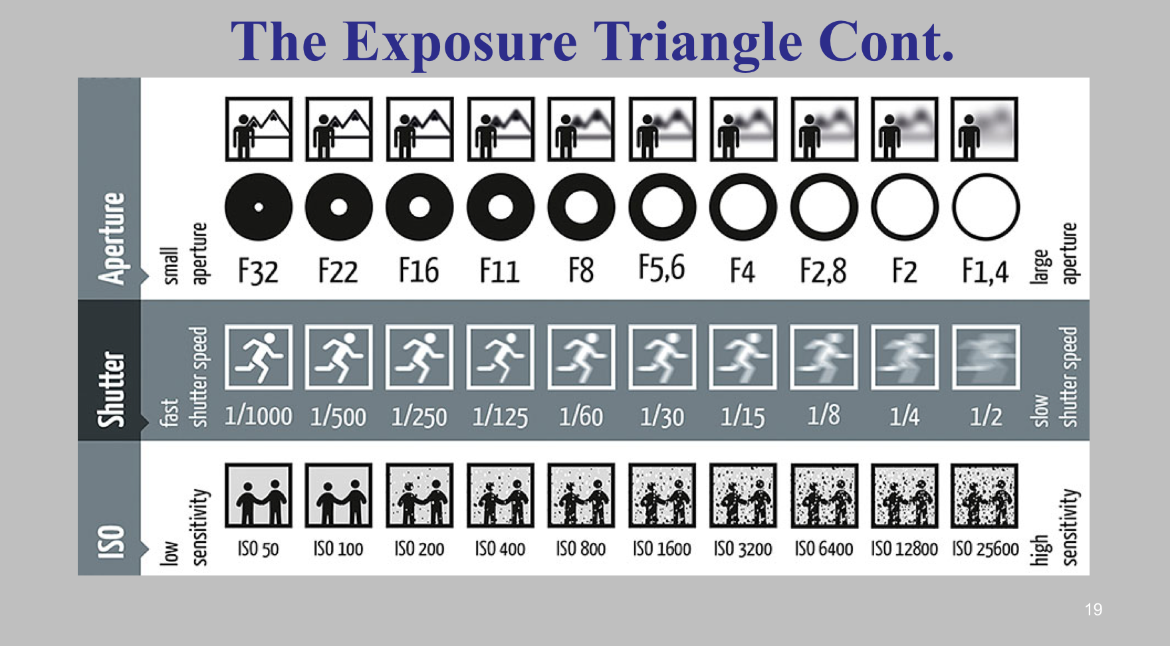
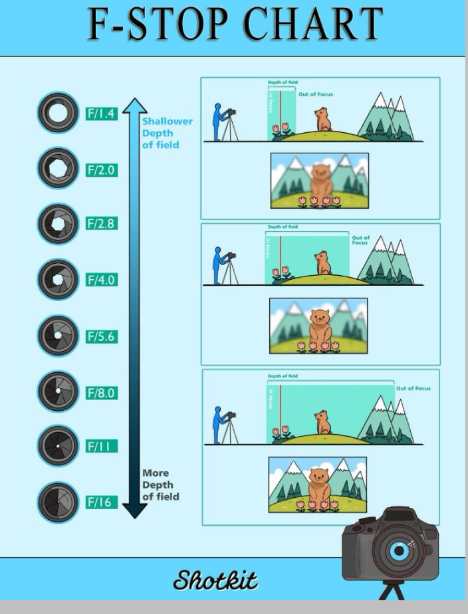
F-Stop Mechanism
Definition:
The f-stop number is calculated as the focal length divided by the diameter (D) of the lens opening:
Impact on Depth of Field:
Explains how varying f-stop settings influence depth of field and artistic choices in photography.
The Importance of ISO Numbers
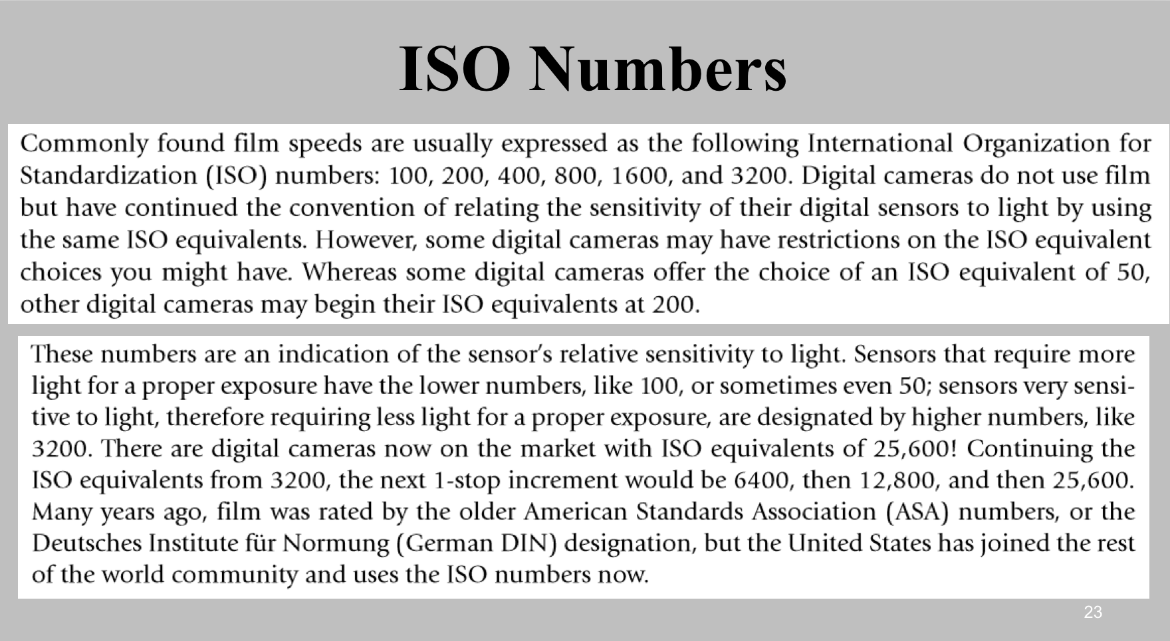
Purpose of ISO: The setting provides information on how sensitive the camera is to light.
ISO Range:
Typical ranges: 100 to 3200, relevant to both film and digital photography.
A low ISO value (i.e 100) means that there is LESS sensitivity to light which PRODUCES a clearer (higher resolution) image.
A high ISO value (i.e 3200) means that there is more sensitivity to light which PRODUCES a grainy image. Note: This also means it works better in the dark.
Summary on range:
Low ISO produces clearer images; higher ISO better for low light but results in graininess.
Forensic Aim: We want to produce examination quality images which correlates with a low ISO value of 100.
ISO Numbers (cont.) :
18% Grey Card
Function:
A tool for used to reduce black noise in digital cameras and set more accurate exposure & white balance.
What is it:
- Flat card reflecting 18% of light falling on it, hence showing the grey tone.
Digital cameras are already calibrated to assume that the average scene will reflect 18% of the light present.
Shutter Speed Dynamics
Definition:
Refers to the time the shutter remains open.
Speed Effects:
Fast shutter speeds (i.e 1/1000th of a sec) will → let LESS light and can do freeze motion
Slow shutter speeds (i.e ½ of a second) → lets MORE light but can cause risk to motion blur.
Recommended shutter speed is 1/60 in order to mitigate blur caused by handheld camera images.
Mitigating Camera Movement
Types of Movement:
Addressed are
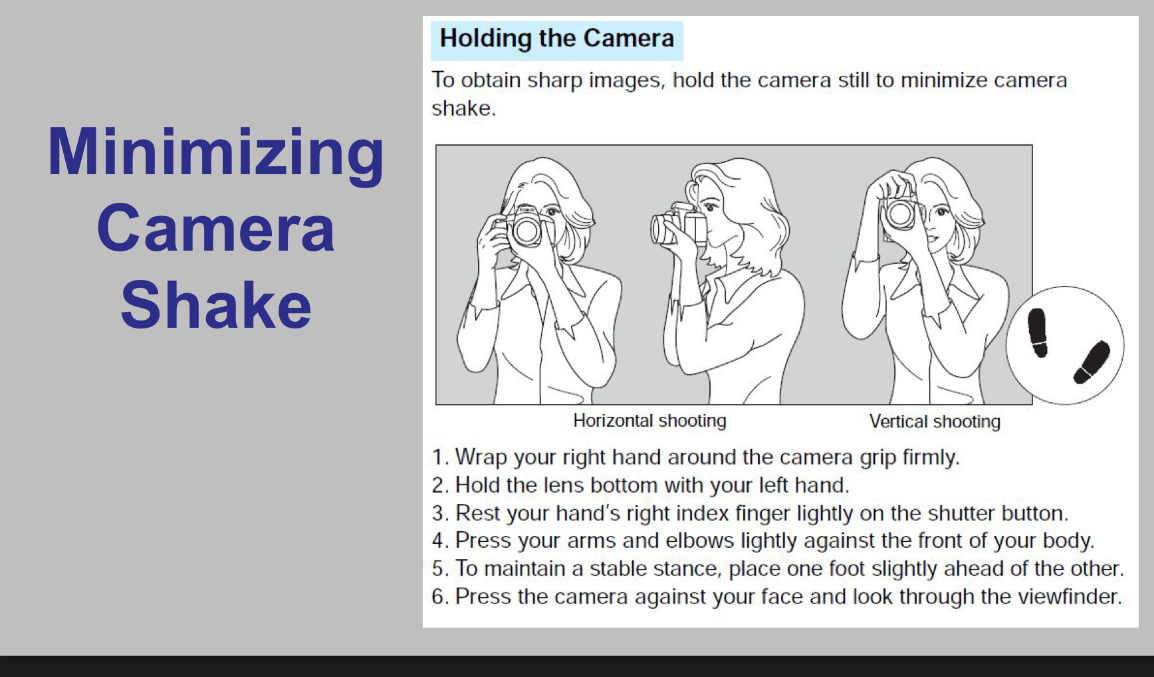
1) Photographer’s body movement
- Camera not being held properly → Solution : use tripod
- Eliminating Blur from hand hold → Solution: use shutter speed closest to the focal length of lens on camera but inverted to a fraction.
2) Subject motion
- A faster shutter speed will allow faster motion to be “frozen”. (Ex. 1/125 for walking whereas 1/2000 for freezing airplane propellers in motion)
-Exception for slow shutter speed is when eliminating blur from weather such as rain or snow
^So while its beneficial to document the weather conditions from a scene, images without the obscurity or blur from weather are needed.
3) Camera movement :
Camera Maintenance
Best Practices:
Use of straps and lens care
Protect from harsh elements
Proper storage/carrying case
Store in well ventilated, cool, dry environment
Ensure Camera is Off:
Turn camera off BEFORE : changing memory, batteries, or lenses.
Do NOT turn camera off before : images finish downloading.
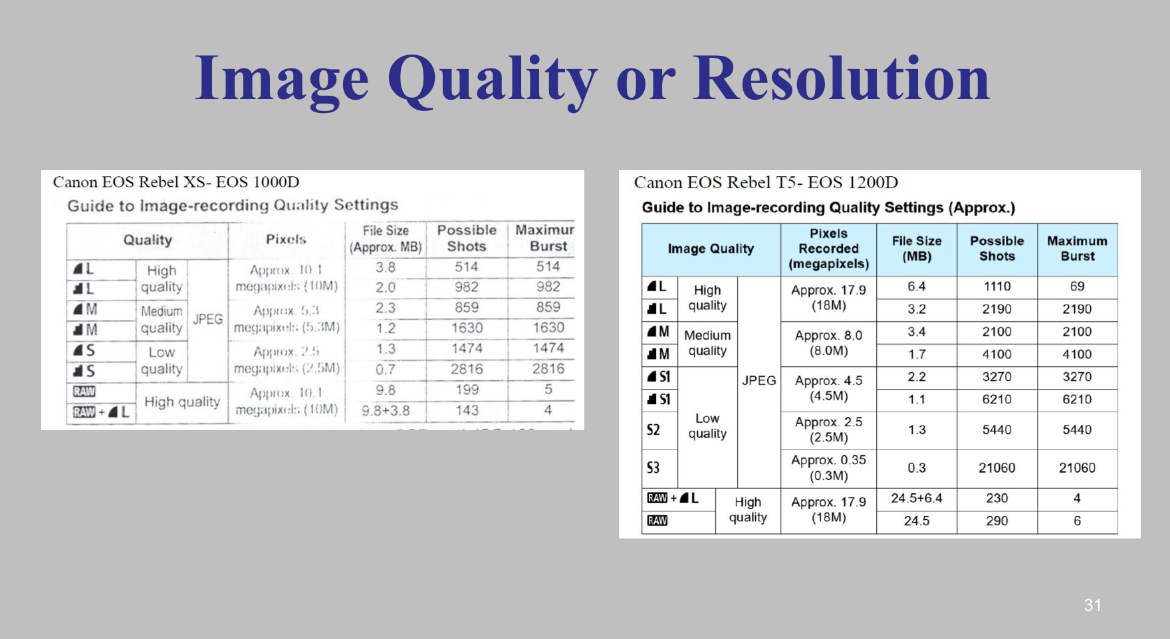
Image Quality Settings
Resolution Parameters:
Case Study: TWA Flight 800 Accident
Event Summary:
Overview of the TWA Flight 800 incident on July 17, 1996, detailing flight circumstances and the reconstruction of the crash scenario.
Image Quality Analysis
Comparative Quality Assessment:
Discusses high-resolution vs low-resolution image qualities in forensic applications.