Size Reduction in Processing
Introduction
Size Reduction (Comminution): An essential process in the preparation of solid materials to create specific particle sizes and shapes. (Can use grinder to reduce size)
Increases surface area for chemical reactions.
Liberates valuable nutrients or active ingredients.
Energy Intensity:
Size reduction is energy-intensive; accounts for 5% of all electricity generated.
Industrial processes are generally less than 1% efficient due to energy used in creating new surfaces.
Temperature of product increase because use of energy.
Grinding
Energy Usage: During fracture, energy used mainly creates new surfaces; most energy lost as heat.
Forces in Grinding: Four types of force can be applied: compression, impact, shear, or combinations thereof.
Stressing Mechanisms in Grinding
Three mechanisms responsible for particle size reduction:
Between Two Surfaces: Low velocity (0.01 – 10 m/s) leads to crushing and attrition.
Single Solid Surface: High velocity (10 – 200 m/s) leads to impact fracture and attrition. Involve inpact fracture plus attrition of the solid material.
Carrier Medium: Stress is applied via a medium in wet grinding.
Examples of Grinding Equipment
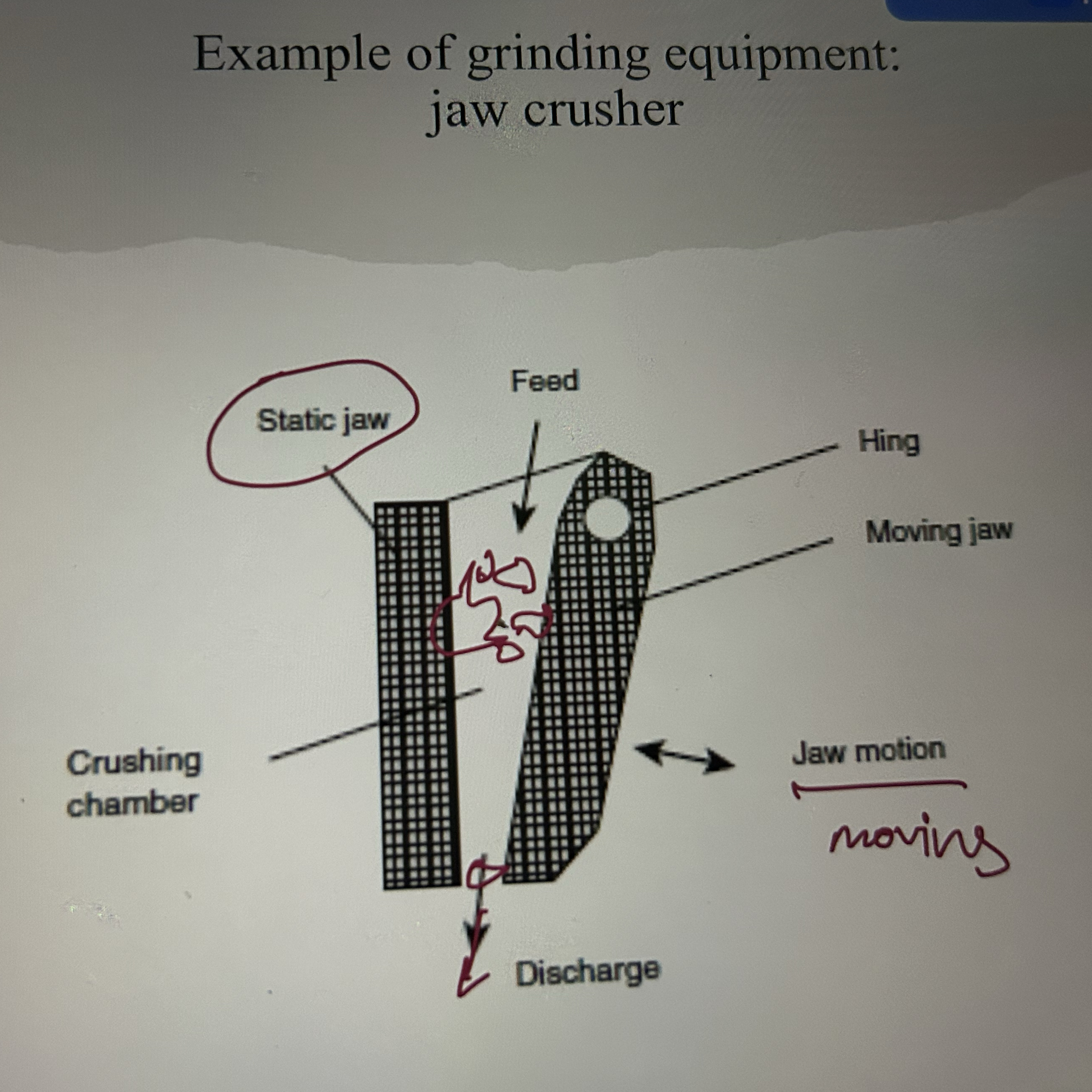
Jaw Crusher:
Acts like a pair of giant nutcrackers.
Material is crushed between a fixed jaw and a movable jaw.
Satu fix, satu gerak. (Mcam jaw)
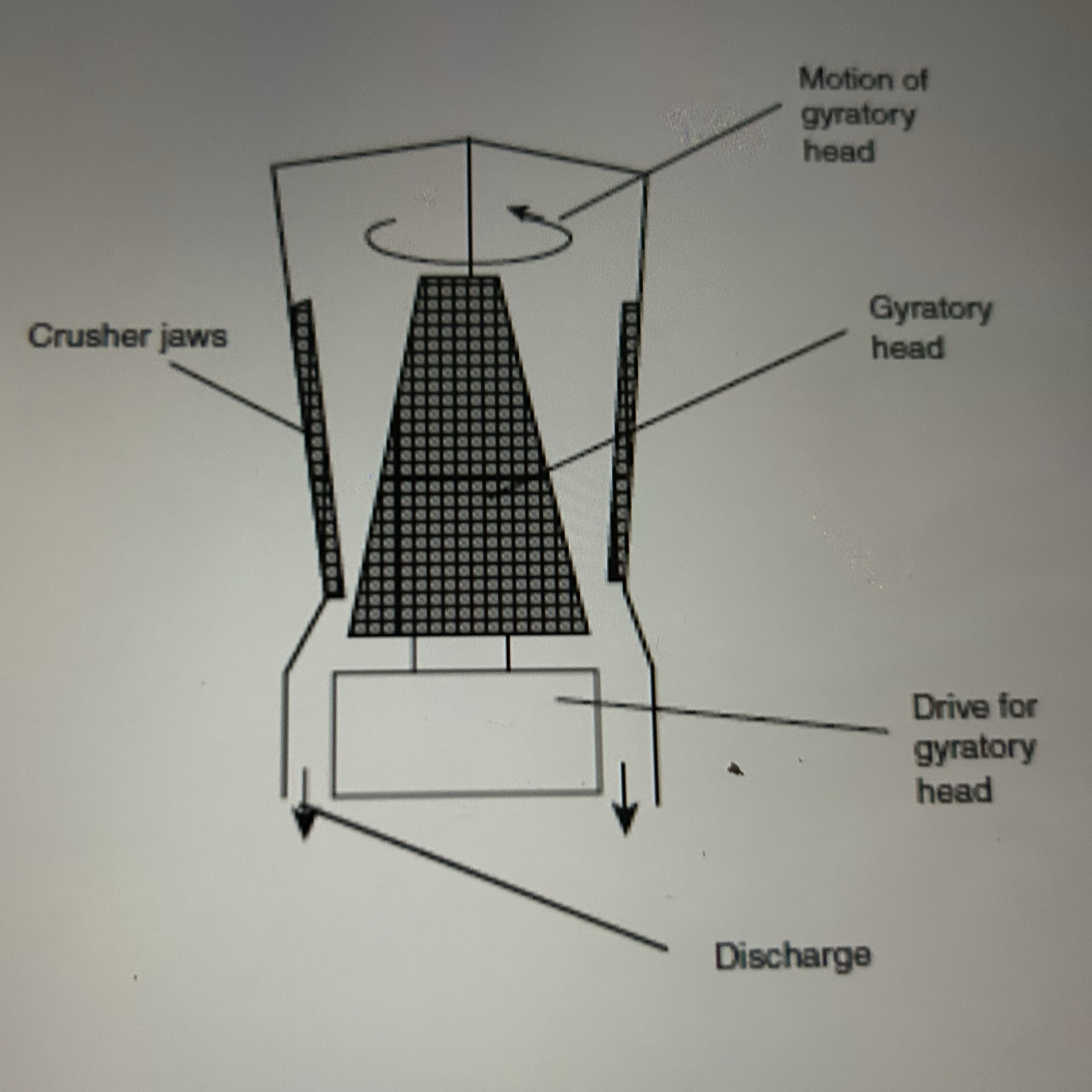
Gyratory Crusher:
Features a fixed jaw shaped like a truncated cone.
Another cone rotates inside, discharging material when small enough.
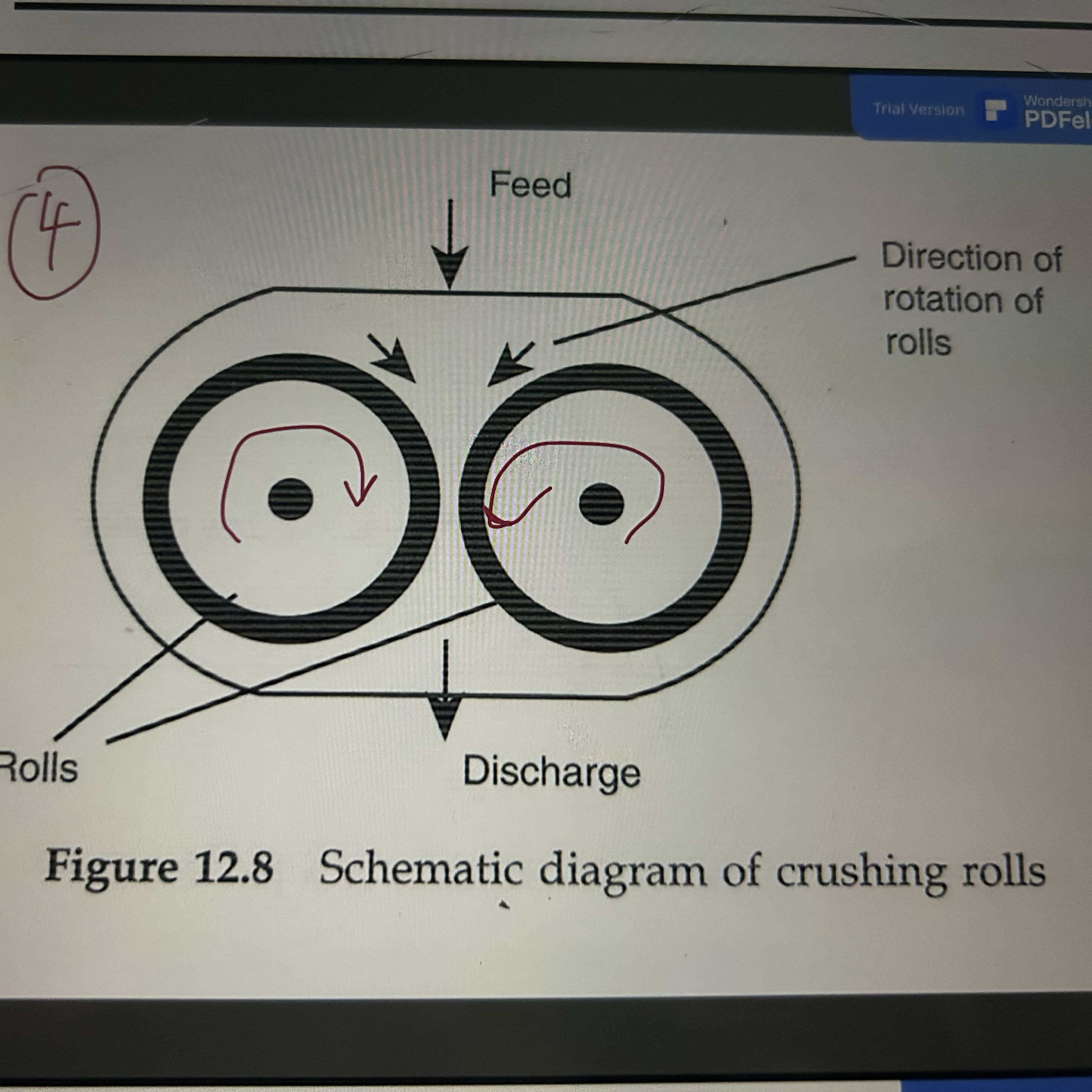
Crushing Roll: (involve 2 silinder)
Two cylindrical rolls rotate, opposite direction, horizontal and side by side with an adjustable gao between them.
Material is cracked mainly due to pass through the rolls.
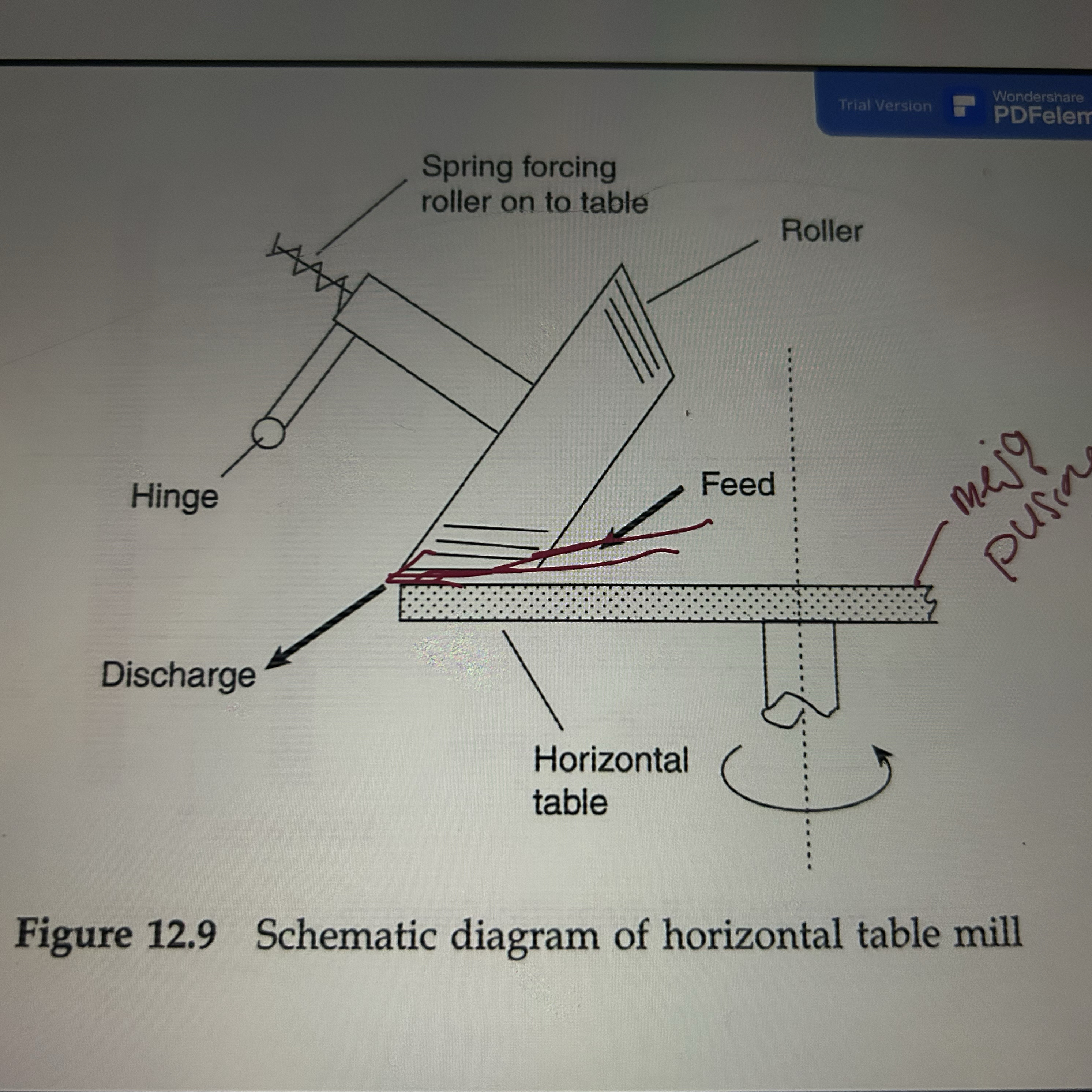
Horizontal Table Mill: (ada meja and meja yg akan pusing)
Material falls onto a circular rotating table and is propelled outward.
Thrown out by centrifugal force
Material passes under roller and crushed
Additional Grinding Equipment
Hammer Mill:
Rotating shaft with attached hammers, fed materials leave when small enough.
Device rotate in cylinder
Fed into cylinder by gravity force or gas stream.
Pin Mill: Consists of circular discs with projecting pins; one disc rotates producing impact/attrition.
Fluid Energy Mill: Utilizes turbulence from high-velocity jets for interparticle collisions.
Sand Mill: Contains stirred bed of sand/glass beads; slurry fed at the bottom.
Colloid Mill: Slurry passes through the space between a rotating cone and a fixed cone.
Ball Mill: Rotating cylindrical shell with balls, operates below critical speed to avoid centrifuging.
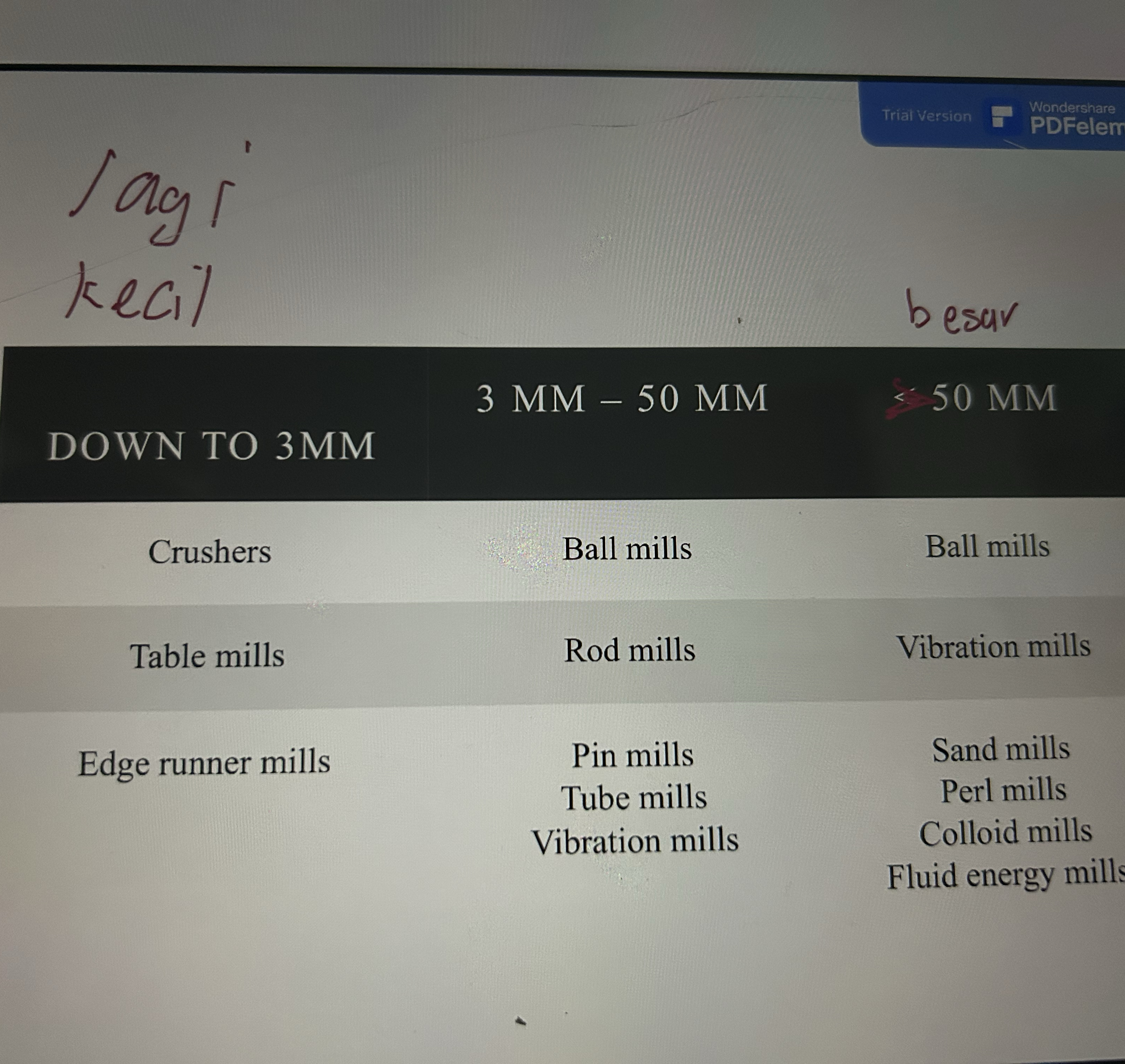
Ball, Colloid, Sand, Fluid energy : untuk reslt yg besar >50mm
Pin, ball, rod medium crysh (3-50mm)
Crusher, table mill, Edge runner mill : small size (<3mm)
Size Reduction Categories
Size range terminology:
Coarse (kasar) Crushing: 1 – 0.1 m
Crushing: 0.1 m
Fine Crushing// Coarse grinding: 1 cm
Intermediate Grinding/Milling: 1 mm
Fine Grinding: 100 μm
Ultrafine Grinding: < 10 μm
Factors Influencing Equipment Selection (choice of size reduction.)
Material PropertiEs
Hardness: (measure to resistance to abrasion)
abrasiveness (mcm clean or polish surface la), : linked closely to hardness (most important factor).
toughness( takmau brittles),; resistance utk permulan of crack. Bila material lagi tough, lebih banyak enegy kena pakai.
cohesivity; ada tendency utk particles melekat each other to surface .(because moisture content so use la wrt grinder)
fibrous nature: material yg fibrous must comminated in shredded/ cutters which based upon the hammer mill design
low melting point affect equipment choice.: heat mmg akan occur during grinding and can cause melting of material. (May increase toughness, inceease cohesivity/adhesivity.) so overcome using cold air (carrier medium during grinding.
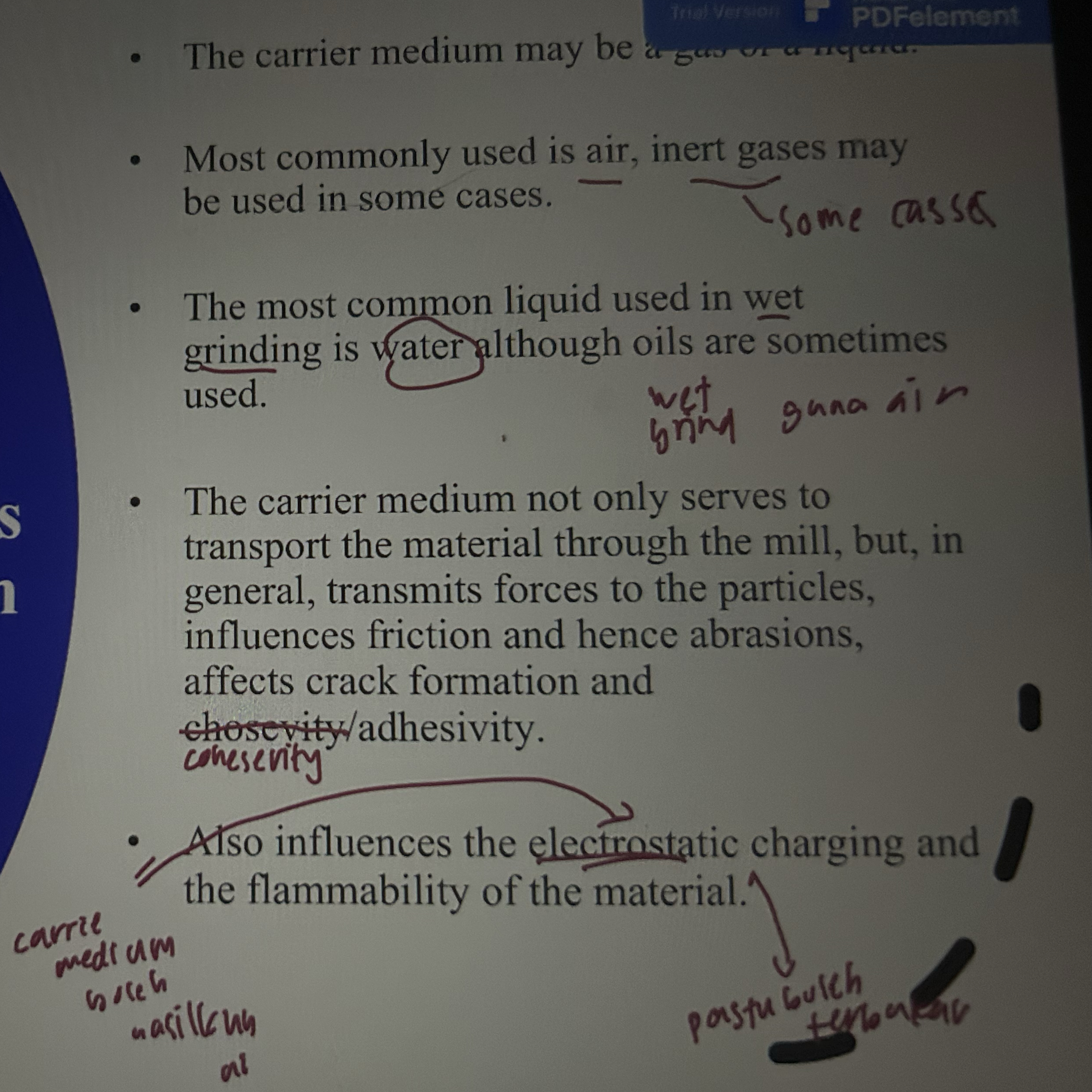
Carrier Medium: Can be air (gas) or liquid (water/oil). Influences the milling process regarding transport, friction, abrasions, and properties of materials. Carrier medium boleh hasilkan electrostatic
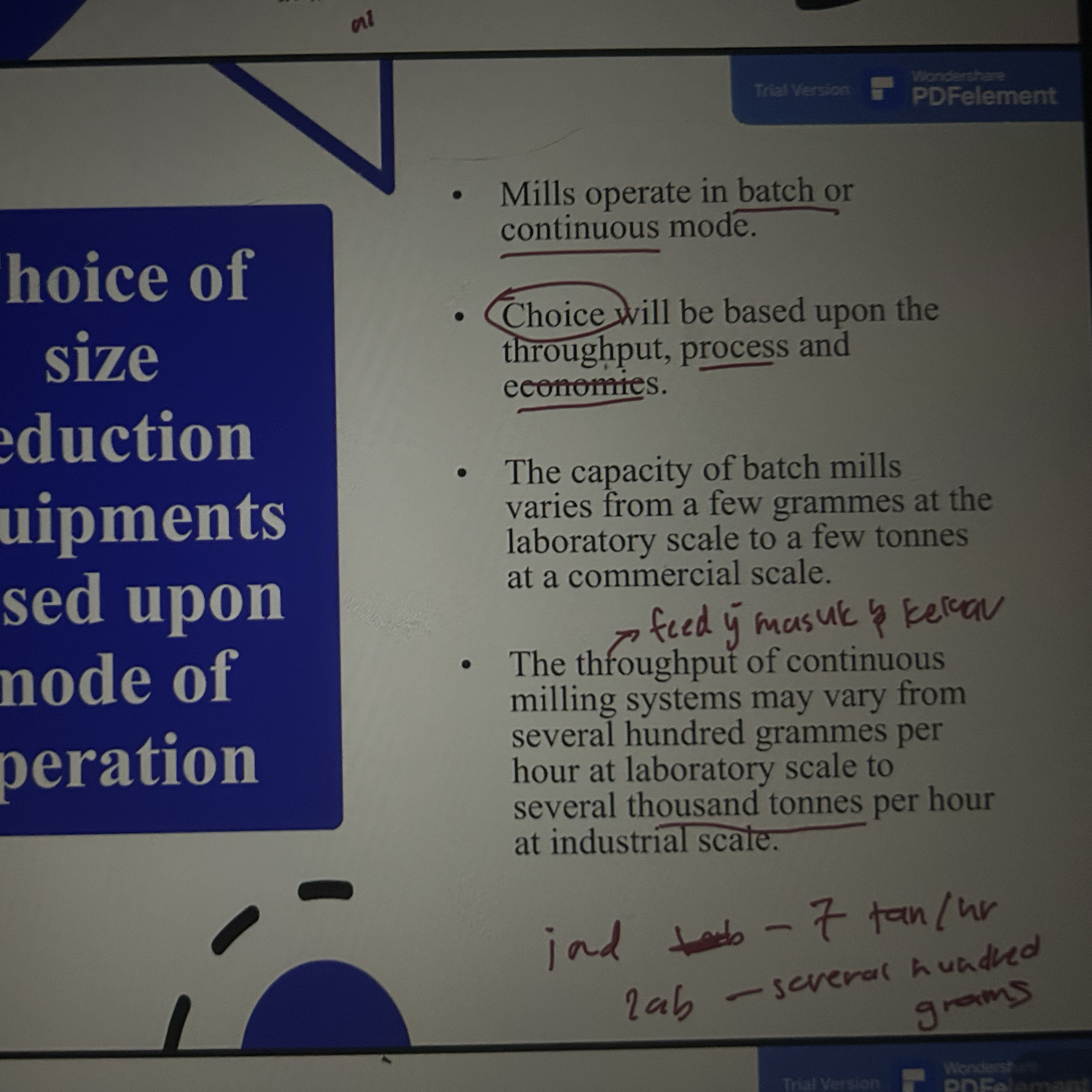
Mode of Operation: Batch or continuous; depends on throughput, processes, and economics. (Based on capacity: Lab scale or industry scale.)
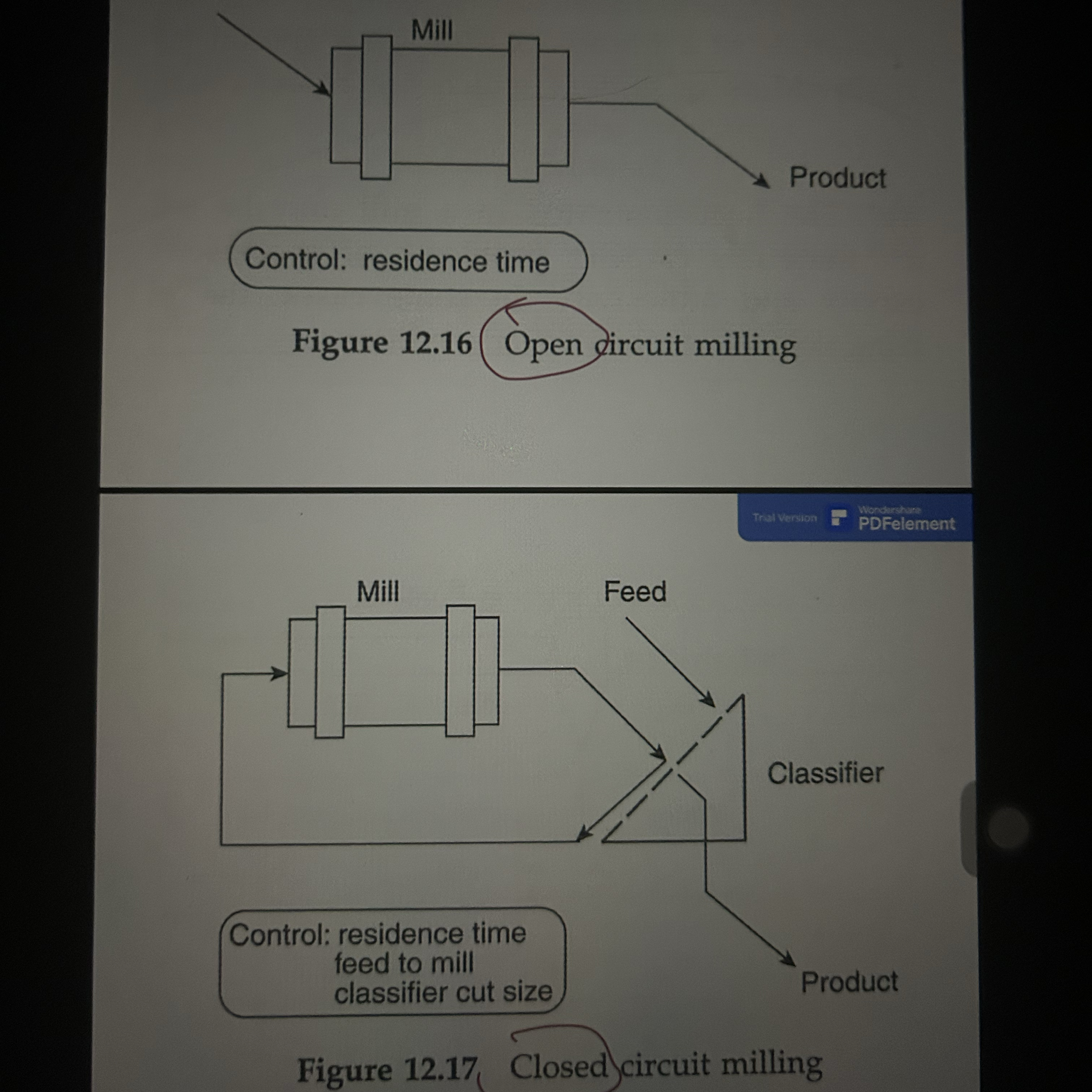
Millling circuits can be open or closed milling
Open Circuit Milling: Material passes through once; variables limited, can control residence time. Thus size produc may be controlled over certain range by varying material residence time.
Closed Circuit Milling: Material is classified and returned for further processing, offering more control. Bila size besar, dia boleh patah balik untuk kecilksn. More flexible since both size and distribution can be controlled
Energy in Grinding
Efficient use of energy is essential due to continuous inefficiencies.
Energy Laws:
Kick's Law: Energy required is proportional to size reduction ratio.
Rittinger’s Law: Energy required is proportional to the change in surface area.
Bond's Law: Energy relates to reducing unit mass from an infinitely large particle size to a specific size (100 μm).
Example Calculations
Kick's Law Equation:
Rittinger’s Law Equation:
Bond's Law Equation:
Case Studies
Example 2.1: Material crushed from 25 mm to 7 mm requires energy measurement using different laws (Kick's, Rittinger’s, and Bond's).
Use these laws to determine energy requirements for lower particle sizes and assess machinery effectiveness.