Introduction to Biochemistry(more in depth)
Atom Structural Review
Review of Atoms
Atoms have a nucleus that contains protons (p+), neutrons (n0) and electrons (e-). Atomic number = the number of p+. Atomic Mass is the number of p+ and n0.
Atoms and Chemical Reactions
%%Rearrangement of electrons%% when atoms/molecules collide. Electrons on the outer shell determines rearrangement.
molecule we observe in biochemistry.
Intramolecular Forces
%%Chemical bonds within a molecule%%. Also called covalent bonds.
Covalent bonds occur when %%2 non-metal atoms%% overlap so they can %%share valence electrons.%%
Electronegativity
An %%atoms ability to attract a shared pair of electrons wh%%ile in a covalent bond.
%%The higher the EN, the closer the electrons are to the nucleus.%%
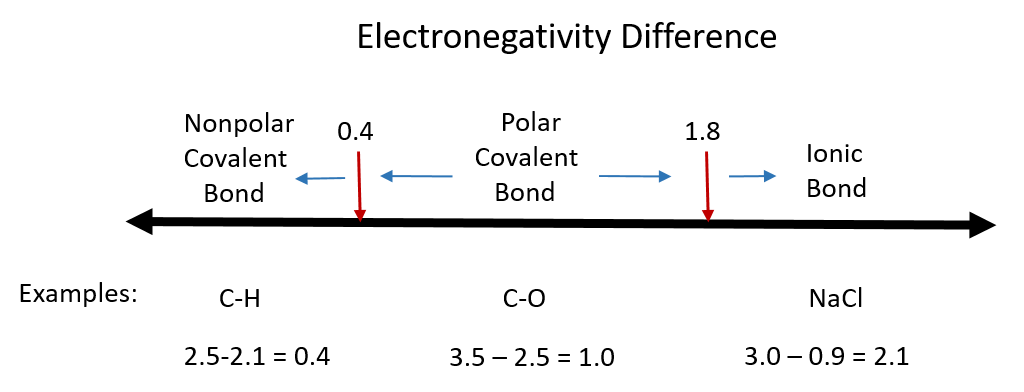
%%If one atoms EN is higher than the others it will result in a polar covalent bond. If both atoms have an equal EN it will result in a non-polar covalent bond.%%
%%The atom with the lower EN gets a positive partial charge and the atom with the higher EN gets a negative partial charge.%%
The electronegativity difference between 2 atoms %%can be used to determine what bond will form%%. (Ionic, covalent, non-polar)
Page 13 #1-5 in McGraw-Hill Ryerson Biology12 Textbook.
- An atom is the smallest unit with elemental properties
- The difference between Carbon-12 and Carbon-14 is that Carbon-14 is a radioisotope and is unstable compared to Carbon-12. Carbon-12 is the most common carbon.
- Difference between ionic bonding and covalent bonding is that ionic bonds is when there is a transfer (gain or loss) of electrons, whereas covalent bonds is when the electrons are shared between atoms.
- Water is polar due to Intramolecular forces. Water is also hydrophilic and does not attract hydrophobes.
Factors Affecting Chemical Reactivity
- The number of electrons in the outer shell
- The number of energy shells
- Electronegativity
- Ionization and Valence
Chemical Bonds
Types of Chemical Bonding
- Ionic. %%Electrons are lost or gained%% between atoms, %%results in charged ions that attract%%. Ionic bonds are relatively weak and break apart in water.
- Covalent. %%Electrons are shared between atoms%%. Single, double and triple bonds may form. Energy in bonds depends on the EN of surrounding atoms. Molecules with double and triple bonds are “unsaturated”. Single bonds are “saturated”.
- Polar covalent. %%Unequal sharing of electrons.%% Creates molecules that have polar sections. Eg. Water.
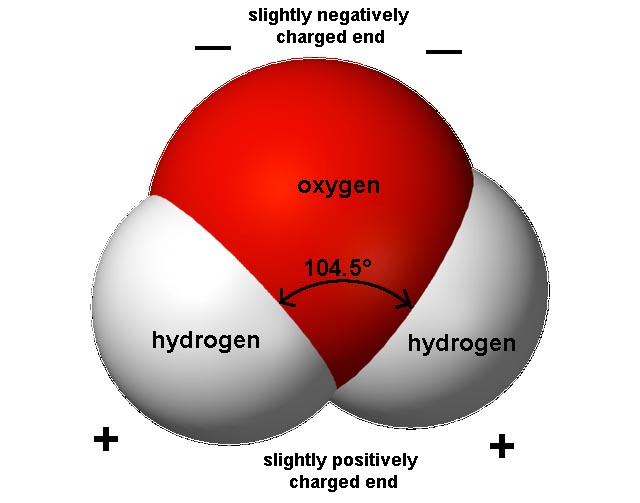
- Hydrogen bonds. A %%bond between molecules%%, created when a negative side of a molecule is attracted to a positive side of a molecule.
Functional Groups
Groups of molecules that %%give specific properties to bigger structures.%% %%They are usually involved in chemical reactions%%.
Types of Functional Groups
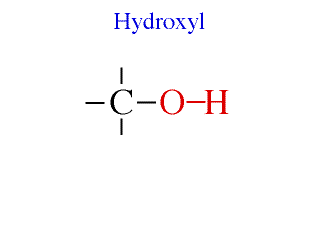
- Hydroxyl group “OH”
Part of the alcohol family. Eg. Carbohydrates.
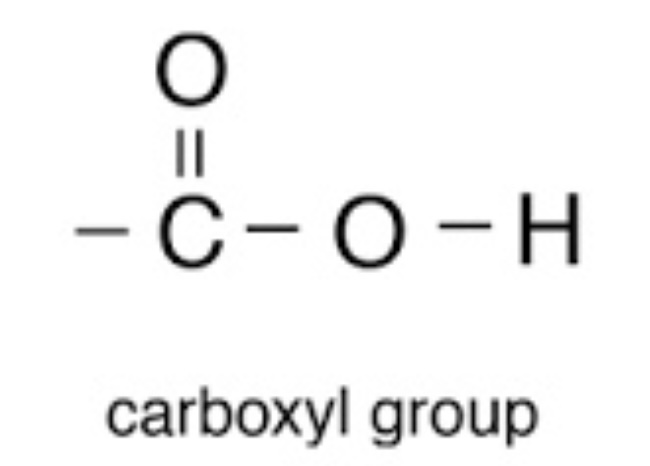
- Carboxyl Group “COOH”
Part of the carboxylic acid family. Eg. Fats and proteins.
- Carbonyl groups “C=O”
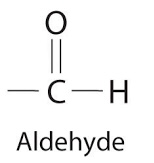
Aldehyde- carbonyl group is on a terminal carbon.
Ketone- carbonyl is located in the middle of the molecule.
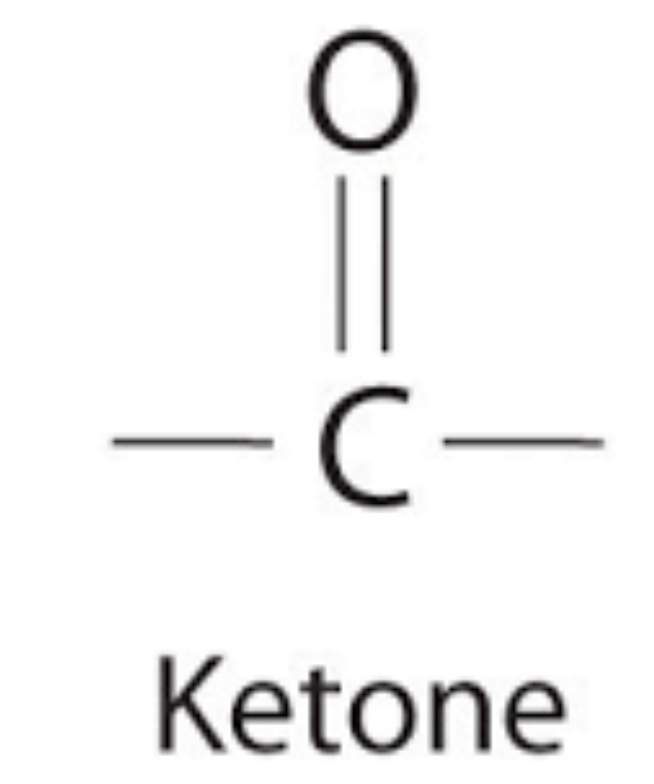
Eg (for both). Sugars.
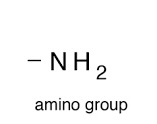
- Amino group “NH2”
Causes an amine. Amino group has a partial charge of its N which attracts the Hs. Animo Acids create proteins.
Page 17 #1-2, 4-13 in McGraw-Hill Ryerson Biology12 textbook
- Radioistopes emit gamma rays and are used in MRI, CT scans, etc.
- An example of a Intramolecular force would be the bond between H and O in an H2O molecule. An example of an intermolecular force is 2 H2O molecules bonded together.
- Intramolecular bonds are stronger because they make up molecules.
- H2O molecules attract together due to the polar side. The -ve sides attract the +ve sides and vice versa.
Metabolism
Chemical reactions in the cell that deal with energy.
3 Main Types
- Energy is released
When new bonds are formed %%reactants release energy as they form less energetic products.%%
Eg. Cell respiration
→ Exergonic- the process of energy being released.
- Energy is stored
Energy is %%absorbed by less energetic reactants creating more energetic product.%%
Eg. Photosynthesis
→ Endergonic- the process of energy being absorbed.
- Transfer of Energy
Most common reaction in biology. It occurs in both exo/endergonic reactions.
Redox Reactions (Reduction-Oxydation)
The %%process of losing electrons is called oxydation%% and the %%process of gaining electrons is called reduction.%%
| Traits of Oxydation | Traits of Reductions |
|---|---|
| - loss of e- and/or h+ | -gain of e- and/or h+ |
| -loss of energy | -gain of energy |
| -gain of oxygen | -loss of oxygen |
Molecular Reactions
%%Interactions of molecules with specific functional groups%%. It results in different organic molecules.
Types of reactions
- Condensation
Putting molecules together. A %%larger molecule is produced with an H2O.%%
- Hydrolysis
Taking molecules apart. %%Smaller molecules are produced%% with %%H2O being used to split them up.%%
Types of links
- Ether linkage
B/w between 2 hydroxyls
- Ester linkage
B/w a hydroxyl and carboxyl
- Anhydride
B/w between 2 carboxylic acids
- Peptide(amide)
B/w between carboxyl with amino
Page 36 #25-30 in the McGraw-Hill Ryerson Biology12 textbook
- a salt and a water are produced after a neutralization reaction
- Electrons are gained by another molecule in a reduction reaction
- Because electrons cannot float freely, if one molecule loses an e-, another molecule MUST gain the e-.
- A molecule in its reduced form has more energy that a molecule in its oxidized form due to the gain of an electron.
Carbohydrates
Functions: %%Energy and structure%%
Types of structures:
- Simple Sugars(monosaccharides)
%%The building blocks%%. Identified by a ketone or aldehyde group and the # of carbons in the structure.
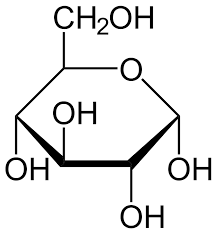
Eg1. Glucose C6H12O6 - %%if the “OH” on the C1 is below the midline of molecule it is called an alpha-glucose. If it is above the midline it is called a beta-glucose.%%
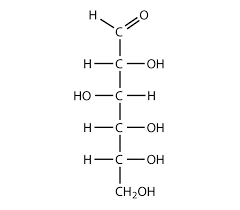
%%A 6 sided pyranose ring is formed in water%%
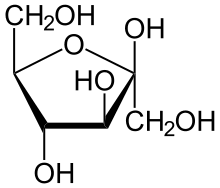
Eg2. Fructose(isomer)C6H12O6
Eg3. Ribose (5C sugars) (DNA) C5H10O5
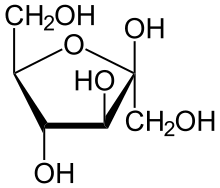
- More Complex Sugars