Paging And Pagetables In Operating Systems
Paging and Page Tables in Operating Systems
Paging is a memory management technique used by operating systems to efficiently manage memory. It divides the physical memory into fixed-sized blocks called pages and logical memory into equal-sized blocks called page frames.
The page table is a data structure used by the operating system to keep track of the mapping between logical addresses and physical addresses. It stores the base address of each page frame in physical memory.
Each process has its own page table, which is used to translate logical addresses to physical addresses. The page table is typically stored in the process's control block.
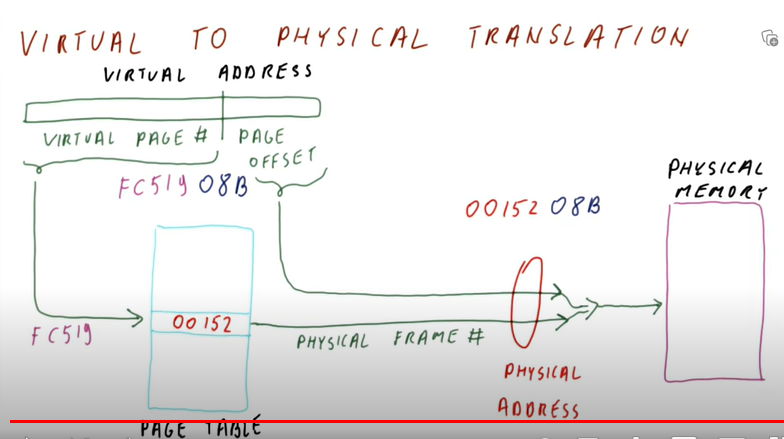
When a process references a logical address, the operating system uses the page table to translate it to a physical address. This translation involves two steps:
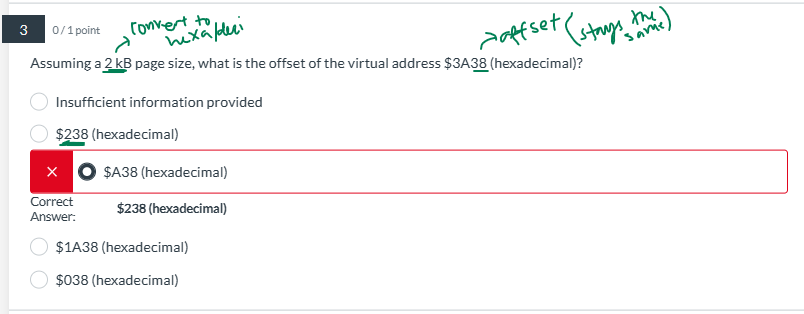
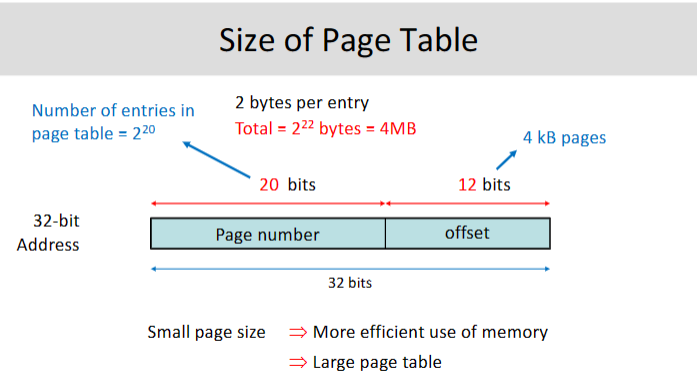
The logical address is divided into a page number and an offset within the page.
The page number is used as an index into the page table to obtain the corresponding physical page frame number. The offset is then added to the base address of the physical page frame to get the final physical address.
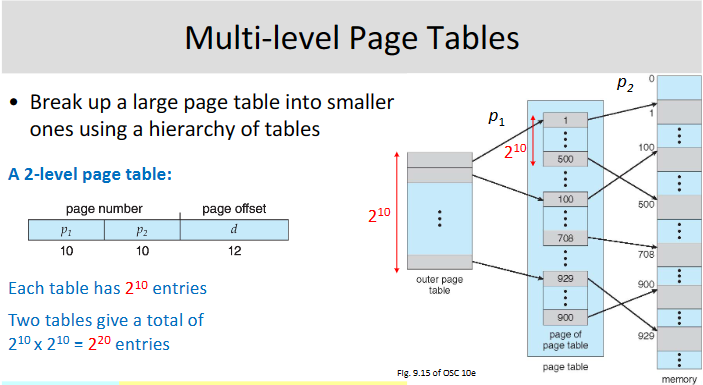
The page table is usually implemented as a hierarchical structure to reduce its size and improve efficiency. It consists of multiple levels, with each level containing a subset of the page table entries.
To access a page table entry, the operating system traverses the levels of the page table hierarchy until it reaches the desired entry. This process is known as page table walk.
Paging allows for several benefits, including:
Memory protection: Each page can be assigned different access permissions, preventing unauthorized access to memory.
Virtual memory: Pages can be swapped in and out of secondary storage, allowing for more memory space than physically available.
Memory sharing: Multiple processes can share the same page, reducing memory consumption and facilitating inter-process communication.
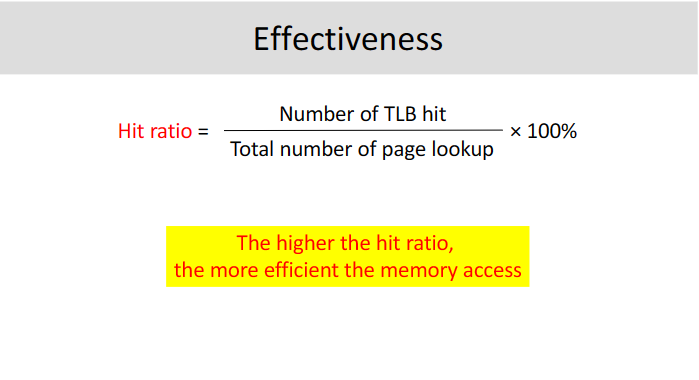
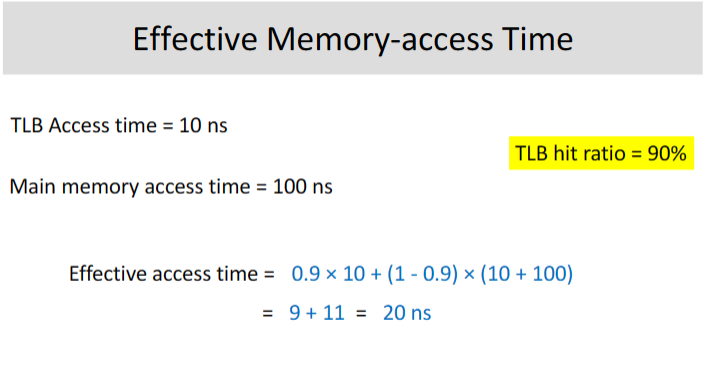
However, paging also introduces some overhead, such as the need for frequent page table lookups and the possibility of page faults when a required page is not present in physical memory. These issues are mitigated through techniques like caching and demand paging.
Overall, paging and page tables play a crucial role in the efficient and secure management of memory in operating systems. They enable processes to utilize memory effectively while providing isolation and protection between different processes.