lecture ?: sandy shores and micro organisms
sample collected on 27 oct morning at beach at fornebu
labs on thrusday and friday
collected top 20 centimetres
used using a bailer in the hydropsammon
preparation - incubation - examination
place sand sample in petri dish
cover with lens paper
the organisms should crawl onto the coverslips and those slips will be moved onto a microscopy slide
add coverslips and/or microscopy slide
examination of coverslips under light microscope
teh habitat
beach
influenced by:
temperature
salinity
wave action (wind, tides)
grain size
light
depending on the coarsness of the grains, it can control how much light can penetrate into the sand
around the world, the temperature varies greatly
nutrients
the organisms that live in teh beach need nutrients to grow
the organic material that washes up onto the beach decompose, which provides enough nutrients to the animals living in that area and microbes in the sand
poor water has more nutrients than the water above
dryness - wetness
the swash zone → never totally dries out
beaches can be very different:
some can be very sheltered or very exposed
protected beaches:
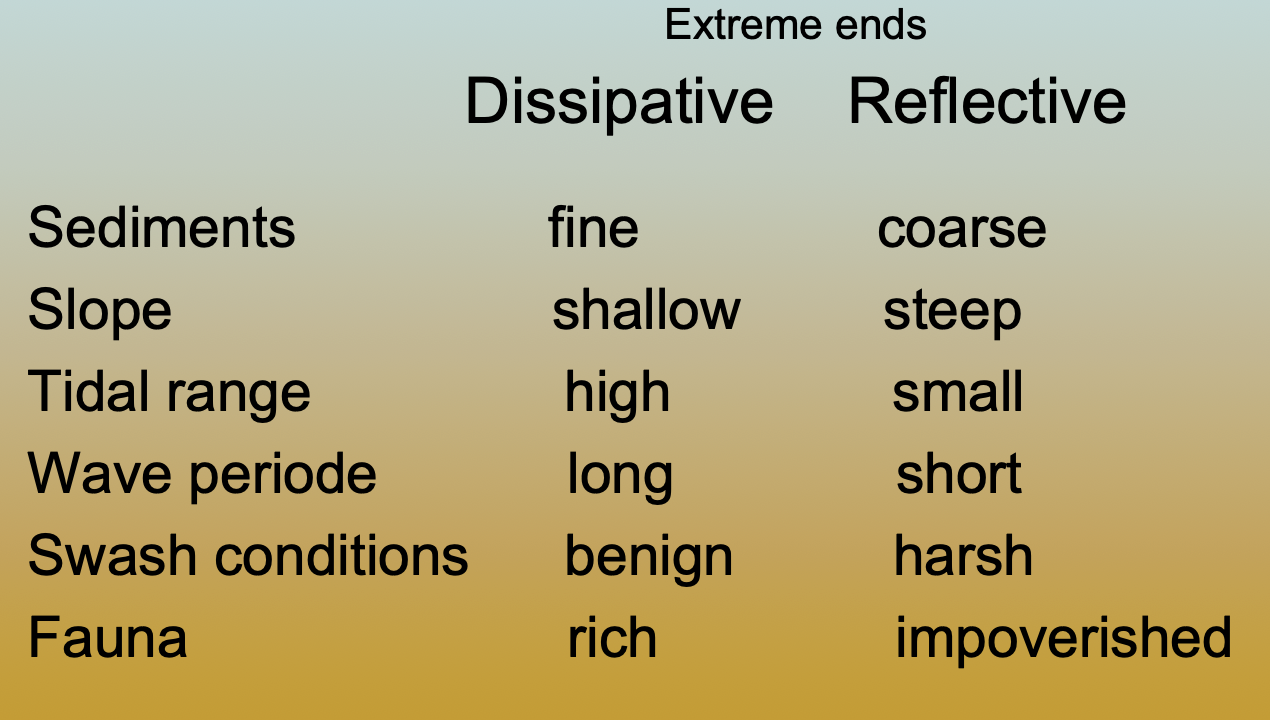
fine sediments
large wave periods
shallow slope
benign swash conditions
rich fauna
exposed beaches:
sand grains are larger
small wave periods
steeper slope
harsher swash conditions
fauna less rich
these are the extreme ends on the type of beaches
morphodynamic spectrum
dissipative beaches →
reflective beaches →
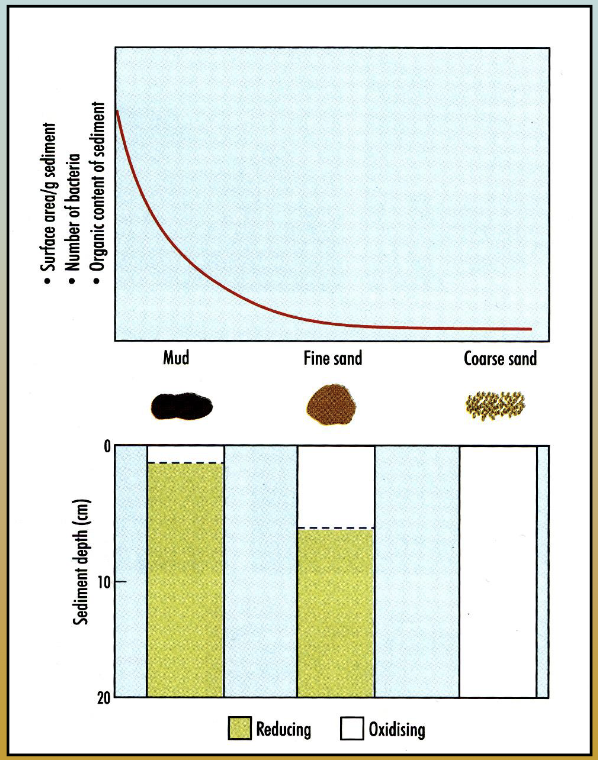
average particle size affect physico-chemical conditions
small particle size - large surface
mud retain water better than sand
gradients on concentration of free oxygen
in mud teh surface area, the number of bacteria, and organic ocntent of hte sand are high
in sheltered ares, the oxygen is depleted withing the first 10 cm, due to low wave action. when there is highere wave actions in more exposed beaches, the sund in the beach is moved more around and oxygen is penetrated deeper
size ranges of grains and organisms
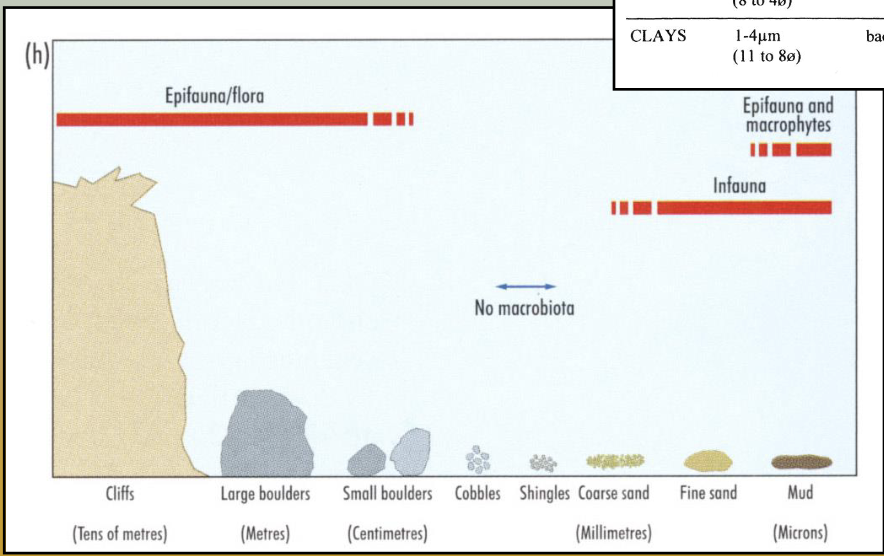
grain size structures the habitat and influences what kind of organisms that will live there
organisms living in sandy beaches
macrofauna → > 500 µm
meiofauna → 100-500 µm, e.g. flatworms and nematodes
microfauna → <100 µm
microflora and fauna of sandy beaches
important groups:
cyanobateria
ciliates
euglenozoa
dinoflagellates
haptophytes
cryptomonads
heterokonts
cercozoa
incerta sedis
cyanobacteria
photsynthetic bacteria
contain chlorphyll a
phycocyanin (blue)
phycocerathrin (red)
euglenozoa
characcterisitcs: …
majority are heterotrophs
dominating group in the psammon (sandy habitat)
genera and species differ from thos in th eplankton
reducing environments: thrive in environments with low oxygen
dinoflagellates
characteristics: amphiesma some with cellulose plates (armour/ theca), two flagella often in furrown, dinokaryon
heterotrophic and photosynthetic species common
most species in psammon lack theca
many genera in common with plankton, species differ
cilliates
characterisitcs: cilia
heterotrophic, some inhabit anoxic habitats
some have symbiontic algae, e.g. mesodinium pulex
stramenopiles
characterisitcs: two flagella, one smooth, teh other with tripartite hairs
many calsses
heterotrophic, phototrophic
consists of diatoms (silicified frustules, lack flagella, all phototrophic) and raphidophytes (naked)
haptophytes
characteristics: haptonema, organic scales (a few coccoliths), smooth flagella
a few representatives in the psammon, mainly planktonic
cryptomonads
characterisitcs: two flagella with bipartite hairs, periplast
heterotrophic and photosynthetic
chlorophyta (archaeplastida)
photosynthetic
characteristics: smooth flagella, green chloroplasts
adaptations
living on and between sand grains
gliding - diatoms - raphe, extruding mucus
flagellates - swim
cells oftne flattened
costs very little energy to move the flagella
vermiformed organisms
surf zone diatoms
solid line - floating cells
dashed line - mucus coating
dotted line - dividing cells
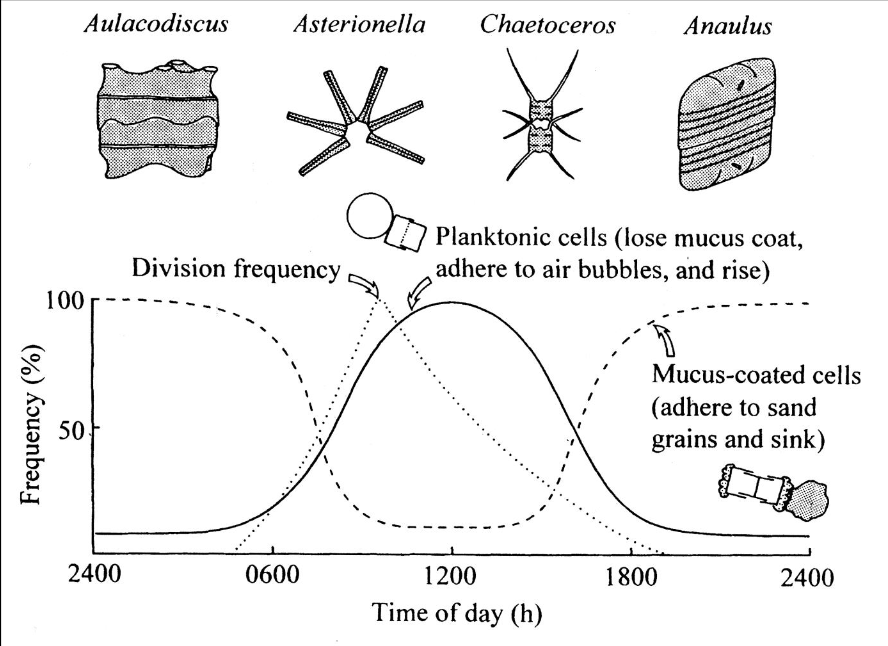
predators: Donax and Emerita
coloration of the sand
the coloration can be casued by diatoms, dinoflagellates, chlorphytes, euglenophytes
they form green, golden brown or brown patches ont he surface of hte mosit sand or shallow water sediments
dinofalgellates aoccur in large numbers
vertical migration
euglenophytes
diurnal pattern of vertical migration
cells on the surface during the day
tidal migration pattern with cells on the beach surface only during daytime tide and more than 15 cm below the surface during daytime high tides and at night
diatom
tidal rhythm
on intertidal sand and mud flats
at low tide golden brown pathces on the surface of intertidal sandflats
at high tide up to 2 cm below the sediment surface
bias when collection
record only the organisms that attach to teh coverslip
if the ice method is used, only organisms that are driven out of the sand by the temperature gradient will be seen
microalgae; species identification
…..