Unit 2 test essay step-by-step
Question 1
Part a: draw the line graph (the time should be on the bottom and the maltose on the side; basically, just flip the line graph. The bar graph is perfect like you rizz ;D )
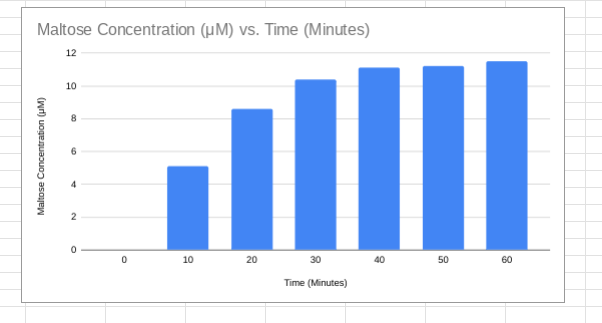
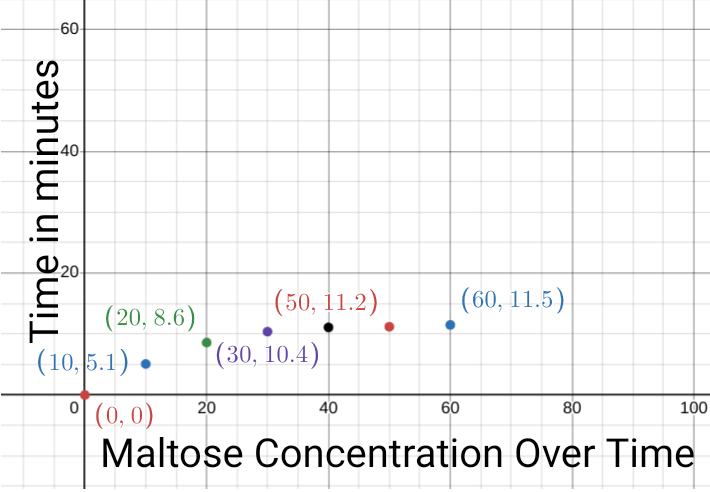
Part b: The change in reaction rate after 30 minutes is likely due to substrate depletion, meaning there’s less starch for the enzyme to act on. Maltose might inhibit the enzyme, and factors like enzyme saturation or slight temperature changes could also contribute to the slower rate.
Part c: Temperature affects how well enzymes work. When the temperature increases, molecules move faster, leading to more collisions between enzymes and substrates, speeding up reactions. Most enzymes work best at a specific temperature. Enzymes can change shape and stop working correctly if it gets too hot. On the other hand, if the temperature is too low, molecular movement slows down, reducing the reaction rate. Keeping the temperature just right is essential for enzymes to work effectively. pH is important for enzyme activity, too. Each enzyme has a pH range where it works best. For example, pepsin, an enzyme in the stomach, works best in very acidic conditions. If the pH is too high or too low, it can change the enzyme’s shape and how well it binds to the substrate, slowing the reaction. Enzymes in the small intestine work better at a neutral pH. So, maintaining the proper pH is essential for enzymes to function correctly.
Question 2
Cell signaling involves three main stages: reception, transduction, and response. In the first stage, male silkworm moths detect chemical signals from females through specialized receptors on their antennae. When these pheromones bind to the receptors, they change the receptor's shape. The second stage, transduction, converts the signal into a different form that can be processed by the cell. This involves a series of biochemical reactions and second messengers to amplify the signal. This amplification allows a small amount of pheromone to generate a significant cellular response. Finally, in the response stage, the cell reacts to the signal. This means activating behaviors like flying toward the pheromone source for male moths. This response increases the chances of mating, demonstrating the crucial role of cell signaling in communication and reproductive success in silkworm moths.
Question 3
Part A: The cell in the electron microscope image has numerous mitochondria, Golgi bodies, and rough endoplasmic reticulum (RER), indicating high metabolic and synthetic activity.
Part B: Mitochondria produce ATP through cellular respiration, essential for energy-demanding functions. Golgi bodies modify, sort, and package proteins and lipids synthesized in the RER, which is crucial for secretion and cellular functions. The RER, with its ribosomes, synthesizes proteins for export or membrane use.
Part C: Such an abundance of these organelles suggests the cell is highly active in protein production and energy generation, typical of pancreatic acinar cells, which produce digestive enzymes or insulin-secreting beta cells.
or
The electron microscope image reveals a cell with many mitochondria, Golgi bodies, and rough endoplasmic reticulum (RER), indicating high metabolic activity. Mitochondria generate ATP, which is vital for energy. Golgi bodies modify, sort, and package proteins and lipids from the RER, which is essential for secretion. The presence of these organelles suggests the cell is active in protein production and energy generation, typical of pancreatic acinar cells or insulin-secreting beta cells.
Question 4
Packing food in salt preserves it primarily through osmosis and diffusion. When salt is applied to fish or ham, it draws out moisture from the meat, creating a hypertonic environment. This reduces the water content, making it harder for bacteria and mold to thrive, as they require moisture for growth. The high salt concentration also disrupts the osmotic balance for microorganisms, causing them to dehydrate and die. Additionally, the salt can inhibit enzyme activity that leads to spoilage. Overall, this method effectively extends the shelf life of food by reducing the conditions necessary for rotting.