separating techniques
KEY TERMS
soluble: a substance that can be dissolved in a solvent
insoluble: a substance that cannot be dissolved in a solvent
solvent: a liquid that can dissolve a solute
solute: a solid substance that can be dissolved by solute
solution: what’s formed when a solute has dissolved into a solvent
TECHNIQUES
filtration - used for insoluble solids and liquids

pour mixture through filter paper and funnel into conical flask
insoluble solid remains in filter paper as residue
collect the liquid in conical flask as filtrate
evaporation - used for soluble solids in a liquid

heat the mixture in an evaporating basin
evaporate rhe solvent (water)
soluble solid is left in the evaporating basin as residue
KEY TERMS
filtrate: liquid that remains after filtration (in conical flask)
residue: insoluble/soluble solid that remains after filtration/evaporation
distillate: the liquid that is collected from distillation
evaporation: the change of state from a liquid to gas
condensation: the change of state from gas to liquid
TECHNIQUES
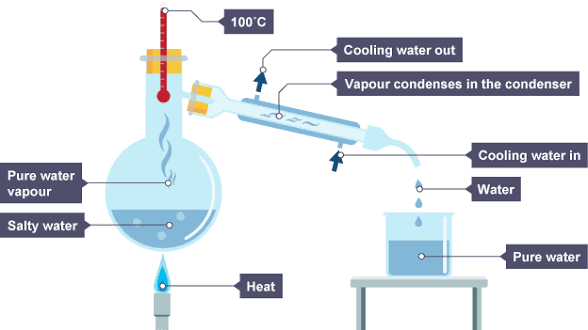
simple distillation - used to seperate a solvent containing a soluble solid or two liquids with very different boiling points
STEPS
mixutre is heated in round bottom flask
liquid with the lowest boiling point that starts to evaporate
vapour produced is cooled in the condenser = condensation
collects liquid in a beaker as distillate
rest of solution remains in round bottom flask
fractional distillation - used to seperate two or more different liquids with similar but different boiling points

STEPS
mixture is heated in a round bottom flask
evaporate the fractions - the liquid with the lowest boiling point starts to evaporate
vapour travels up the fractionating column and reaches its boiling point
vapour condenses in the condenser - COOLED
forming a liquid which is collected (distillate)
the rest of the mixture remains in the round-bottom flask until it begins to vaporise/evaporate
ROCK SALT SEPERATION
put the rock salt into a beaker full of water
pour the beakers contents into a conical flask with a funnel amnd filter paper (to remove silicon dioxide)
transfer the conical flasks contents to an evaporating basin
place the basin on top of a tripod above a bunsen burner (evaporation removes water)
heat until water is gone as water vapour (now only the sodium chloride(residue))
CHROMATGRAPHY
Chromatography can be used to separate mixtures based on the solubility of different solutes in a solvent. It’s a measure of how soluble the solute is in that solvent, if the sample doesn’t move, it is insoluble in that solvent.
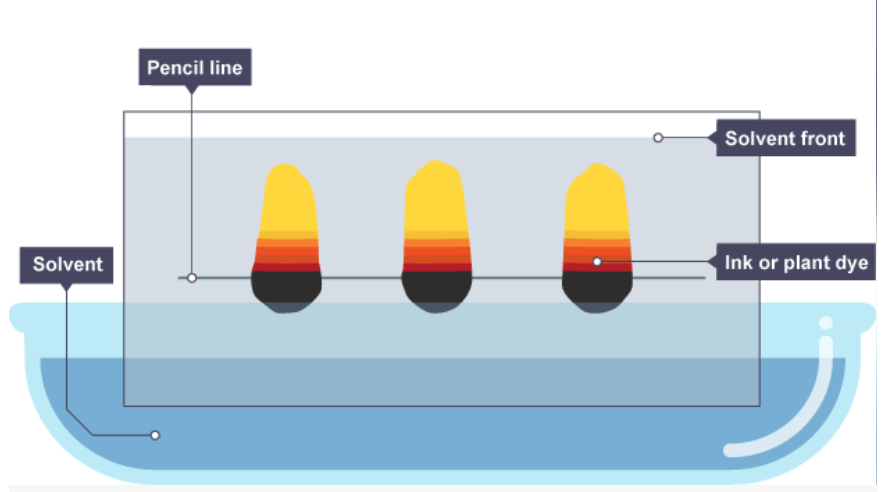
lid: used to prevent the evaporation of the solvent
solvent front: distance travelled by the solvent
start line: must be drawn in pencil to ensure that results are from the sample only

Rf = distance travelled by solute / distance travelled by solvent
EXAMPLE
if in the picture above, the distance from the solvent front to the baseline was 4, and the distance travelled by the substance was 2, the Rf value would be 2/4 = 0.5