AP Chemistry Chapter 3 🐸🐛🐌🐞🦎
3.1 Intermolecular and Interparticle Forces
Intramolecular forces: interaction within a singular molecule (covalent bond)
intermolecular forces: interactions between molecules
Nature of intermolecular forces
Water molecules are polar
A partial negative charge on oxygen atom and partial positive charge on each hydrogen
Intermolecular forces are coulombic, like covalent and ionic bonds (much weaker)
Dipole-dipole interactions
occur between any two POLAR molecules
can be attractive or repulsive
molecules orient themselves to maximize attraction
The strength of the interactions is directly related to the magnitude of the dipole
Common examples: CO, NH3, CH2Cl2
Dipole-induced-dipole interactions
When a dipole of water approaches a nonpolar O2 molecule (partial positive hydrogen ends, partial negative oxygen center) 👉 electrons in O2 are repelled by the negative part of water, O2 is forced to have an induced dipole
Usually the nonpolar oxygen becomes slightly polar because of the effect of the water
Interactions between nonpolar molecules
When 2 polar molecules interact = dipole-dipole dipole
When a polar molecule and a nonpolar molecule interact = dipole a dipole-induced dipole
Bromine is nonpolar, however electrons still randomly fluctuate inside of the molecule 👉 produce temporary dipoles 👉 when the temporary dipole of one molecule approaches another molecule, the electrons in the second molecule are repelled by the negative pole and attracted to the positive pole 👉 polarizes the second molecule slightly, producing a temporary dipole -→ results in attraction between the two molecules
London disperson forces
all molecules exhibit LDFs, including polar molecules
LDFs are the primary type of interaction between nonpolar molecules
strength of LDF depends on how easily the electrons can disperse 👉 the larger the electron cloud, the more polarizable it is (greater the strength)
LDFs get stronger as the molecule gets larger
higher boiling point
If 2 molecules have the same formula, but different shapes → look at surface area, larger surface area yields a higher boiling point
As molar mass increases, LDFs become stronger in nonpolar molecules because a heavier molecule yields a larger, more polarizable electron cloud
Hydrogen bonding
highly electronegative O draws electrons to itself away from hydrogen atoms
The small H atom partially loses its electron, leaving a bare proton
Highly electronegative O atom from a different molecule interacts very strongly with H, forming hydrogen bond
takes place between hydrogen and F,O,N
Ion dipole interaction
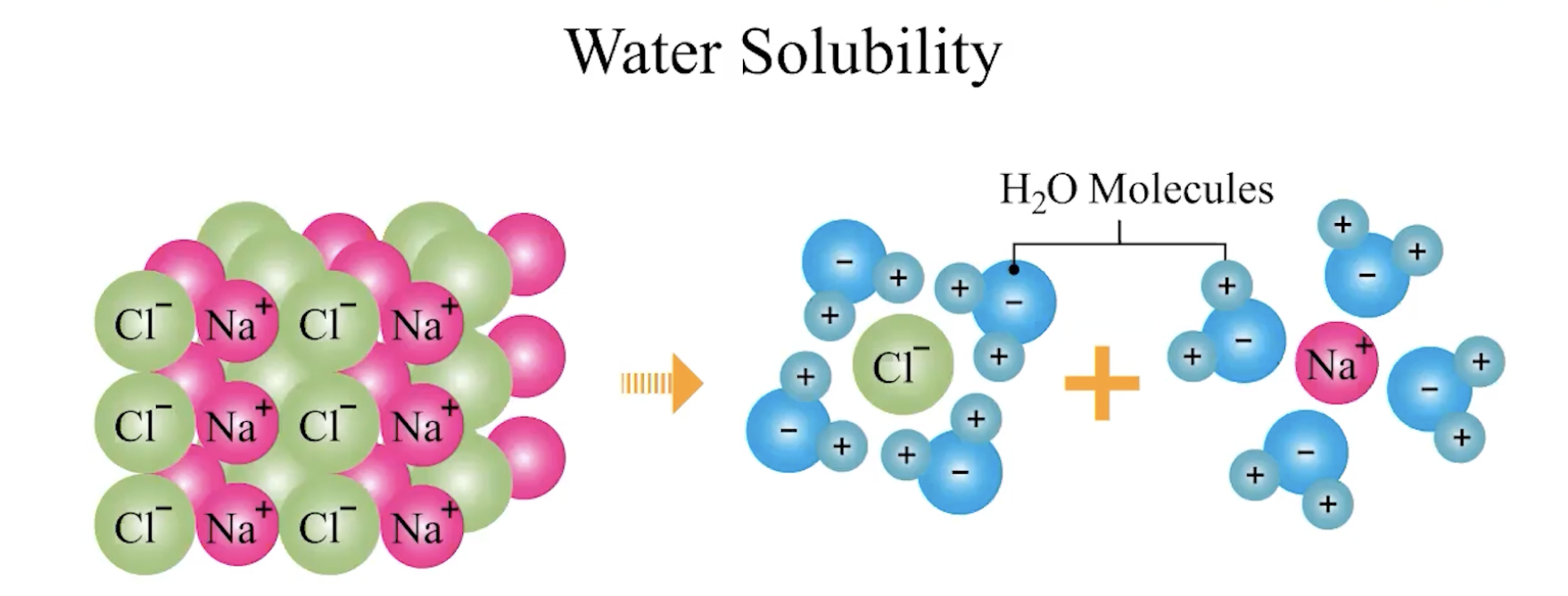
when ionic compounds dissolve in aqueous solution, the dipole of water interacts with the charged ions and causes them to separate
known as ion dipole interactions
stronger than hydrogen bonding
What properties can be explained by intermolecular forces?
melting point and boiling point
Vapor pressure (pressure exerted by a gas when it is at equilibrium with its liquid in a closed container)
Volatility (ease of evaporation)
Surface tension (ability of the surface of a liquid to resist an external force)
Viscosity (resistance to flow)
Heat of vaporization (energy required to convert a liquid to a gas)
Properties that increase as IMFs increase
melting point and boiling point
surface tension
Viscosity
heat of vaporization
Properties that decrease as IMFs increase
vapor pressure
volatility
Comparing the IMFs in 2 different substances
if 2 molecules have approximately the same number of electrions / same mass
LDF < dipole dipole < hydrogen bonding
Comparing magnitude of IMFs in 2 different substances
if 2 molecules have significantly different numbers of electrons and the same types of IMFs, the larger molecule experiences stronger IMFs
Methane CH4 and octane C8H18 both experience only LDFs (both nonpolar), but octanes lDFs are stronger because the molecule is bigger
If two molecules have significantly different sizes and different IMFs, it is difficult to determine which has stronger IMFs → look at boiling points
3.2 Properties of solids
Properties of solids
very strong interactions between particles
have definite shape and volume
regular, crystalline structure
fixed arrangement of particles
vibrational degree of freedom
Types of Solids
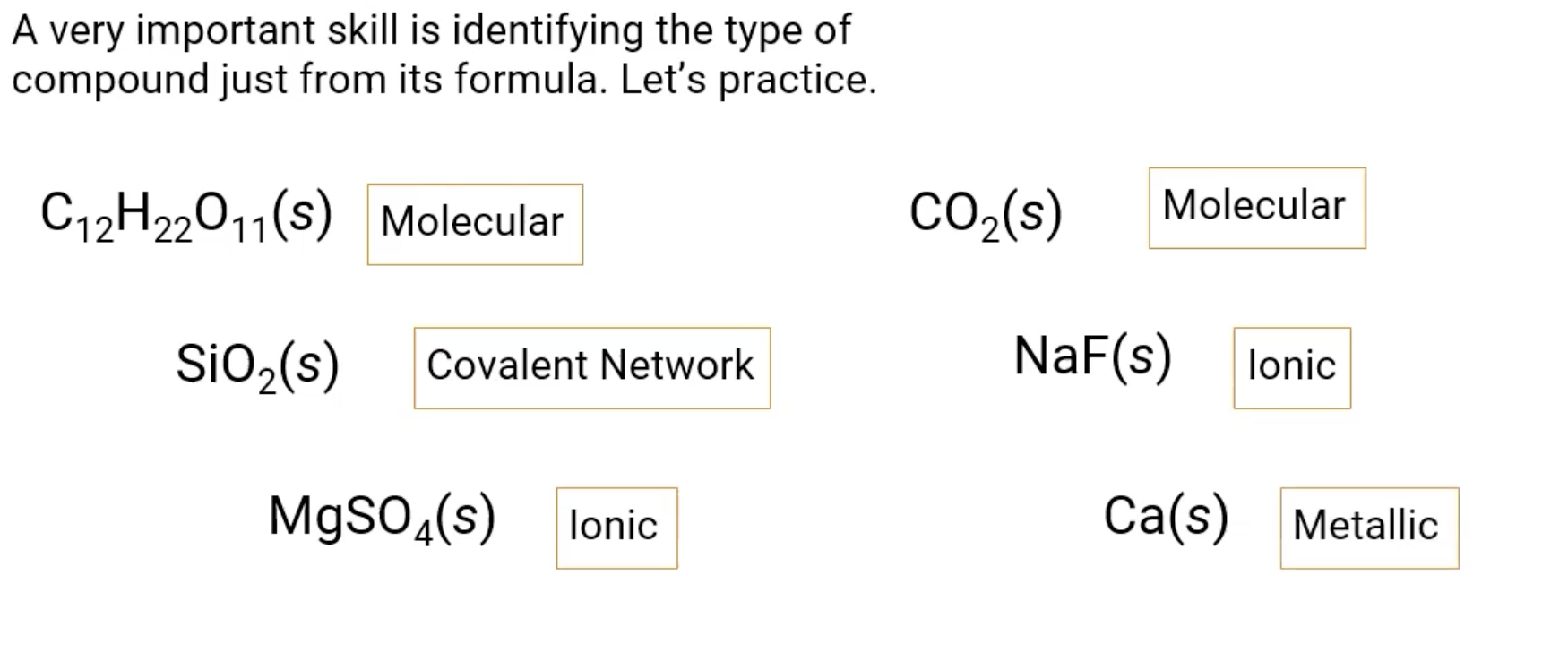
Ionic solid
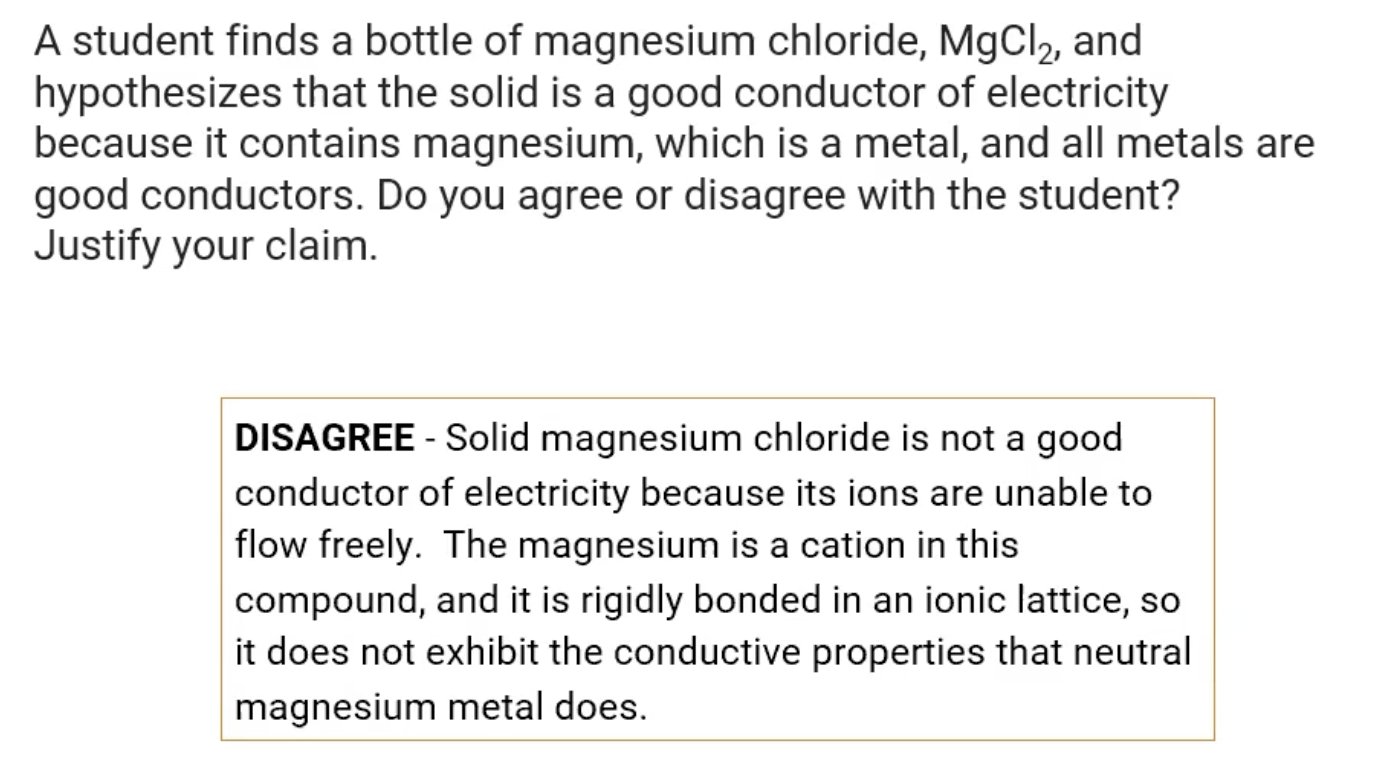
formed by cation (+) and anion (-) each type surrounds eachother in a lattice structure of varying shapes held together by lattice energy
cations are smaller than anions because cations lose electrons, whereas anions gain electrons (increase electron-electron repulsion and makes electron cloud larger)
formula represents ratio between ions
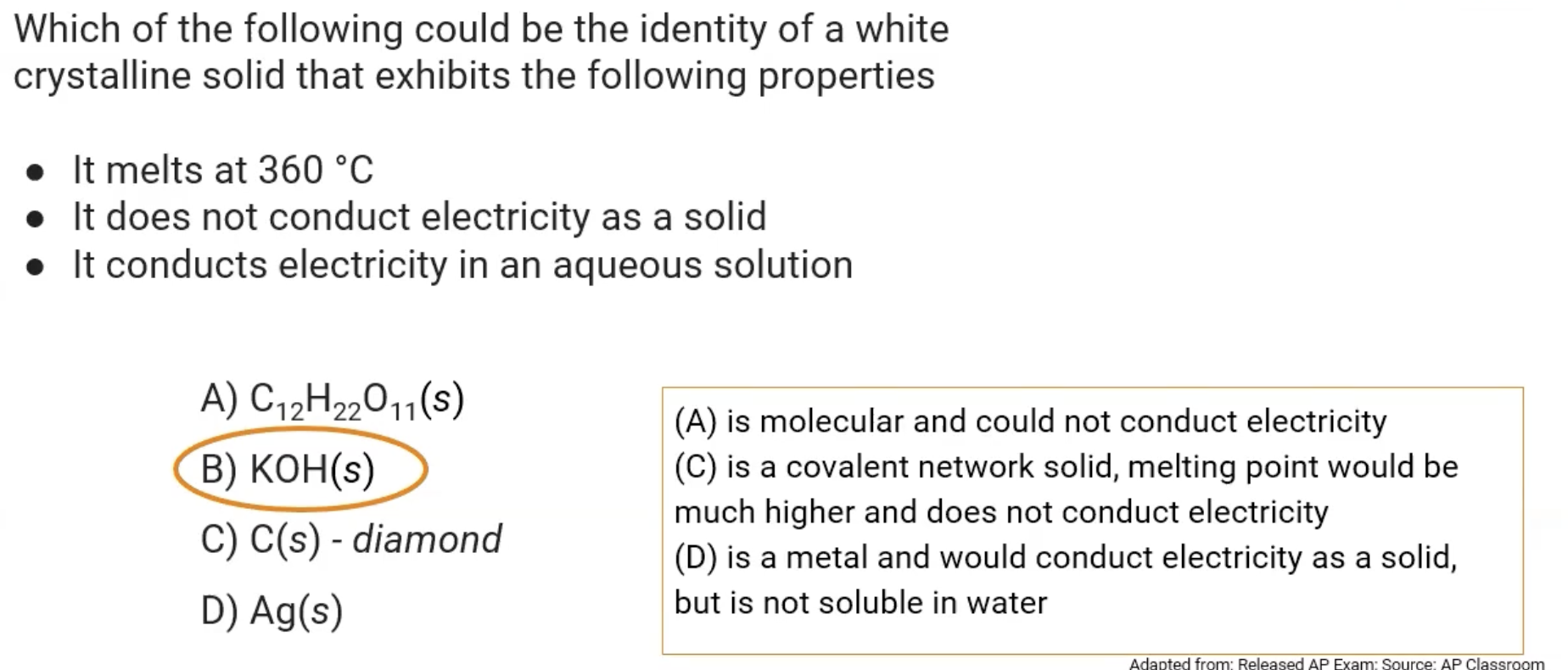
generally high melting and boiling point due to strong coulombic attraction between ions
poor conductor of electricity in solid state but good conductors when liquid and aqueous ; ions must be free to flow for it to conduct
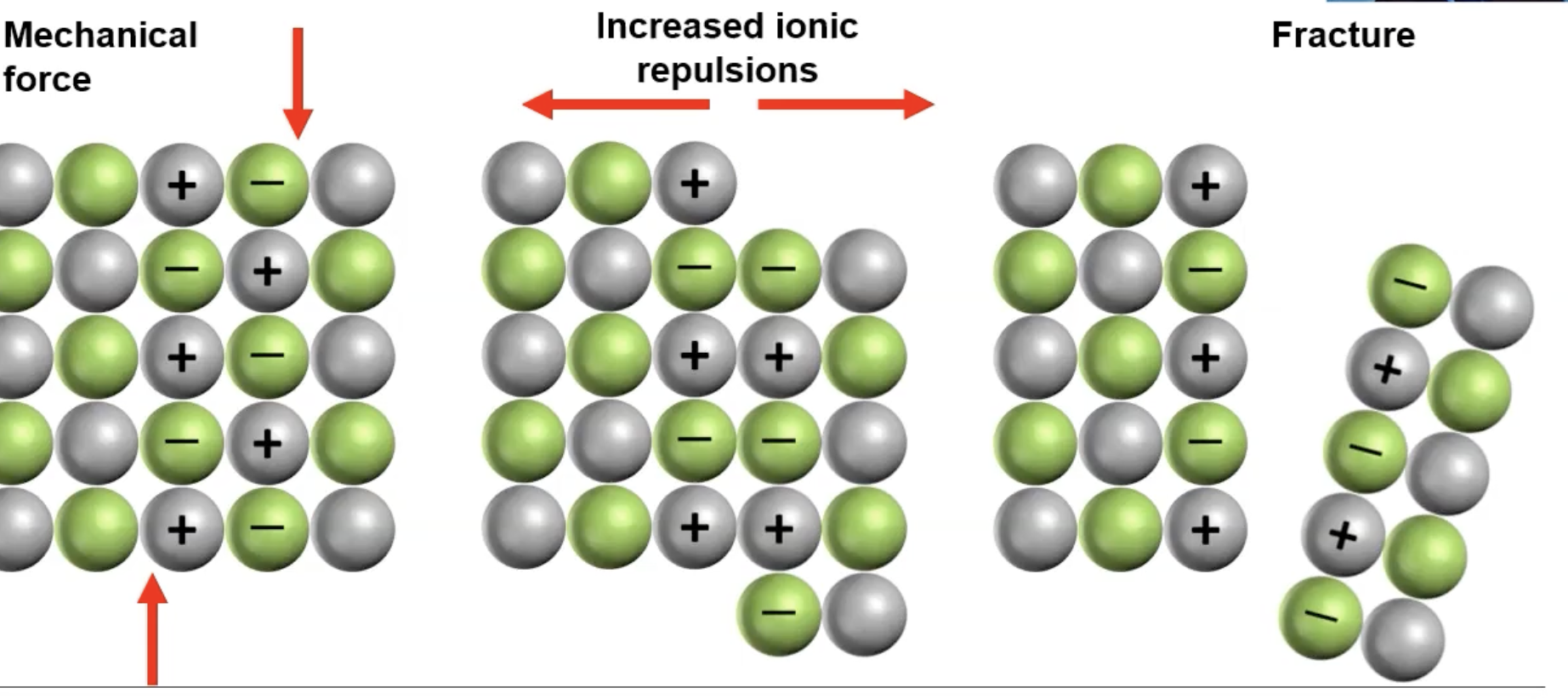
brittle
molecular solid
formed by distinct, indivudal, neutral molecules, which form molecular lattice structures
formed exclusively by non metal atoms, and chemical formula represents actual number of atoms in each individual molecule
relatively weak intermolecular forces holding molecules, low melting and boiling point
poor conductors of electricity in all states, as atoms are held tightly together by covalent bonds
Metallic
formed by metallic elements
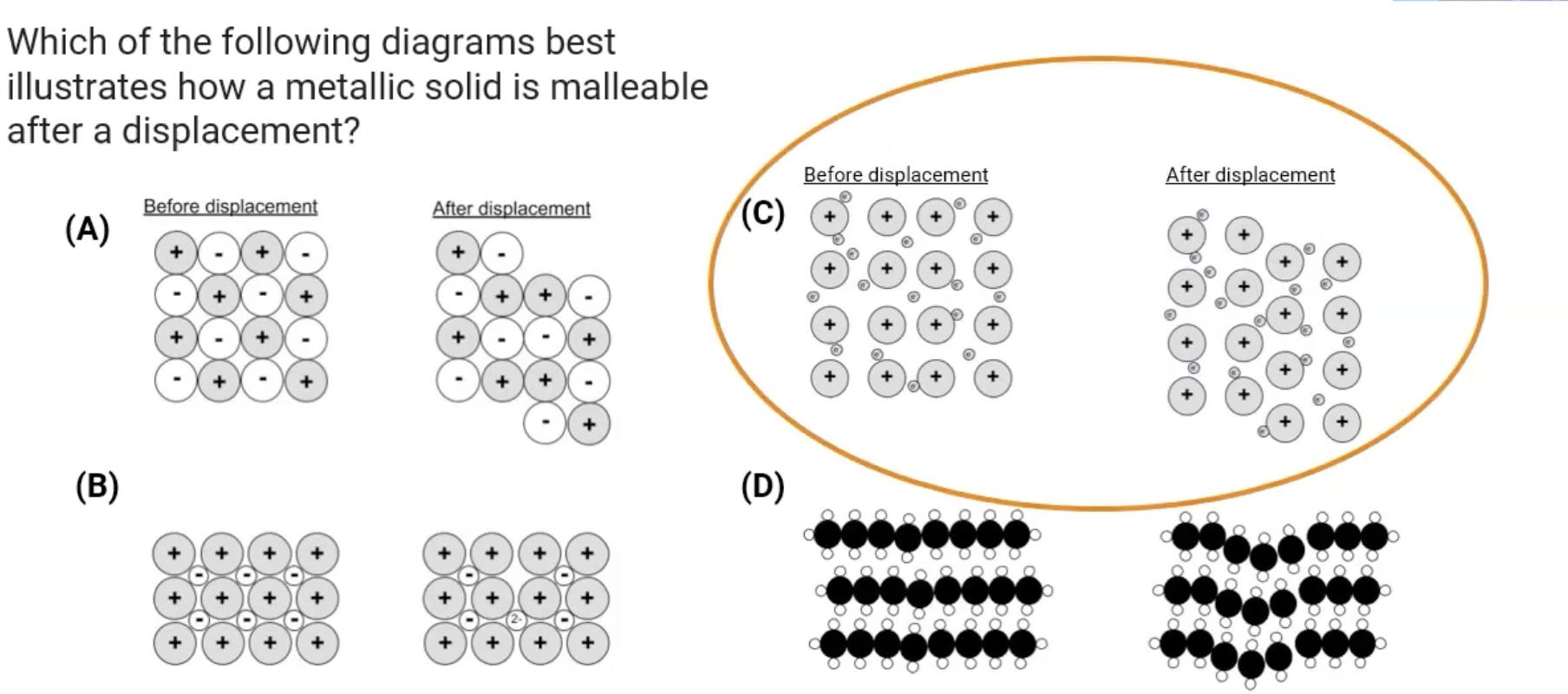
exhibit metallic bonding where valence electrons are free to flow from atom to atom (sea of electrons model)
great conductors of heat and electricity
malleable and ductile
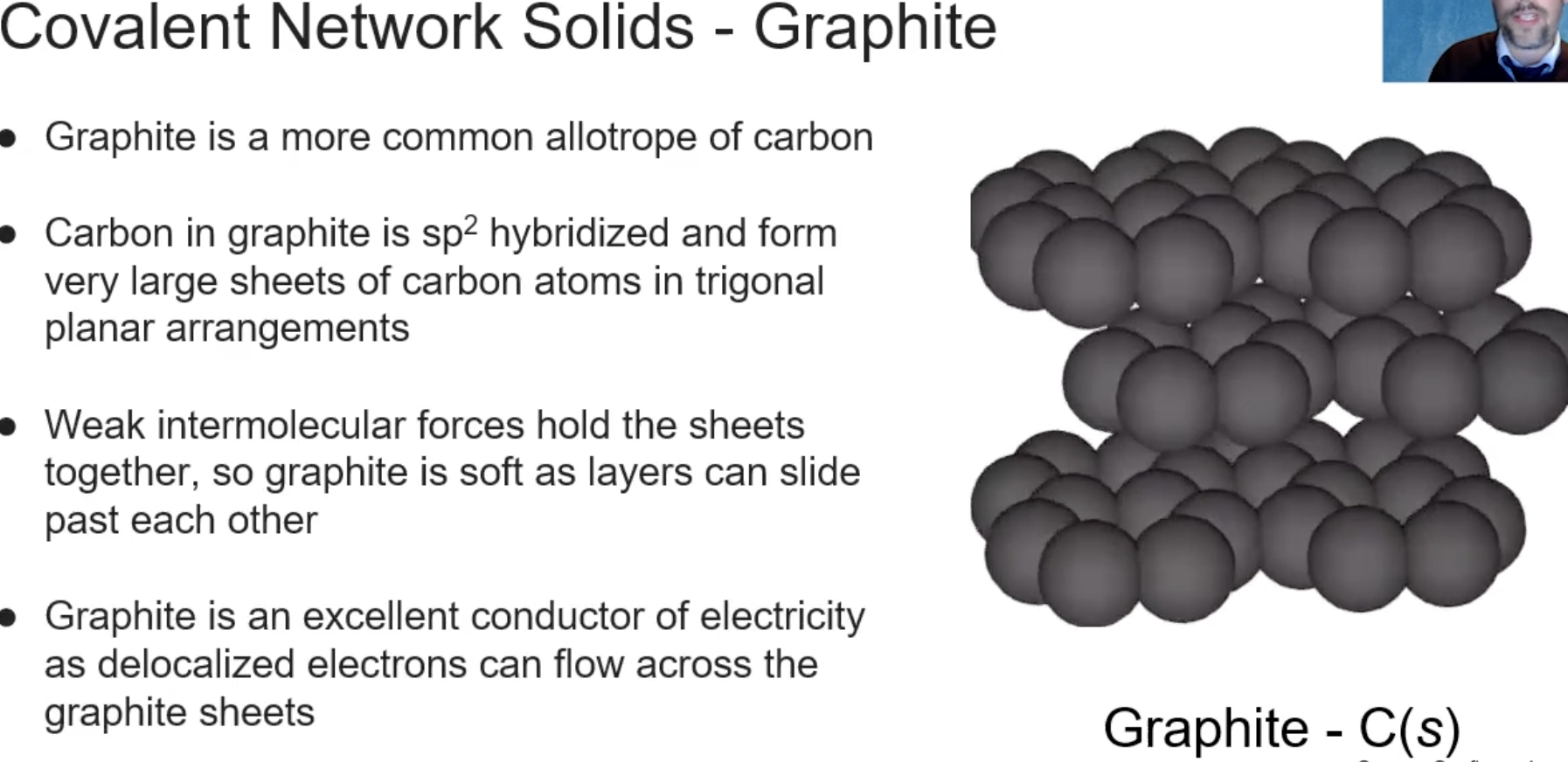
Covalent network
formed by distinct atmos bonded covalently in a 3D shape
formed by carbon and metalloids, silicon, germanium, boron
very high melting point and hardness
poor conductors of electricity as electrons are held tightly in covalent bonds
3.3 Solids, liquids, and gases
Phases of matter : compare and contrast
states of matter are dictated by kinetic energy of particles and the substances heats of fusion / vaporization, as well as pressure and temperature
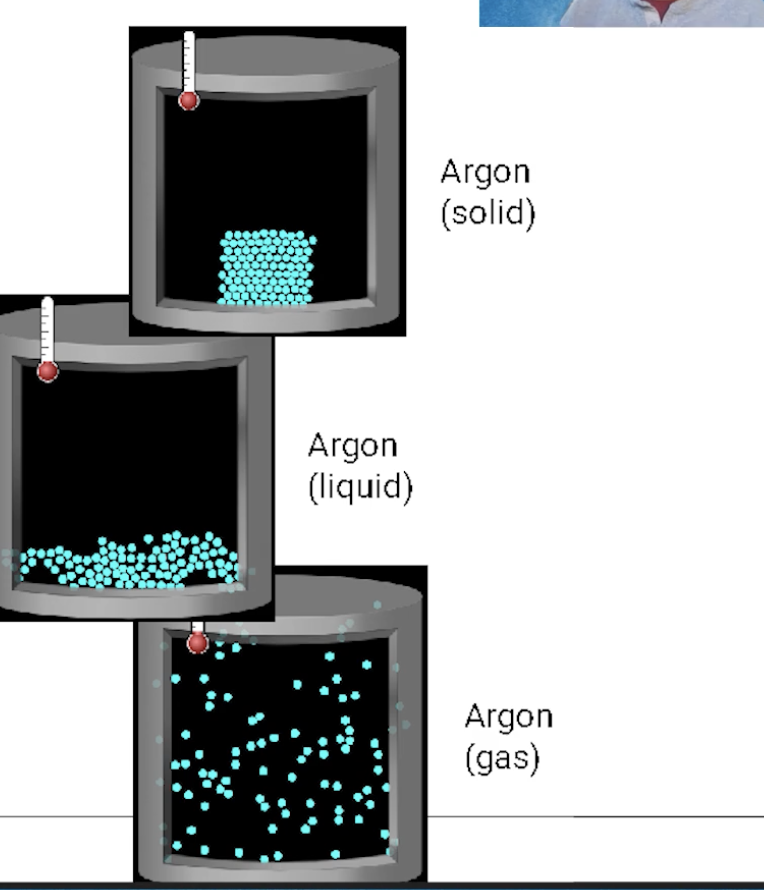
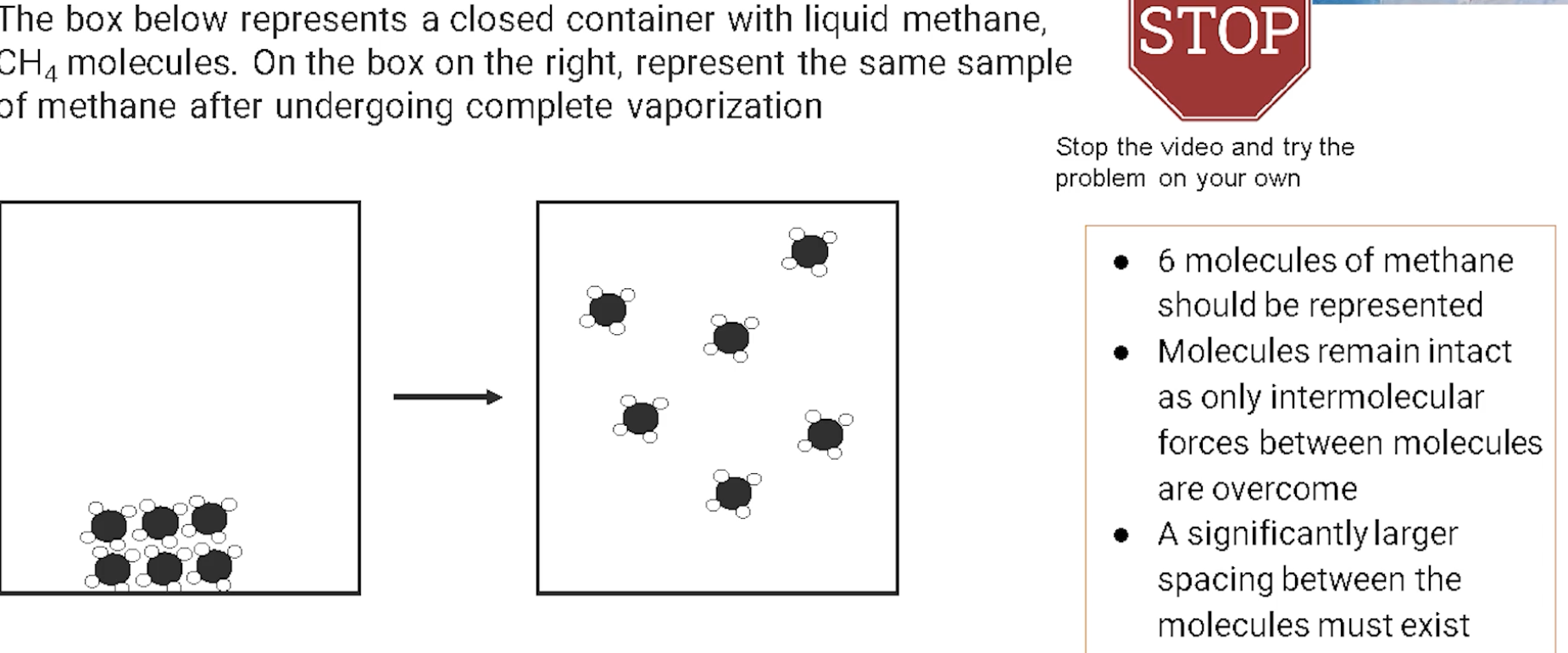
particles retain their chemical identity in all 3 states, but the volume, density, and interparticle distances are all different
Solid water
below 0 C, water molecules are in a fixed position as a solid
molecules are moving but not past eachother - vibrational degree of freedom
molecules in a solid are not necessarily closer to eachother than they are in a liquid → water is an example of a solid that is less dense as a solid due to its crystalline structure and spacing
Liquid water
above waters melting point, water molecules are moving too fast for their mutual attraction to maintain them in a locked place
molecules are able to slide past one another - translational degree of freedom
the molecules at the surface may evaporate - air pressure also effects vaporization
Gaseous water
above 100 C, attraction between water molecules is not sufficient to hold the molecules together
molecules in the gas phase move randomly in straight lines between collisions - all degrees of freedom (vibrational, translational, rotational)
the space between molecules in the gas phase is much larger than that of liquids or solids
3.4 Ideal Gas Law
PV = nRT (describing variables that effect gas behavior)
P = pressure (the force that gas exerts on the interior surface of the container through collisions)
V = volume (the region of space that the gas occupies)
n = number of moles, number of gas particles
R = ideal gas law constant (relates the other four variables together)
T = temperature (the average kinetic energy of the gas in kelvin)
Effect of V on P
if all other variables are held constant, then the function of pressure multiplied by volume must also be constant
V and P are inversely related
As volume decreases, pressure increases → the greater concentration of particles results in greater frequency of collisions
Effect of n on P
if all other variables are held constant, then the equality of pressure and number of moles must also be constant
as the amount of molecules increase, the number and frequency of collisions increases
pressure is directly proportional to the amount of particles
Effect of T on P
as the average kinetic energy of the molecules increase, P increases as collisions occur more often and are more energetic
pressure is directly proportional to the absolute temperature
Gas samples are often mixtures
each different kind of gas exerts its own pressure, based on the amount of gas particles present, called its partial pressure
ideal gases behave the same

Mole ratio
mole fraction is the ratio of the moles of one gas to the total number of moles of gases
3.5 Kinetic molecular theory
Gases :
particles are in continuous, random motion
between collisions, particles have constant velocity and direction
after collisions, particles have new velocity and direction
as particles collide, they don’t stick → elastic collisions
Kelvin temeperature is proportional to the average kinetic energy of the different particles : KE=1/2mv²
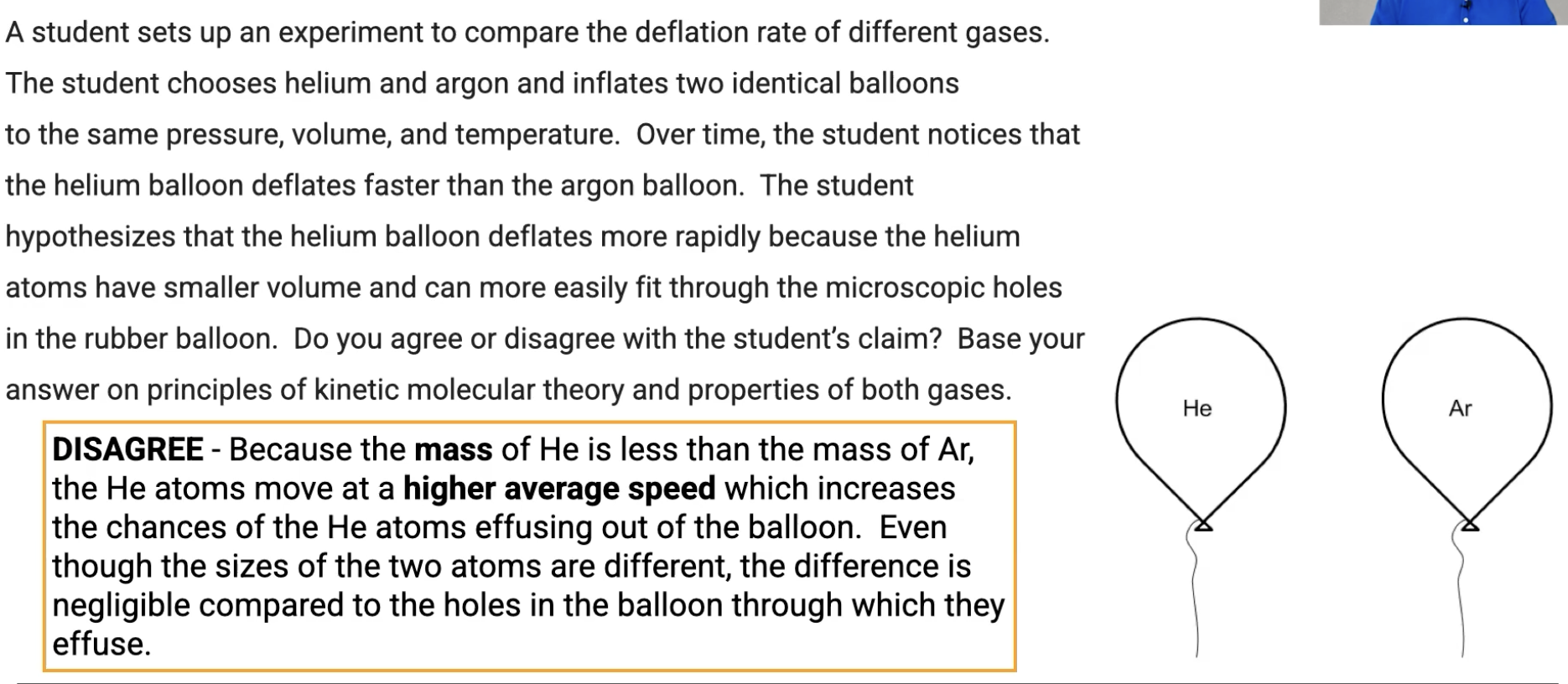
at the same temperature, lighter particles move faster → heavier particles move slower
KE=1/2mv²=1/2vm²
pressure is caused by particles colliding with walls
Kinetic molecular theory
summarizes ideal behavior of gases
particles have random, continuous motion
collisions are perfectly elastic
particles have negligible volume
constant temperature = constant average kinetic energy
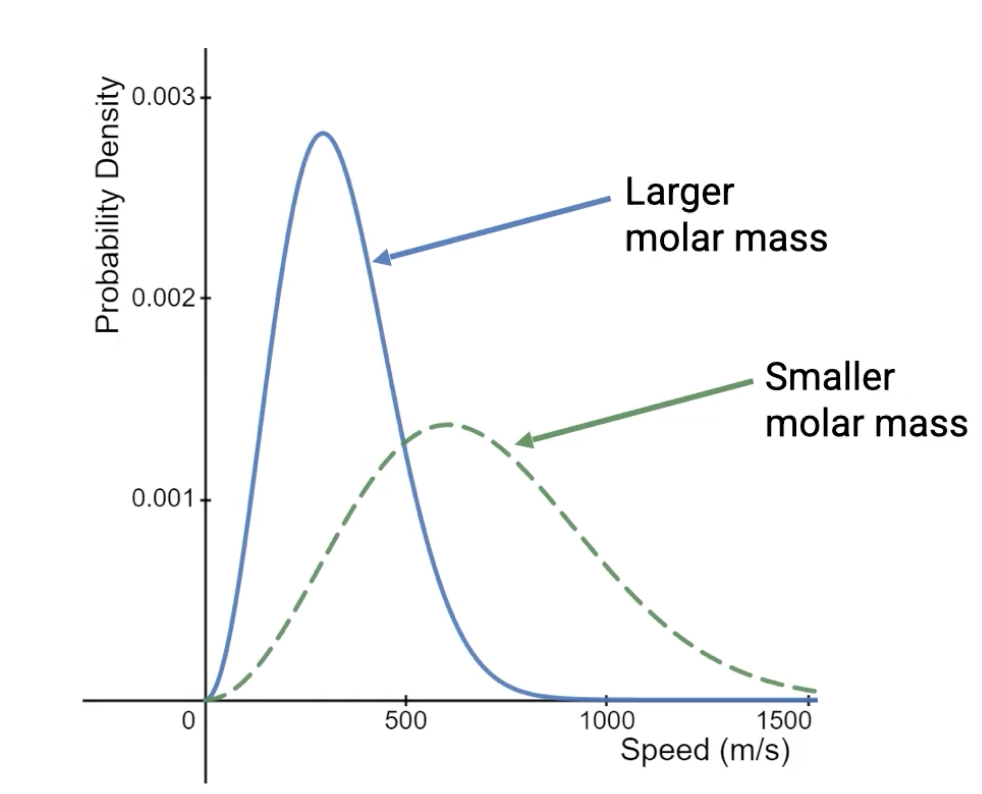
Particle speed
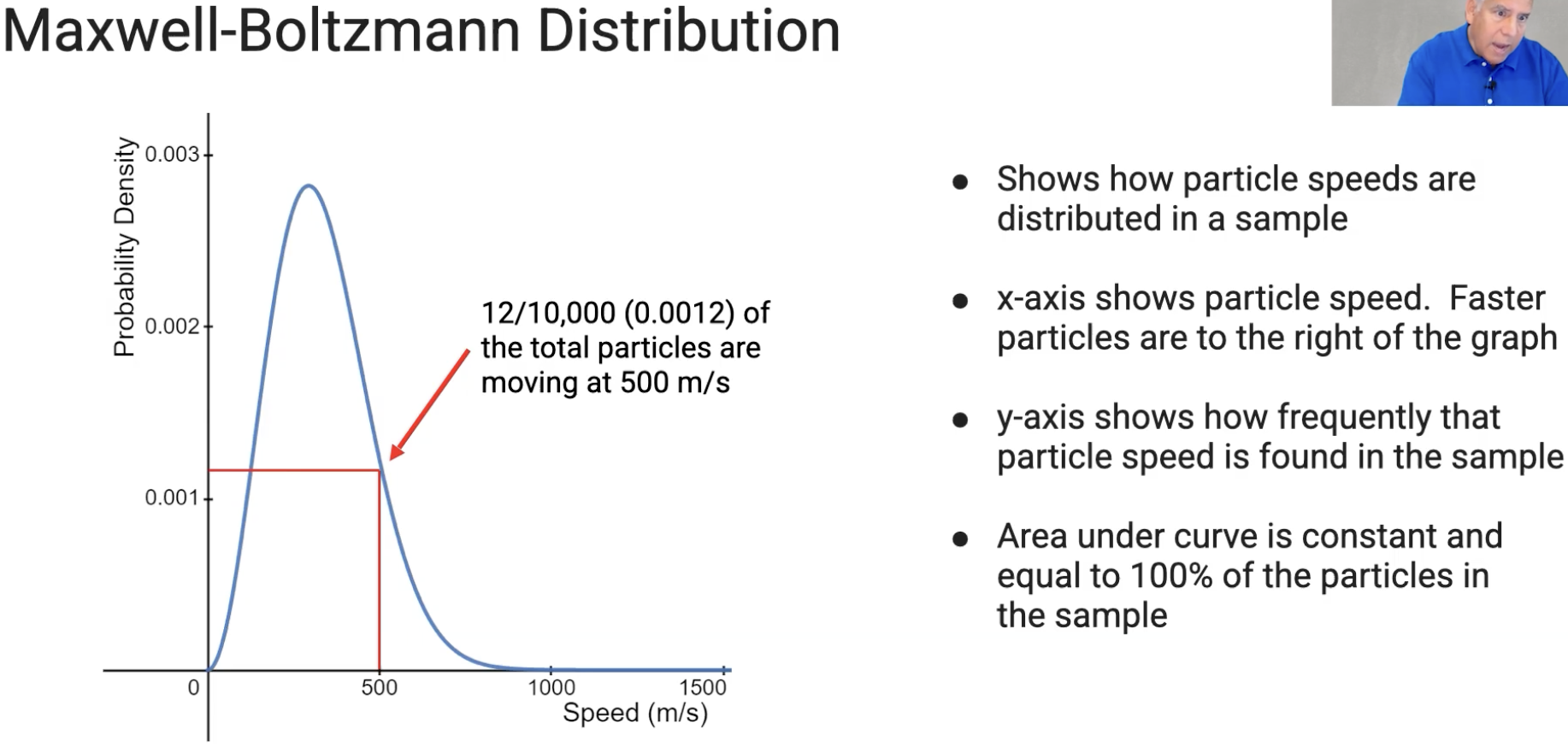
individual particle speed is always changing
with large numbers of particles, the distrubution remains consistent despite individual fluctuations
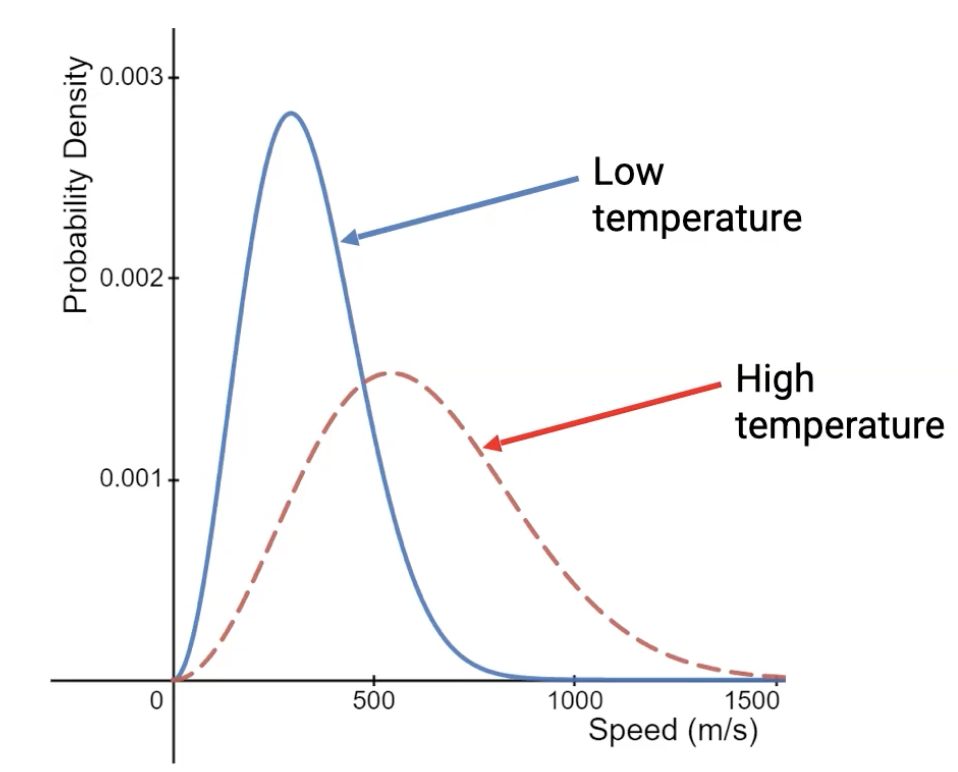
As temperature increases, more of the particles have higher speeds, and fewer of the particles have lower speeds
Gases with different masses at the same average temperature have different average speeds
more massive gases move slowly, less massive gases move faster
3.6 Deviation from Ideal Gas Law
Ideal gas law (Pv=nRT):
collisions between gas molecules are perfectly elastic
there are no attractive or repulsive forces between particles
particle volume is negligible
Real gas behavior
all gases are able to condense ; there are attractive forces
molecules vary in size and do not have volume
So, PV does NOT = nRT
Why does PV not = nRT ?
At 273 K, 1 mole of an ideal gas occupies 22.4 L and its pressure is 1atm (ASSUMING PARTICLES HAVE NO ATTRACTION)
with significant attractions between particles, the number of collisions between gas particles and the walls of the container decreases, and the actual pressure is less than 1atm
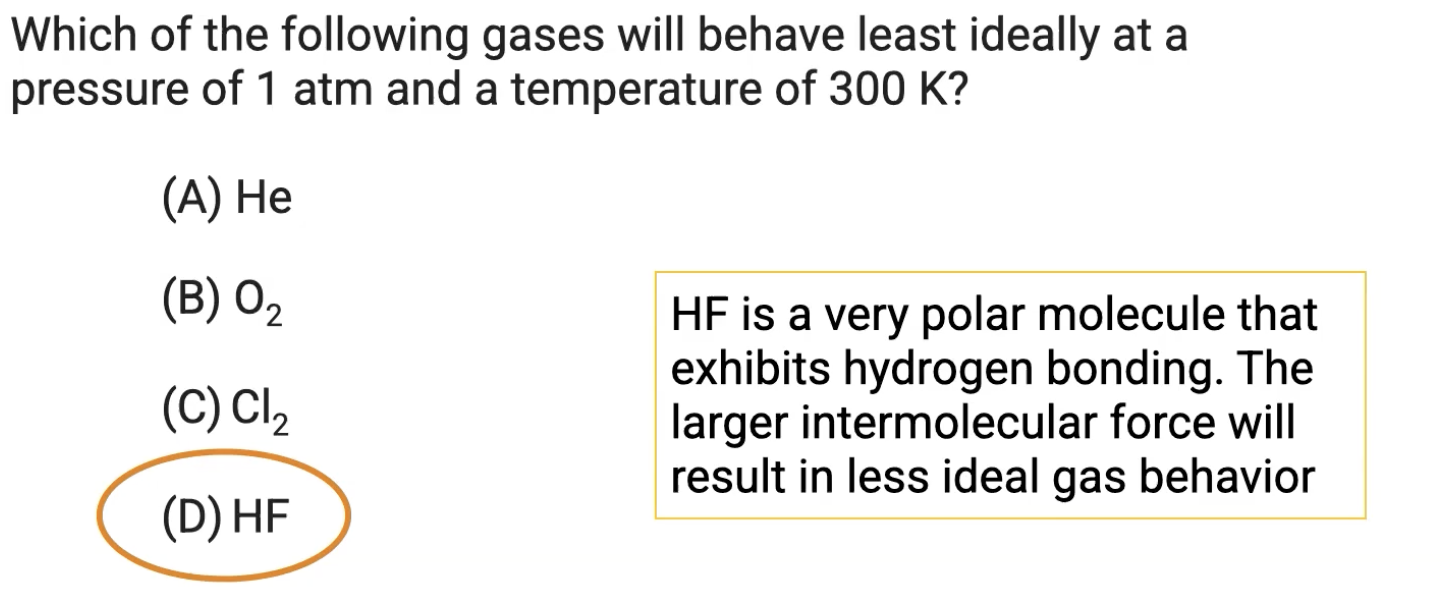
Effect of intermolecular forces
as intermolecular forces increase, the predicted pressure is less than hypothezied
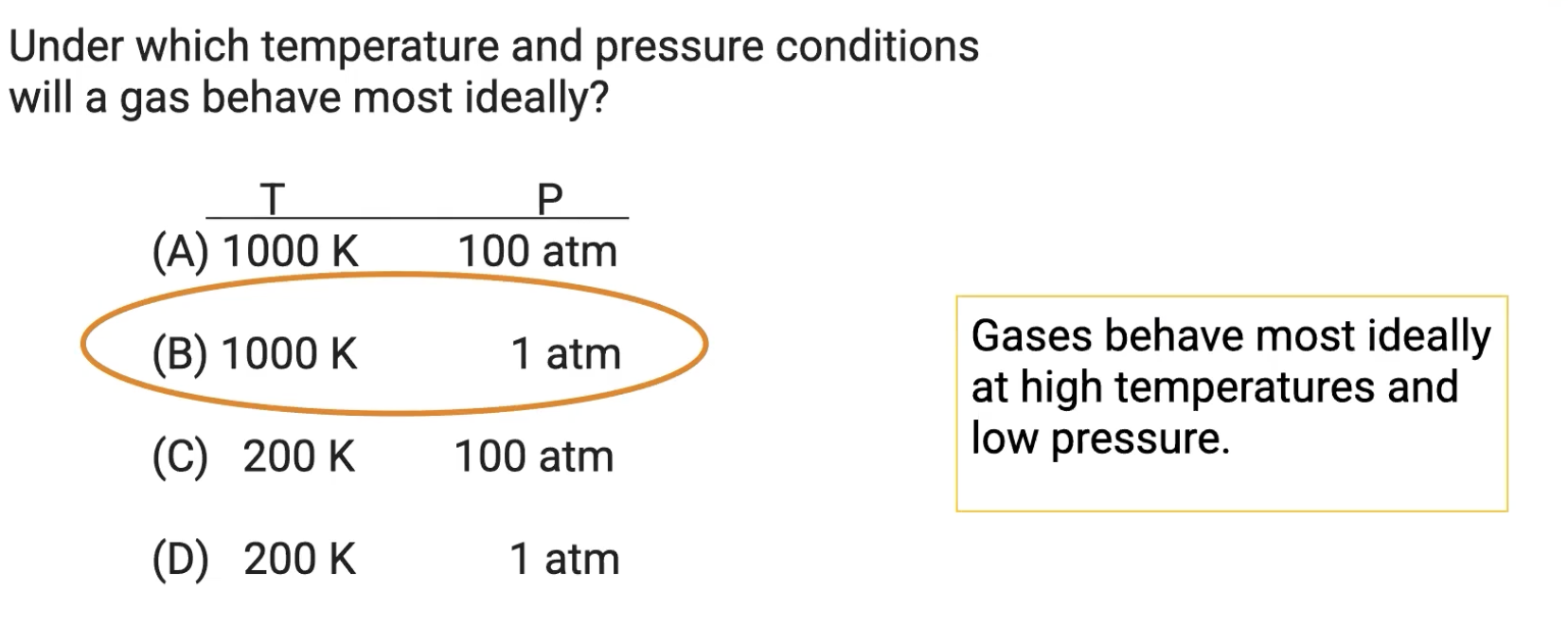
At high temperatures, IMFs become negligible and gases behave ideally
At low temperatures, IMFs become significant and gas behavior is non ideal
At 273 K, 1 mole of an ideal gas occupies 22.4 L and its pressure is 1atm (ASSUMING PARTICLES HAVE NO VOLUME)
with significant particle volume, the space in which particles are free to move is reduced and the number of collisions increase → increased pressure
Decreasing volume of a container
according to ideal gas law, halving the volume of a gas will double its pressure
as volume of the container becomes smaller, the particle volume becomes more significant, leading to greater pressure than predicted
Effect of particle volume
as particle volume becomes significant, actual pressure becomes greater than predicted
at low pressures, the space between molecules is much greater than the volume of molecules themselves, and the gas behaves more ideally
at high pressures, particle volume significantly reduces the volume in which particles are free to move, and the gas behavior is non ideal
When do gases exhibit non ideal behavior ?
low temperatures
high pressures
when partciles exhibit significant intermolecular force
when particles have significant molecular size
3.7 Solutions and mixtures
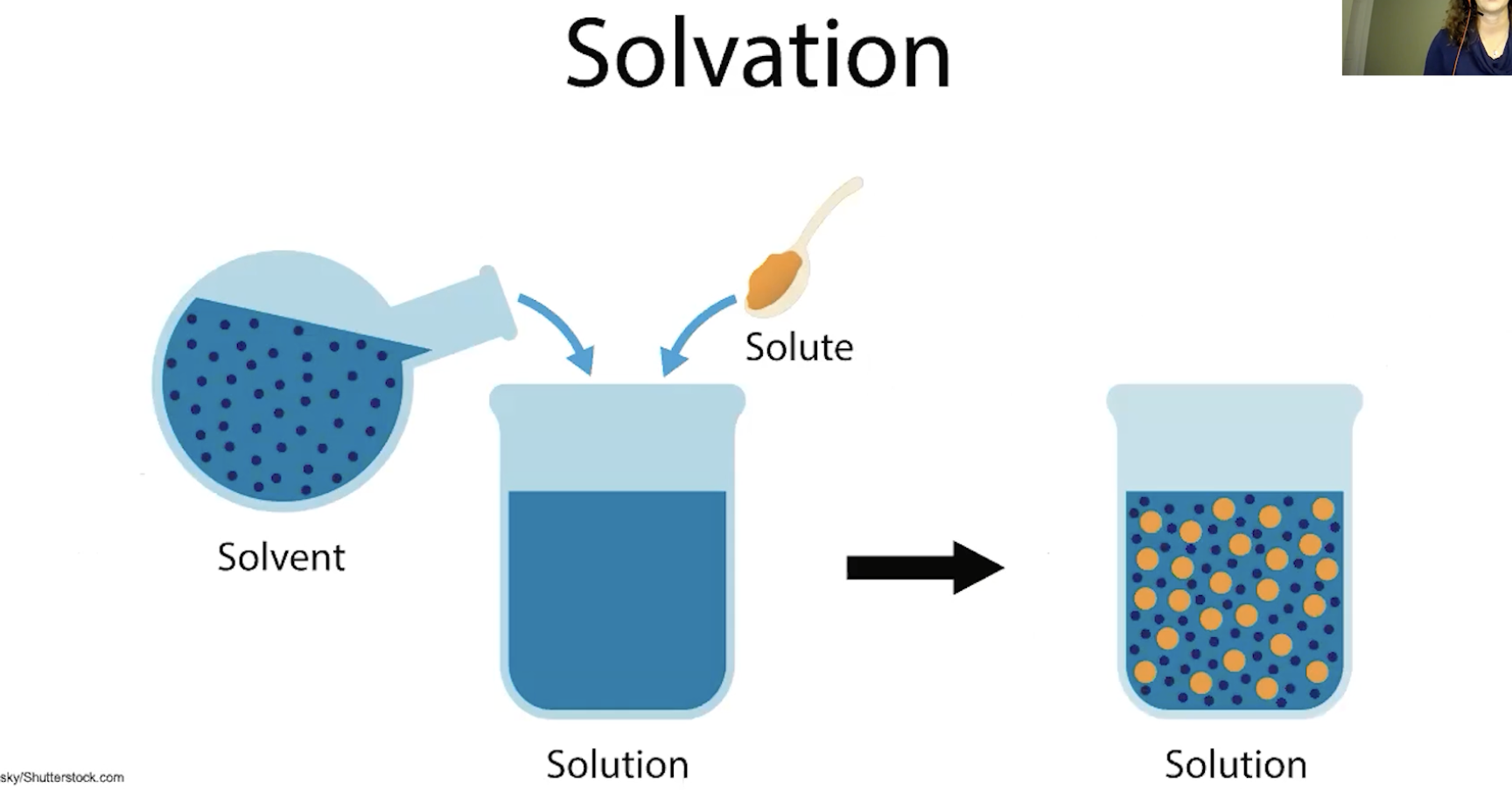
What is a solution?
a solution is a physical combination of any state of matter in which microscopic properties do not vary
another name for solution is homogenous mixture
hetergenous mixtures do have varying properties depending on location in the mixture
How do we quantatively describe solutions?
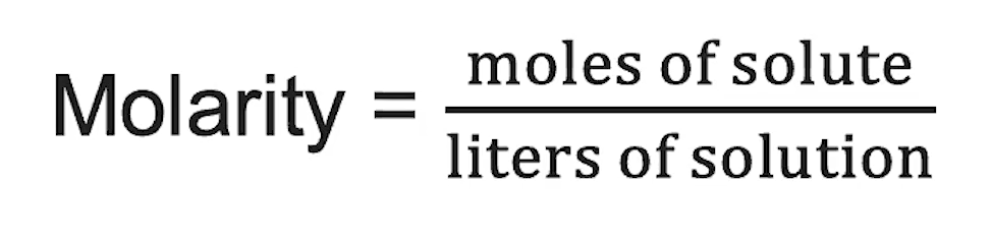
molarity is the most common method used in the laboratory to describe solution composition
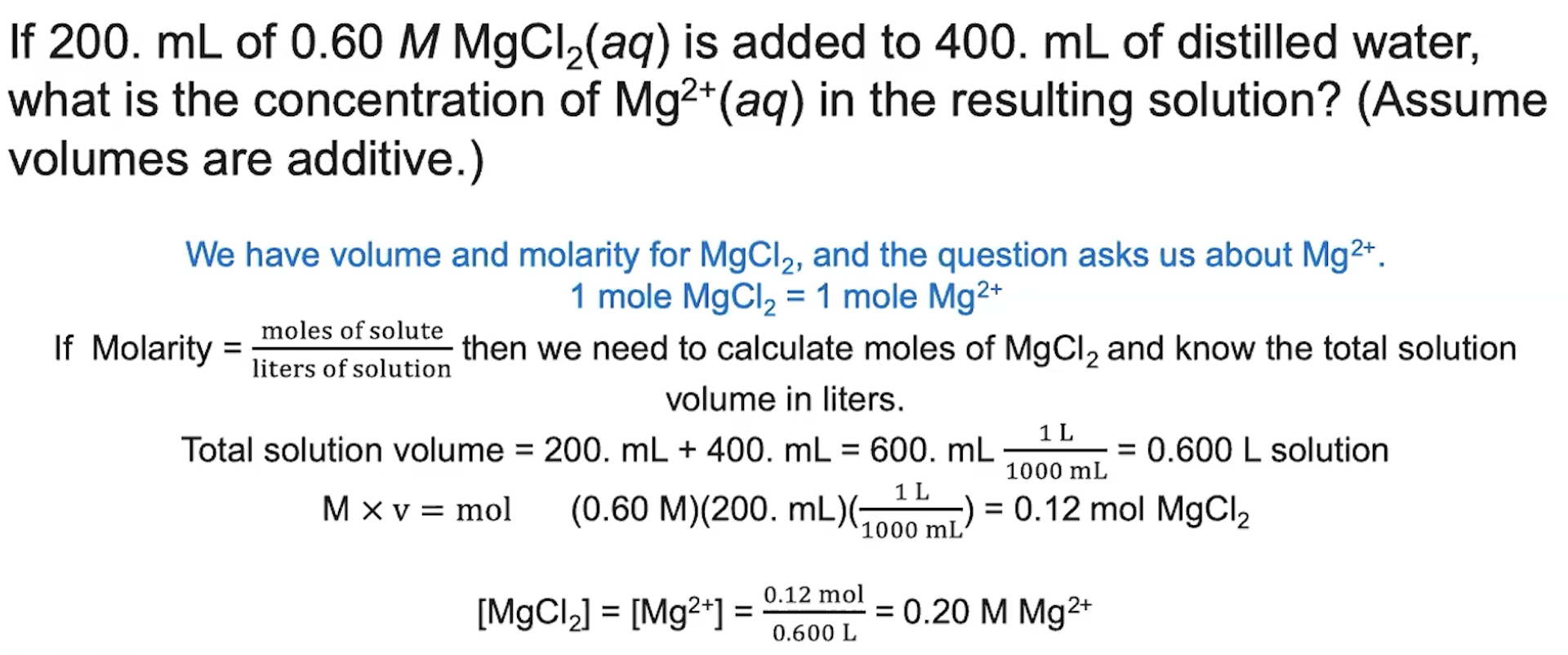
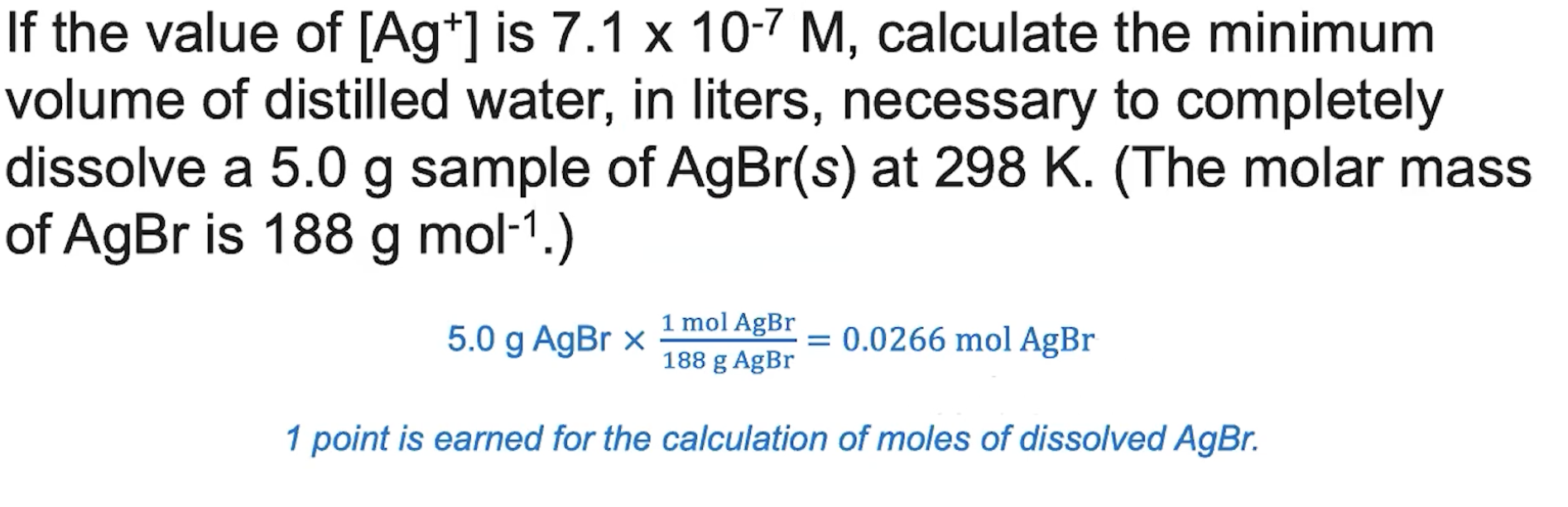
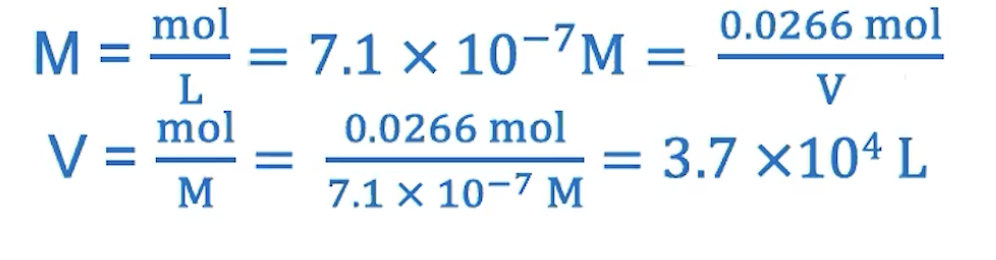
USE M X v = mol + rearrange to find different quantities of stuff
3.8 Representations of solutions
Using particulate models for solutions
representing interactions between components of a mixture
ion sizes
orientation of solute ions and solvent particles
representing concentrations of components
3.9 Separation of solutions and mixtures
the components of a liquid solution cannot be separated by filtration because the process must consider the differences in intermolecular attractions of the components
chromotography paper can be used to separate components of a solution due to attractive forces among the components of the mobile and stationary phases
the solution, or mobile phase, will have a certain amount of intermolecular attraction to the surface components of the paper or column due to differences in polarity
the more polar a solution, the less interaction it will have with the stationary phase → travels further
the less polar a solution, the more interaction it will have with the stationary phase → travels less
Distillation separates chemical species by taking advantage of the differential strength of intermolecular forces between and among the components and the effects these interactions have on the vapor pressure of the components of the mixture
3.10 Solubility
Substances with similar intermolecular forces will tend to be soluble (or miscible) in one another
ionic compounds will tend to dissolve in polar substances because cations interact with the negative poles of water molecules while anions interact with the positive poles
molecular compounds that do not have dipoles and predominantly london dispersion forces will tend to dissolve in nonpolar solvents. The larger and more polarizable the electron cloud, the more interactions will occur with the solvent
“like dissolves like” indicates that nonpolar solutes dissolvle in nonpolar solvents, as poalr solutes dissolve in polar solvents
the degree of polarity and presence of intermolecular forces determines solubility in a particular solvent
3.11 Spectroscopy and the Electromagnetic Spectrum
spectroscopy is the study of matter’s interactions with electromagnetic radiation
matter can absorb or emit radiation in different regions of the spectrum, and those regions are associated with molecular motion or electronic transitions
microwave radiation is associated with transitions in molecular rotational levels
infared radiation is associated with transitions in molecular vibration levels
vibrational states of bonds require more energy than molecular rotations ; IR has a higher energy per photon than microwave
ultraviolet / visible radiation is associated with transitions in electronic energy levels
3.12 Properties of photons
The wavelength of the photon is related to the frequency of the radiation
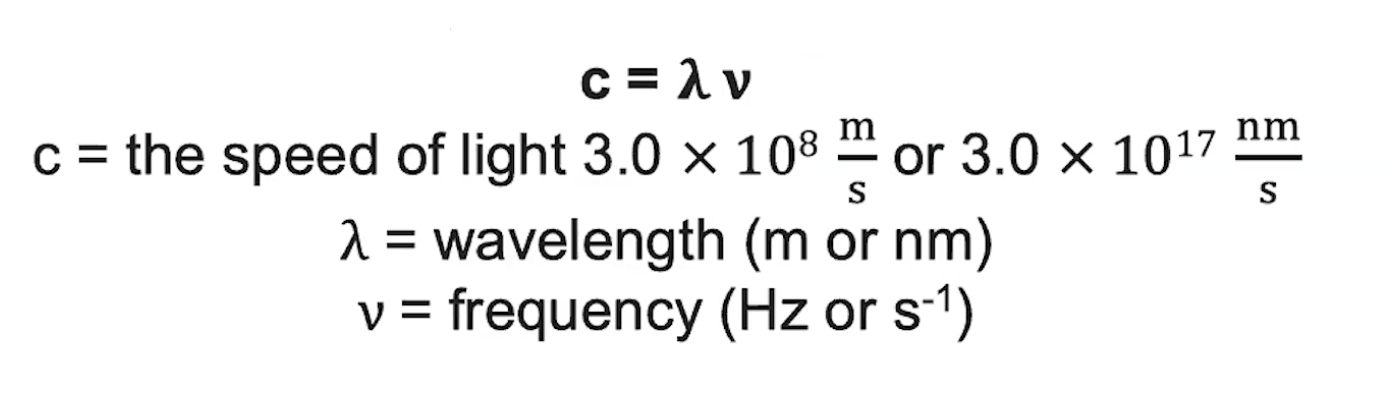
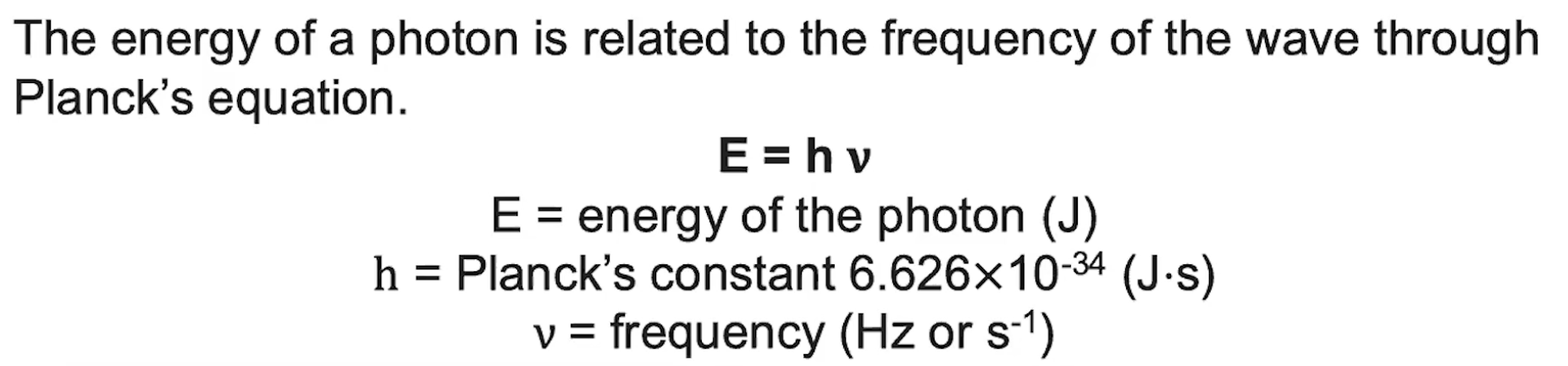
When a photon is absorbed or emitted by an atom or molecule, energy is increased or decreased by an amount equal to the energy of the photon
3.13 Beer Lambert Law
Instruments such as spectrophotometers or colorimeters can be used to determine the absorbance of a chemical species
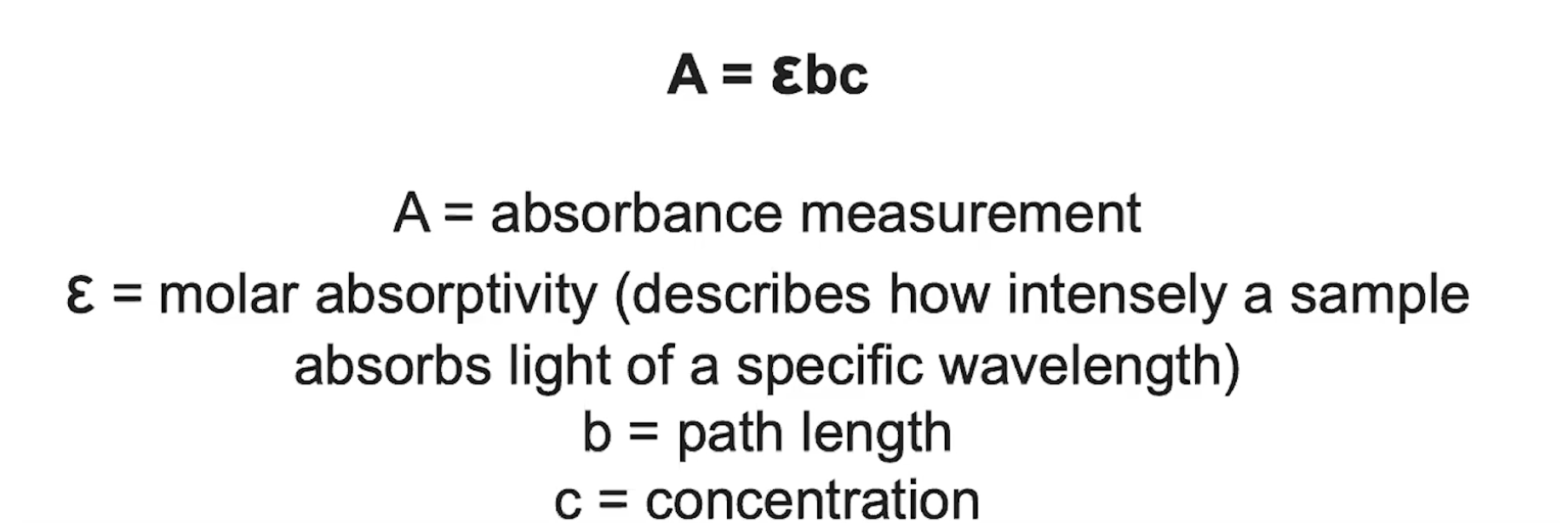
The beer lambert law relates the absorption of light by a solution to three variable according to the equation :