The Respiratory System
%%Functions of the respiratory system%%
The main function of the respiratory system is to deliver air to sites where gas exchange can occur between the air and the circulating blood
%%Overview of the respiratory system%%
The cardiovascular and respiratory system function together and are sometimes referred to as the cardiopulmonary system the lymphatic system also works closely with the respiratory system to transport excess fluid from the tissues and to destroy any particles that have escaped the filtering systems and traveled deep into the lungs
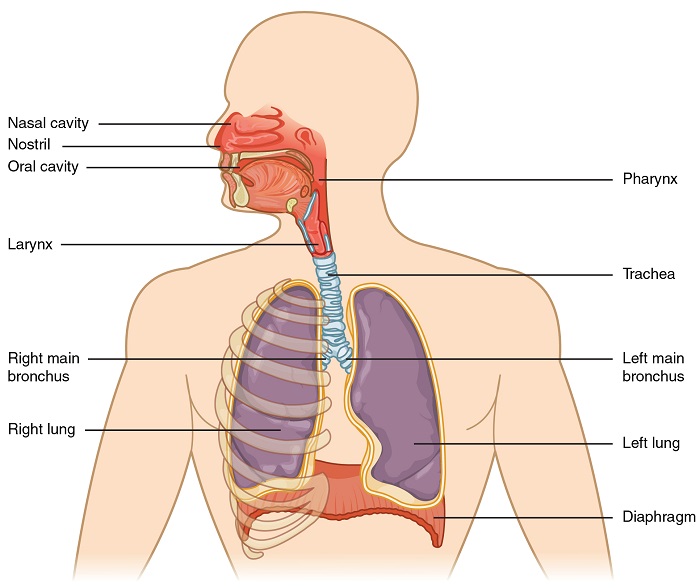
%%Structures of the respiratory system%%
- Nose: the sensory organ for smell. Also plays an important function in the respiratory system. The nose is the first filter for incoming air. Hairs and bony ridges in the nasal cavity trap the larger particles, while the nasal cavity has a mucous membrane that produces mucus to trap smaller particles. The nose also humidifies and warms the air as it passes through with moisture from the mucus, sinuses, and tear ducts. Sinuses are cavities filled with air that are located around the eyes and nose.
- Pharynx: The throat. Located behind the nasal cavities, it is the passageway for food and liquids, along with air. To prevent swallowed items from entering the passageway to the lungs, there is a flap-like structure called the epiglottis that closes off the larynx automatically during swallowing. The soft palate, at the upper rear of the roof of the mouth blocks food and liquid from entering the nose.
- Larynx: The voice box containing the vocal cords. These are usually relaxed and open. Sounds such as speech and singing, are produced when the cords are tightened, at the same time that air is passed out of the lungs.
- Trachea: The windpipe, which serves as a passageway for air. At its distal end, it splits to form the right and left bronchi.
- Diaphragm: A sheet of muscle that separates the chest from the abdomen and stretches from the spine to the front of the rib cage. It provides a moveable floor for the lungs. As the diaphragm contracts it moves downward. This causes air pressure in the lungs to decrease, which pulls air into the lungs. As the diaphragm relaxes, it moves up raising air pressure in the lungs and forcing air out.
- Bronchi: The right and left bronchi continue to branch into smaller and smaller airways until they become thin-walled bronchioles. The bronchioles terminate into tiny sac-like structures called alveoli. Its through the walls of the alveoli that exchange of carbon dioxide and oxygen take place.
- Lungs: The right lung has three lobes the left has two. Each of these lobes contains a branch of the bronchi with its system of airways. The lungs are soft, elastic, spongey, and very light. Each is surrounded by an airtight covering called the pleura. Lungs have no muscles of their own and depend on the muscles around the chest cavity to do their work.
%%Major Diseases and Disorders%%
- Atelectasis- occurs when the alveoli are either partially or totally collapsed. Common causes are blockage in the lungs, not breathing deeply due to pain or injury, and inability to cough up secretions.
- Chronic obstructive pulmonary disease (COPD)- a general term that refers to chronic disease that obstruct airflow. For example asthma, chronic bronchitis, and emphysema.
- Influenza (Flu)- caused by a variety of viruses that infect the nose throat and sometimes the lungs.
- Lung cancer- the growth of tissues in the lung that destroy or block the flow of oxygen to the healthy lung tissue.
- Pneumonia - inflammation of the lungs that can be caused by bacteria, viruses, or fungi.
- Pneumothorax- the collapse of a lung due to air in the chest cavity.
- Sleep apnea- a disorder in which breathing repeatedly stops and starts during sleep thus depriving the body of oxygen
- Tuberculosis- a disease that damages the lungs and is caused by the tubercle bacillus.
- Upper respiratory infection (URI)- any infection of the upper respiratory structures.
%%Preventative measures%%
- Do not smoke
- Use a protective mask when working around dust, toxic fumes, paints, cleaners, and so on.
- Maintain good posture
- Take deep breaths occasionally
%%Age-related changes%%
Decreased: Lung elasticity, lung expansion, functional alveoli, vital capacity, ciliary action, sense of smell
Increased: respiratory rate; diameter of chest (barrel chest), often caused by osteoarthritis in the rib-spine joints; rigidity of lungs.