CCH 15
Evolution Overview
Chapter Topics:
Invertebrate Evolution
Vertebrate Evolution
Anticipation of Chapter 47
Instructor's Interest:
Evolution is a favorite area of discussion due to a background in studying how organisms evolve over time.
A promise of interesting examples to illustrate key concepts of evolution.
Historical Context of Evolution
Critical Year: 1860 - Publication of "On the Origin of Species" by Charles Darwin, marking a pivotal moment in evolutionary theory.
Definition of Evolution: The process by which organisms change over time as they adapt to their environments. Key points include:
Life is dynamic and constantly changing across generations.
Specific traits may become favorable while others may diminish.
Evidence for Evolution:
Diverse fields provide evidence supporting evolutionary theory:
Paleontology
Molecular Biology
Taxonomy
Geology
Early Contributors:
While Darwin is often credited as the father of evolution, Jean-Baptiste Lamarck published earlier works advocating for evolution in the early 1800s.
Early concepts included ideas of descent with modification that precede Darwin’s findings.
Key Theoretical Contributors
1. Charles Darwin
Recognized as the father of evolution due to:
Comprehensive understanding of evolutionary processes.
Introduction of the mechanism known as Natural Selection.
Darwin's Background:
Originated from a family of physicians.
Pursued studies in biology at Cambridge University, graduating in 1831.
Spent five years on scientific voyages, gathering evidence that opposed existing creationist views.
2. Jean-Baptiste Lamarck
First to publicly defend evolution and provide evidence for it. Key aspects of Lamarck's theory include:
Inheritance of Acquired Characteristics: Organisms could pass traits acquired during their lifetime to offspring.
Example: Proto-giraffes stretching necks to reach higher leaves, subsequently passing on longer necks to their descendants.
Critique: Modern genetics refutes this model; traits are not acquired and instead, genetic inheritance is primarily responsible for evolutionary changes.
Evolutionary Mechanisms
Natural Selection: Proposed by Darwin as the primary mechanism for evolution, involving:
Mutations that provide advantageous traits increase reproductive success.
Over successive generations, beneficial traits become more prevalent within populations.
Example of Giraffes:
Misconception of neck length evolving solely for feeding; recent research suggests sexual selection may have played a role in developing longer necks due to competition among males for mates.
Fossil and Geographical Evidence
Lyell's Influence:
Charles Lyell's 1833 book "Principles of Geology" emphasized the Earth's age as accumulating geological observations supported the theory of gradual change over time.
Key processes: erosion, sedimentation, and uplift.
Plate Tectonics & Biogeography:
Understanding of continental drift elucidates the distribution of species and their evolutionary paths.
Fossils found across continents (e.g., similar species in South America and Africa) support the theory of a common ancestry before the separation of landmasses.
Case Studies from Evolutionary Evidence
1. Giant Sloths (Megatherium)
Existed approximately 11,000 years ago, showcasing adaptations for survival, including large size and specialized claws for foraging.
Evidence suggests opportunistic carnivory, utilizing size to steal kills from predators (saber-toothed cats).
2. Armadillos (Glyptodon)
Comparison of Glyptodon (800-pound armored mammal) with modern armadillos:
Shared common ancestor.
Evidence supports evolution and adaptation from a shared lineage, showing distinct evolutionary paths based on environmental pressures.
Patterns of Evolution
1. Divergent Evolution:
Isolated populations evolve differently over time due to environmental adaptations (e.g., rabbits on different continents).
2. Convergent Evolution:
Similar traits arise in organisms from different lineages when adapting to similar environments (e.g., physical characteristics of rabbits and Patagonian hares).
3. Sexual Selection:
Darwin’s observations indicated that not all traits evolved directly for resource acquisition; many traits arose from mating competition.
Example: Giraffe neck length for fighting rather than merely feeding.
Conclusion on Evolutionary Theory
Galapagos Islands Example:
Isolation on the Galapagos allows unique adaptive traits to develop among local species, highlighting the influence of local ecological conditions on evolutionary paths.
Tortoises exhibit variations based on their vegetation access, demonstrating how geographic separation contributes to divergent evolution.
Darwin's Evidence of Evolution
Continuation from previous discussion on Darwin's evidence regarding evolution.
Fossil Evidence
Early discussions about fossils and their significance in understanding evolution.
Fossils offer a historical record of past life forms and their changes over time.
Importance of the fossil record for proving evolutionary theory and tracing species lineage.
Geology
Understanding geological strata helps establish a timeline for the fossil record.
Layers of sediment indicate periods of life and geological activity.
Biogeography
Study of how organisms spread to new areas and adapt over time.
Key example: Darwin's observations in the Galapagos Islands.
Galapagos consists of a chain of islands off the coast of Ecuador, about 800 miles from the mainland.
Each island has distinct geological and ecological features influencing species diversity.
Tortoises as Examples of Adaptive Divergence
Example of two species of tortoises descended from a mainland ancestor:
Short-neck tortoises:
Thrive in moist tropical islands, where food is abundant.
Long-neck tortoises:
Adapted to reach scarce food resources on higher vegetation.
Darwin’s Finches
All finches observed in the Galapagos descended from a common ancestral species.
Adapted to various feeding niches available on the islands.
The migration of finches likely resulted from storms disrupting their journey.
Resulted in rapid diversification due to lack of competition.
Types of finches based on feeding behavior:
Insectivorous finches:
Have beaks suited for catching insects.
Omnivorous finches:
Possess varied diets and adaptable feeding methods.
Evolutionary Mechanisms Discussed
Move towards Darwin’s theory of natural selection as a mechanism for evolution.
Contrast between Lamarck’s idea of the inheritance of acquired characteristics and Darwin’s natural selection.
Natural Selection Principles
Heritable Variation: Organisms possess genetic variations that can be passed on to offspring.
Variations can arise from mutations, which provide raw material for evolution.
Struggle for Existence:
Reproductive capacity of species often exceeds environmental support.
Results in competition for limited resources.
Survival of the Fittest:
Fitness defined as the ability to reproduce successfully relative to others in the species.
Only the individuals with the best adaptations survive under specific environmental conditions.
Required Preconditions for Natural Selection
Members of a population exhibit heritable variation.
Reproductive capacity exceeds environmental resource limits.
Different survival and reproductive success based on traits leading to changes in trait distribution across generations.
Changes in The Environment
Environmental conditions are dynamic and play a crucial role in shaping adaptations.
Evolution is ongoing due to constant changes in the environment and available resources.
Types of Selection
Directional Selection:
Favors one extreme phenotype over others, shifting trait distribution in one direction.
Example: Increased body sizes favored during periods of cooling climate for better temperature regulation.
Stabilizing Selection:
Favors average phenotypes at the expense of extremes, compressing the range of variation.
Example: Optimal egg-laying numbers in starlings.
Disruptive Selection:
Favors extreme phenotypes at both ends, selecting against intermediate phenotypes, leading to speciation.
Example: Rattlesnakes in different habitats developing distinct coloration patterns.
Sexual Selection:
Preferences that enhance reproductive success, leading to traits that might be disadvantageous for survival.
Examples: Peacocks' extravagant tails and moose antlers for mating competition.
Adaptive Radiation
Rapid speciation occurs in response to newly available resources or ecological niches.
Key Events:
Examples of adaptive radiation demonstrated by Darwin's finches.
Mass Extinctions: Adaptive radiation often follows mass extinction events, as seen with sharks and bony fish after the Devonian extinction or with mammals post-dinosaur extinction.
Fossil Records and Examples of Evolution
Fossil evidence enhances understanding of evolutionary history with shows in features like trilobites and feathered dinosaurs.
Key evidence includes:
Complexity of trilobite eyes evolving over time.
Evolution of avian traits from feathered dinosaurs leading to modern birds.
Conclusion on Modern Evidence for Evolution
With advancements in molecular biology and a better fossil record, there is a more complete understanding of evolutionary history than during Darwin’s time.
The fossil record indicates a complex history of life and evolutionary processes, supporting Darwin's theory.
Biogeographical Evidence
Understanding of how species have evolved in relation to geographical changes.
Example of the Great American Interchange: North and South America exchanged species following the formation of the Isthmus of Panama 2.7 million years ago, leading to significant changes in local biodiversity.
Important details regarding the characteristics of species resulting from these interactions and the impact of climate on their survival and evolution.
Migration of Species
General Overview of Migration
Species were able to migrate south after the formation of the isthmus.
Terror birds were one notable successful species during this migration.
Marsupials were significantly negatively affected by these changes.
Extinction and Competition
Impact of Placentals on Marsupials
The formation of the isthmus allowed North American placental mammals to spread rapidly into Central America and South America.
The introduction of placentals led to a significant decline in marsupial species due to competitive exclusion.
Placentals effectively outcompeted marsupials in nearly every ecosystem.
Record of Extinctions
A wave of extinctions was observed in the fossil record, indicating that relatives of placentals were better adapted to various environmental niches.
Major predators, including most of the terror birds, were replaced, leading to their eventual extinction in South America before disappearing from North America.
Factors Contributing to Extinctions
Key Competitors
Sigmoid Rodents
Included species such as rats and mice, which were effective as small herbivores and omnivores.
They outcompeted many native South American species.
Canids
Wolves, direwolves, and hyenids outcompeted various medium-sized predators, including the terror birds.
Cervids
Deer relatives thrived in South America, outcompeting many herbivorous species.
Procionids
Raccoon relatives were highly successful in South America despite originating from North America.
Survivors from Marsupials
Examples of Marsupial Success
Porcupines evolved in South America and managed to migrate to Canada and Alaska.
The only surviving marsupial in North America is the opossum, which has shown remarkable adaptation as a generalist competitor across various habitats.
Giant Sloths
These creatures, which evolved in South America, migrated to North America but subsequently went extinct, likely due to human activity around 11,000 years ago.
Glyptodonts
Originated in South America and spread into North America, also going extinct possibly due to human factors.
Evolutionary Perspectives on Migration
The Great American Interchange
Many species successfully moved from South America to North America, yet did not survive the subsequent mass extinction event following the last ice age.
Aquatic Ecosystem Changes
Effects of the Isthmus on Aquatic Species
The formation of the isthmus disconnected the Atlantic and Pacific Oceans, leading to significant evolutionary changes in aquatic ecosystems.
Example provided of two diverging species of wrasse due to this disconnection.
One species evolved in the Pacific – Cortez rainbow wrasse (found in the Sea of Cortez).
Another closely related species in the Atlantic, showcasing similar physical features but diverging in coloration.
Both species originated from the same species approximately 2.5 million years ago, but conditions in the Atlantic and Pacific differ vastly in terms of nutrients, available fish species, and temperature.
This example demonstrates how isolation caused by geographic barriers resulted in speciation.
Conclusion
Remaining materials on biochemical aspects and additional information were mentioned to be available in the slides posted earlier on campus, prompting students to refer to them for a full understanding of the topic.
Biochemical Evidence
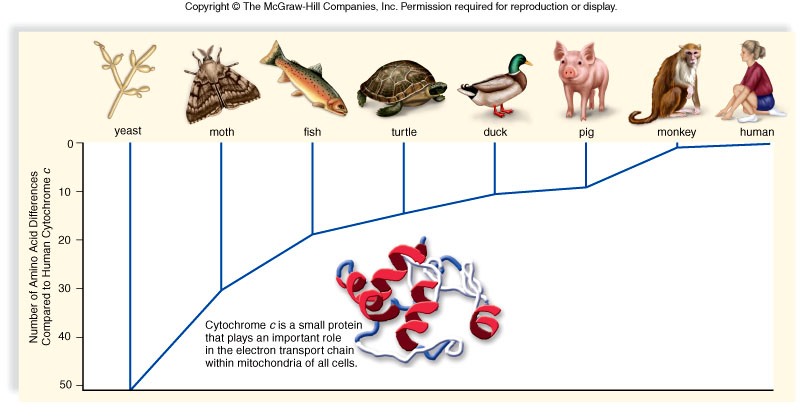
●All life uses the same basic molecules: DNA, amino acids, ATP, ribosomes, etc…
●Identical genetic code.
●Many genes very similar – especially developmental genes.
●Ex) Cytochrome c
Major Evolutionary Changes
●4.5 bya – Earth finished accreting, begins cooling.
●First life arose 4.1 bya.
●First true cells.
●Determined by chemical fingerprints (present in volcanic rocks) 3.8 bya, no fossils.
●Recent studies on zircon crystals indicate life was present 4.1 bya
Loading…
●Earliest prokaryote fossils – 3.46 bya
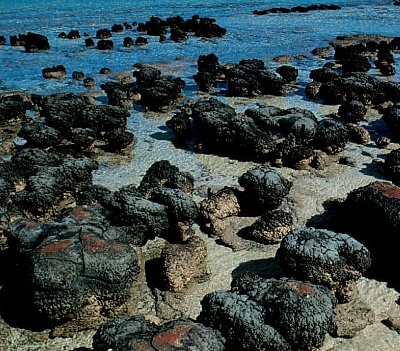
●Stromatalites – photosynthetic bacteria, accumulate sandstone
●Responsible for producing O2 in the atmospheric
●Ozone shield a direct result of this process (took 2 billion years to form)
●2.2 bya – first eukaryote fossils.
●Endosymbiosis theory.
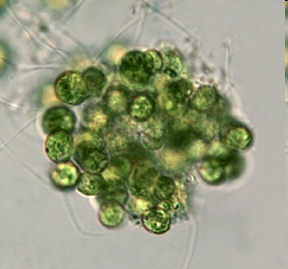
●1.4 bya – colonial protists appear.
●Aquatic, capable of sexual reproduction.
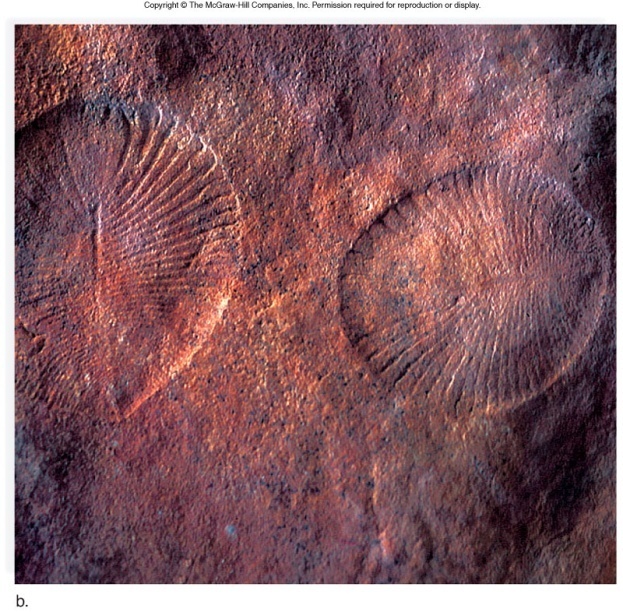
●600 mya – true multicellular organisms.
●Edaicean invertebrates.
●End of the Precambrian.
Loading…
Explosion of Life
●580 mya – present.
●Differentiation and diversification of multicellular life.
●Plants and animals invade the land, occupy every niche available.
●A direct result of photosynth. production of O2.
●Ozone (O3) shield protects against harmful radiation.
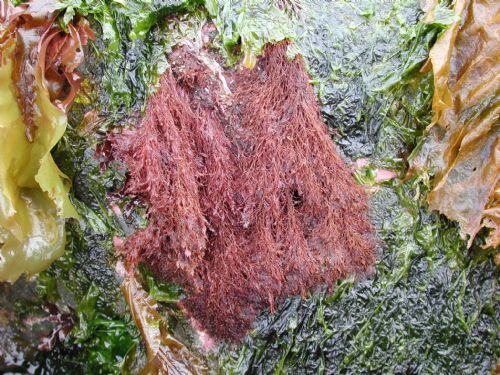
●Plants first to appear – approx. 540mya.
●Very simple, similar to algae.
●Non-vascular plants (similar to mosses) appeared 480mya.
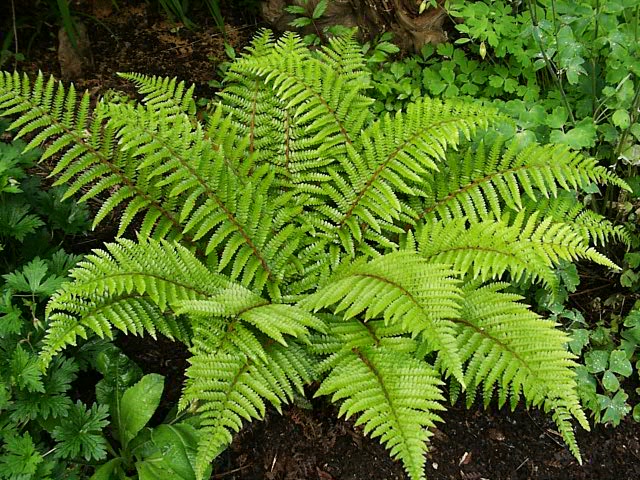
●First true vascular plants (ferns) – 440mya
●Animals took first steps approx, 440mya.
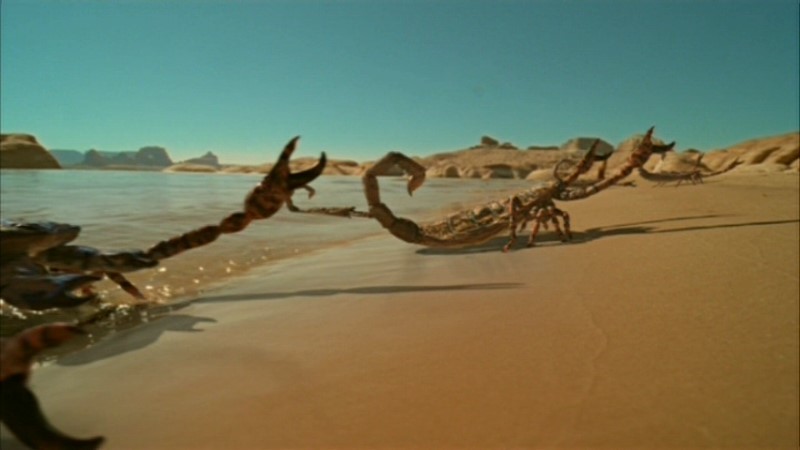
●Giant sea scorpions, breathed through gills.
●Giant millipedes 430mya, first air-breathers.
●Early animals inefficient at absorbing O2 from air.
●First amphibians (vertebrates) would not appear until 400mya at the earliest