Catheter and Perineal Care
Personal hygiene is a vital component of caring for a client with a urinary catheter. One of the greatest risks involved with urinary catheters is infection. Adequate hygiene can help to reduce this risk and keep the client healthy.
Care of a client with a urinary catheter is typically described as perineal care or peri-care. Perineal care involves cleansing around the catheter, the client's genitalia, and the anus. A vital consideration when performing perineal care is to safeguard the client's safety, dignity, and privacy. Catheter care should be done at least once every 8 hours. Each facility has policies to ensure timely care is conducted to decrease the chance of infection. It is the nurse's responsibility to understand and follow policy for caring for catheters.
Assess the environment to make sure it is safe for you and the client during perineal care. For example, if the client is confused, ask a colleague to remain on the opposite side of the bed to talk to the client and promote safety. With clients who tend to become combative, it is always a good idea to have another person present when you give that client perineal care. Having a witness present offers protection in the event of any allegations of abuse.
Position the client for perineal care so that you have access to the genitalia but are also able to keep the client comfortable. If the client will remain in bed for perineal care, place an absorbent pad beneath the client to keep the sheets clean and dry. Close the curtains around the bed if it is a double-occupancy room. You can also give perineal care while showering a client or while a client is still seated after using the toilet.
The catheter care you perform should be specific to the client's genitalia. Know which areas are vulnerable to infection, as well as which areas are prone to cause infection. Always use warm water, a clean washcloth, and an approved perineal wash solution. Avoid alcohol or irritants that may hurt the sensitive genital skin. Wear gloves when performing perineal care and always consider the client's privacy, culture, and condition when performing perineal care.
Have all supplies ready before starting perineal care. Organization can help reassure the client and facilitate prompt completion of the task.
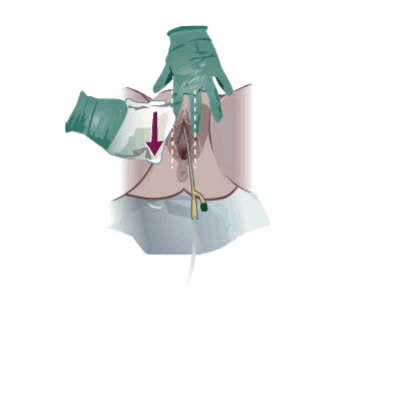
With female clients, use a front-to-back cleansing method in the perineal area. Cleanse the external genitalia (labia majora) and the internal genitalia (labia minora, urethra opening, and vaginal canal opening). This is to prevent the sweeping of fecal material or bacteria upward into the vaginal canal and the urethra. Use a different part of the washcloth with each swipe. Improper wiping can cause both UTIs and vaginal infections. Clean catheters in a circular motion directly around them.
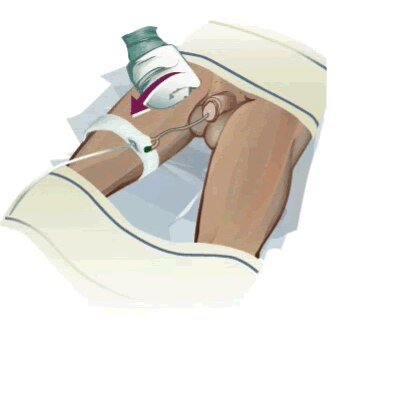
For male clients, first cleanse the upper thighs and then the insertion site of the catheter. For a circumcised male client, cleanse around the meatus and glans, working your way down the shaft of the penis to the scrotum. Remember to change sides of the washcloth to clean each area. If the client is uncircumcised, retract the foreskin, cleanse the head of the penis, then release the foreskin. Failure to replace the foreskin can result in a painful swelling episode that can make it difficult to return the foreskin to its expected position. For both, cleanse the scrotum to the anus, always using a clean side of the washcloth.
Suprapubic Catheter Care
Suprapubic catheter dressings should be changed daily. The dressing may be a clean or sterile procedure, depending on the facility's policy.
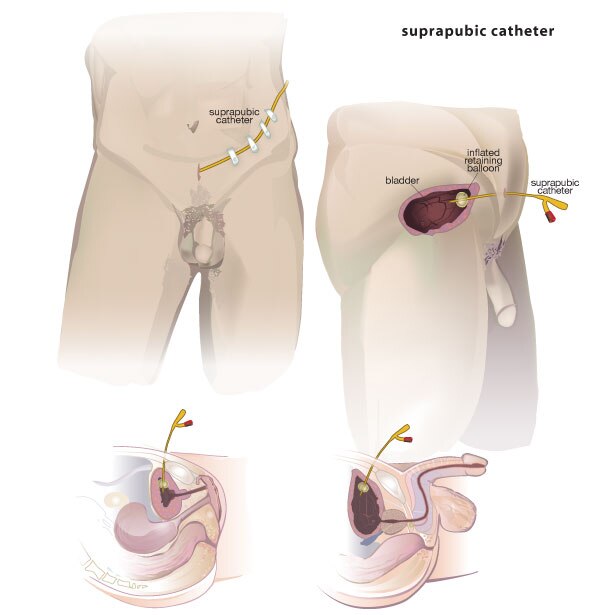
suprapubic catheter