Population Genetics
• What is population genetics?
• Frequencies of alleles in populations
• The Hardy-Weinberg Law
• Mechanisms that change allele frequencies
• Examples of human and animal population
genetics
What is a population?
• A species
– All members of the same species can
interbreed and produce fertile offspring
– not all have the opportunity
A population
– A group of organisms within the same
species that do have the opportunity to interbreed
– Capable of gene flow🧬
Population Genetics
• Up to now considered genetics of individuals, but it is whole populations of individuals that mate
• Phenotypes appear with different frequencies in the population
-Up to now considered genetics of individuals, but it is whole populations of individuals that mate.
• Phenotypes appear with different frequencies in the population
• E.g. albinism – in humans and animals it is a relatively rare trait compared to the wild pigmented
phenotype
—
• Why are we interested in it?
• the probabilities of inheriting genetic traits – genetic counselling
factors that change the frequencies of genetic traits
• gene flow between populations
• effects of inbreeding
Allele Frequencies
• The variability of phenotypes in an individual population
(human or animal) is due to allele differences
• Differences in the frequency of phenotypes in a population must be due to differences in allele frequencies
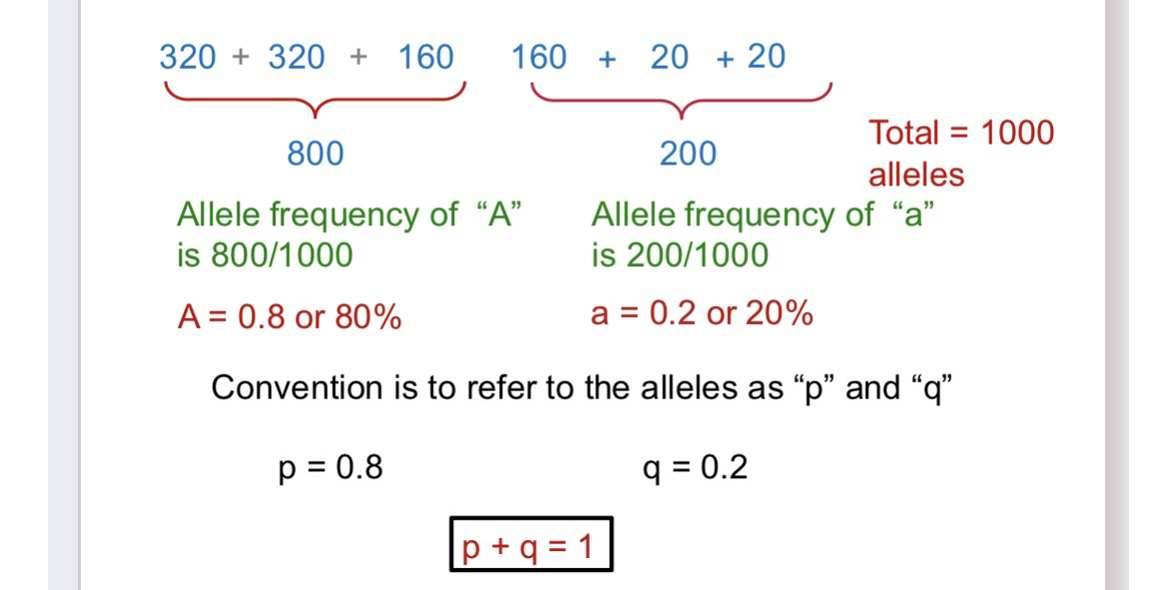
• Usually the frequency of an allele is given as a % or decimal fraction:
– Frequency of A = 0.8 or 80%
– Frequency of B = 0.2 or 20%
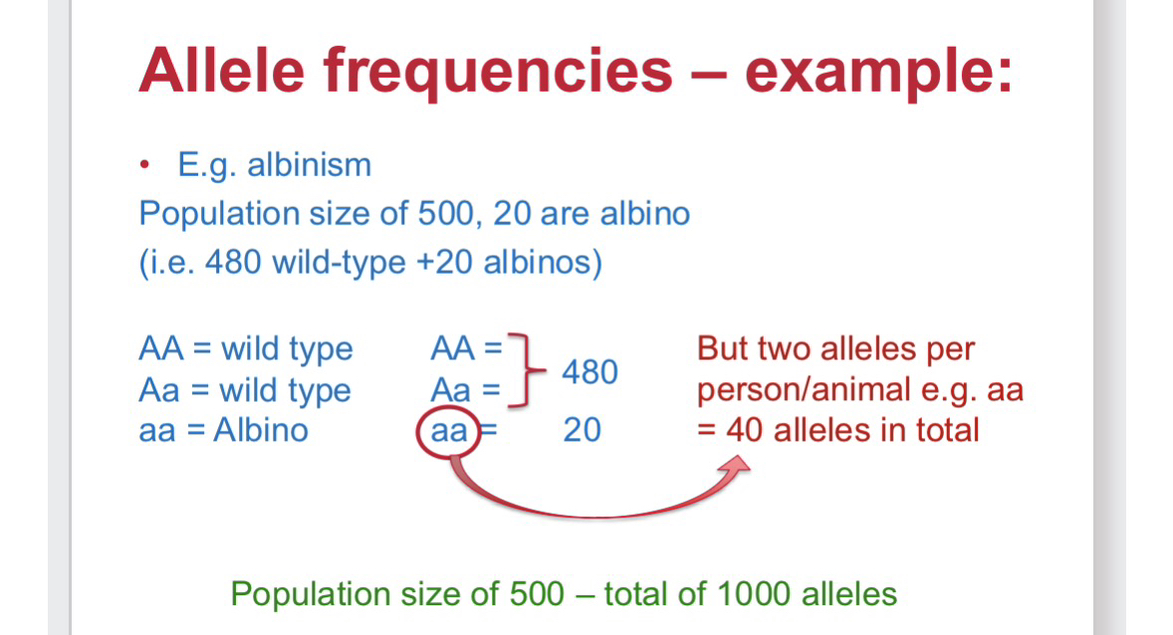
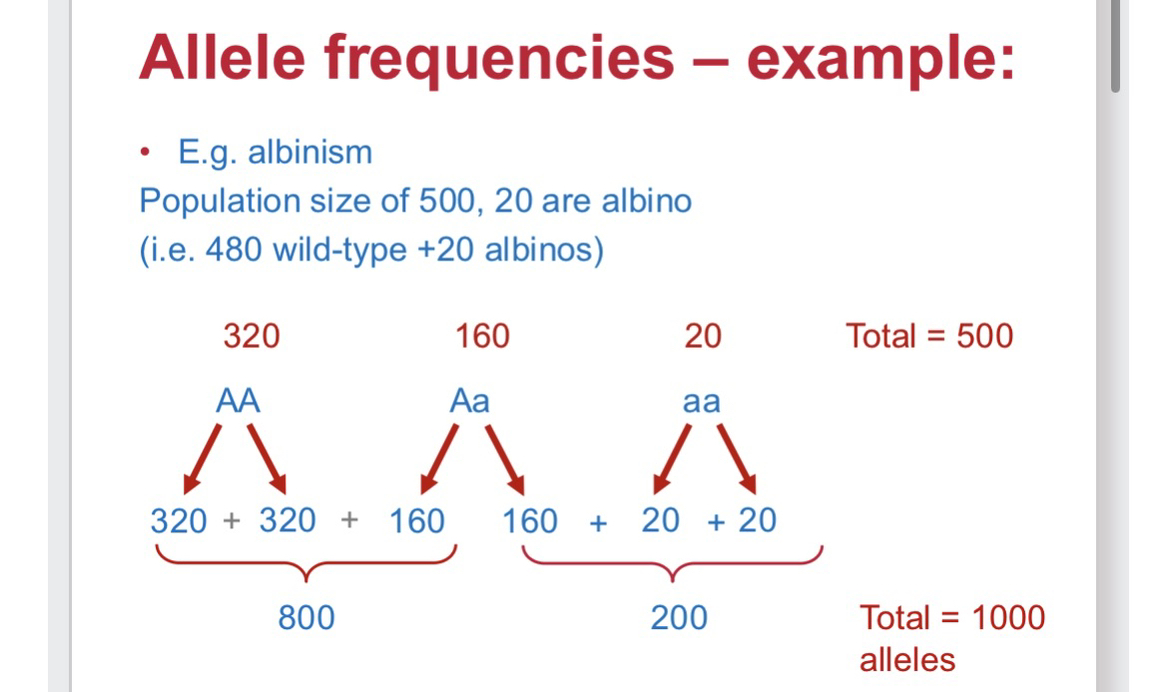
1000-40 = 960%3= 320 A=160, a=20
IMPORTANT!!!
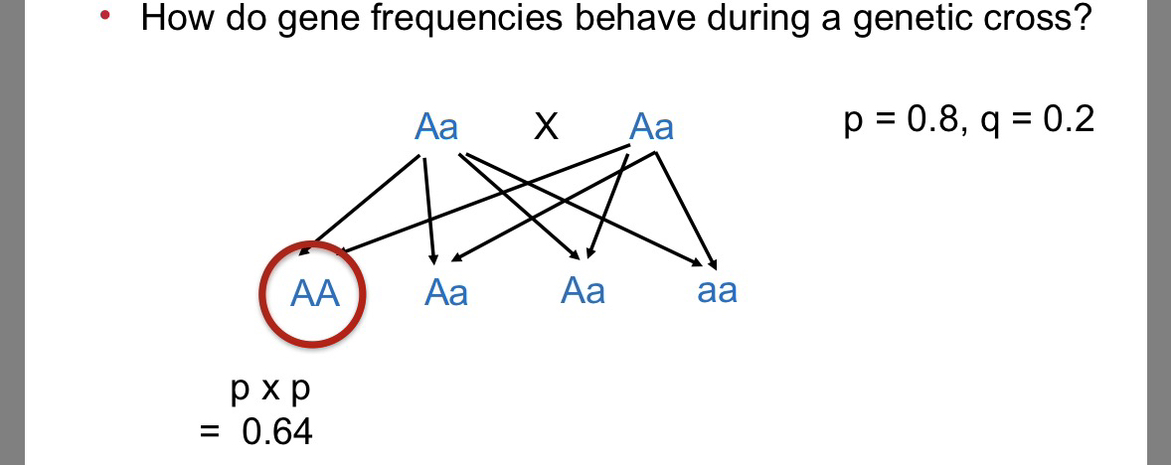
What happens to allele frequencies during genetic
crosses?
• If there are two alleles that determine a phenotype, the frequency of those two alleles will add up to 100%:
• Frequencies of alleles are designated by p and q
– p = frequency of one allele
– q = frequency of the other allele
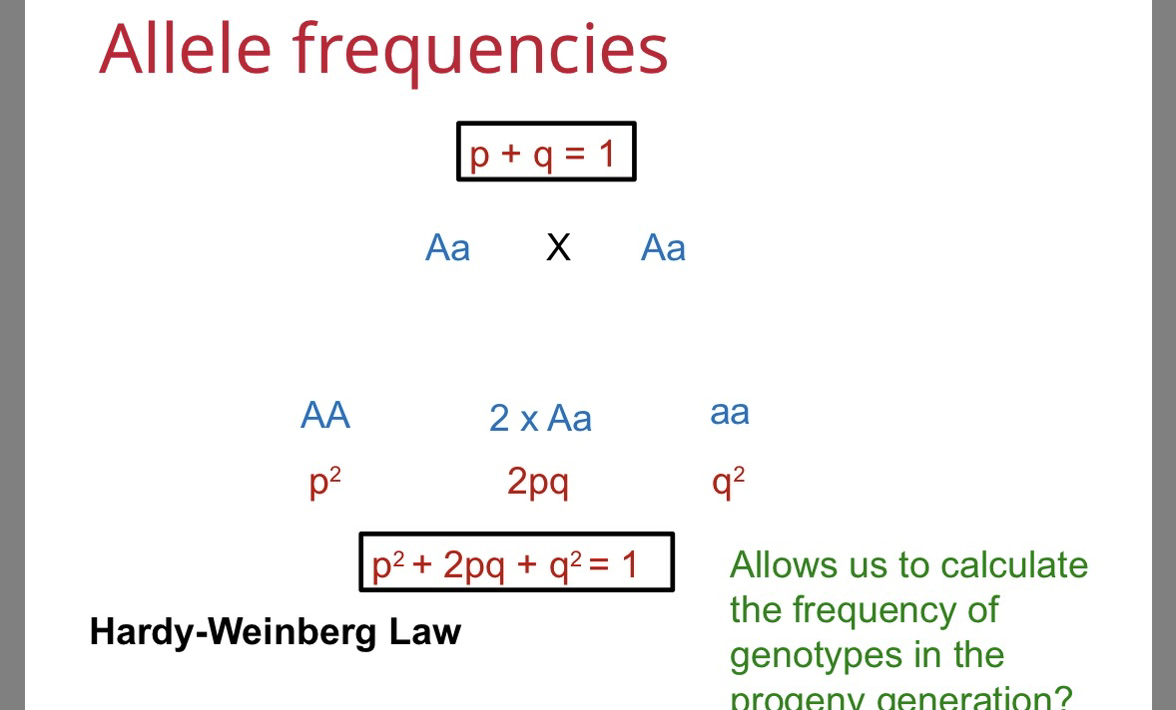
• p + q = 1
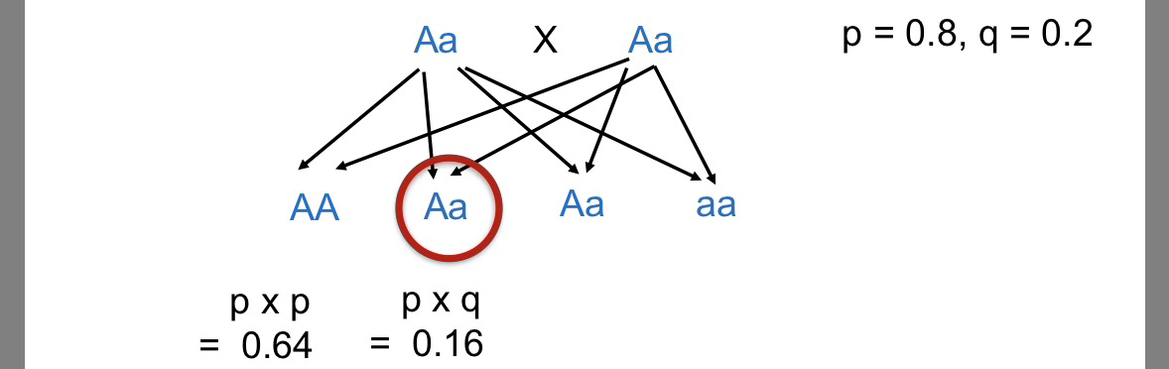
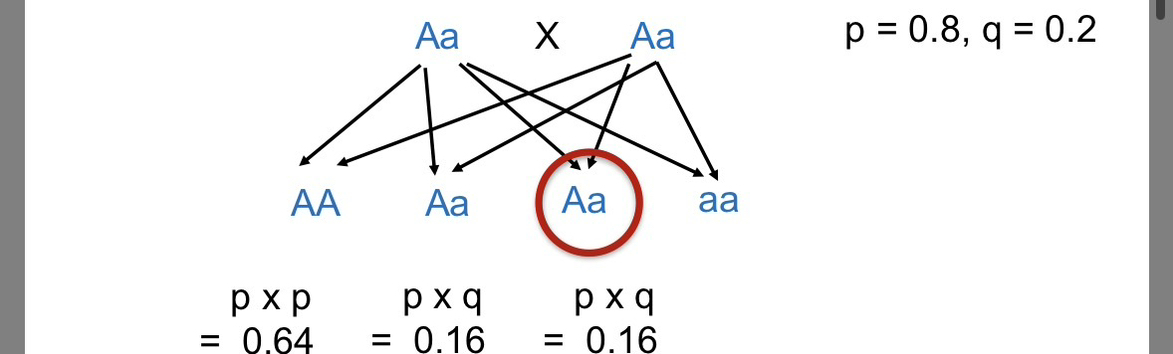
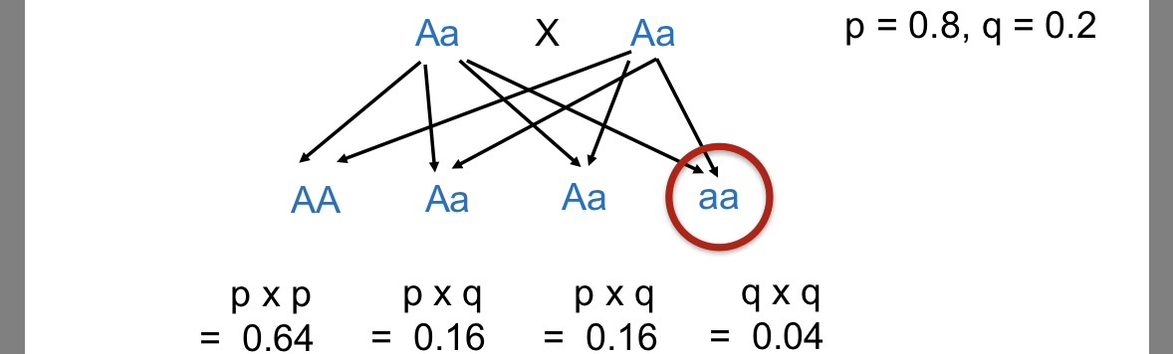
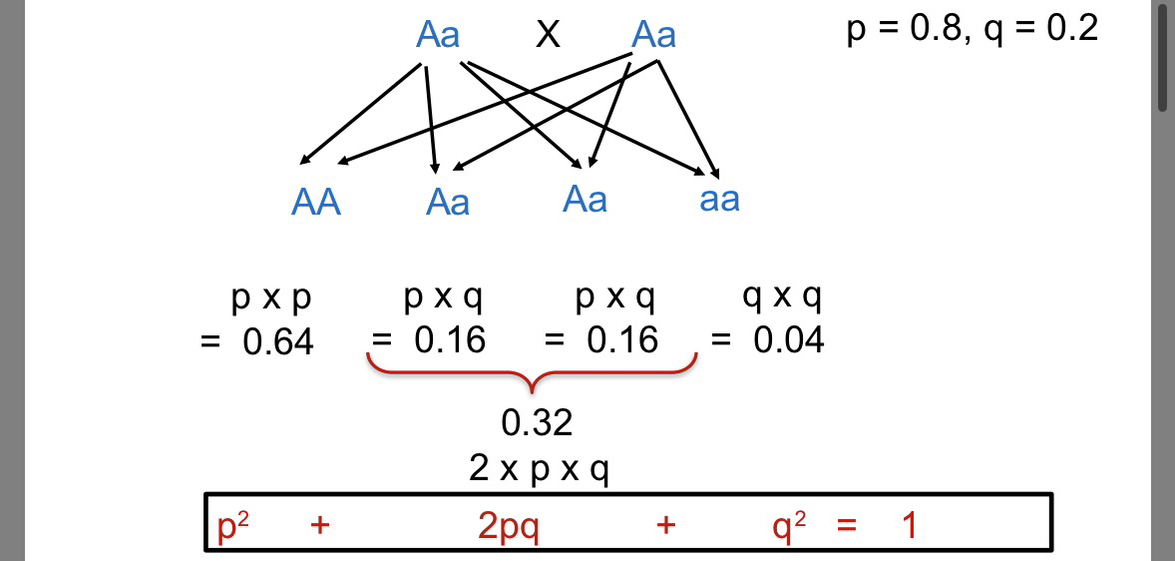
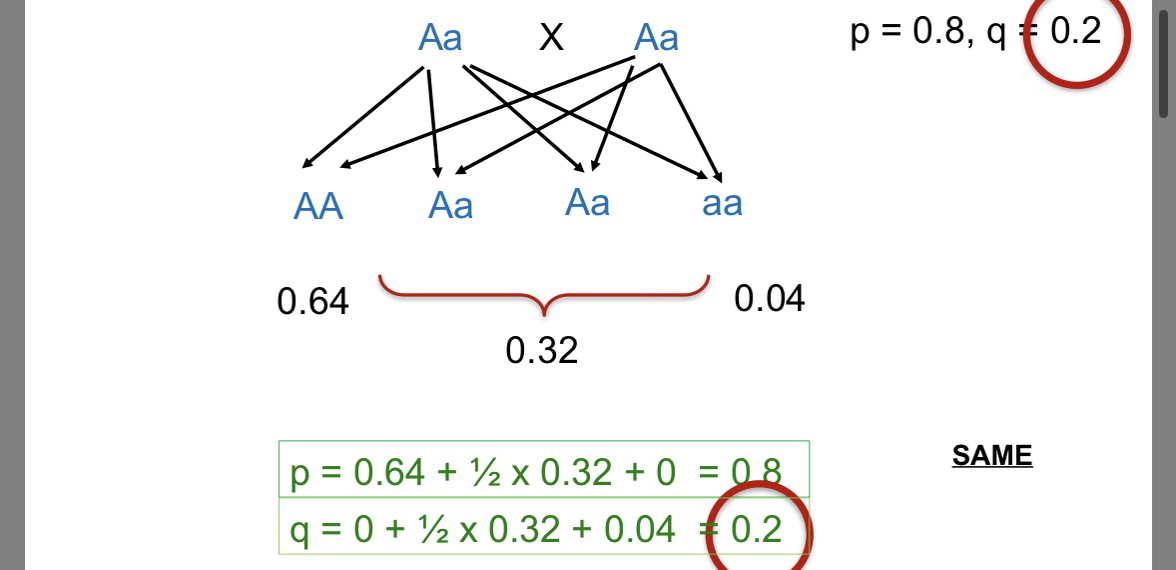
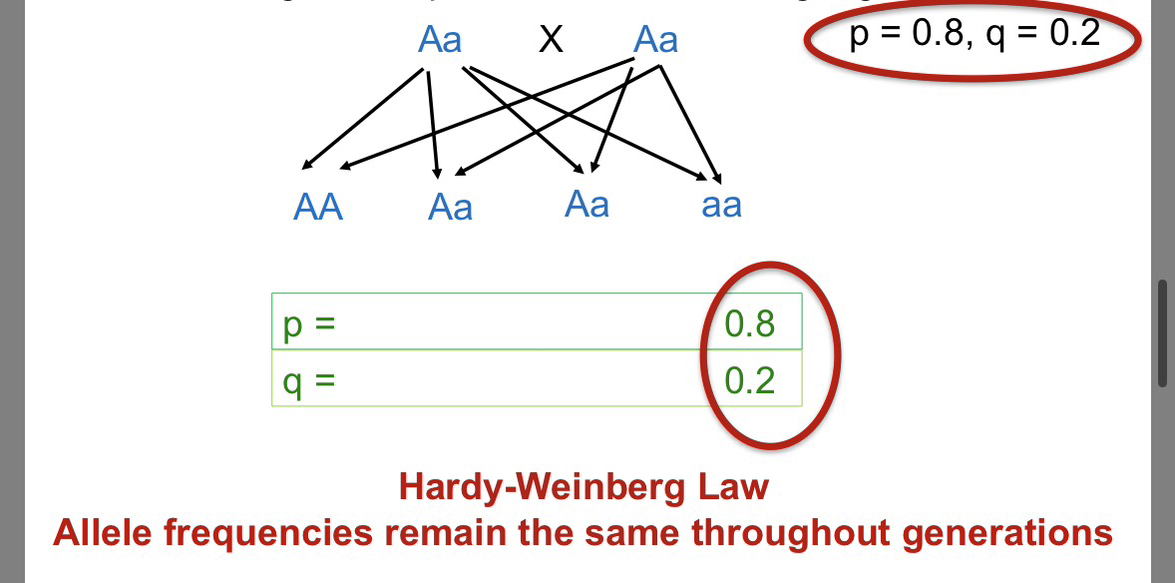
Allele Frequencies
There are several assumptions under the HW Principle:
• Random mating must happen
• Populations must be large
No selection pressures
• Immigration or emigration
-Hardy-Weinberg Law Allele frequencies remain the same throughout generations
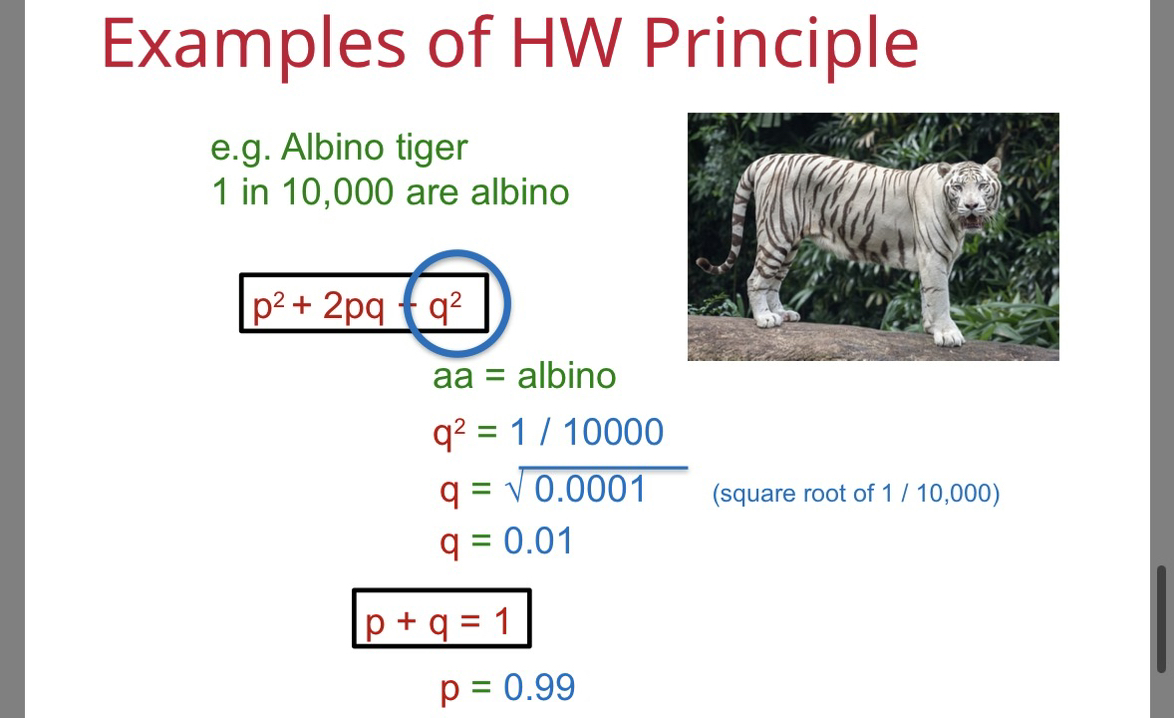
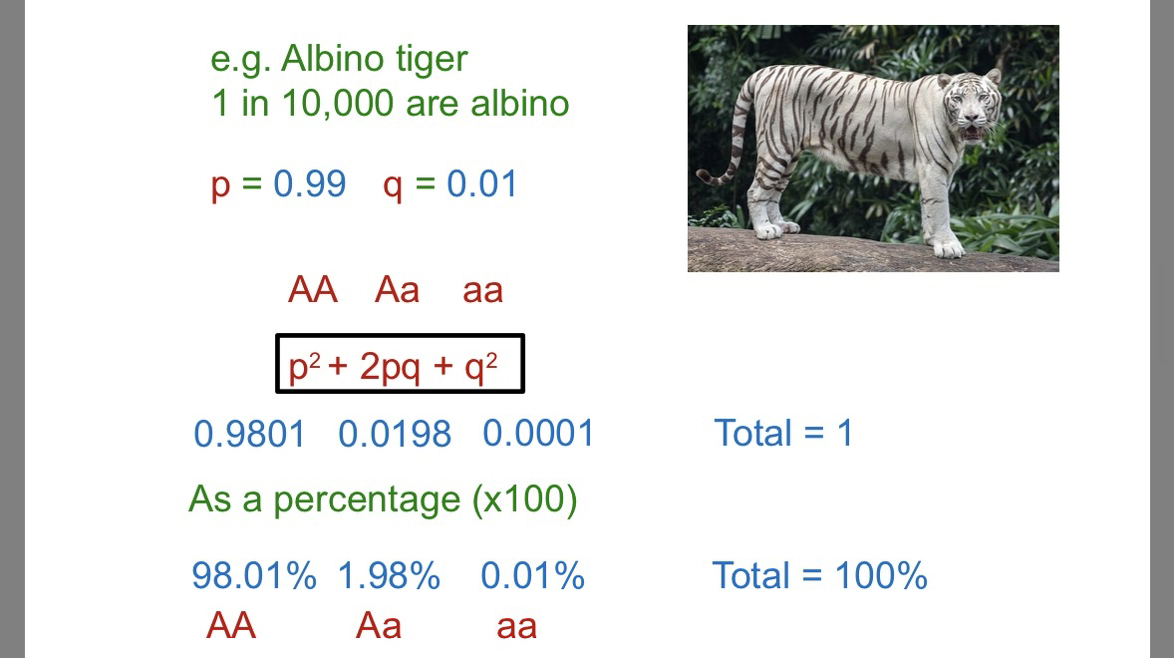
albino tiger
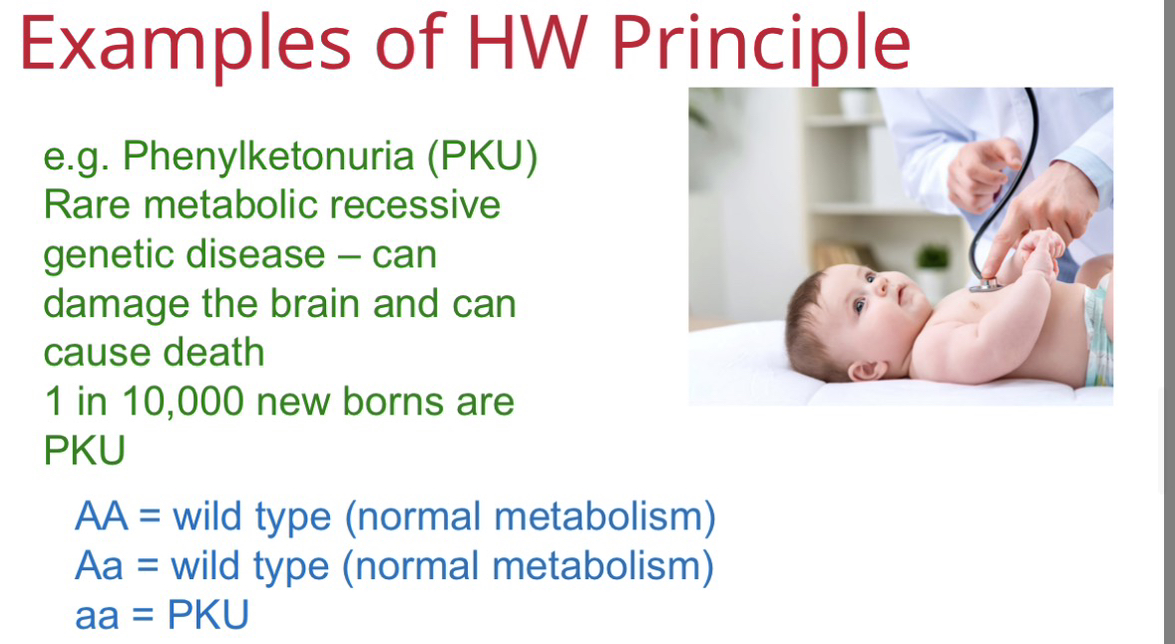
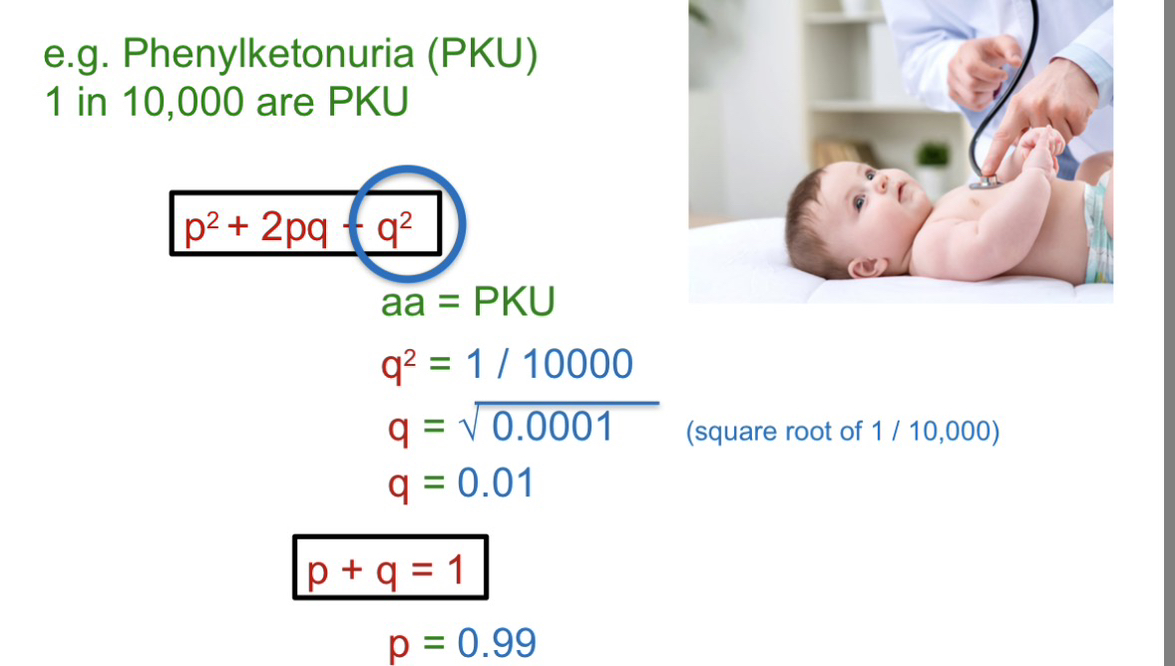
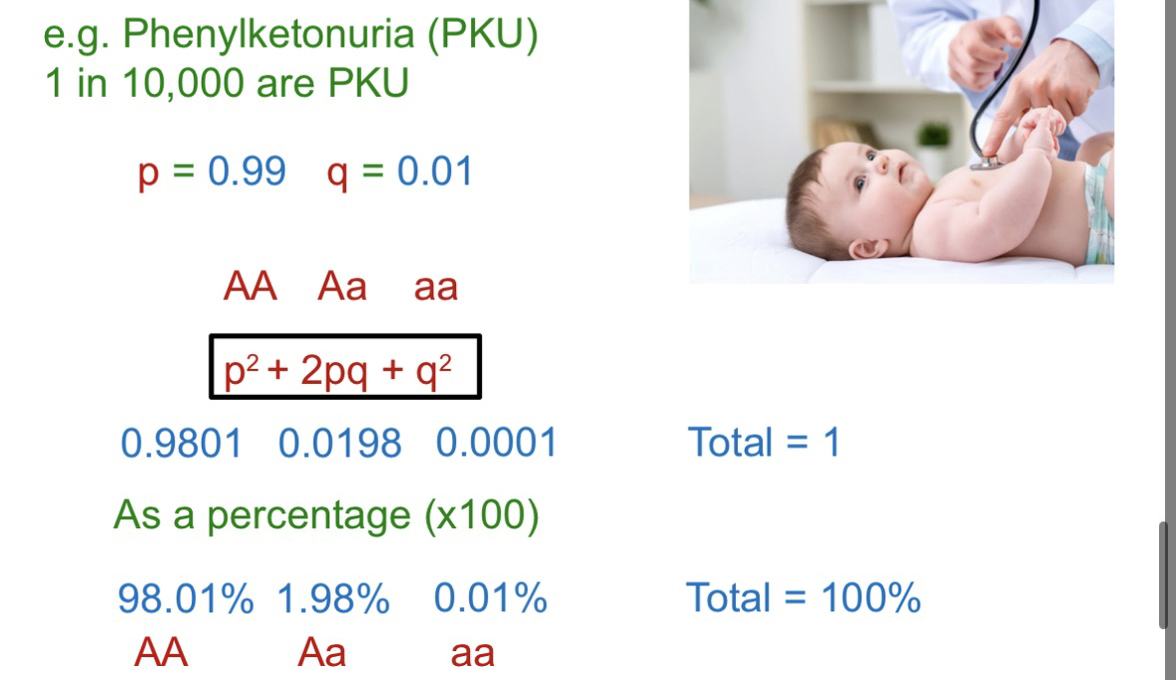
Phenylketonuria
Causes of evolutionary change in gene frequencies
-The HW principle indicates that allele frequencies do not change as a result of reproduction:
p = 0.5 and q = 0.5
• But there are processes that DO cause change in allele frequencies
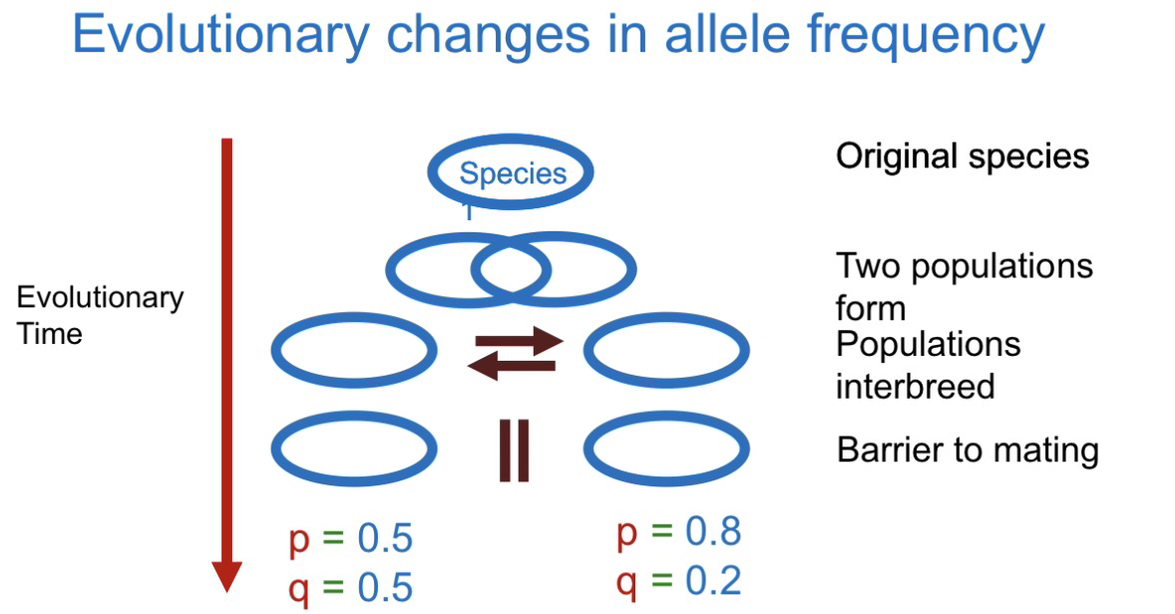
Comparing populations
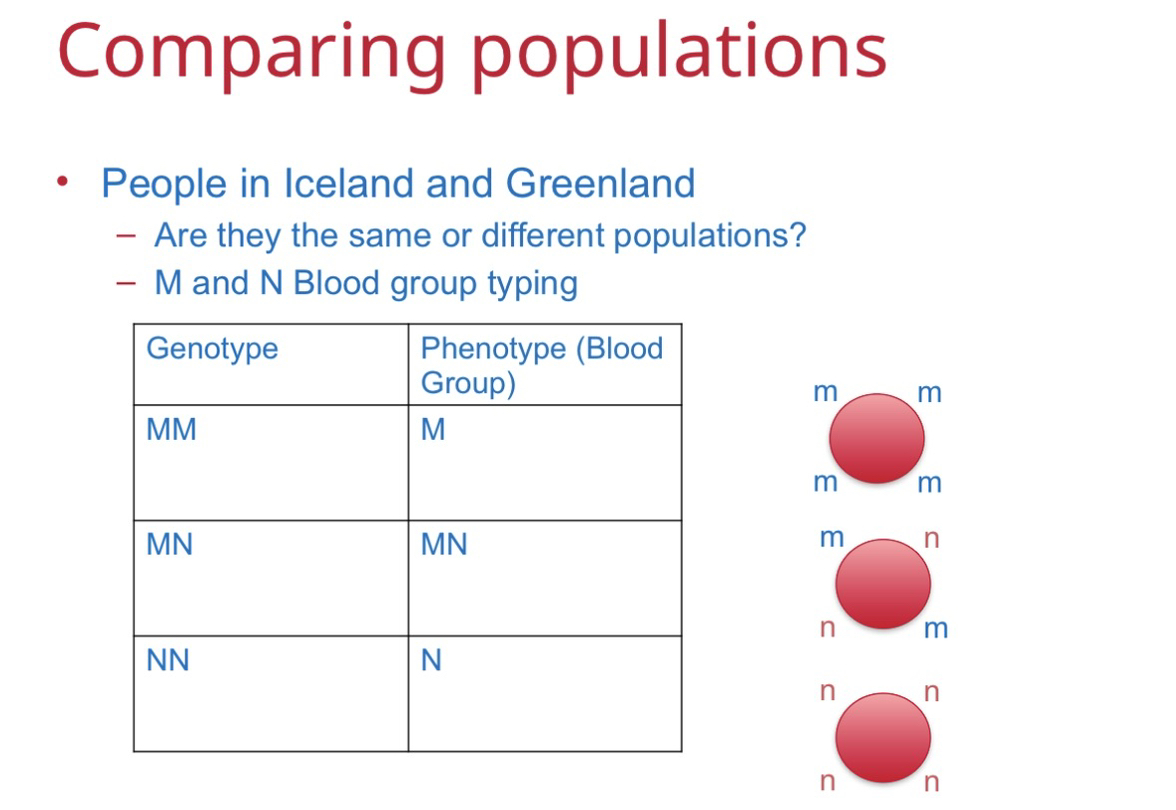
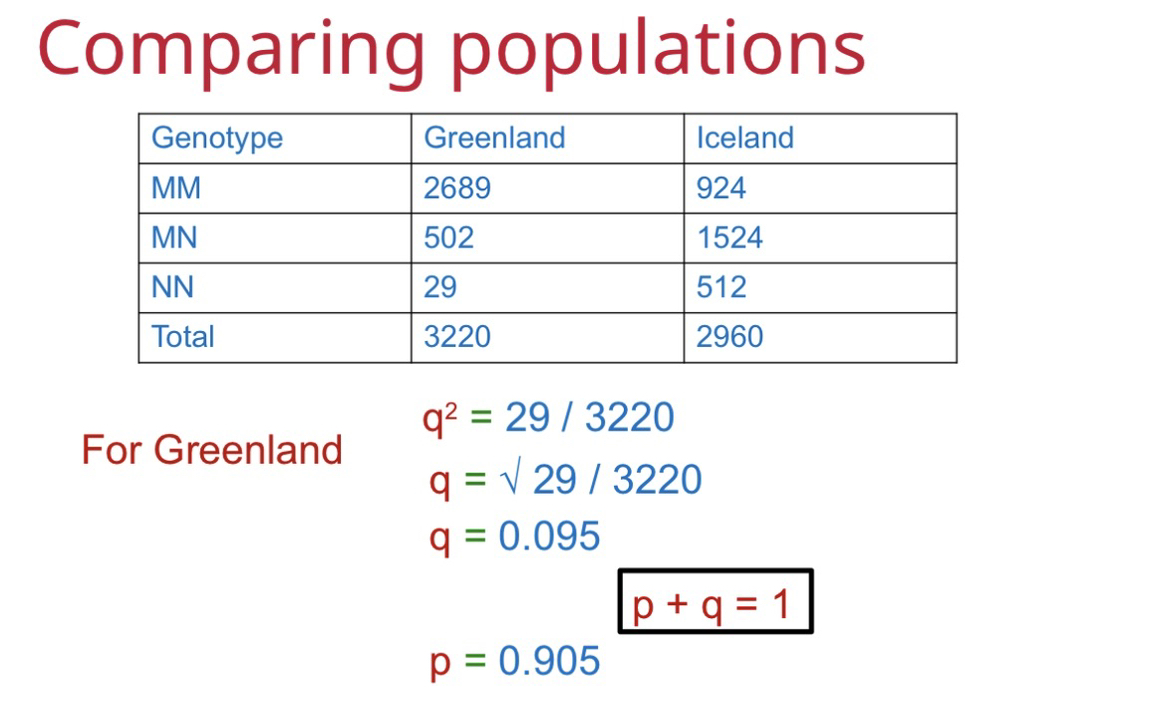
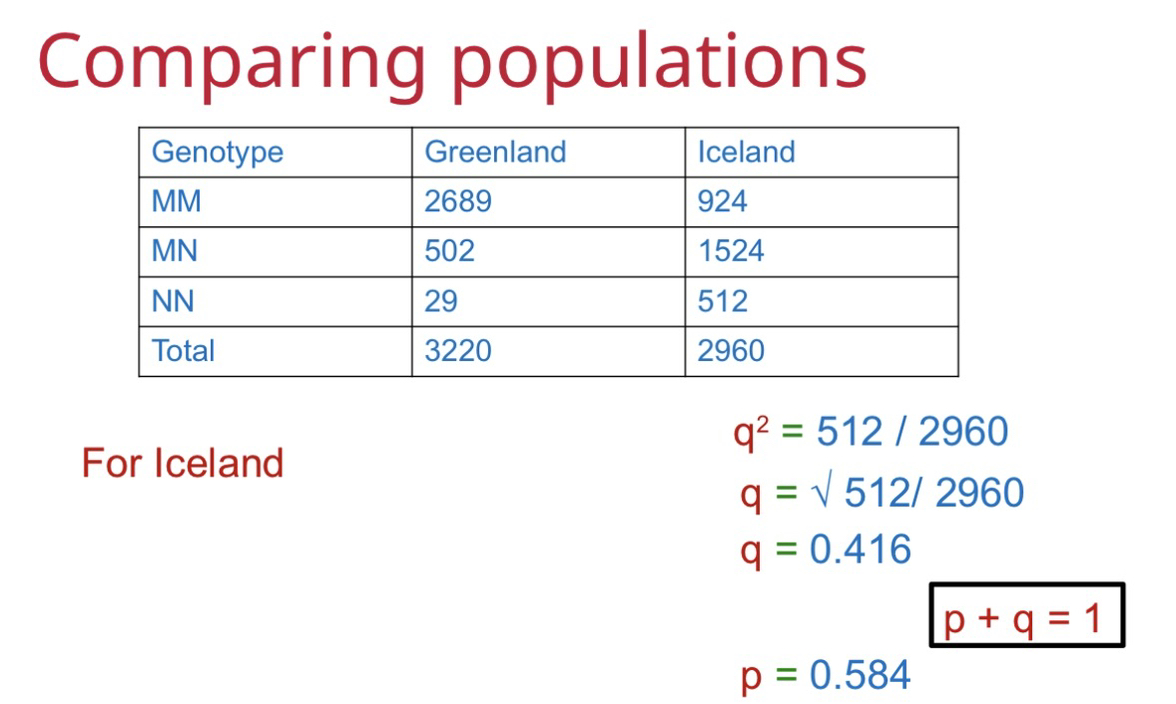
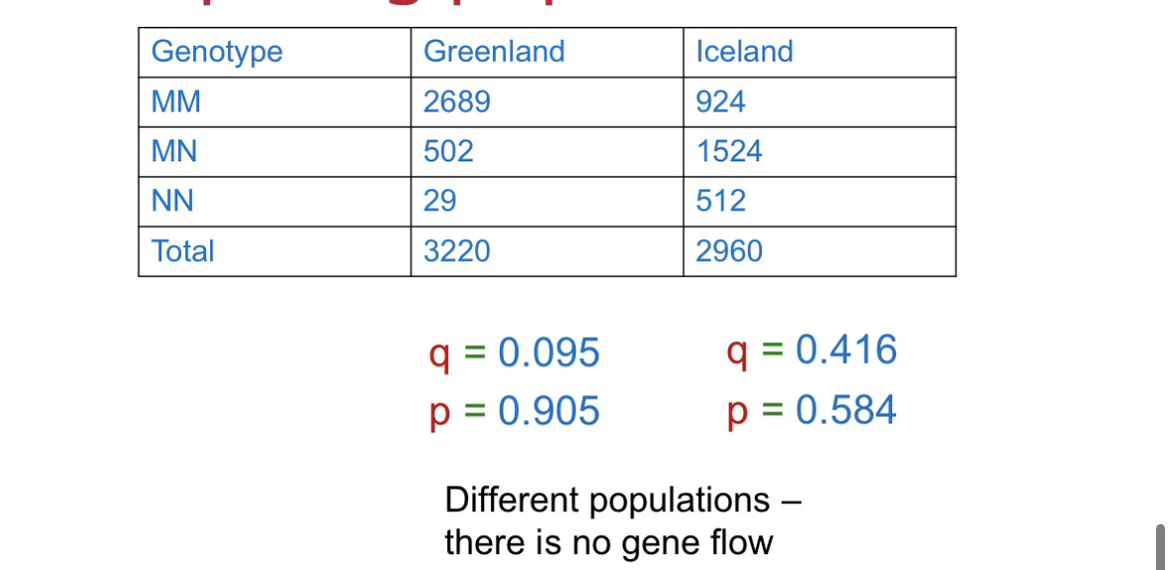
the frequencies are very different numbers which shows no gene flow, if numbers similar then there may be gene flow.
Mechanisms that cause allele frequency
changes
Factors causing Hardy-Weinberg law to break down:⭐️
1. Small populations - chance events
2. Founder effects
3. Gene flow between populations (migration)
4. Mutational changes
5. Non-random mating
– Inbreeding (e.g. Hapsburg Lip and Jaw)
– Selfing
Mechanisms that cause allele frequency changes
• Factors causing Hardy-Weinberg law to break down:⭐️
1.Small Populations, Chance events
a) Genetic drift (random loss or gain of alleles)
b) Bottleneck effect
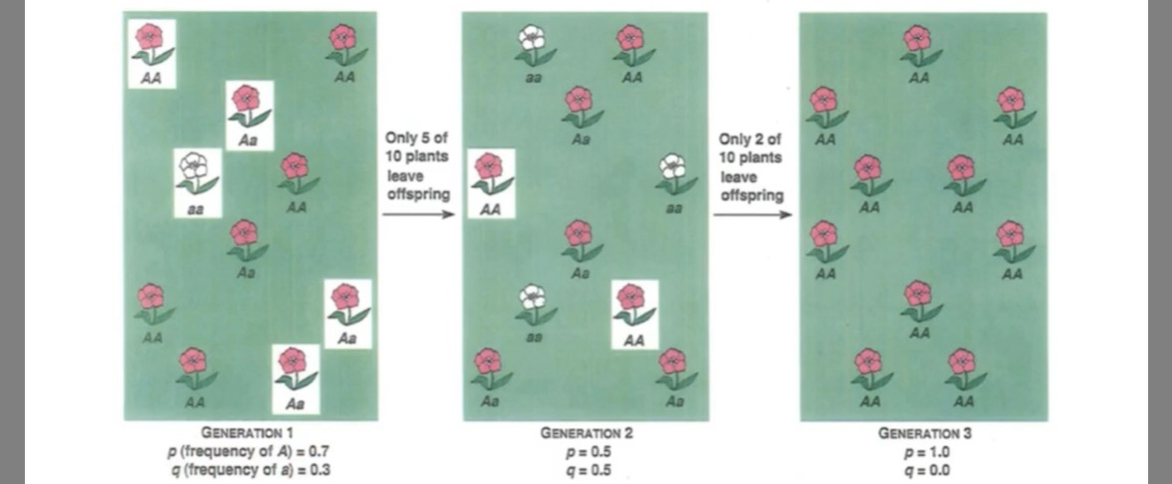
P= frequency of A
q= frequency of a
-bottleneck effect 🍾
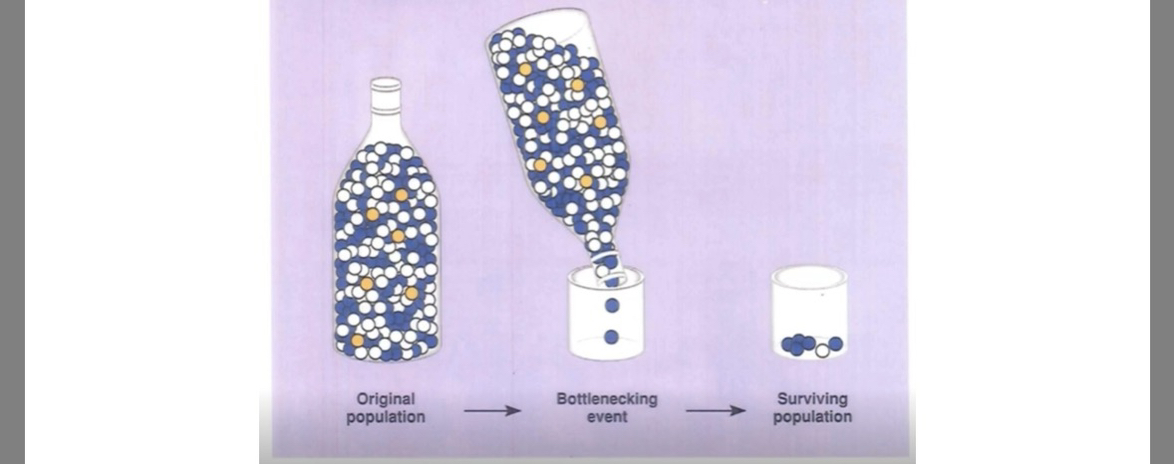
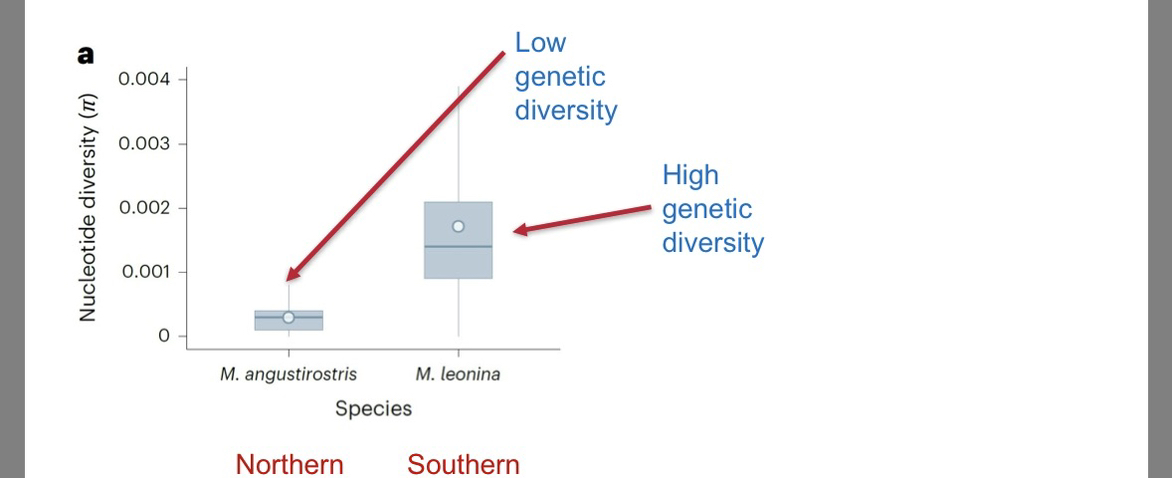
• Bottleneck effects: a sharp reduction in population size due to environmental effects resulting in a loss of genetic diversity
-Bottleneck in northern elephant seals \/
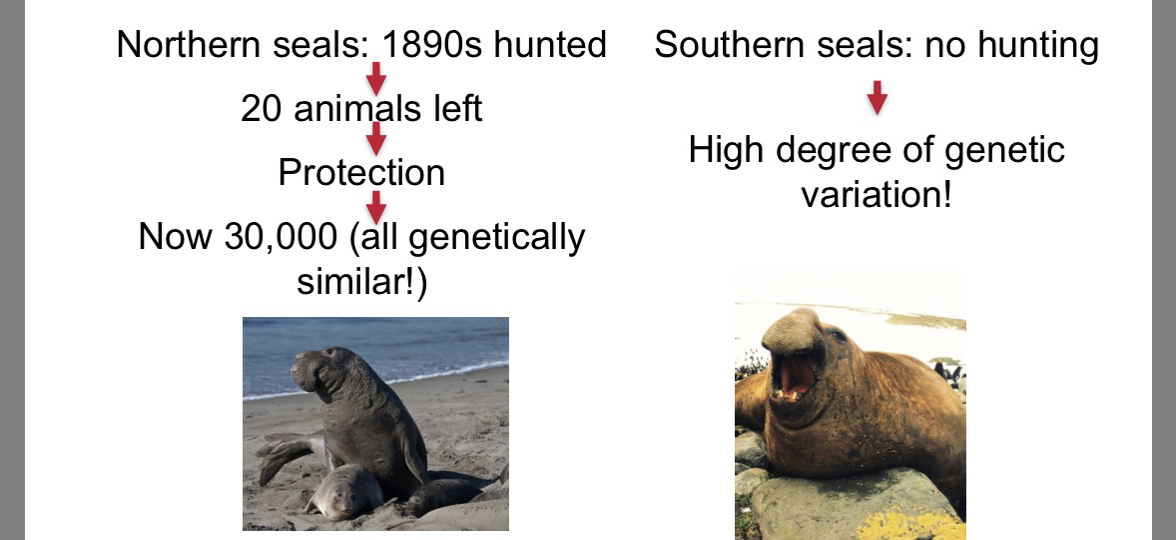
Mechanisms that cause allele frequency changes
• Factors causing Hardy-Weinberg law to break down:⭐
Founder effects
-Founder effects: loss of genetic variation that occurs when a new population is established by a very small number of individuals from a larger population.
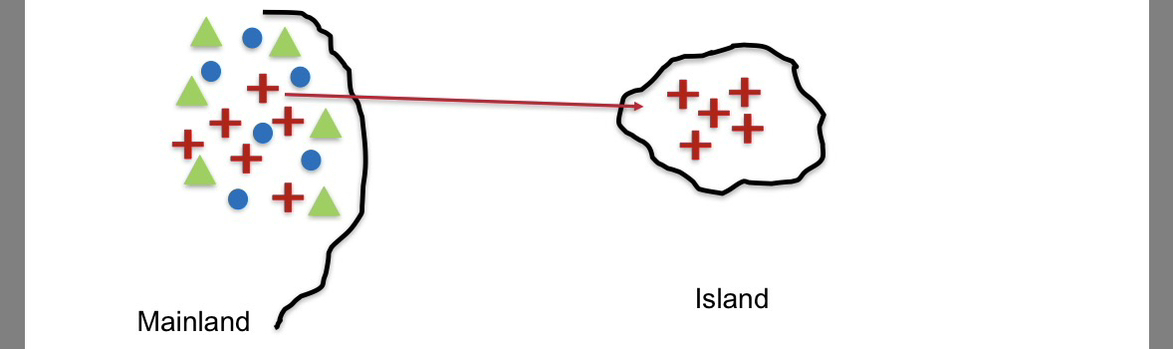
Founder effects example: Retinitis pigmentosa on Tristan de Cuhna (night blindness)
• Island was first colonised in 1810 by 15 people
– Just one person had night blindness
– Current population today has a high frequency of the condition
4.Gene flow between populations (migration)
Mechanisms that cause allele frequency changes
• Factors causing Hardy-Weinberg law to break down:⭐
5. Mutational change: before evolution can happen, genetic variation must exist within a population.
• Allele frequencies change over time because some alleles mutate into others
• Eventually, these alleles become fixed in the population
Mechanisms that cause allele frequency changes
• Factors causing Hardy-Weinberg law to break down:⭐
6. Assortive Mating-mate choice: a mating pattern and form of sexual selection where individuals with similar phenotypes mate with one another more frequently than expected.
• E.g.Bufo toads commonly choose mates based on size
– Large toads choose large toads
– Small toads choose small toads
7. Natural Selection IMPORTANT
The direction and magnitude of change depend on:
– Selection intensity
– Dominance relations of the alleles
– Allele frequencies