24th March Timber Frame Construction & Regulatory Frameworks
Learning Objectives
Introduction to various construction systems
Timber-frame construction: overview, terminology, regulatory frameworks including NZS3604 (can refer to previous notes from uoa as revision)
Construction Systems
Light timber frame
Rammed earth
Mass timber construction (CLT & Glulam)
Mimiro Structures
SIPs
Post and Beam COnstrucion
Masonry
Steel frame
Tensile structures
X frame fdf system
Timber frame construction
Timber is a construction material with long history in NZ, creative applications and carving of elements
After colonisation more logging and removal of native tress to make buildings, hardwood removed and construction changed overtime. We use timber in planted forests so it can be reused sustainably, more used in residential in terms of smaller scale buildings
Contemporary architecture rethinks how to use timber for larger buildings with mass timber, material can give creative expression (Kotukutuku papakainga facade), new design with tools such as CNC cutting.
Laminated veneer lumber growing rapidly in use for timber framing, majority of wall framing is pre-cut/nailed (pre-fabrication)
Wall system timber but use different material such as brick for the facade sometimes (without showing the timber framing)
Important to learn even though its common is because its renewable, locally available, natural material with biophilic qualities (human tendency to connect with nature and other forms of life), lightweight, thermal properties (steel and timber framing the heat transfer where timber can insulate heat better ‘still requires insulation‘), carbon footprint, affordability, speed of construction, flexibility, and adaptability
Some cons include durability (dependent on exposure, rammed earth lasts longer than rammed earth), chemical treatments (timber painted pink colour to protect it but changes original material to enhance durability that can be toxic), local impacts of forestry leading to biodiversity loss (pine radiata mainly used), fire resistance, fixings limiting deconstruction (hard to break apart after lifespan exceeded), plaster board and other fixings.
Watch TED talk on slides
Common treatments are: boron compounds, CCA compounds, LOSP (H1.2, H3.2, H5)
Timber can be treated via thermal modification (steam and high temp) to improve the durability. Abodo is wood manufacturer exploring those ways of treating timber without taking away qualities of timber
Wall components:

Top plate: Trusses sit on the top plate
Lintel: Sitting above opening (doors/windows) to support members above and window below
Studs: all around walls and located every 600/400/300mm in the wall
Sill trimmer: Underneath window opening
Jack stud: Under window smaller to studs
Bottom plates: Finishing the system and connection all the members
Bracing (Rigid air barrier or building paper) closing the wall in relation between the interior and exterior
Dwang/Logging: Horizontal Member connected to vertical studs to give rigidity to structures
Head trimmer: Above door opening
Roof trusses
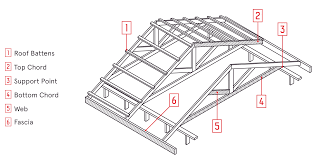
Purlins
Top/bottom chord
Support point
Web
Fascia
NZS 3604 used for timber construction codes
Buildings need to be on stable soil with no pre-existing issues
Total height up to 10m (small scale buildings)
Used for one/two storey and partial 3 storey
Easier to size structural members (using standard tables instead of calculations)
Span (distance between supports need to know these distances to use)
Rammed Earth
Rammed earth construction is an ancient way of constructing buildings that has been developed over centuries.
Durable and permanent construction (good long lifecycle)
Framework is built and a layer of moist earth is filled in, layer of moist earth is compressed, next layer of moist added, more layers added and compressed, framework removed leaving rammed earth wall
Needs reinforcing
Entire wall is structural element (entire wall is solid)
Example: Hundertwasser Park Centre, Kawakawa
Minimal waste as it takes earth sourced locally,
Suitable for loadbearing walls