Return of the Virginia Democrats
Return of the Virginia Democrat Party
After the Civil War, conservatives in Virginia managed to take control of the state government, at least until William Mahone and the Readjusters took control in the late 1870s. Even then, conservatives did not technically operate under the old Democratic Party. The Civil War had discredited the party's name and destroyed much of its structure. Mahone's Readjuster Party enjoyed considerable success until the mid-1880s when the Democrat Party revived and began a decades-long period of dominance over Virginia politics.
Fall of the Readjusters
The Readjusters claimed to represent all poor Virginians, both black and white. Their association with black Virginians in a time when African Americans were becoming increasingly disenfranchised proved to be their downfall. Conservatives in Virginia managed to use the Lost Cause mentality to espouse the virtues of the old Southern way of life.
One such public figure, Robert Lewis Dabney, argued that the New South movement was at best a Republican distraction and at worse a lie of the devil meant to corrupt the morals of good Virginians. The Presbyterian minister believed that the New South's dream of a modern society, with its vision of growing corporations, factories, public schools, and freedom for blacks went against the natural order and the most important values of the Old South.
Meanwhile, famous Readjusters such as Lewis Blair believed that the vision of the New South was the only way for Virginia to attain prosperity. Virginia's progress, he argued, was "dependent on the elevation of the Negroes. The Readjusters were making such arguments at a time when racist attitudes were making a resurgence among white Virginians, who were moving to limit African Americans' social and political power. The support of black voters and their belief in the New South movement caused many white Virginians to associate the Readjusters with the Republican Party and what they called "black reconstruction."
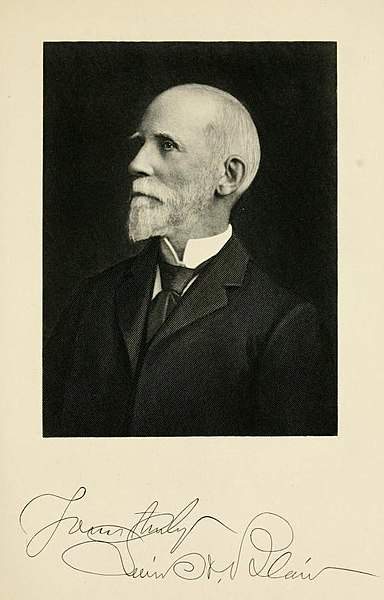
Lewis Blair
The events of 1883 and 1884 effectively ended the influence of the Readjusters. In 1883, the Democrats took control of the General Assembly and, in 1884, they passed the Anderson-McCormick Act. The law effectively ended any political competition for the Democrats by giving the now Democrat legislature complete control over all electoral boards throughout the state. As you read in the section on the disenfranchisement of blacks, the Anderson-McCormick Act allowed white Virginians to block blacks from voting. The years after this act saw a series of Jim Crow laws designed to destroy the political voice of black Virginians. With the loss of black voters, the Readjuster Party had virtually no chance of ever regaining power. This loss was exacerbated by the realignment toward the Democrat Party of poor whites who were swayed by the powerful rhetoric of the Lost Cause.
The last cry of the Readjuster-Republican alliance came in the 1889 gubernatorial election when Billy Mahone tried to mount a strong defense, but by then, thousands of black Virginians and white Republicans had been disenfranchised.
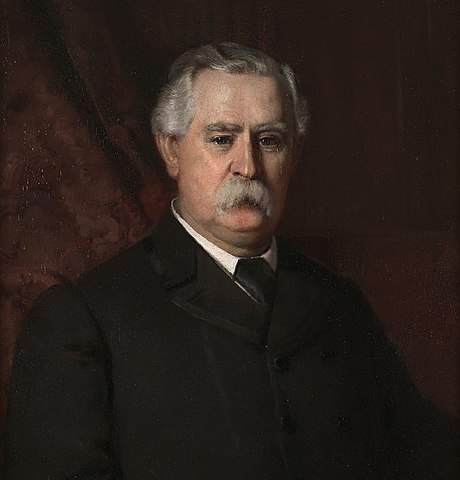
Philip Watkins McKinney
Philip Watkins McKinney, the Democrat candidate, won the election in a landslide. Without shame, McKinney spouted his racist ideas in his speech, arguing that the return of the Readjusters would mean the return of black rule in Virginia. His open rhetoric shows how acceptable racial politics had become in Virginia. Between 1869 and 1890, 87 black Virginians had served on the General Assembly. In 1891, there were no black delegates.
The Lost Cause
The disenfranchisement of black Virginians was the single most important factor in the total domination of the Democrat Party by the 1890s, but the powerful rhetoric of the Lost Cause certainly helped facilitate the party's rise to power. In the gubernatorial election of 1885, for example, Democrats chose Fitzhugh Lee as their candidate. Lee was not only a cavalry lieutenant under J. E. B. Stuart in the Civil War, but he also happened to be the nephew of Robert E. Lee, the quintessential symbol of the Lost Cause. Lee served as the face of a growing Democrat machine led by Senators John S. Barbour and John W. Daniel.
The Lost Cause mentality was not limited to Virginia or even the South. Northerners also bought into the sentimentality of the antebellum plantation culture and tacitly approved of the marginalization of black Southerners, including the Supreme Court's 1896 decision in Plessy v. Ferguson. Northerners felt that by reminiscing about the virtues of the Old South, they could bring healing to the country. Corrupt politics in Virginia and the rest of the South were allowed to continue in the name of national reconciliation. Neither the federal government nor the voice of the people could threaten the dominance of the Democrat Party in Virginia. After Fitzhugh Lee won the governorship in 1885, Democrats would win every gubernatorial election for 84 years.
Thomas Staples Martin and Hal Flood
Thomas Staples Martin, a lawyer from Scottsville, became the leader of the Virginia Democrats after the death of Senator Barbour in 1892. Martin was known for his quiet demeanor but ruthless political maneuvering. Martin became the legal counsel for Chesapeake and Ohio Railroad, a powerful position because he had control of the organization's funds to distribute to political candidates that would support the company. His power gave him access to Democrat leaders, and he soon became a prominent leader in the Party. After Barbour's death, he made a successful run for his Senate seat, using funds from the railroad to defeat the popular former governor, Fitzhugh Lee.
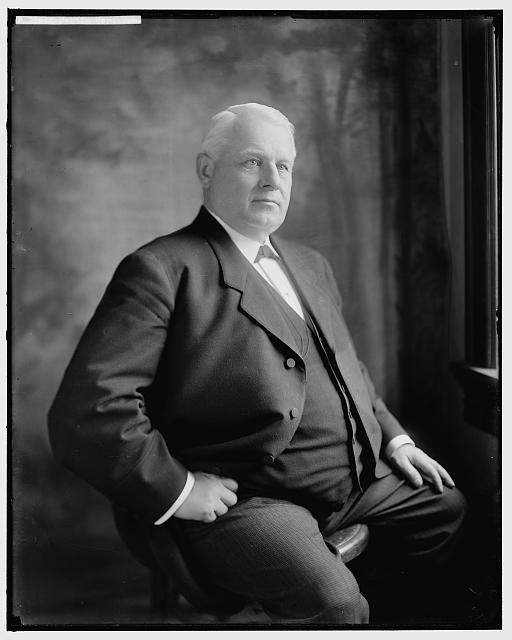
Thomas Staples Martin
Martin found a prominent ally in Hal Flood, a lawyer from Appomattox, who won a seat in the House of Delegates in 1887 and later the state Senate in 1891. Flood and Martin used their influence to build up an incredibly powerful political organization in the 1890s. Fighting Populists and Progressives who threatened their power, the two leaders of the "Organization" defeated the last remaining remnants of the Republican Party in the state and functioned as the leaders of the Virginia Democrat Party for much of the early twentieth century.
The Olcott Settlement
Virginians also finally came up with a lasting solution to their continued debt problems in the 1890s. The plan of the Readjusters had worked for a time but failed as a long-term solution. It also did not address the need for negotiations with West Virginia. After a series of debates and input from bondholders, Virginians came to a solution known as the Olcott Settlement in 1892. The plan extended the interest payment on the debt for 100 years and increased the total amount of the debt by several million dollars. Still, the total amount of the debt was much lower than it originally had been. The plan was a middle ground between the Funders and the Readjusters. It included a plan to pay the debt at a reasonable rate and adjusted the debt to a higher amount, but it still led to revenue problems similar to what Virginia saw under the rule of the Funders. The question of how much West Virginia owed was still unsettled. After decades of negotiations, the Supreme Court finally stepped in and stated in 1911 that West Virginia was partially liable for Virginia's prewar debts. The two states finally came to an agreement in 1915 that West Virginia was responsible for about $12.4 million of Virginia's debt.