Chapter 15
Money — A widely accepted means of payment
currency — type of money, usually coins and bills
Federal bank — banks have reserves, and the Federal ReserveIss the state gov bank
Federal bank — controls both the means of reserves and currency
Every country has a central banking system
majority of new money is created by simply adding money to reserves
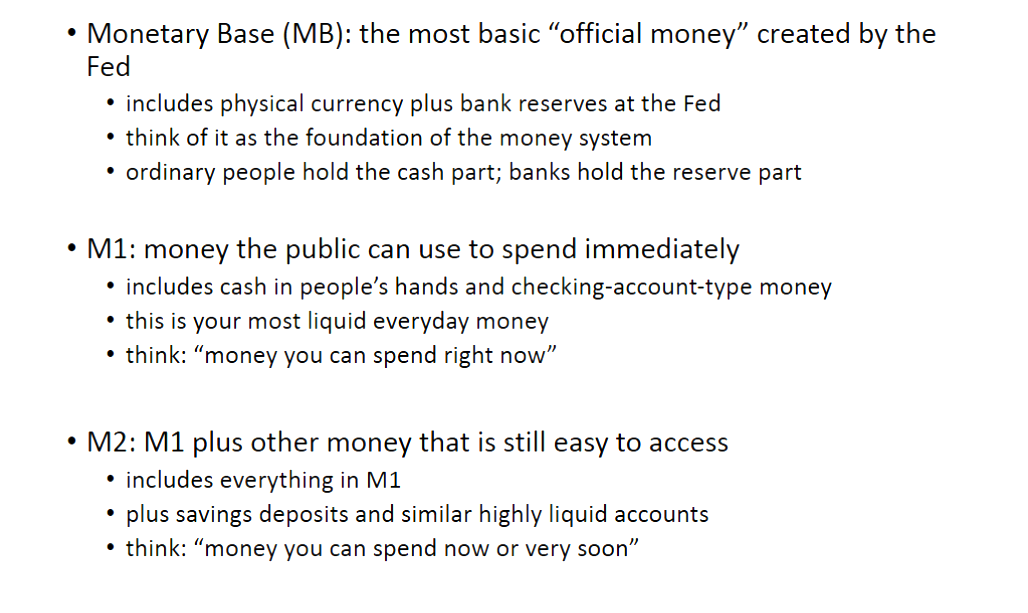
Final means of payment — currency (paper bills and coins), reserves, and checking and savings accounts.
savings account is not as liquid as a checking account
protectsconsumerss and regulates banks
clearing house associations — private mini central banks before the FED
these were the good banks that were basically a council of banks
How the Fed Influences Aggregate Demand:
paying interest on reserves at the Fed banks
open market operations
acting as a lender as a last resort
coordinating expectations
Federal FUnds rule: lending rate from one major bank to another
guides short term funds rate
Open market operations: when gov buys or sell gov bonds
when fed buys more bonds the interests rate goes down because demand for bonds id going up increasign price
this is related to aggregate demand runing cool deccrease running hot decrease
REPO: temporary one day open market operations where you buy one one day and sell next day
no real long term effect of money supply
Quanitative easing: long term intest reate were fed buys long term bonds or seccurities